ARCHBISHOP’S PALACE IN KROMĚŘÍŽ
Archibishop’s Palace in Kroměříž
Sněmovní nám. 1/2
767 01 Kroměříž 1
Czech Republic
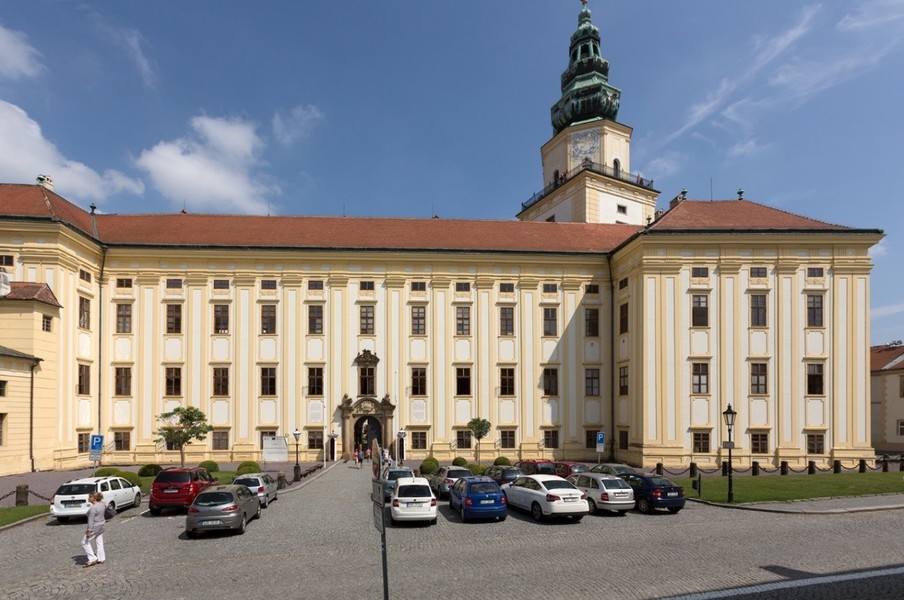
The origins of the building remain uncertain due to the lack of written sources and the demolitions of the 17th century1. The actual site was probably a castle courtyard, later transformed into the residence of Bishop Bruno of Schauenburg (1245–1281) in the 13th century. During the episcopate of Stanislaus I Thurzo (1470–1540), the building was restructured into a multi-wing complex with a prismatic entrance tower, which still bears the bishop’s coat of arms.
In 1664, Karl Liechtenstein-Castelcorno (1624–1695) commissioned important modifications, completed by Giovanni Pietro Tencalla (1629–1702), who designed its current four-wing configuration with two storeys and corner buttresses (Fig. 1)2. Baldassare Fontana contributed to the interior decoration3. Following Liechtenstein-Castelcorno’s death, the works continued, but in 1752 a fire destroyed much of the ornamentation. Restorations completed during the episcopate of Maximilian of Hamilton (1761–1776) involved several artists. The castle was damaged during World War II, and restoration began in 1947. After 1989, its management was entrusted to the Archdiocesan Museum of Kroměříž, and in 1998 the castle and its gardens were inscribed as a UNESCO World Heritage Site.
Central Hal (Sala terrena)


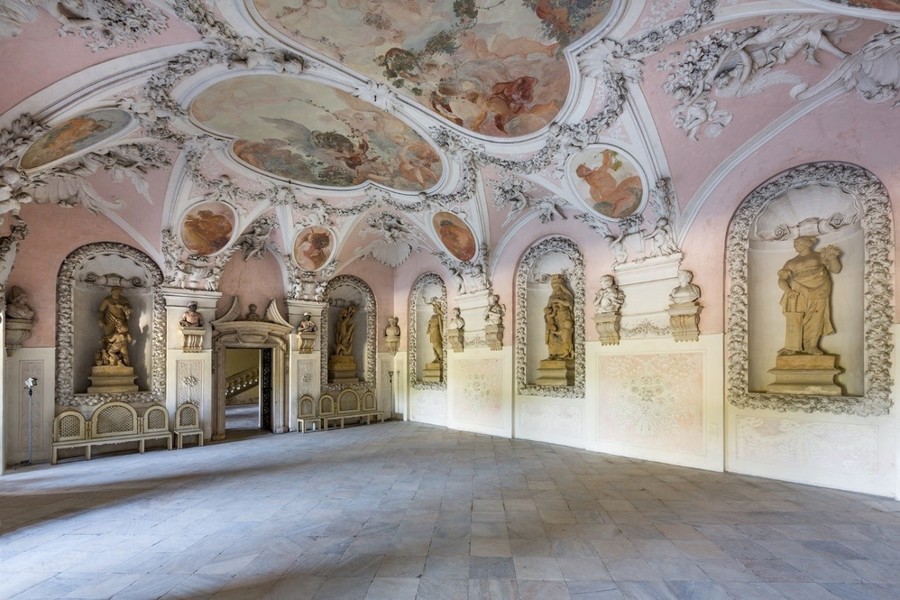
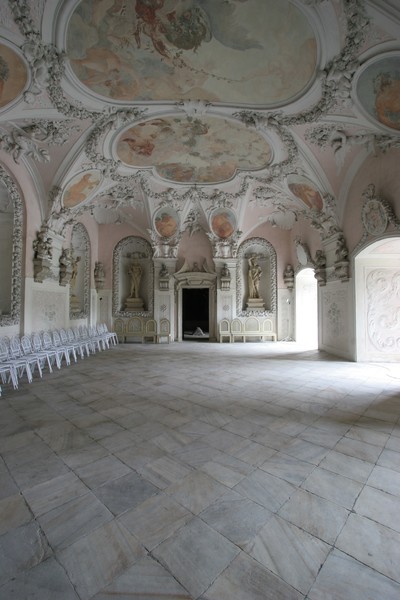
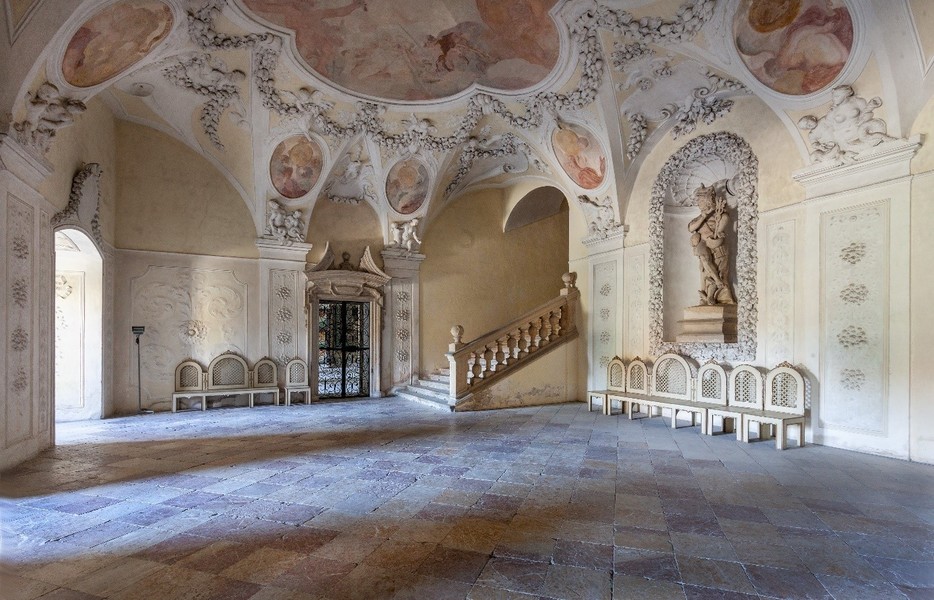
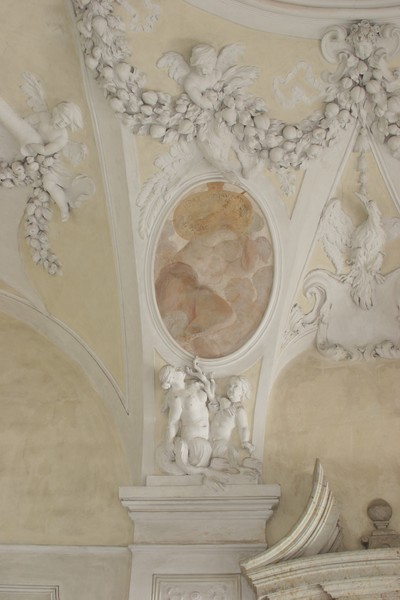
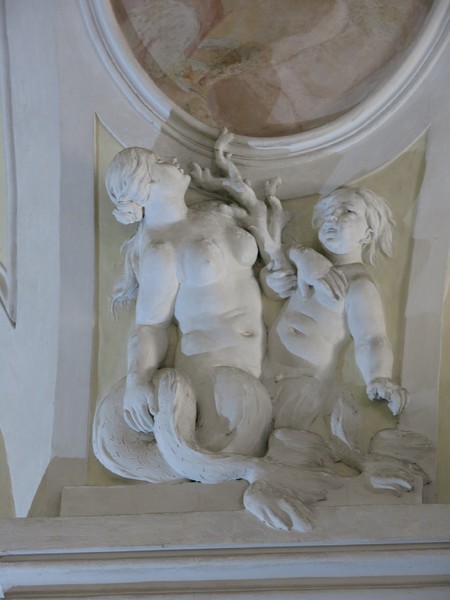
The central hall, one of the three on the ground floor (Fig. 2), features an elaborate stucco decoration framing a large central fresco, enriched with garlands of fruit and foliage held by putti with eagles (Fig. 3). The vault has eight pairs of water nymphs and young Tritons entwined in elegant compositions, sometimes interpreted as mermaids (Fig. 4). In the lunettes, stucco angels hold scrolls or parchments, occasionally accompanied by water birds. The walls and windows arches are adorned with vegetal motifs and refined stucco ornaments, creating a captivating and harmonious atmosphere.
South Hall (Sala terrena)


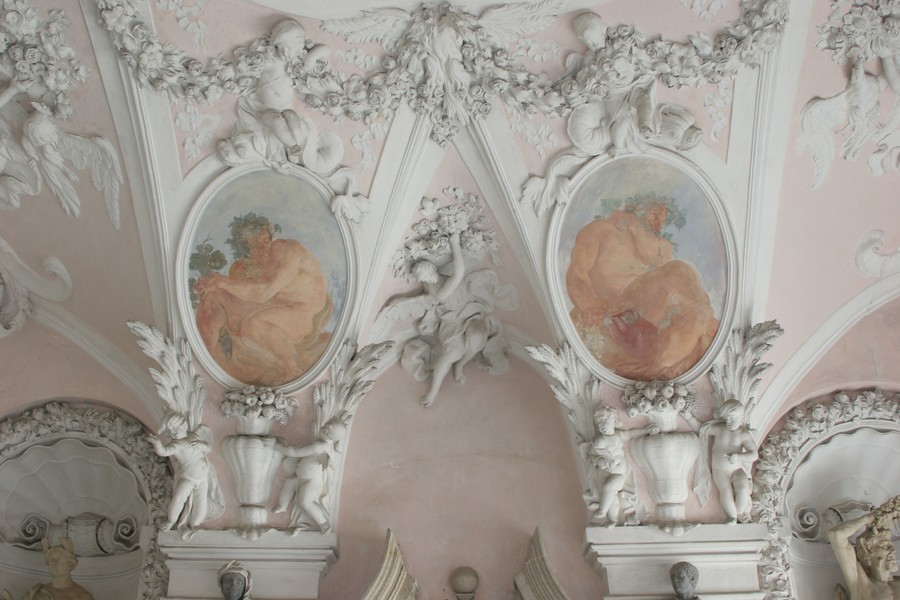
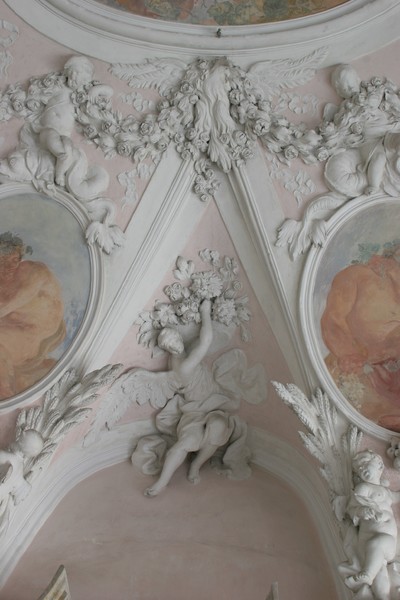
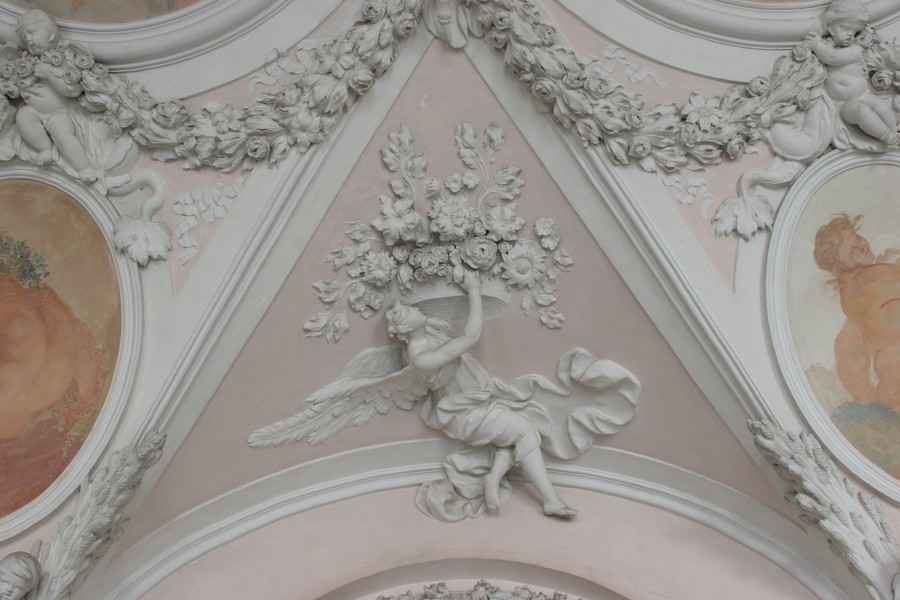
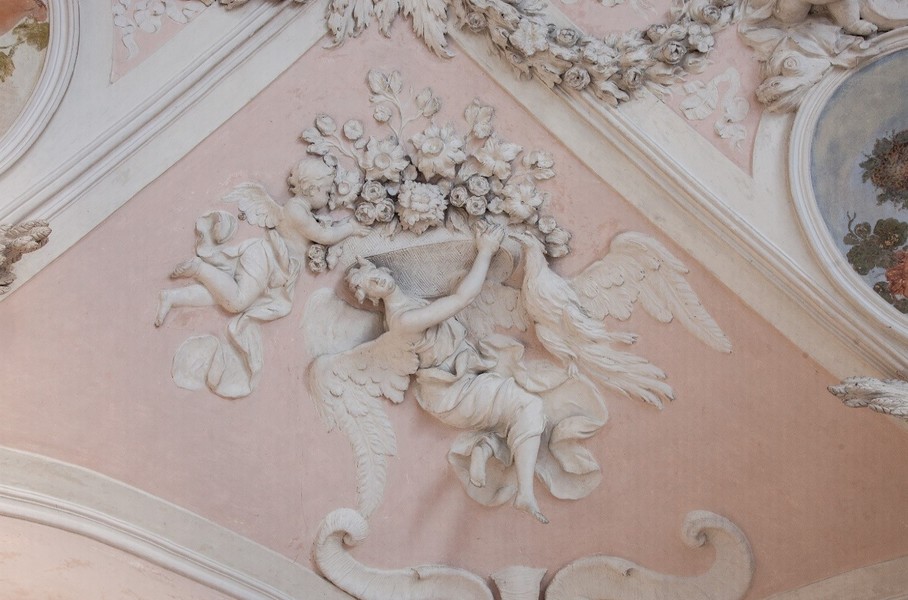
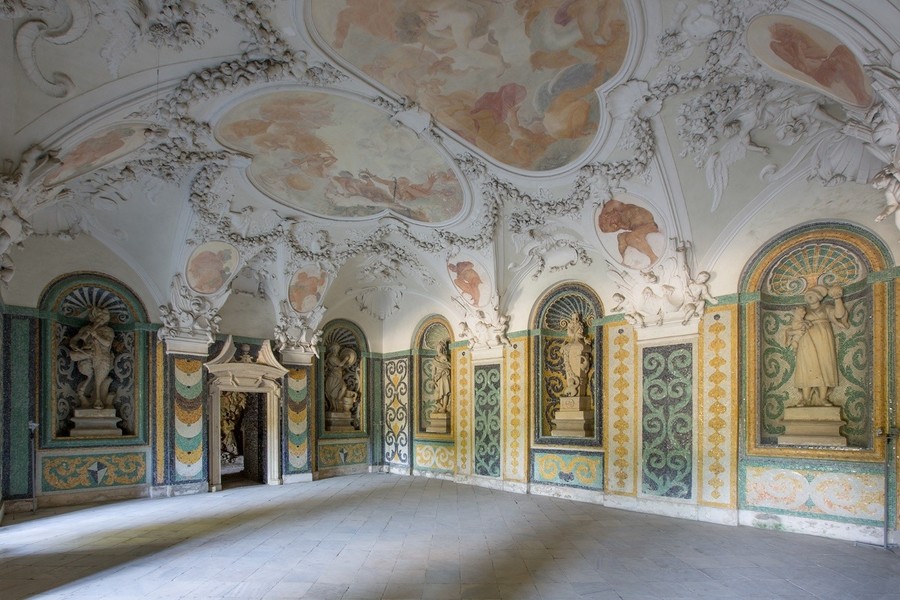
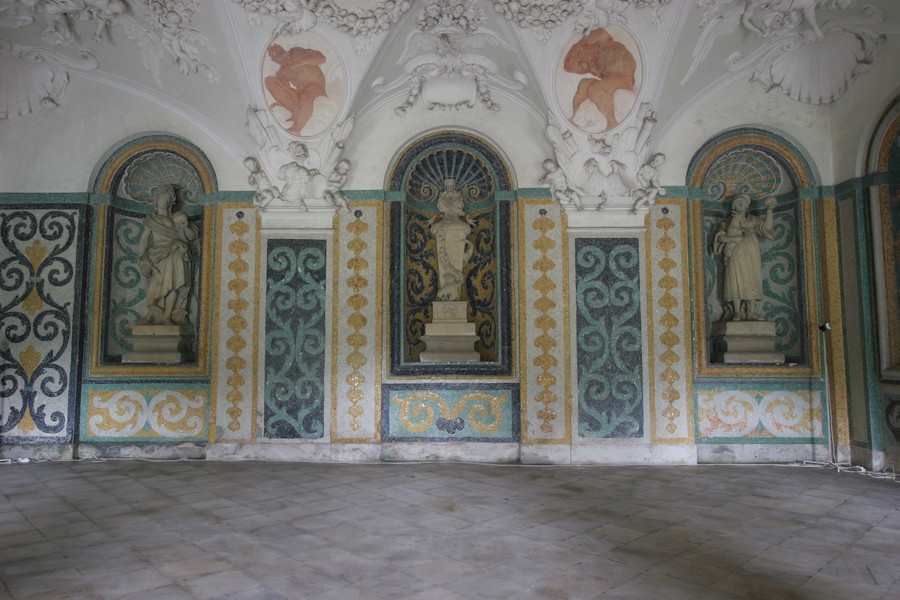
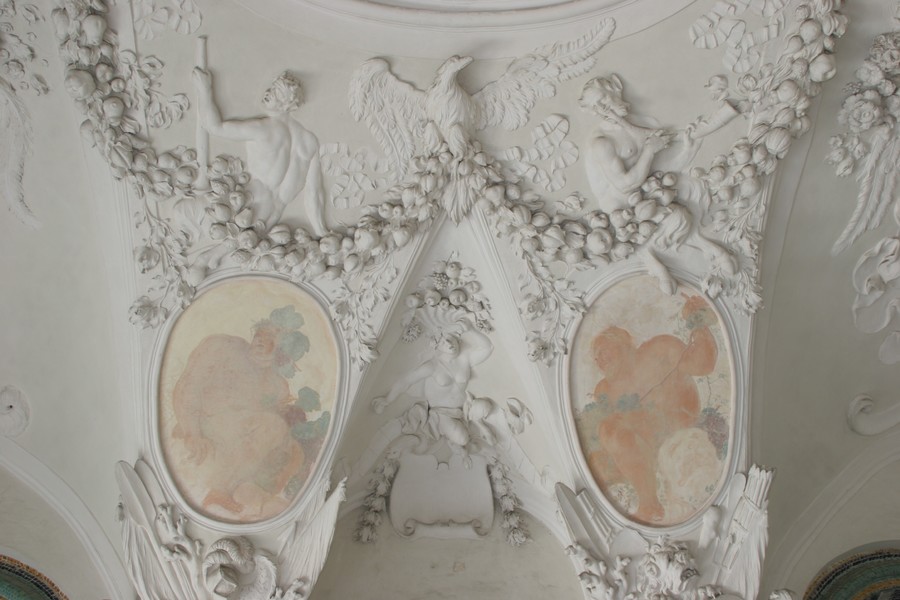
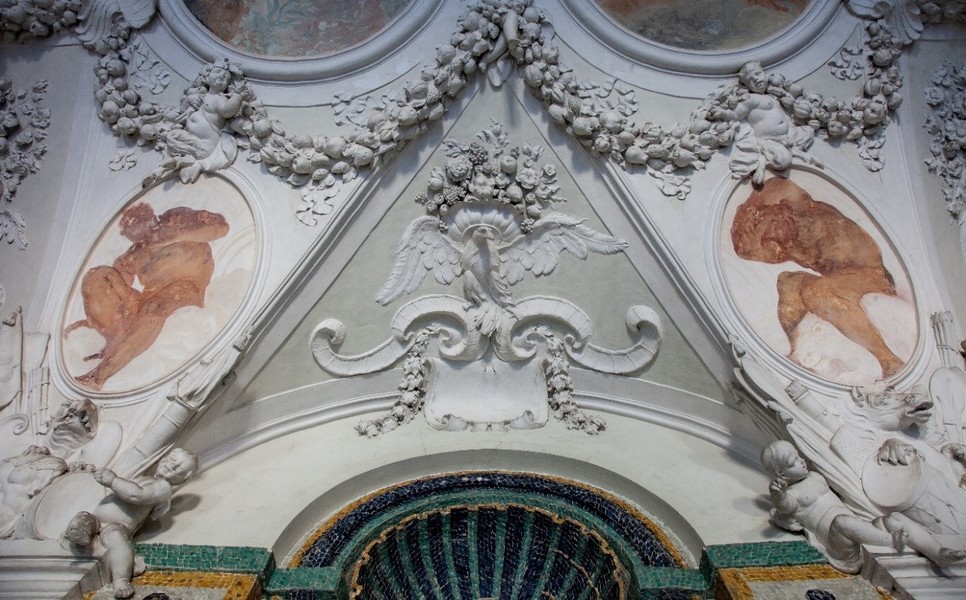
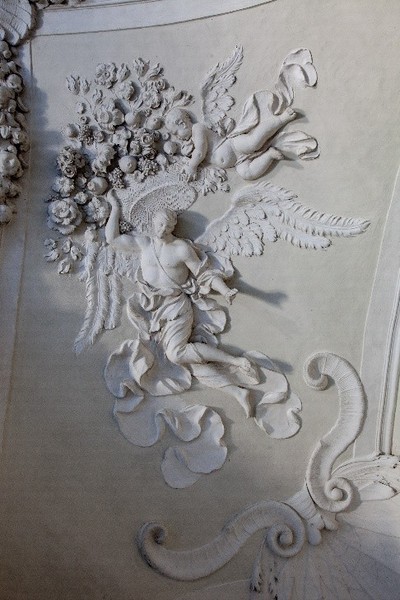
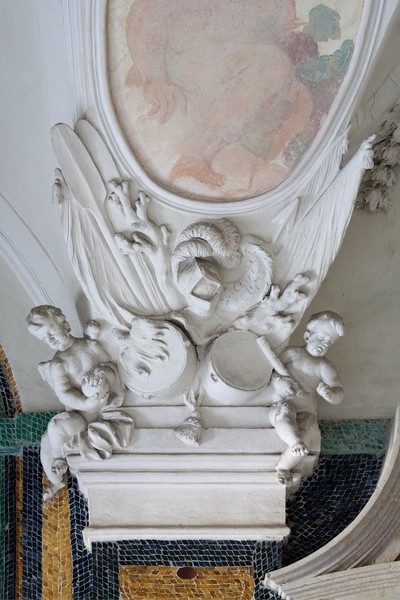
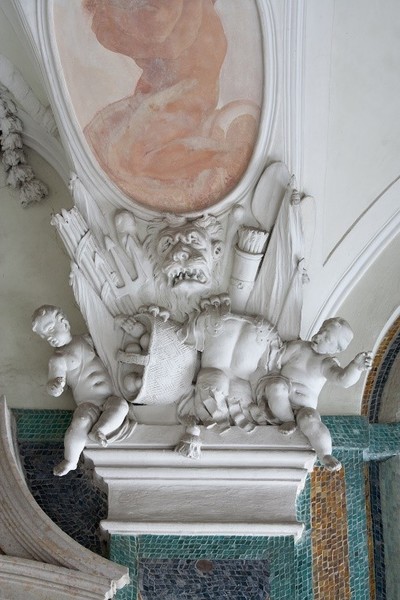
The South Hall is richly decorated with theatrical and symbolic elements (Fig. 5, 6). Two frescoes are set within elegant trilobed frames, while the stucco work features garlands of fruit, shells, and mascarons supported by satyr putti and angels. The vault is animated by angelic figures carrying baskets of flowers, alongside satyrs and eagles, creating a dynamic effect (Fig. 7, 8, 9). The pillars are adorned with putti dressed in various styles, with heads or limbs of fantastical creatures such as lions, seahorses, leopards, and griffins (Fig. 10). One particularly striking detail is a mask with surprisingly individualised features (Fig. 11).
North Hall (Sala terrena)


Located to the left of the entrance atrium, this hall is enriched with elaborate stucco decorations covering the ceiling, walls, and statue niches (Fig. 12, 13). At the centre of the vault, frescoes are framed by garlands held by putti seated on dolphins or majestic eagles with outspread wings (Fig. 14, 15). The niches are surrounded by dense relief garlands of flowers, also supported by putti on dolphins.
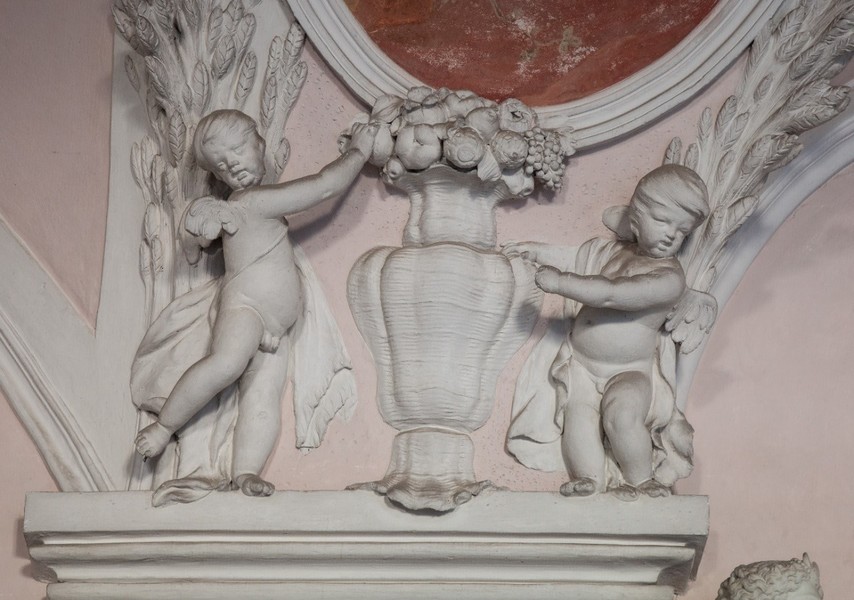
Above the pillars, pairs of putti stand out against imposing acanthus leaves, holding elegant flower vases (Fig. 16). The lunettes feature angels surrounded by flowers, while the walls and windows frames are adorned with floral swags tied with ribbons, forming refined ornamental panels that enhance the room’s scenic and harmonious effect (Fig. 17, 18).