BASILICA OF THE ASSUMPTION OF THE VIRGIN MARY AND ST. CYRIL AND METHODIUS
Basilica of the Assumption of the Virgin Mary and St. Cyril and Methodius
Nádvoří 206
687 06 Velehrad
Czech Republic
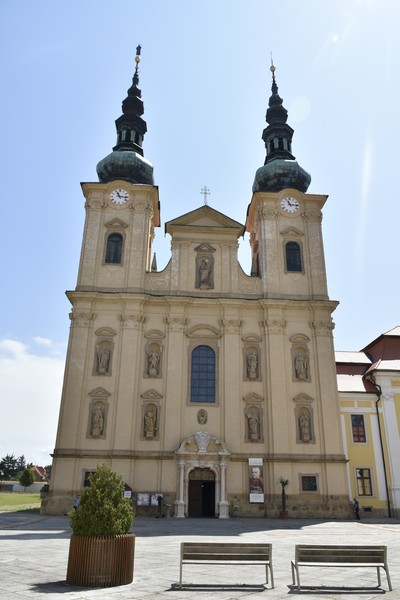
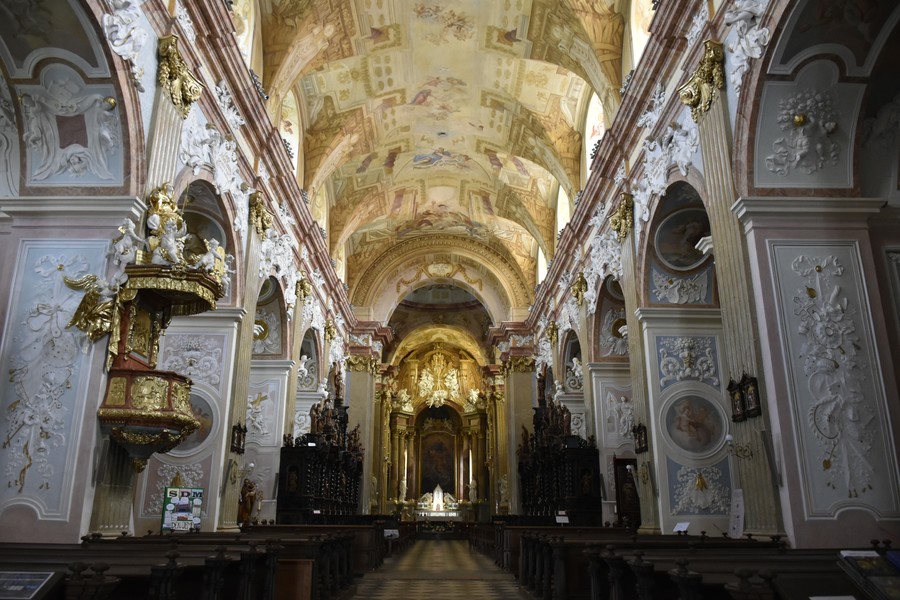
The Monastery and Basilica of the Assumption of the Virgin Mary and Saints Cyril and Methodius were founded by Bishop Robert of Olomouc (1201–1240) and Margrave Vladislav Jindřich (1160–1222)1. The church, consecrated in 1228, is rebuilt after the fire of 1681 based on the design of Giovanni Pietro Tencalla (1629–1702) (Fig. 1).
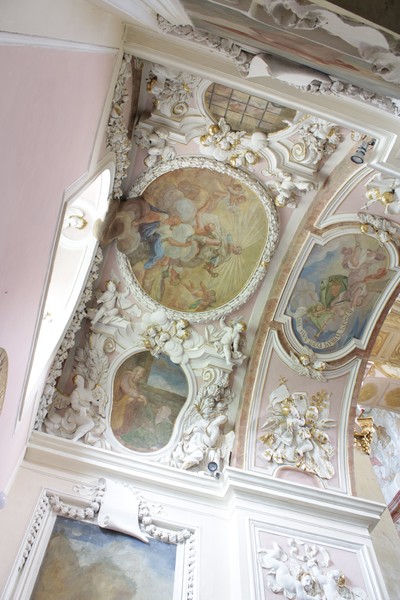
Between the 17th and 18th centuries, Abbots Petr Silavecký (in office from 1669 to 1691), Bernard Kašpárek (1691–1699), Florián Nezorin (1699–1724), and Josef Malý (1724–1748) oversee the works, involving artists such as Martin Antonín Lublinský (1636–1690), Michael Leopold Willmann (1630–1706), Paolo Pagani (1661–1716), Michael Mandík (1640–1694), and Baldassare Fontana (Fig. 2). The Basilica is reconsecrated in 1735, completed with the surrounding buildings in 1777, and granted the title of minor basilica by Pope Pius XI (1857–1939) in 1927.
Throughout the 20th century, the architectural structures and interior stucco decorations had several restoration campaigns (1928, 1935, 1936, 1950). The most recent one was done from 2006 to 2016.
Main altar


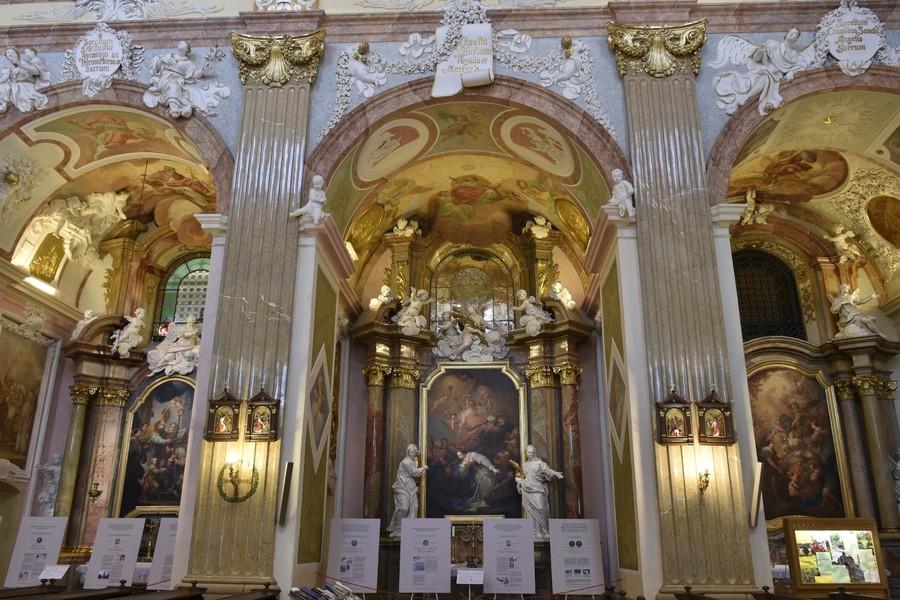
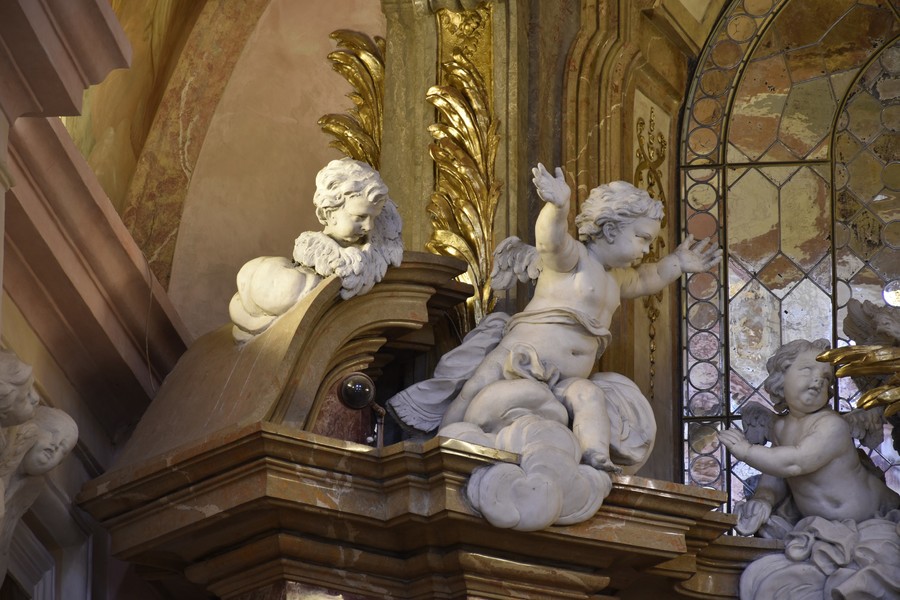
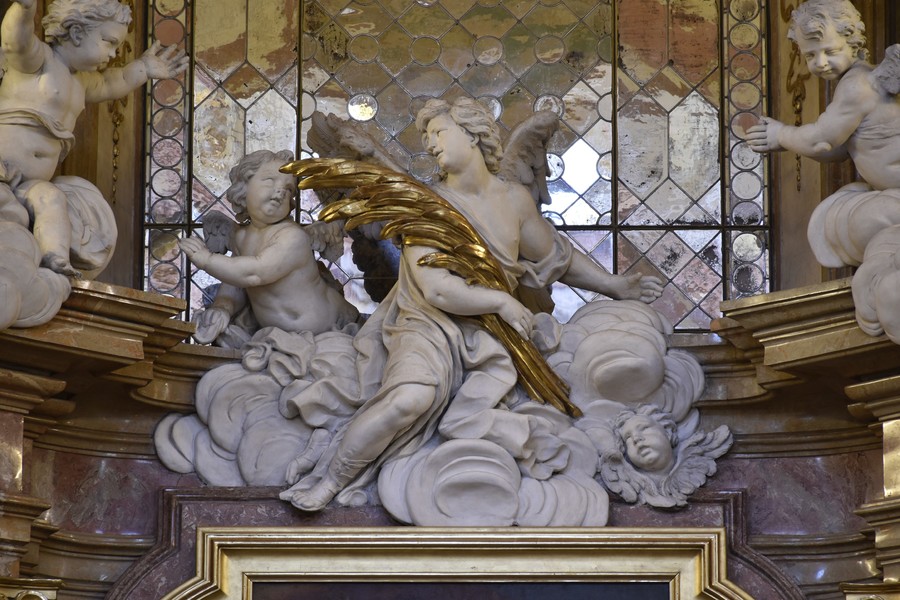
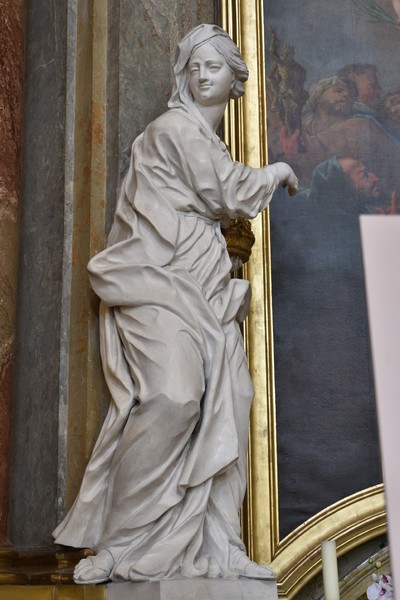
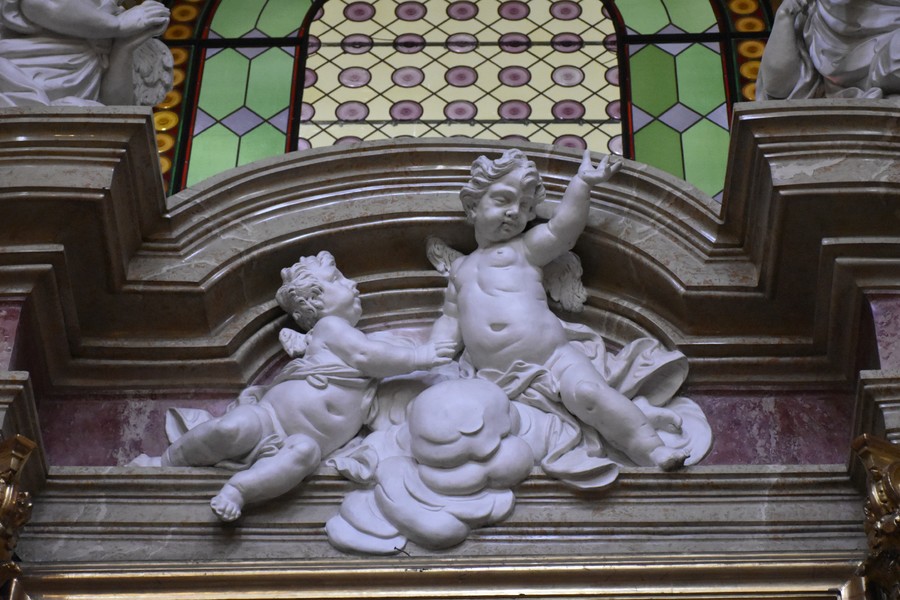
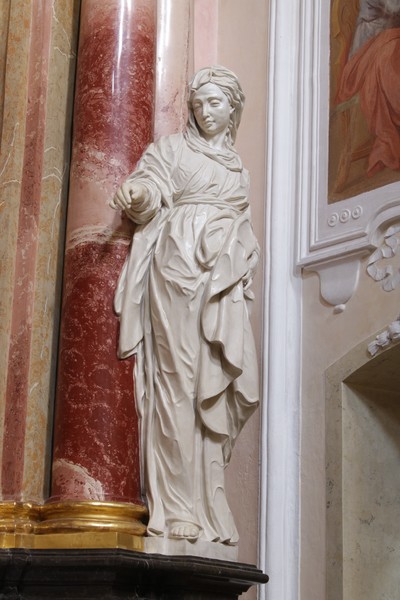
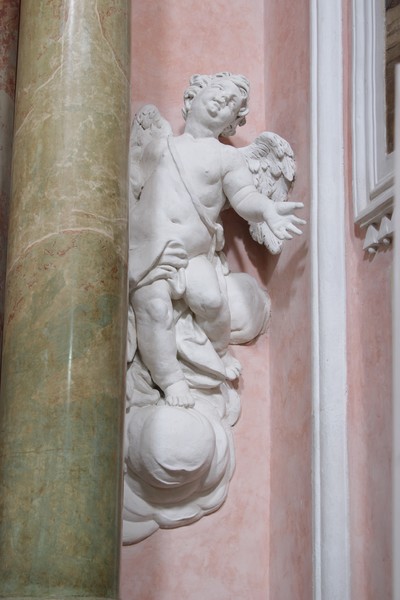
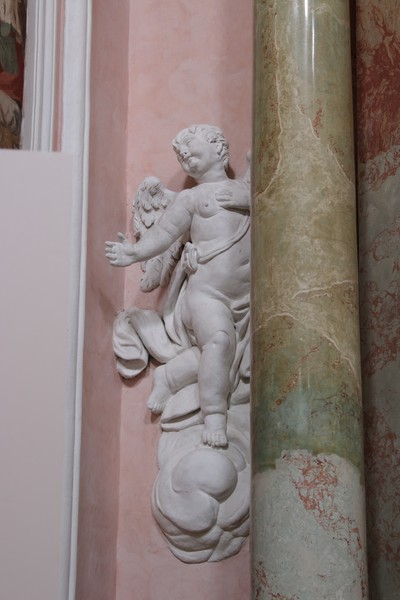
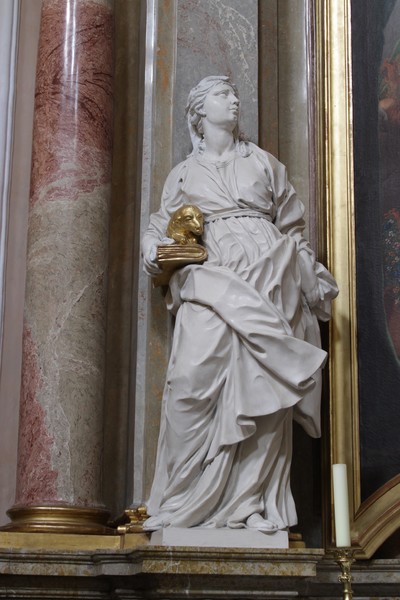
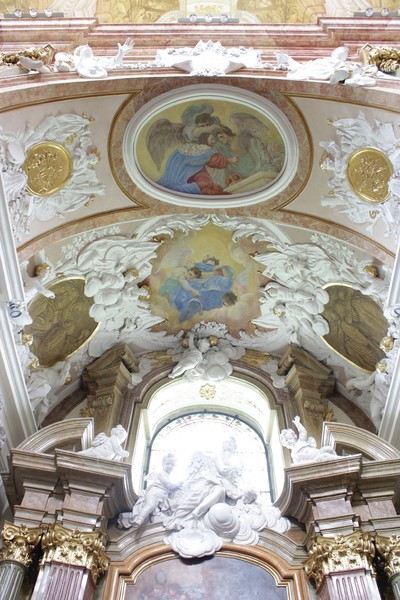
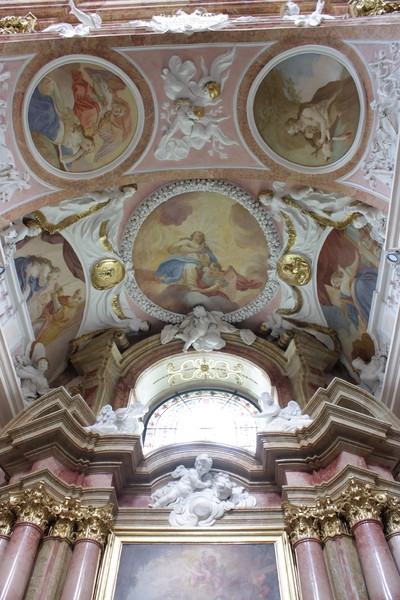
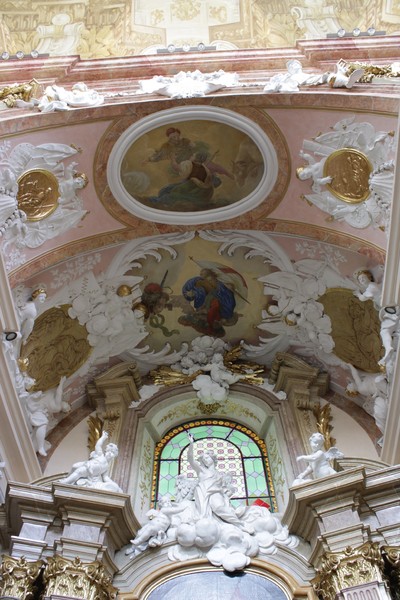
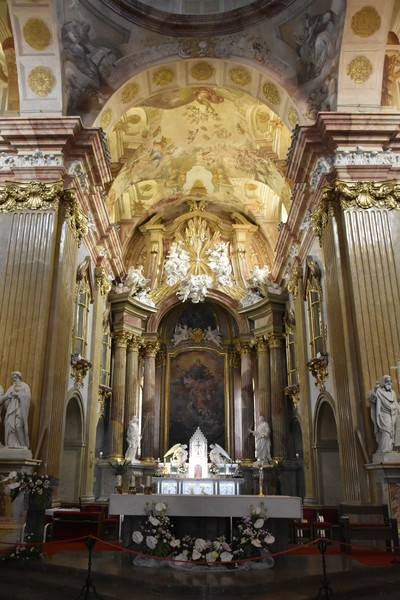
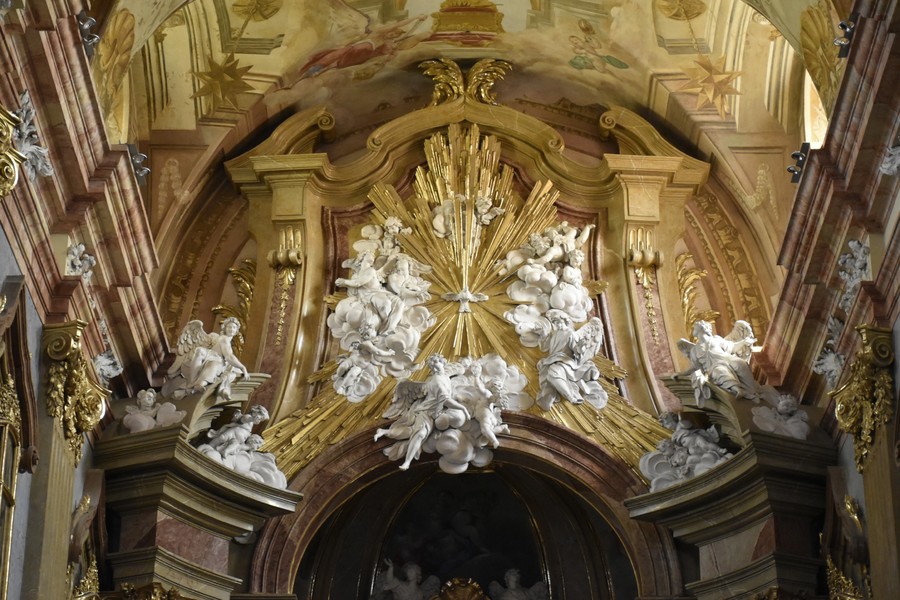
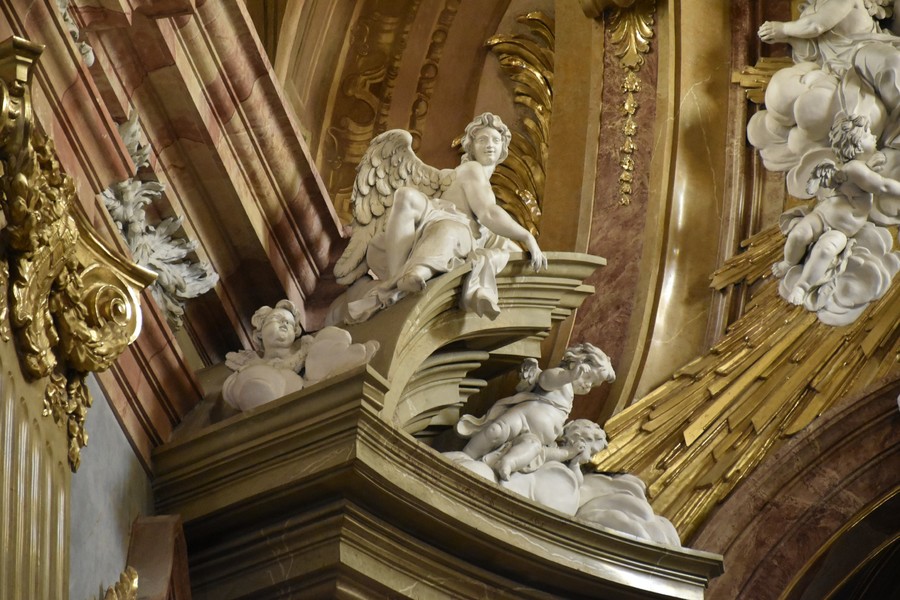
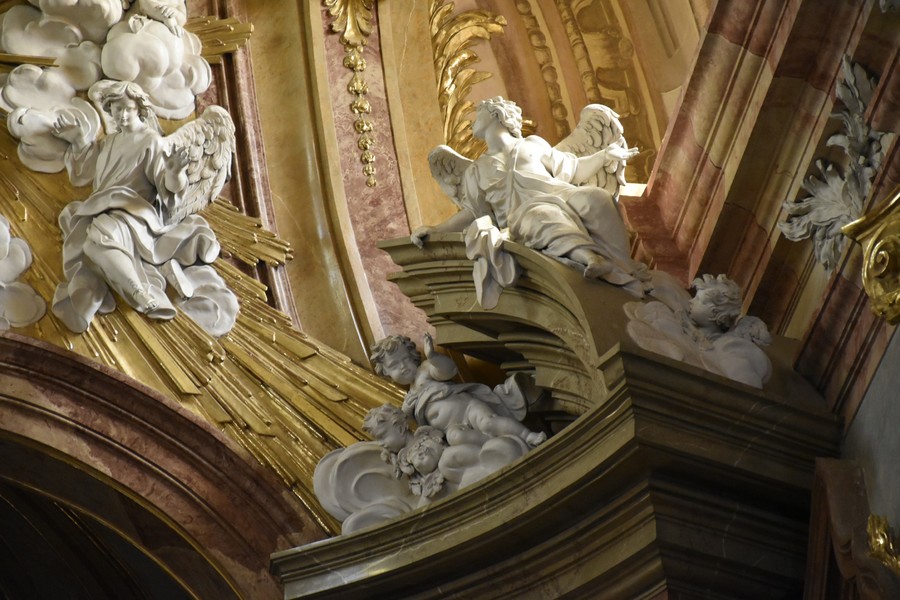
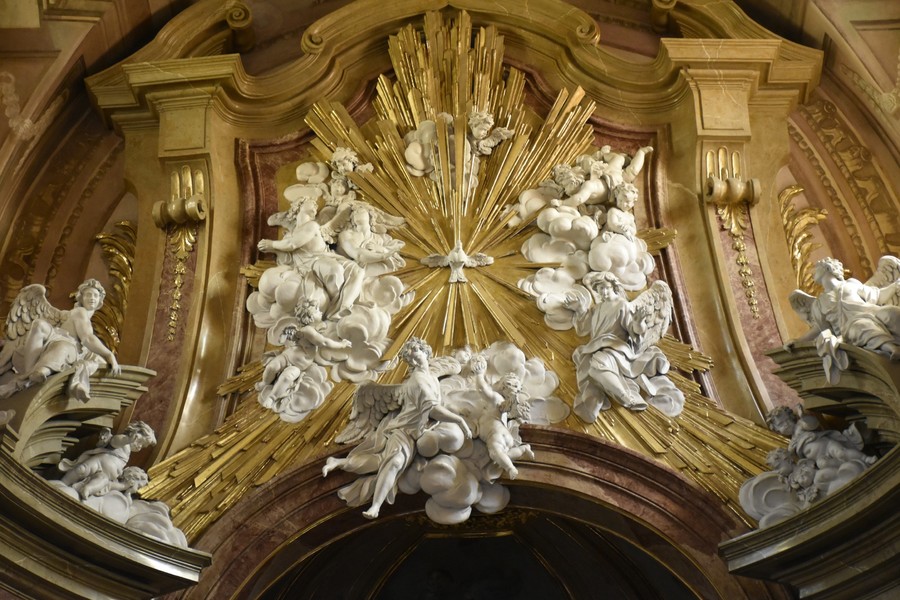
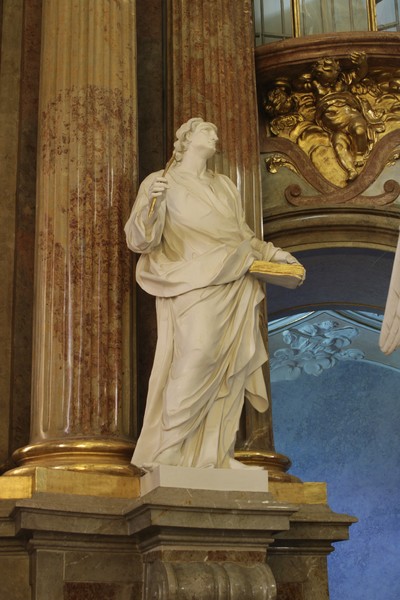
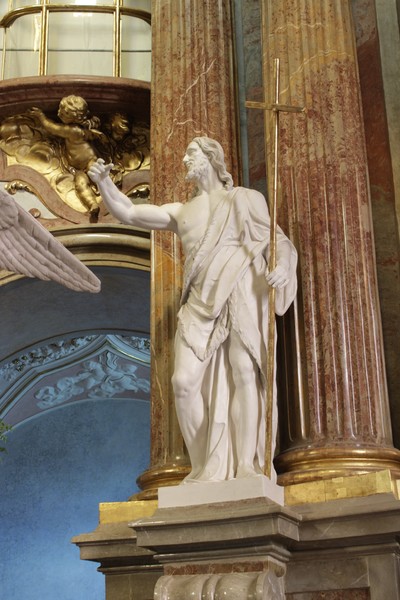
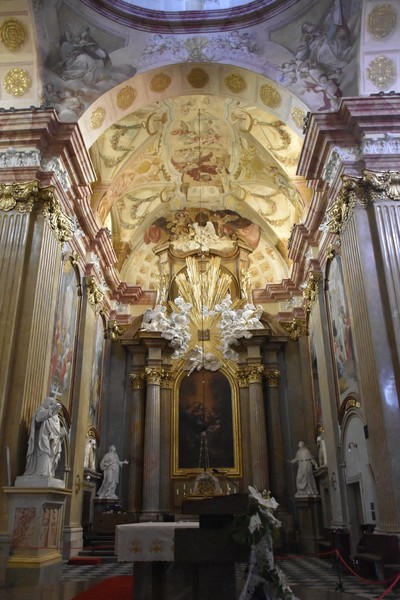
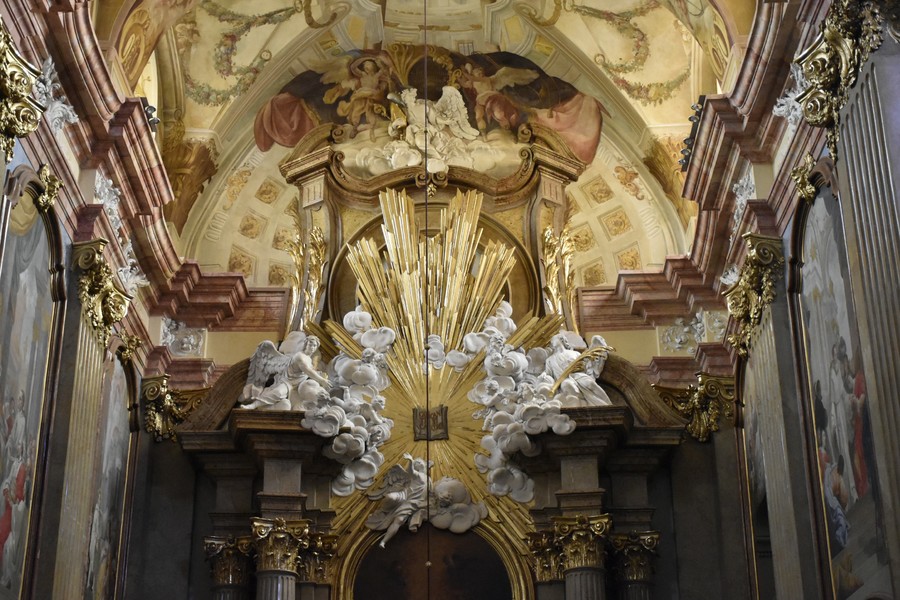
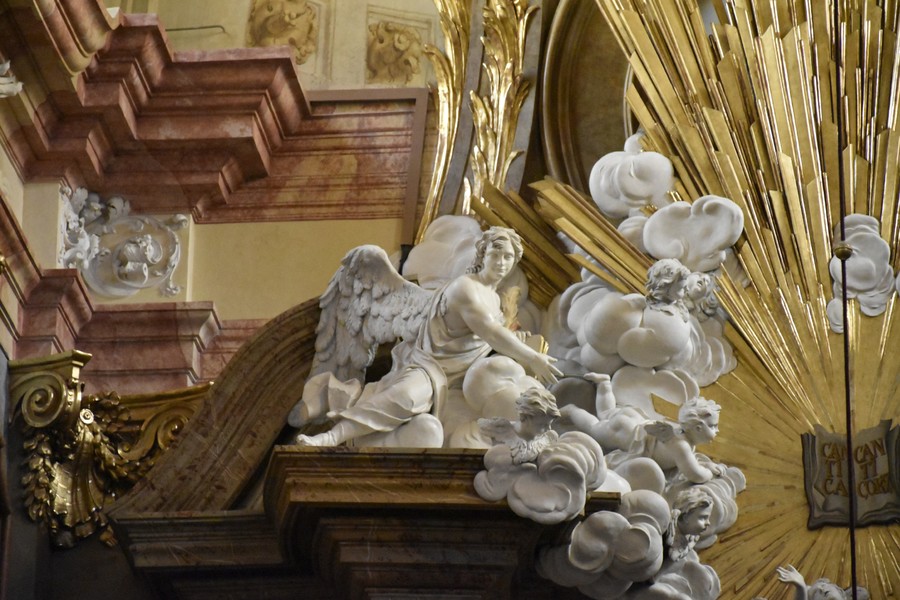
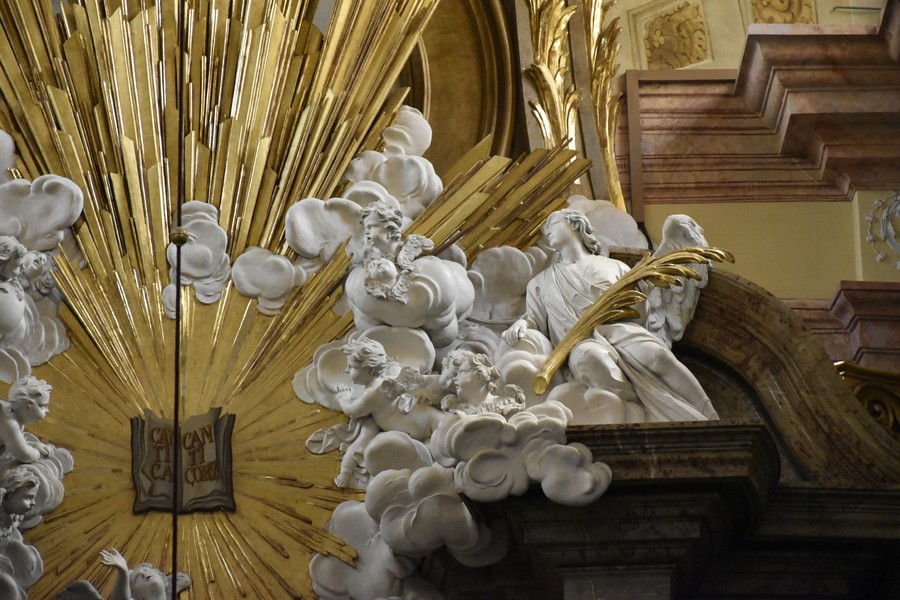
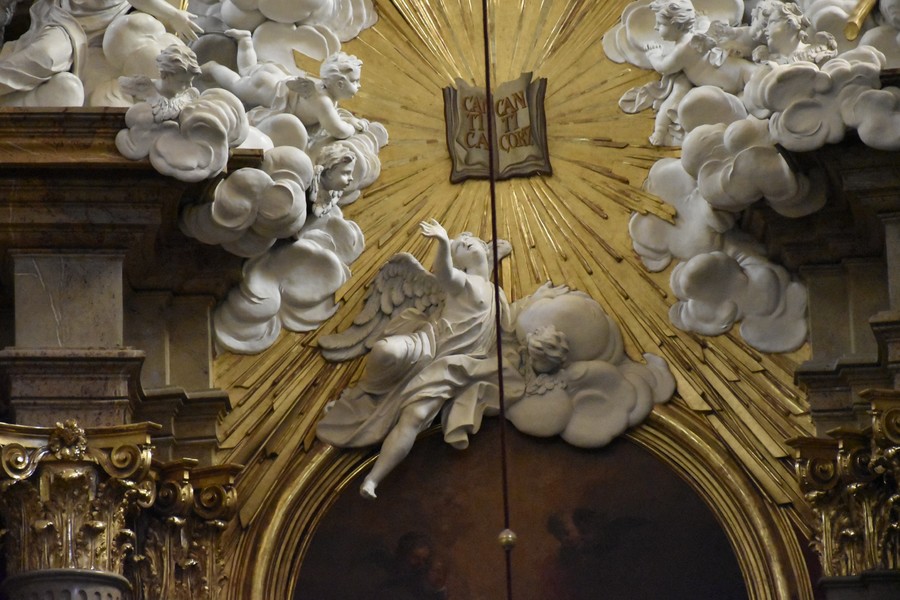
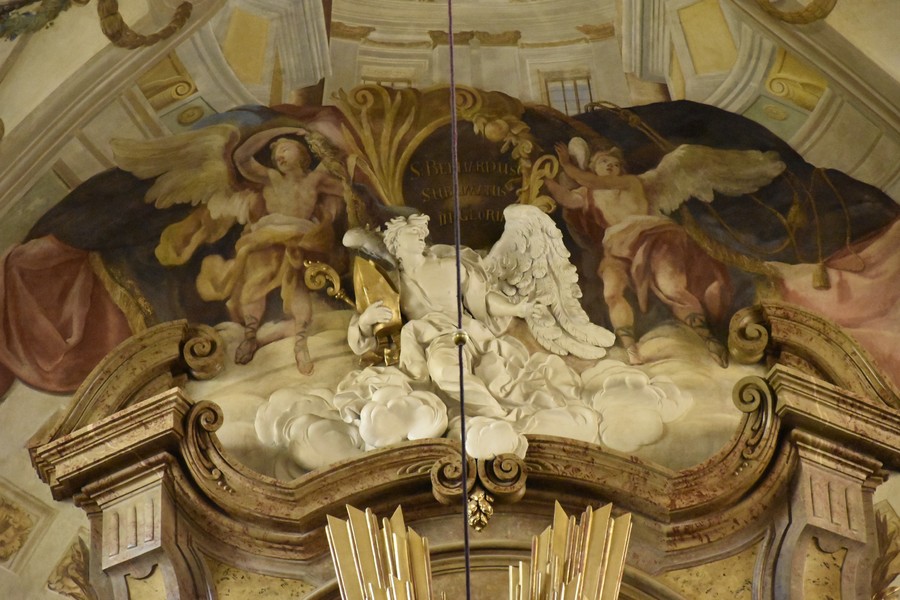
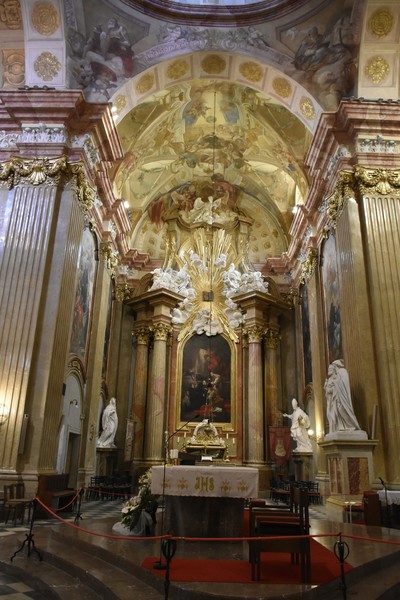
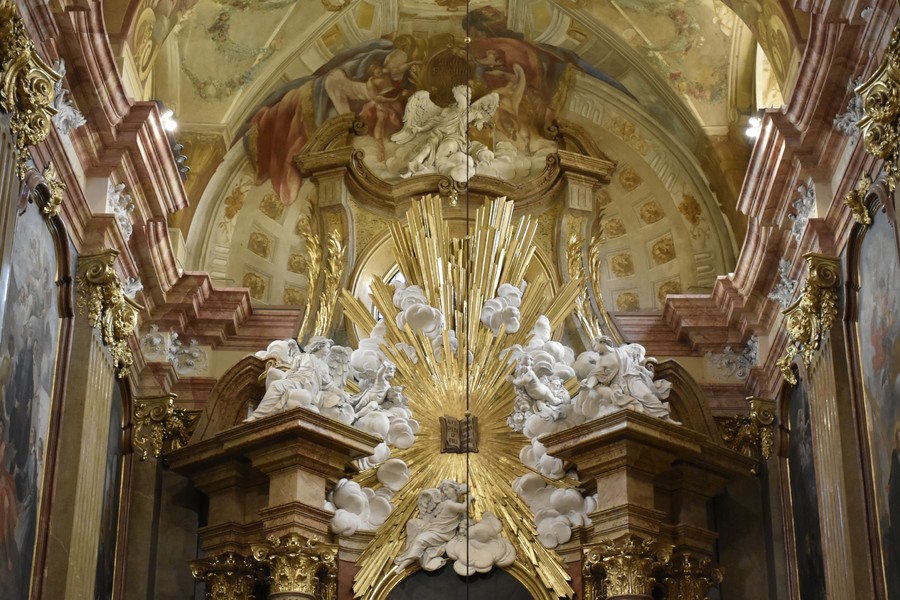
The main altar, a remarkable example of column-based architecture, stands out for its scale and refinement (Fig. 3). Massive columns with composite capitals, arranged in a semicircle, create depth and draw the eye towards the altarpiece framed by coordinated pilasters (Fig. )2. The broken pediment hosts angels seated on the overhangs, while cherubs emerge from the clouds below (Fig. 4, 5, 6). The upper part of the decoration is adorned with palm fronds and golden rays, and frames the dove of the Holy Spirit among angels and putti (Fig. 7). The sculptures of Saint John the Baptist and Saint John the Evangelist stand prominently in front of the columns (Fig. 8, 9).
Transept


Side chapels


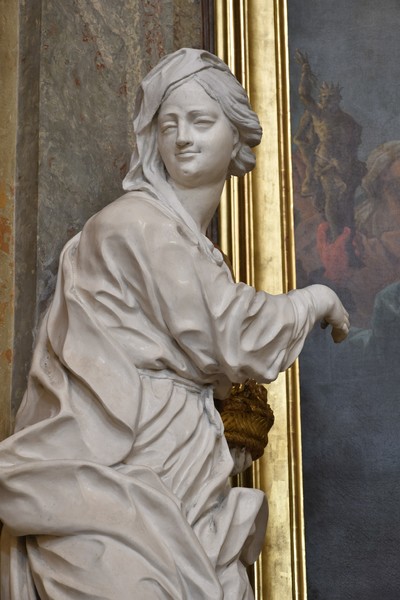
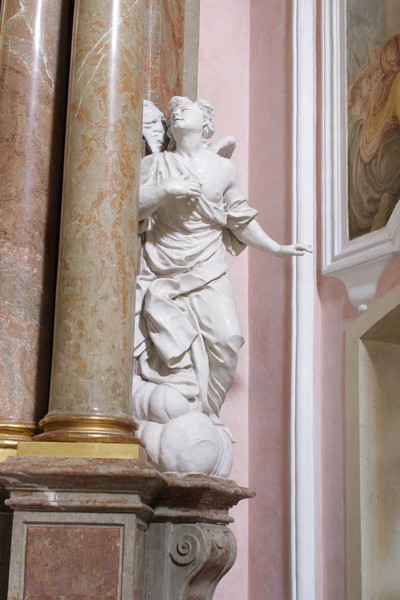
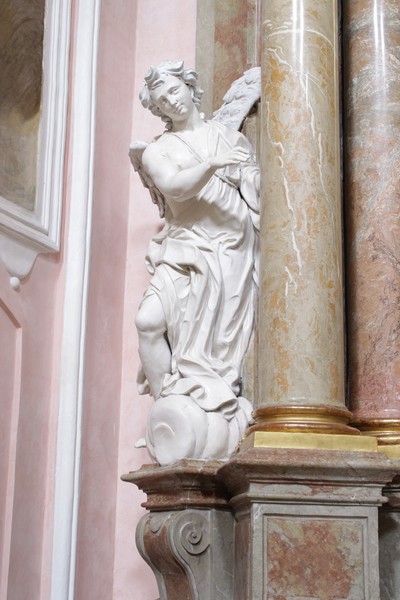
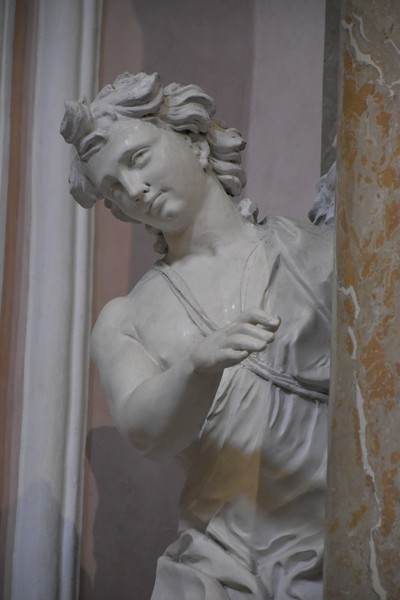
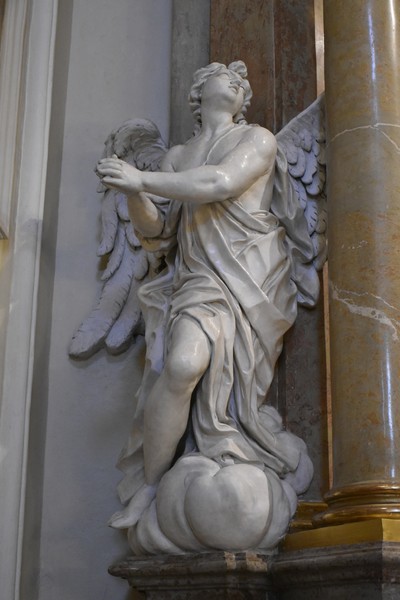
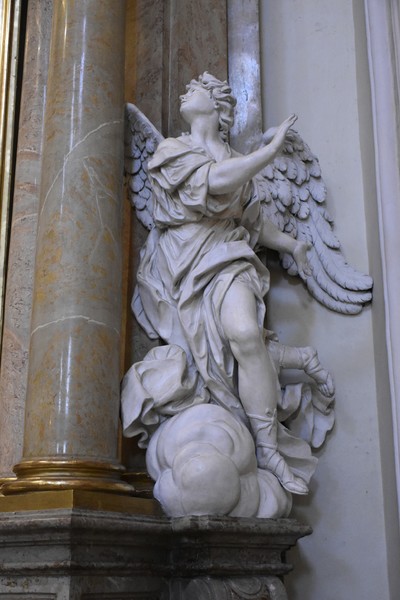
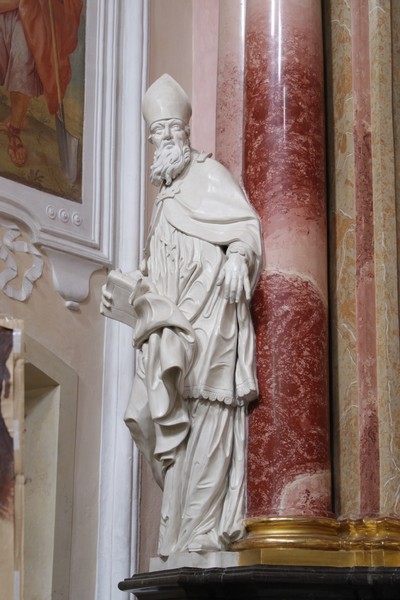
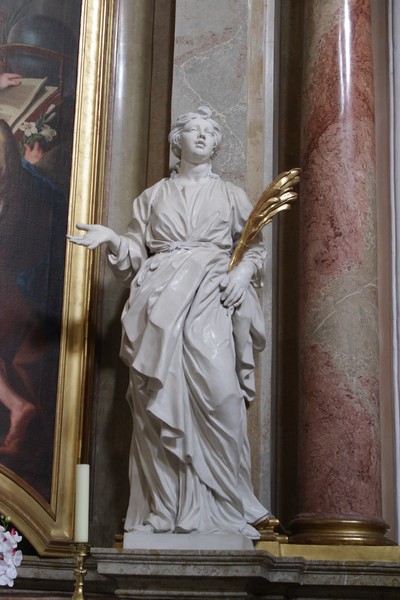
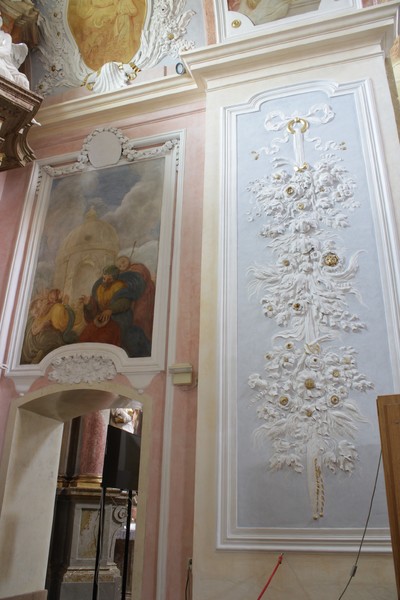
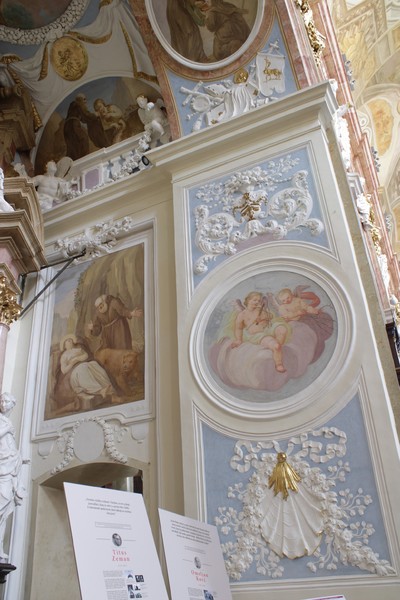
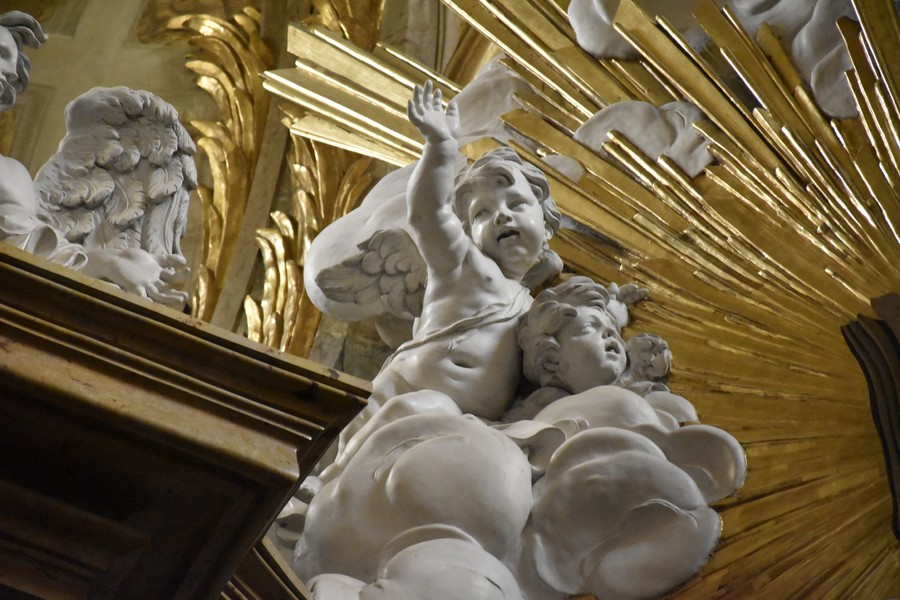
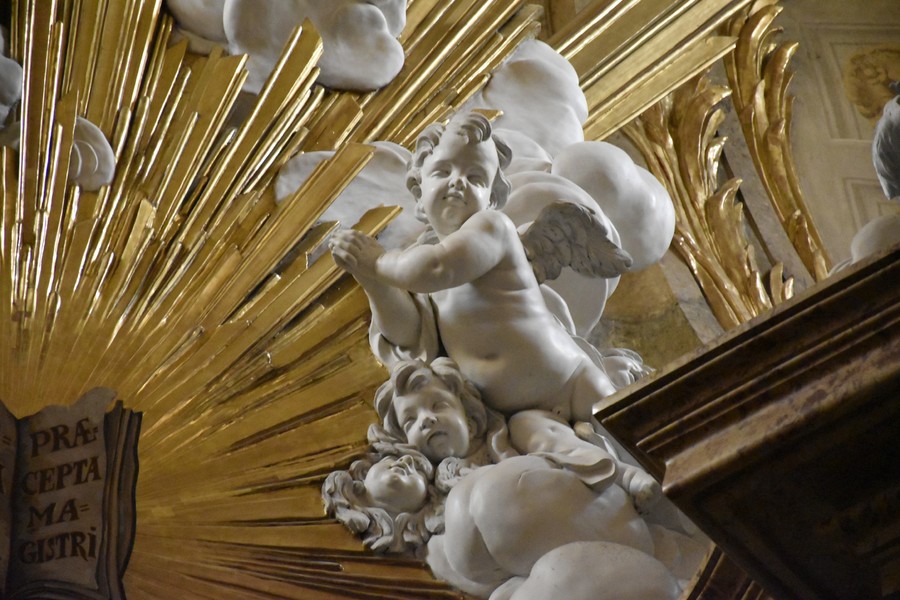
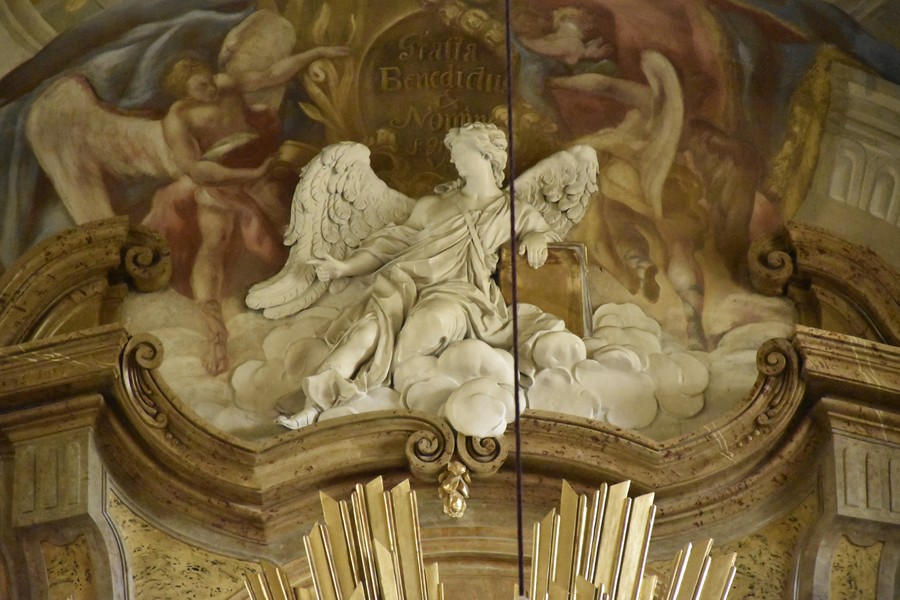
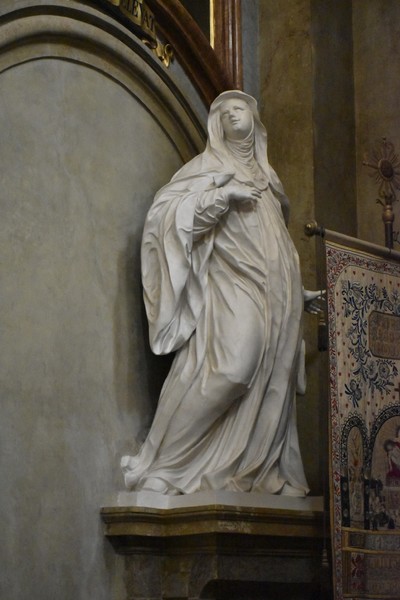
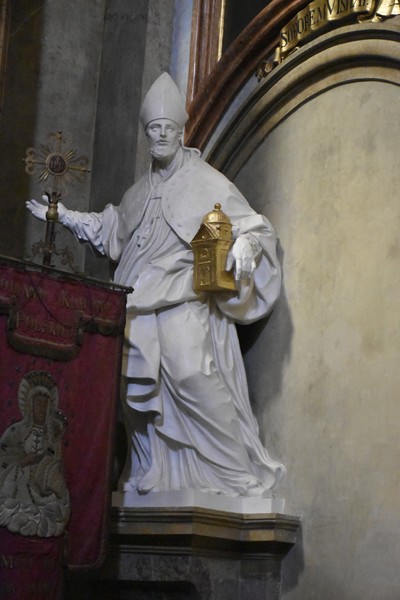
The side chapels feature altars with architectural structures composed of columns (Fig. 23), enriched with angels, putti, and swirling clouds above the trabeation, seamlessly blending with the adjacent walls (Fig. 24, 25, 26, 27, 28, 29, 30, 31, 32, 33, 34, 35, 36, 37, 38, 39). While dynamic, the figures maintain a symmetrical composition, with limbs forming subtle visual lines. Ornamental motifs such as foliage, garlands, shells, and stucco ribbons with bows and tassels embellish the decoration of cartouches and panels (Fig. 40, 41, 42, 43, 44, 45). The distinction between Fontana’s craftsmanship and that of his workshop is evident in the execution: his works stand out for their three-dimensionality and the lightness of the drapery, whereas those by his workshop appear flatter and heavier.