BASILICA OF THE VISITATION OF THE VIRGIN MARY WITH THE ADJOINING CLOISTER AND THE CHAPEL OF THE NAME OF THE VIRGIN MARY
Basilica of the Visitation of the Virgin Mary with the adjoining Cloister and the Chapel of the Name of the Virgin Mary
nám. Sadové 1
779 00 Olomouc 9
Czech Republic
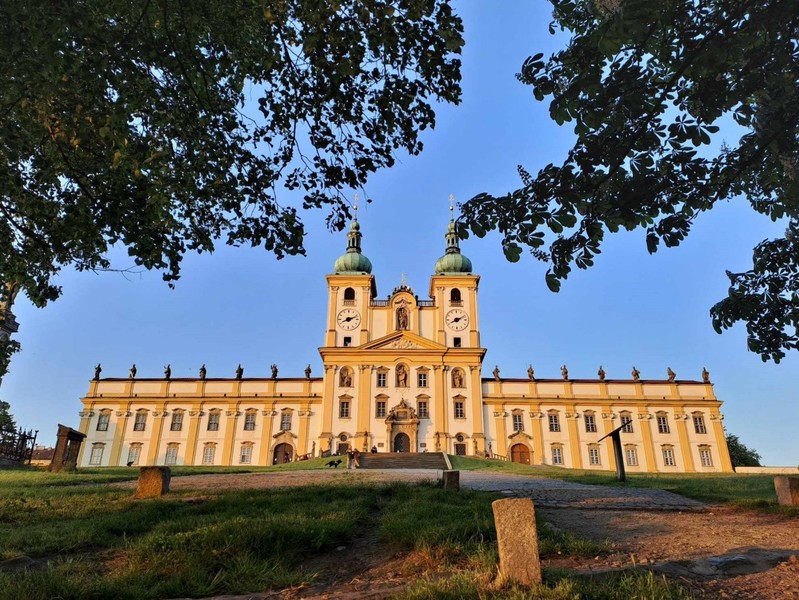
In 1629, Jan Andrýsek promoted the construction of the first chapel at Svatý Kopeček (then known as Svatá Hora), inspired by a vision of the Virgin Mary1. With the support of Abbot Jiří Leodegar and Prior Maxmilian Pracher, the chapel was consecrated on 3 April 1633. Destroyed during the Swedish occupation in the Thirty Years’ War, it was rebuilt in 1646 with a cruciform plan. In 1669, Abbot Bedřich Sedlecius commissioned the construction of the Church of the Visitation of the Virgin Mary, designed by architect Giovanni Pietro Tencalla (1629–1702) that was completed in 1679. The church features a longitudinal nave, eight side chapels, a central transept, and a dome. It was consecrated in 1679 by Bishop Karl II von Liechtenstein-Castelcorn (1624-1695).
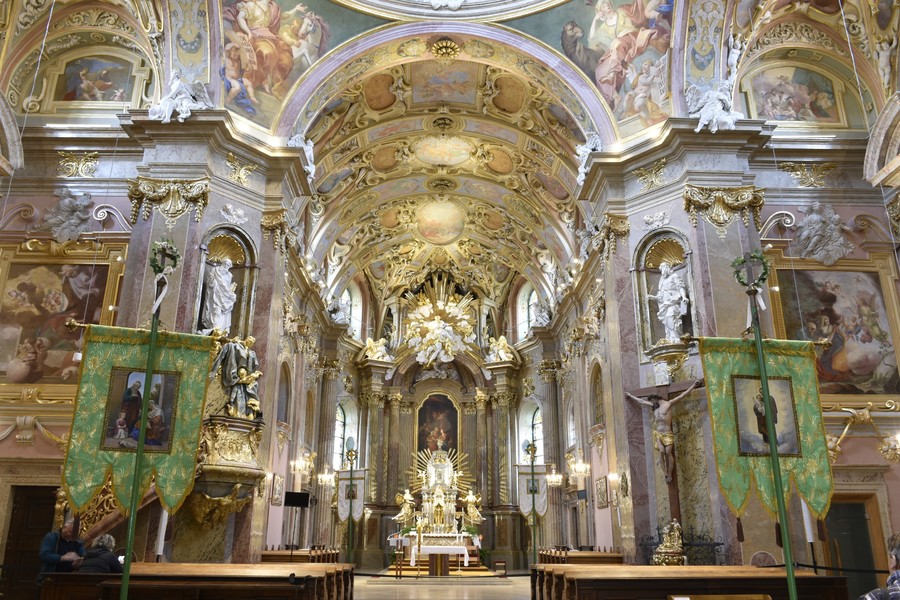
In the 18th century, the towers were lowered by twenty metres, and a new access path was created (Fig. 1)2. Between 1721 and 1732, Baldassarre Fontana oversaw an interior renovation3 (Fig. 2). Ludwig Sebastian Kaltner (documented from 1722 to 1741) modified the façade between 1730 and 1731. In the 20th century, the complex underwent various interventions, including a reconstruction between 1930 and 1932, repairs after the World War II, and restorations from the 1990s onwards. In 1990, the basilica was given back to the Premonstratensian Order and was elevated to the status of a minor basilica by Pope John Paul II (1920-2005) in 1995.
Presbitery


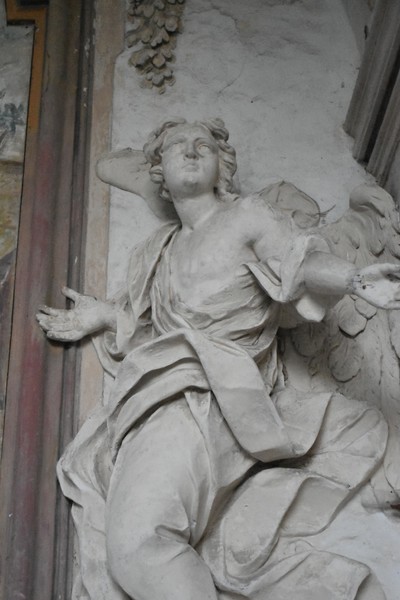
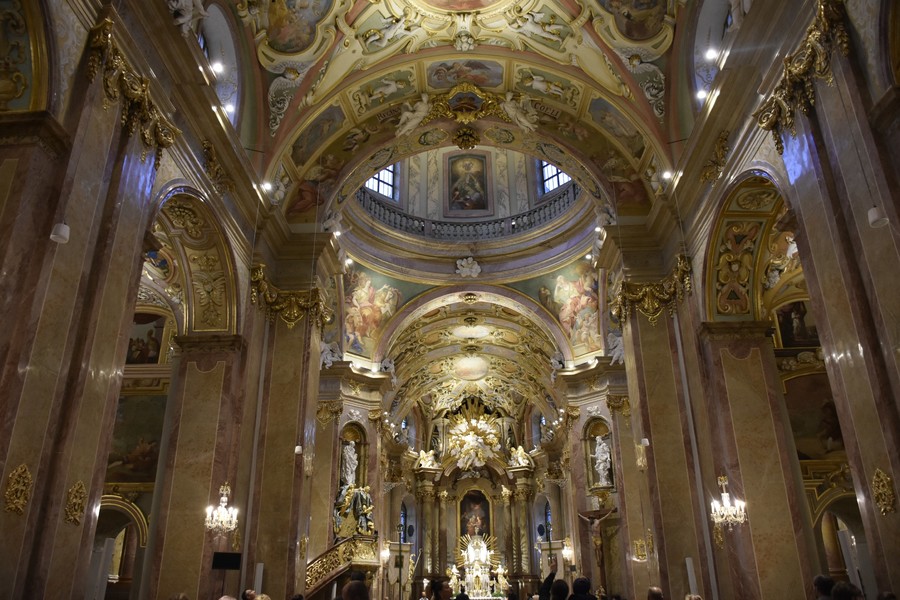
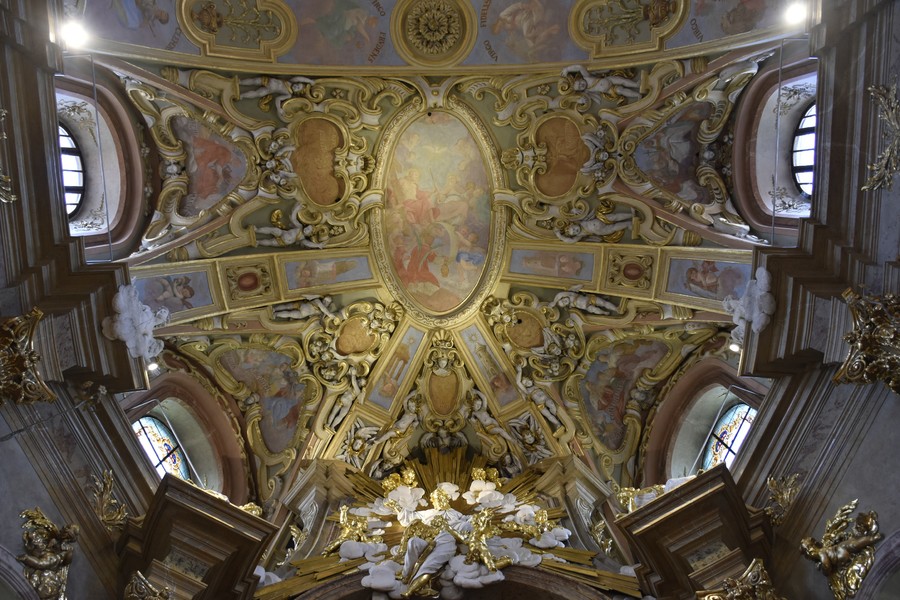
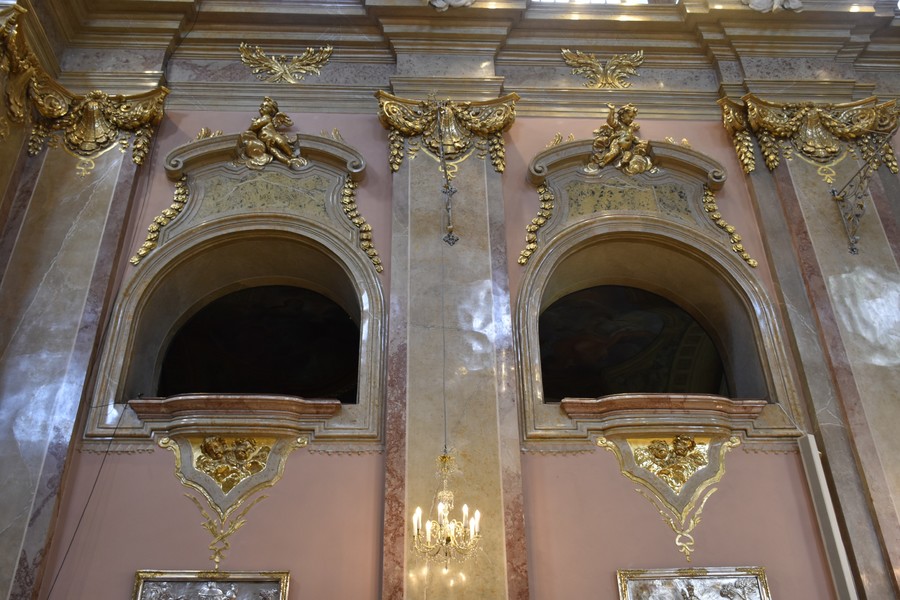
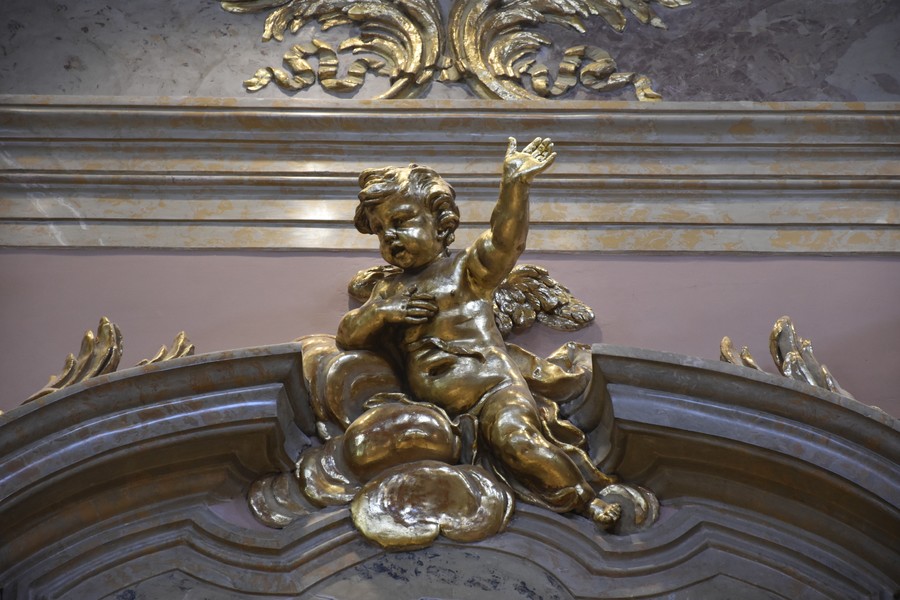
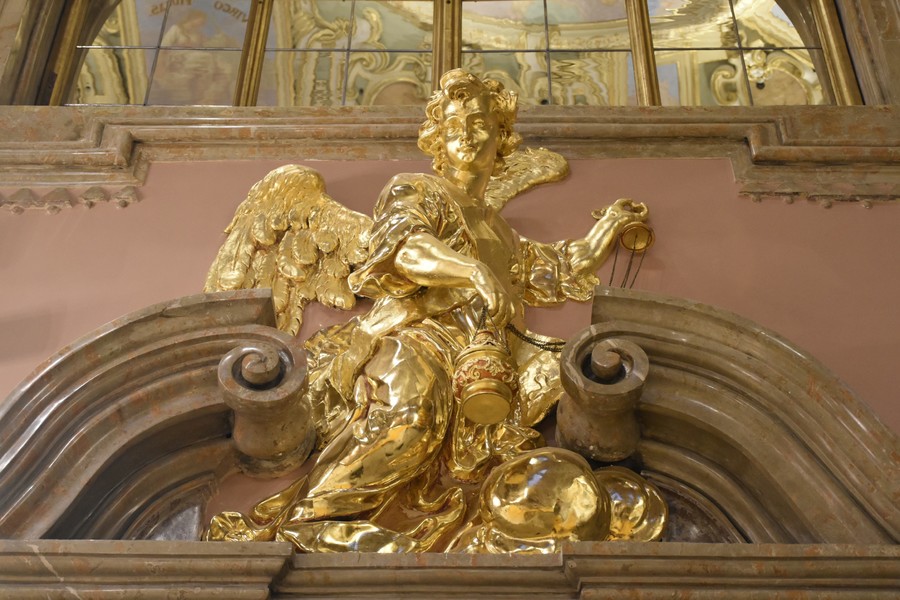
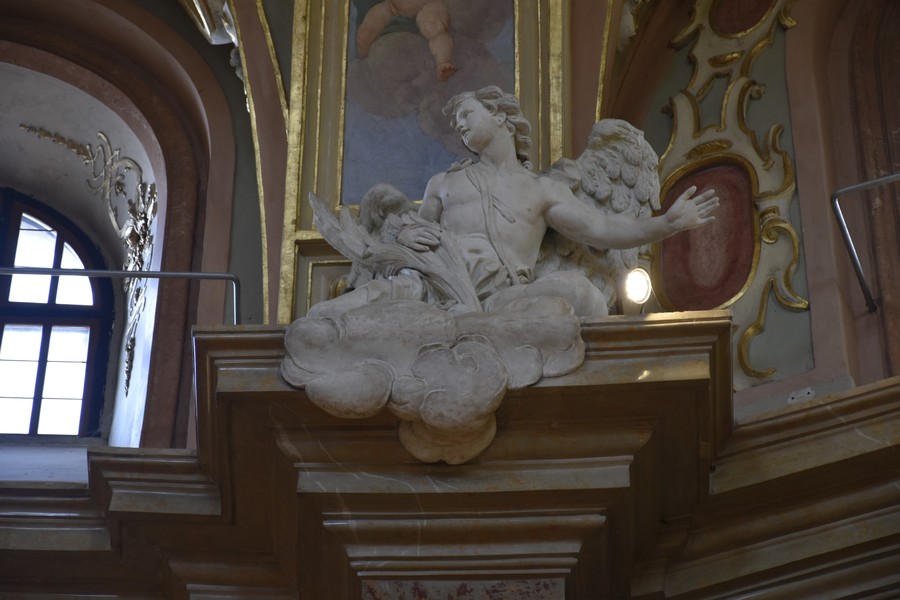
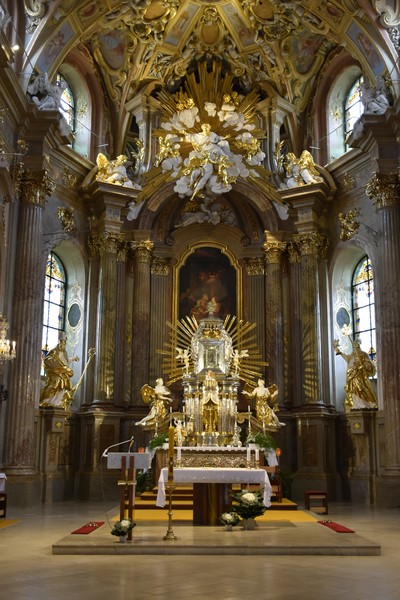
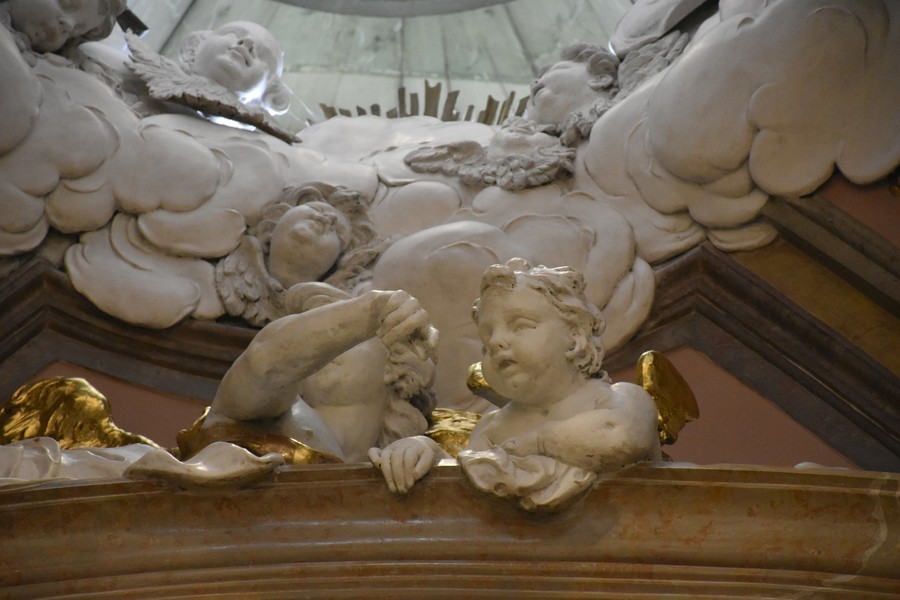
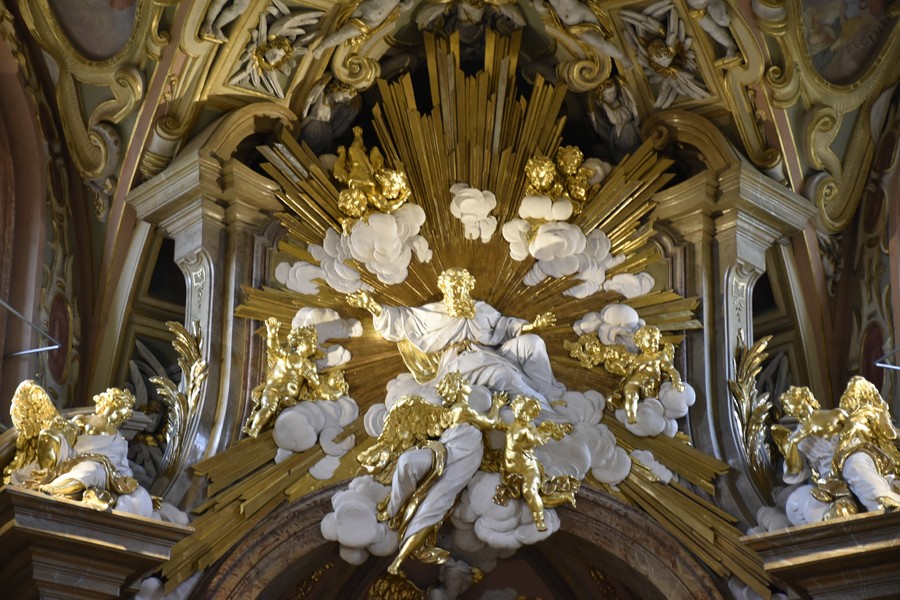
The church’s presbytery features a barrel vault divided into three bays, decorated in two phases with elaborate stuccoes (1675–79 by Castelli and 1722–32 by Fontana) (Fig. 3, 4, 5). The sculptural decoration includes rosettes and figures, with frames embellishing the windows and painted surfaces. According to Fontana’s design, sculpted angels were added along the main cornice (Fig. 6, 7, 8). The main altar is a monumental structure with columns and a triangular pediment, adorned with a stucco composition depicting a gilded glory with God the Father at the centre, surrounded by angels and cherubs (Fig. 9, 10, 11). The gilding of the stuccoes enhances the scene with greater richness and visual depth.
Transept


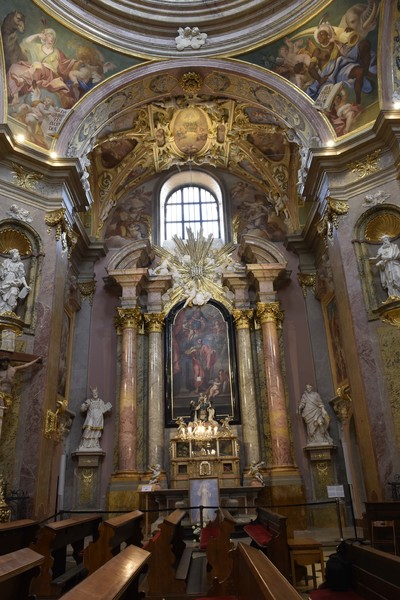
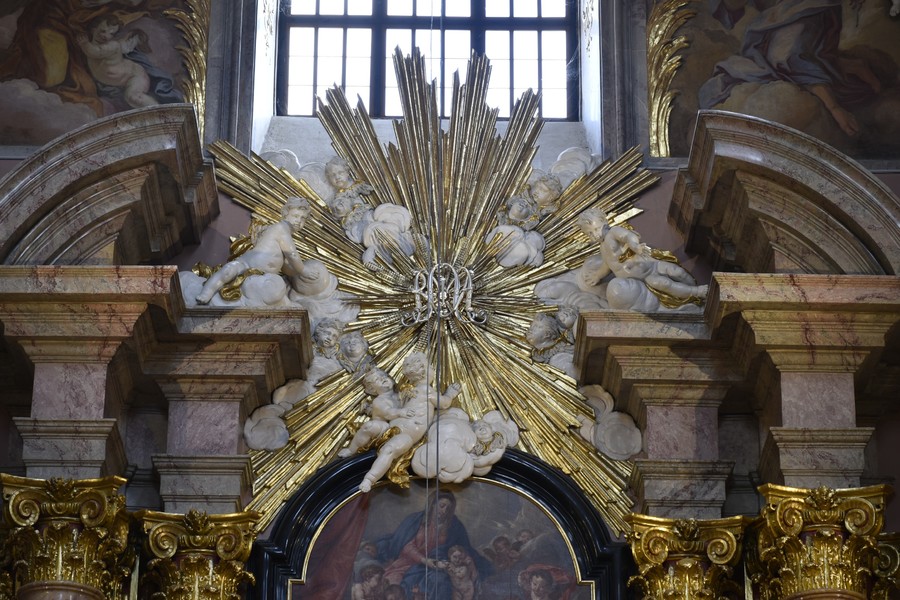
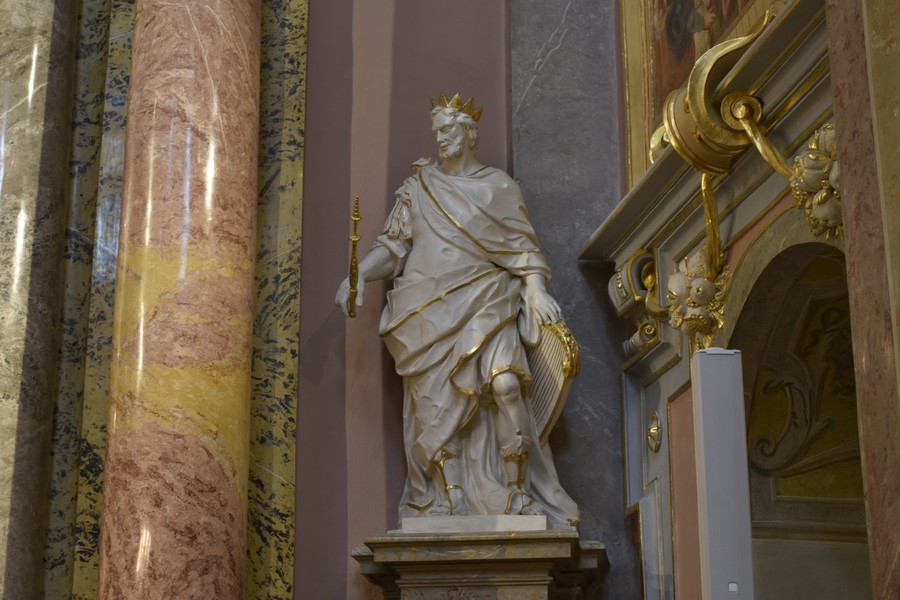
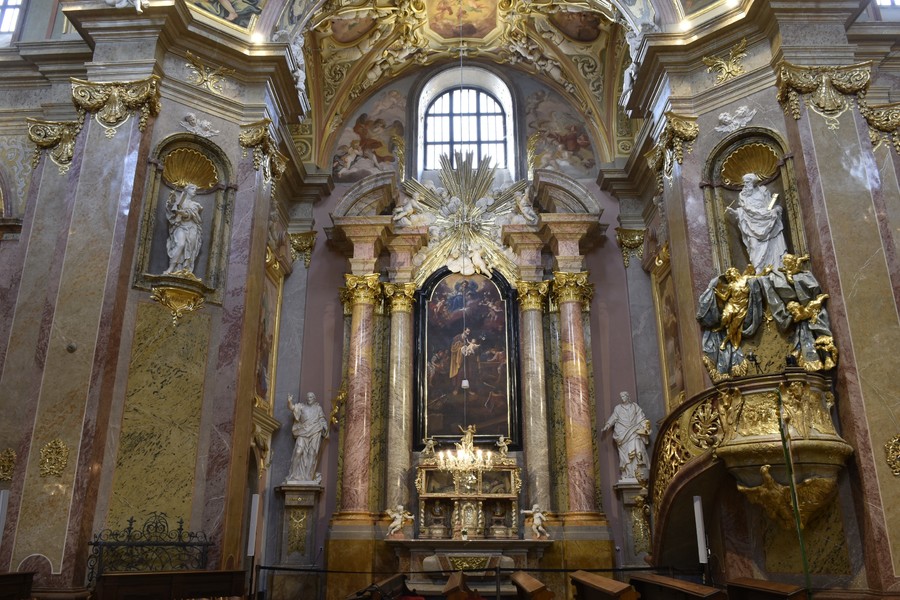
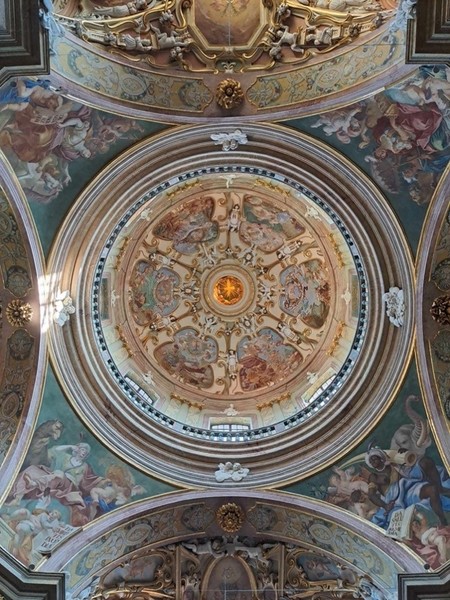
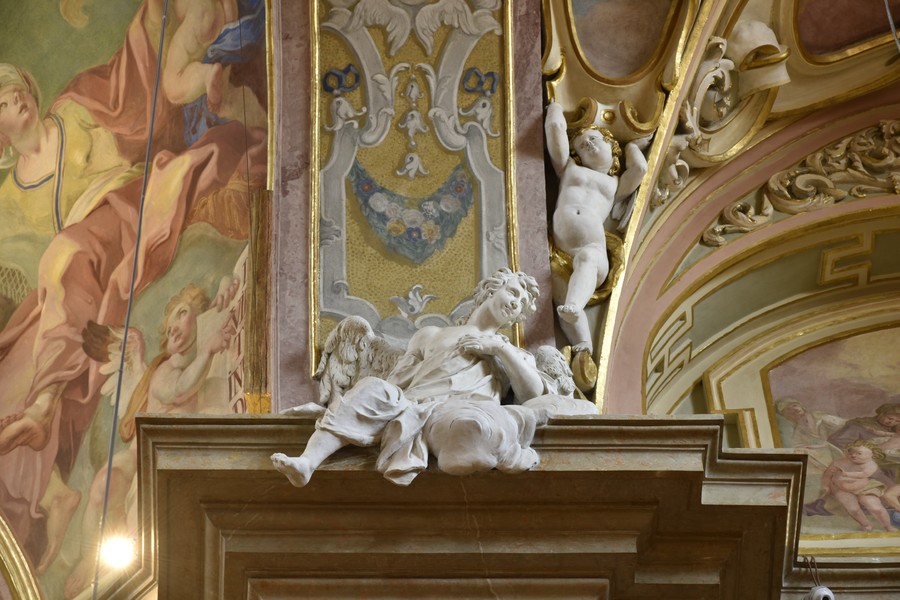
The stucco decoration of the transept was executed in two phases. The structure includes a dome with a drum and pendentives, flanked by the Chapel of Saint Joachim to the south (Fig. 12, 13, 14) and the Chapel of Saint Joseph to the north (Fig. 15). The dome, set on a square plan, transitions into the surrounding spaces through four triumphal arches adorned with rosettes and ornamental motifs (Fig. 16). The cornice is enriched with eight imposing statues of angels, continuing the angelic theme of the presbytery (Fig. 17).
Nave


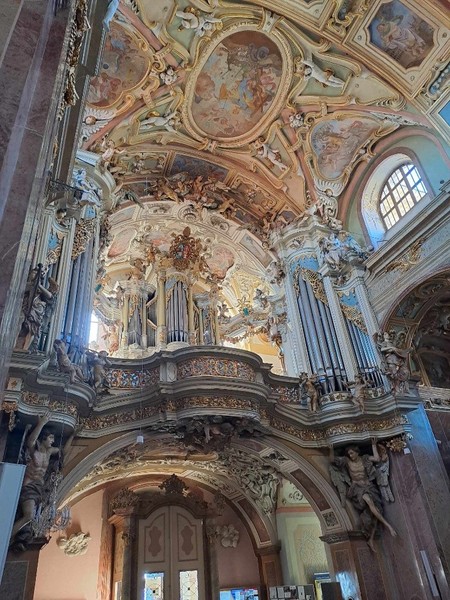
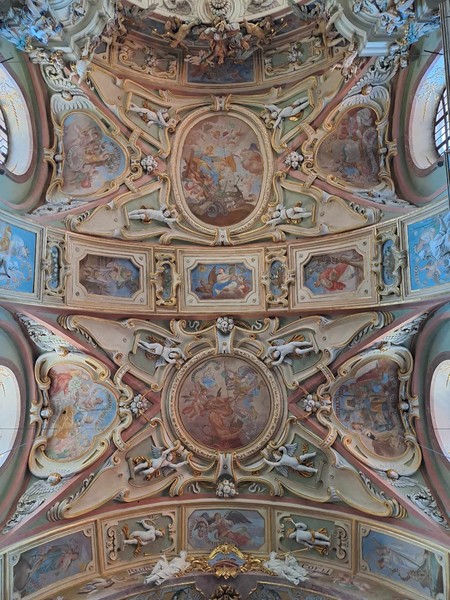
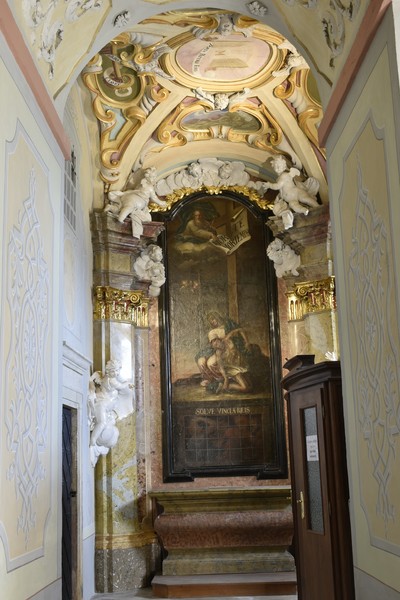
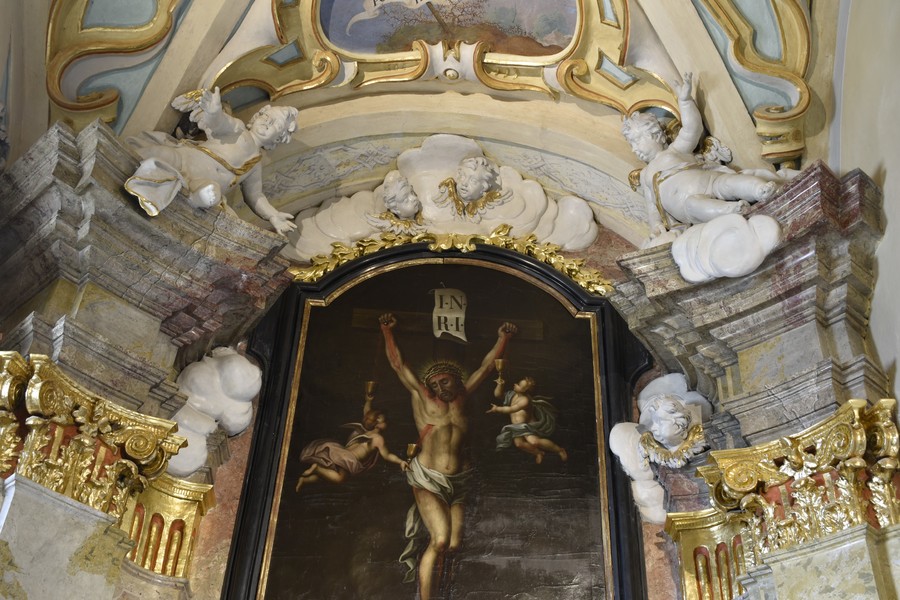
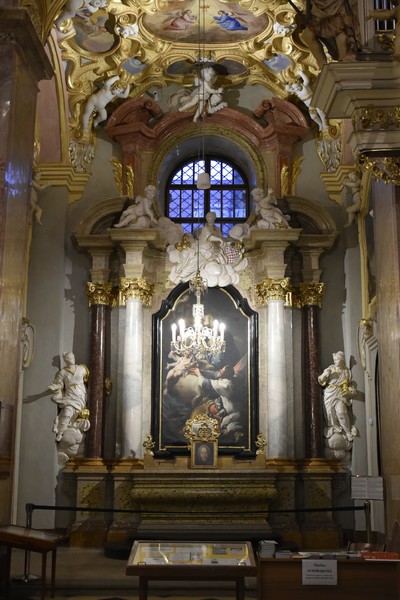
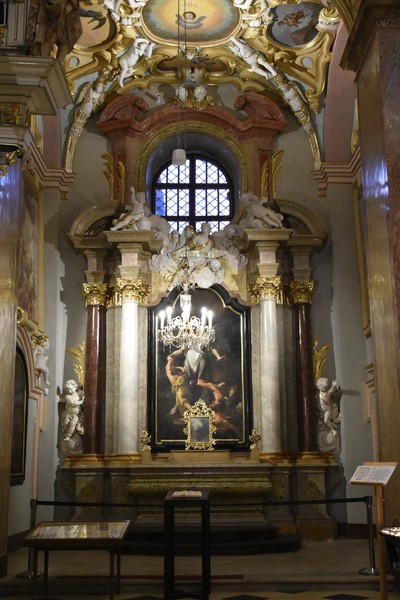
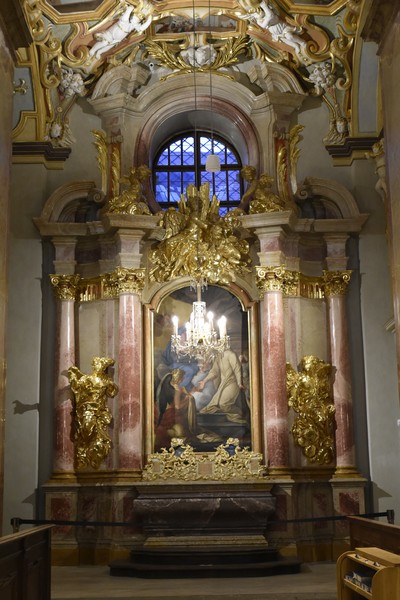
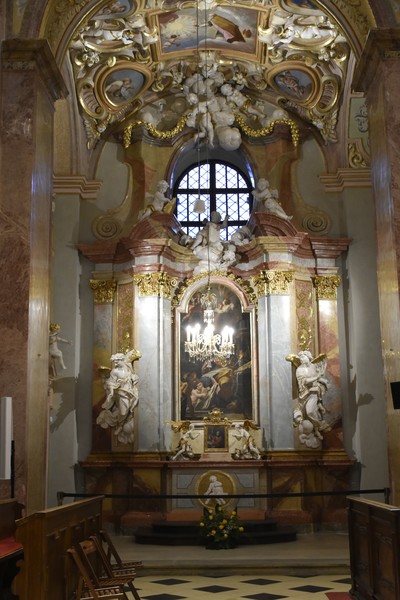
The stucco decorations of the nave, crafted by Fontana and his workshop, reflect the style of the presbytery (Fig. 18, 19). Angels adorn the cornice, while the Ionic capitals of the pilasters feature shell motifs and festoons. Fontana also oversaw the sculptural decoration of the side altars dedicated to Our Lady of Sorrows, the Most Precious Blood of Christ, Saint Pauline, the Guardian Angel, Saint Norbert, and Saint Augustine (Fig. 20, 21, 22, 23, 24, 25).
Chapel of the Name of the Virgin Mary

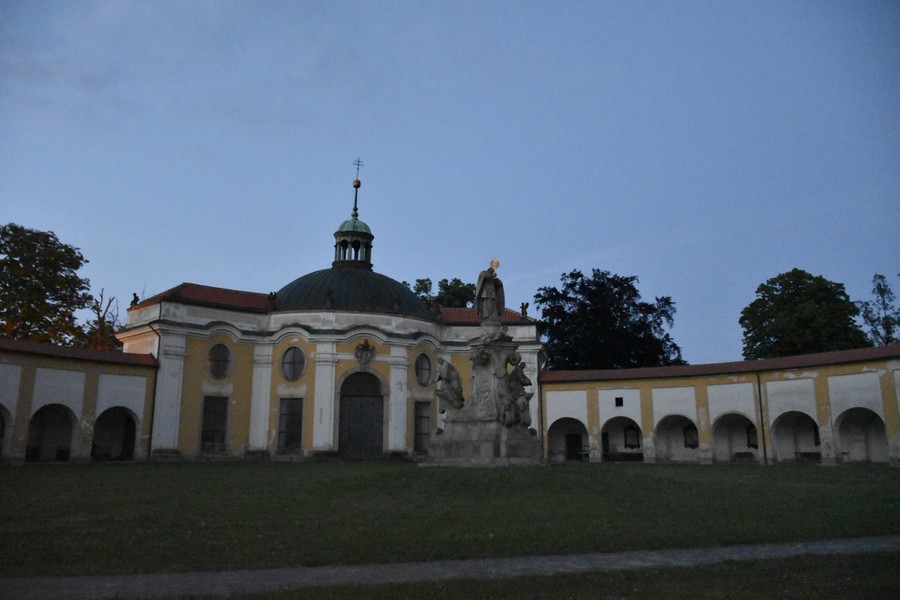
The Chapel of the Name of the Virgin Mary is situated on the eastern side of the basilica and is connected to the pilgrimage complex via the ambulatory (Fig. 26). The stucco decorations are concentrated on the altar, which consists of fluted columns framing a central relief depicting the celebration of the Name of the Virgin Mary. The sculptural composition includes figures of angels and cherubs amidst clouds, with gilded elements.
Chapel of Saint Peter and Chapel of Saint Mary Magdalene