CHURCH OF THE ASSUMPTION OF THE VIRGIN MARY
Church of the assumption of the Virgin Mary
Kostelní 2 č.p. 16/2
682 01 Vyškov (District of Vyškov)
Czech Republic
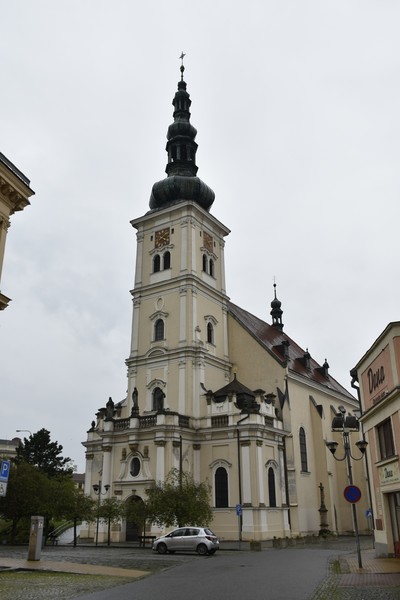
The parish of Vyškov and its church are first documented in 1328, when Bishop Jindřich III Berka of Dubá affiliated it to the Olomouc Deanery (b.-1333)1. The town suffered two fires, in 1423 and 1464 and a new late-Gothic church was subsequently rebuilt, consecrated in 1496 (Fig. 1). In 1672, the Chapel of St. Odile was added, commissioned by the Wroclaw canon Dean Jan Kašpar Hauser (b.-1690) and approved by Olomouc Bishop Karl Liechtenstein-Castelcorno (1623-1695). The decoration of the chapel, completed in 1692, was carried out by the workshop of Baldassare Fontana (1661-1733) for the stucco work and by Jonas Drentwett (1656-1736) for the wall paintings. Between 1928 and 1930, the chapel was restored thanks to the Regional Museum Society in Vyškov. After 1948, interest in maintenance faded and no further restorations were recorded until 1990.
Chapel of St. Odile


The square-plan chapel is adorned with a stucco decoration attributed to the workshop of Baldassarre Fontana based on the correspondence between Bishop Karl Liechtenstein-Castelcorno and the governor of Vyškov Castle, dated 6 May 1692.
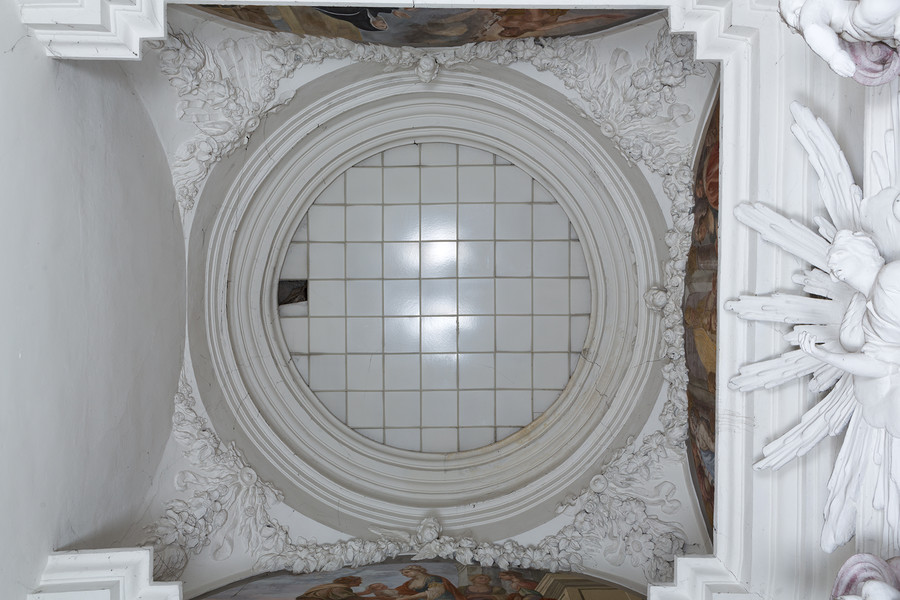
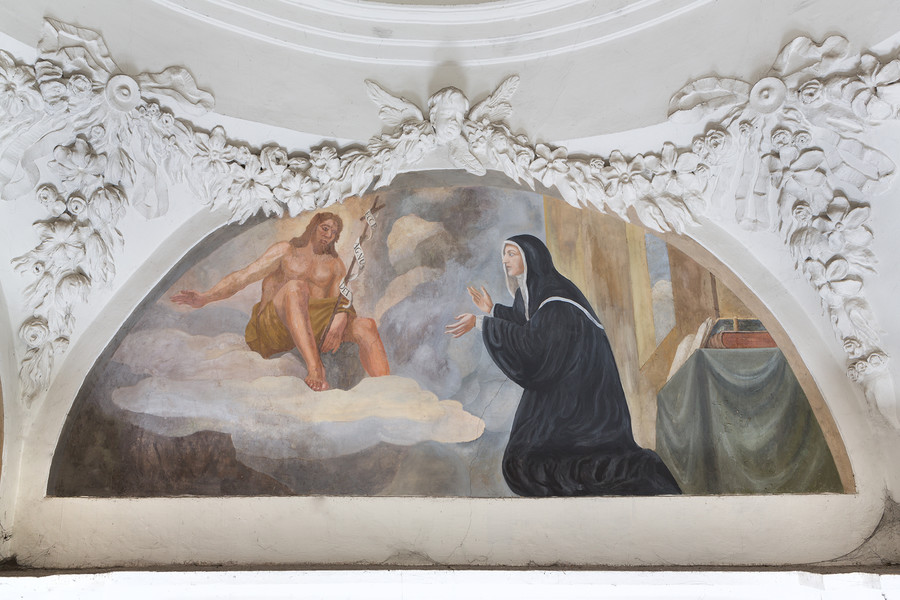
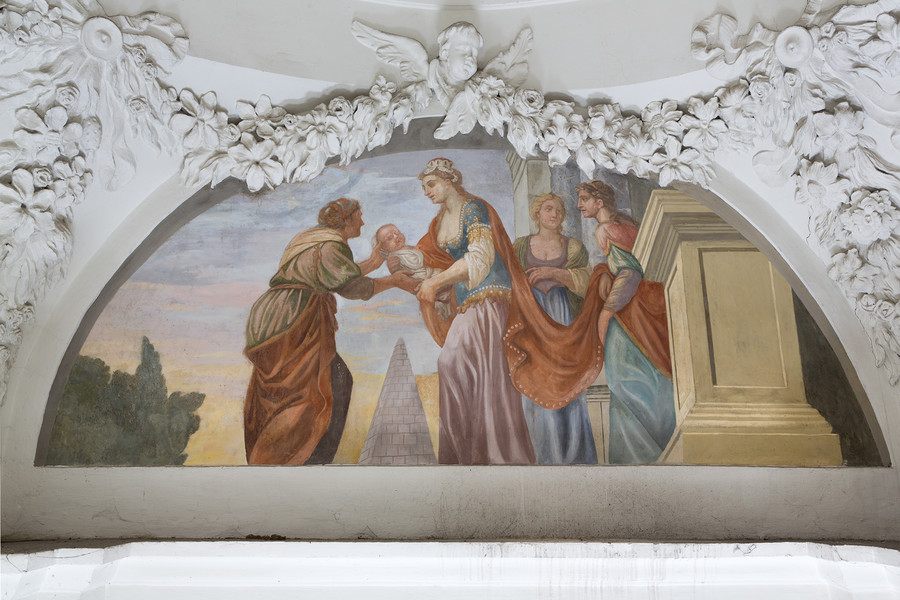
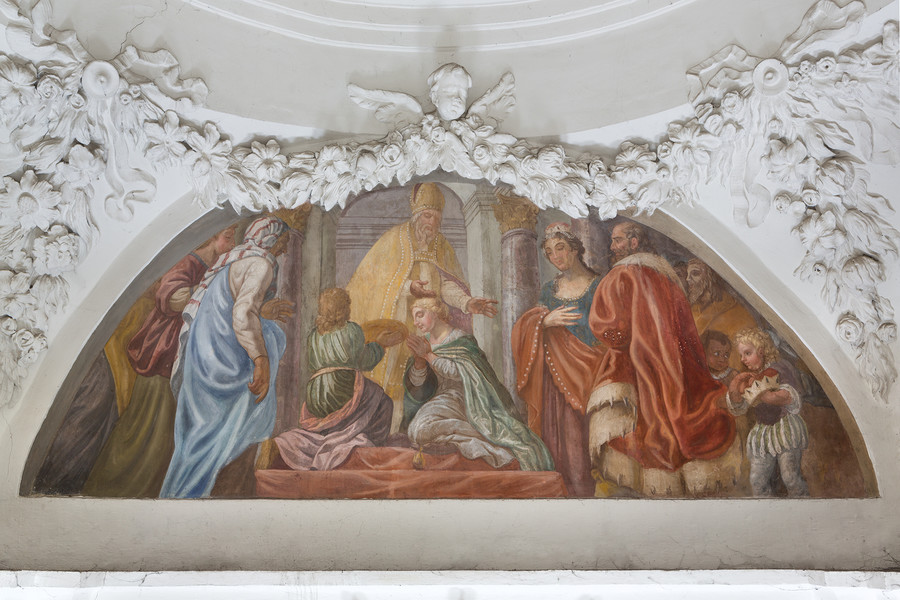
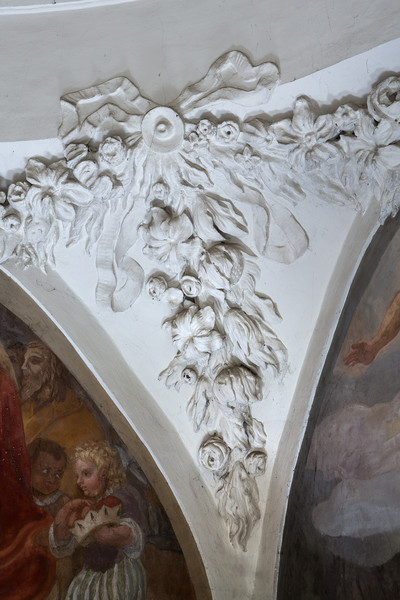
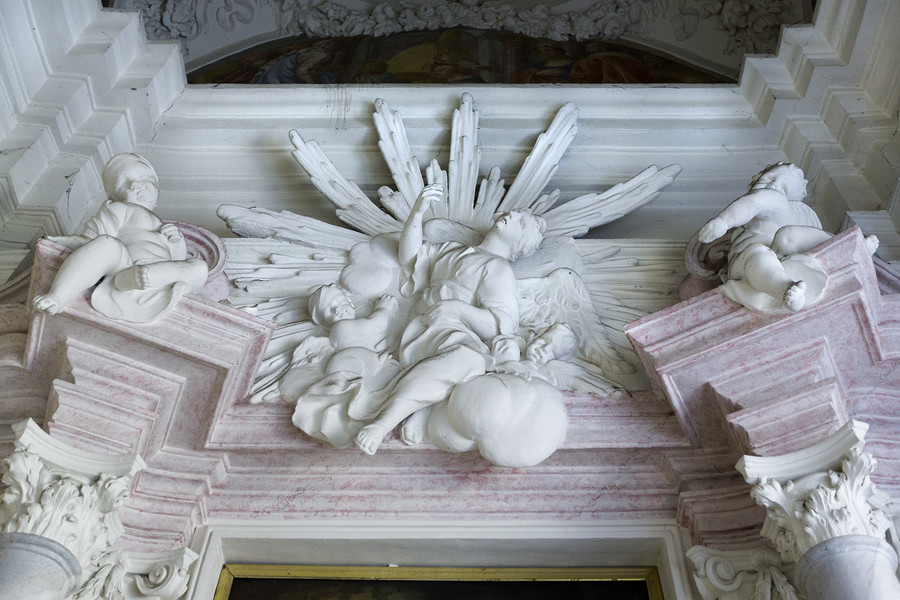
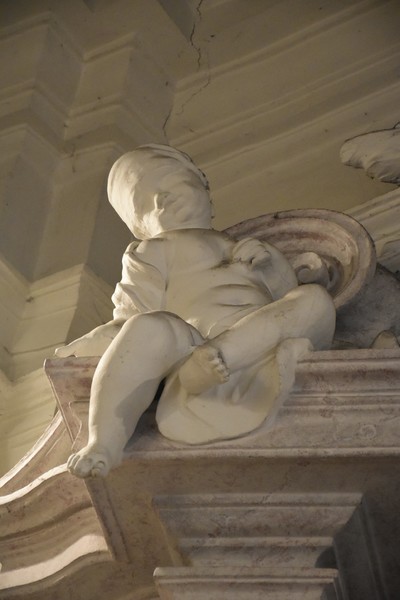
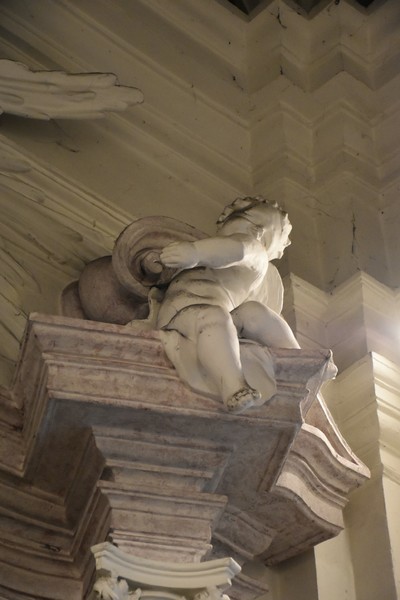
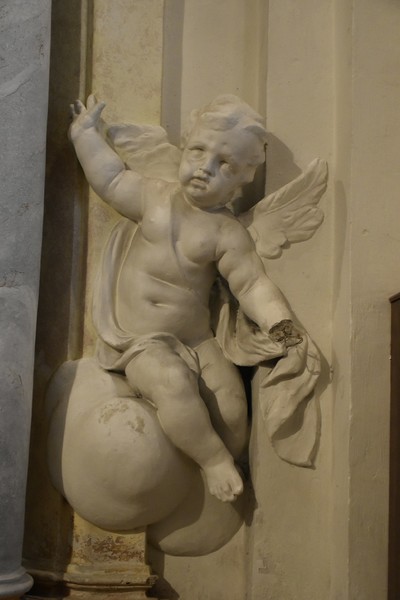
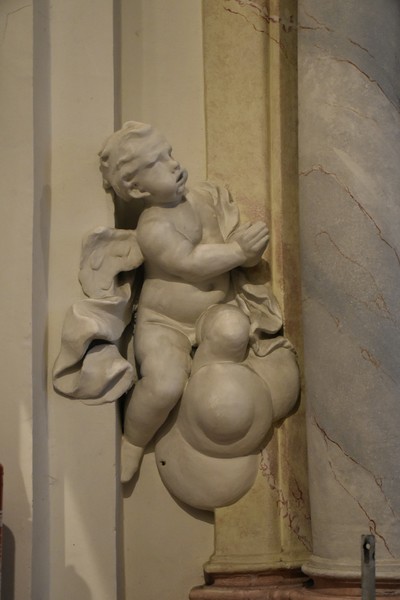
The chapel is crowned by a dome on pendentives with painted lunettes, framed by stucco festoons of leaves and flowers with cherubs on the north, south and east sides (Fig. 2, 3, 4, 5, 6)2. On the south wall, above a window, there are two putti on clouds holding open books. On the east wall is the main altar with a broken pediment, above which an angel sitting on a cloud is surrounded by rays of light (Fig. 7). The angel, leaning backwards with an ecstatic expression, is surrounded by a putto and cherubs, partly covered by his drapery who look towards the observer. On either side of the broken pediment are two seated putti leaning against the volutes behind, both of which let their legs hang over the edge of the cornice while sitting on a drape covering them (Fig. 8, 9). In the lower part of the altar on the outer sides are putti floating on clouds. The hands of the right figure are spread wide in an open gesture (Fig. 10). The putto on the left has his hands clasped and his head turned towards the altarpiece. Both figures are lightly covered by drapery (Fig. 11, 12).
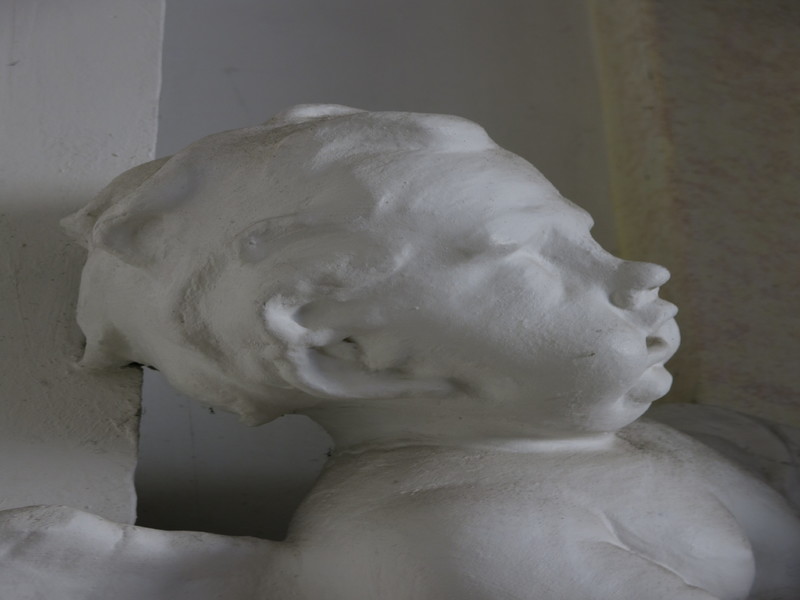
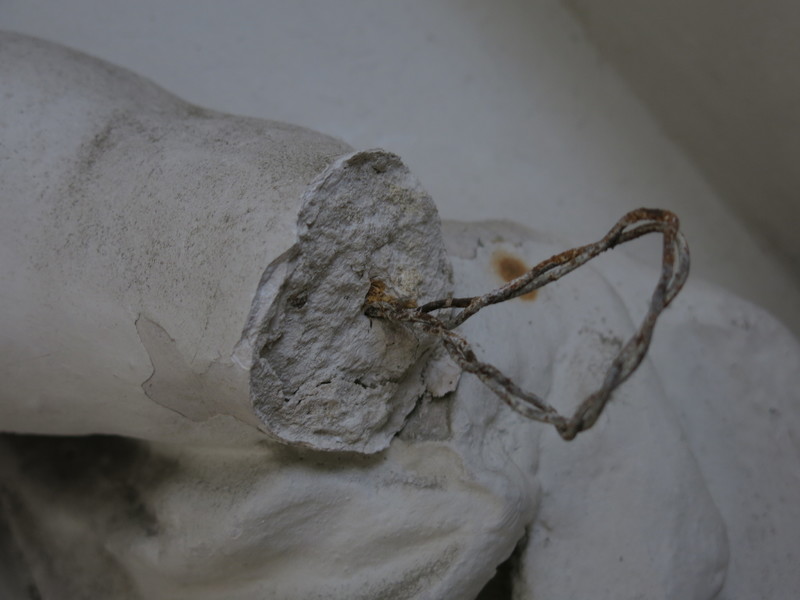
The stuccoes have been repainted several times, concealing the observation of details and anatomy. Two major interventions in the chapel are documented, one in 1928-1930 and the other in 1976-1990. In some localised areas, there are some missing parts, such as the hand of the right putto (Fig. 13).