CHURCH OF THE IMMACULATE CONCEPTION OF THE VIRGIN MARY
Church of the Immaculate Conception of the Virgin Mary
Sokolská 578
779 00 Olomouc
Czech Republic
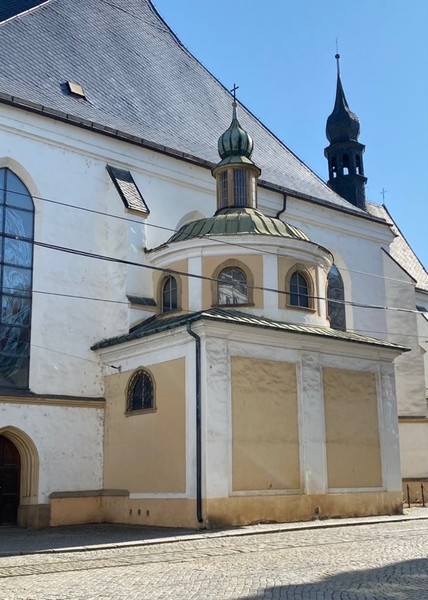
The former convent of the Olomouc Franciscans of St. Bernardinus was founded in 1453 on the initiative of Mikuláš Rys1. The church, dedicated to the Immaculate Conception of the Virgin Mary and St Bernard of Siena, represents the oldest consecration of this dedication in the Czech lands. In 1702, construction began on the replica of the Lateran Holy Stairs, which was consecrated in 1726. With the reforms of the 18th century, the Franciscan Order was abolished and their seat was occupied by the Dominicans of St Michael's Church in Olomouc, who made several changes to the building over the years. The chapel of the Holy Stairs was used as a school, while the chapel of St Anthony of Padua was rededicated to Our Lady of the Rosary (Fig. 1)2.
Chapel of St. Anthony of Padua


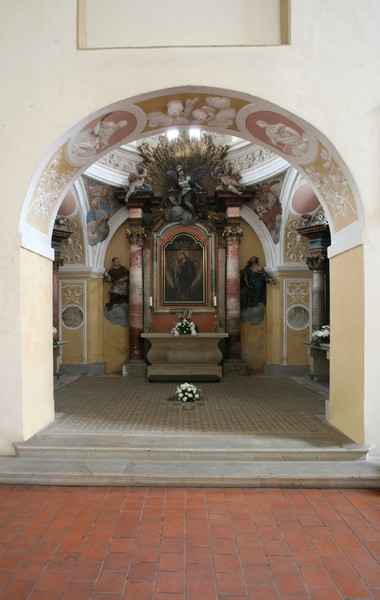
The Chapel of St. Anthony of Padua, located in the south aisle, is decorated with stucco work by Baldassarre Fontana (Fig. 2)3. Founded in 1675, it collapsed during a storm in 1700 and was rebuilt thanks to the contribution of the imperial salt clerk Karel Matěj Michael Březovský, as attested by a commemorative plaque. Abbot Norbert Želecký of Počeničky (1649-1709), who recommended the artists for the decoration, is another patron of the chapel. After the restoration of the existing altars, the chapel was consecrated in the autumn of 1709.
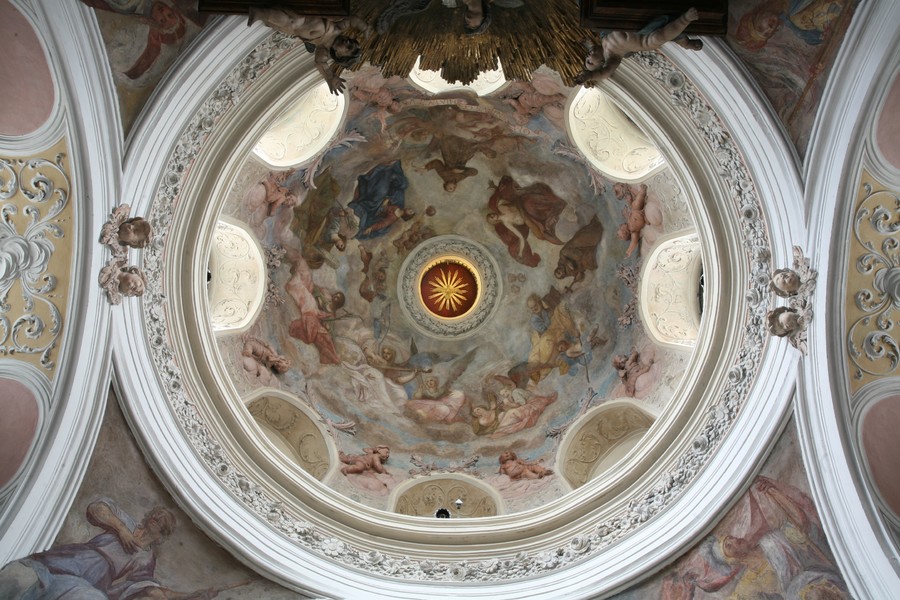
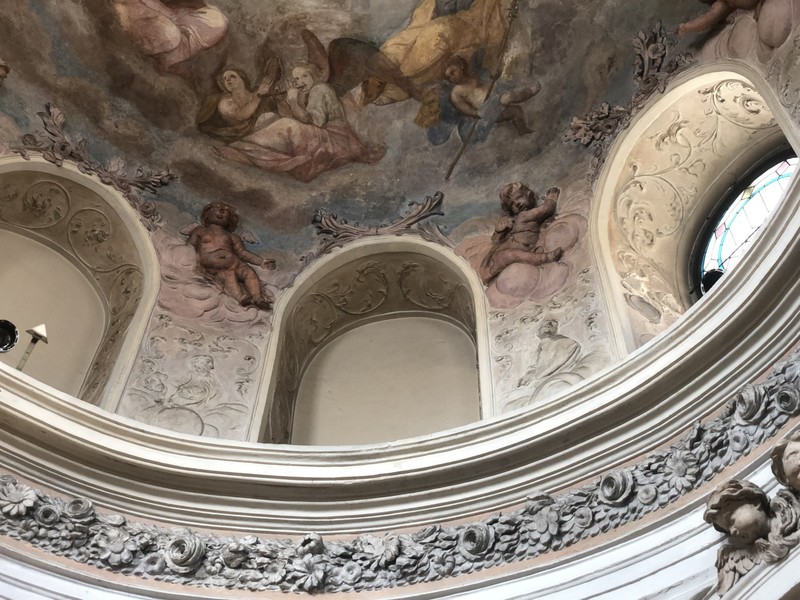
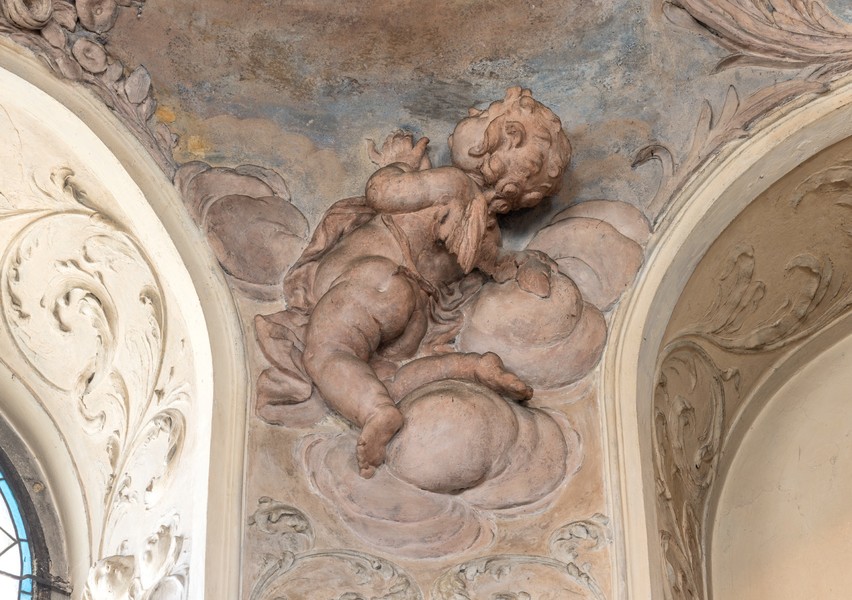
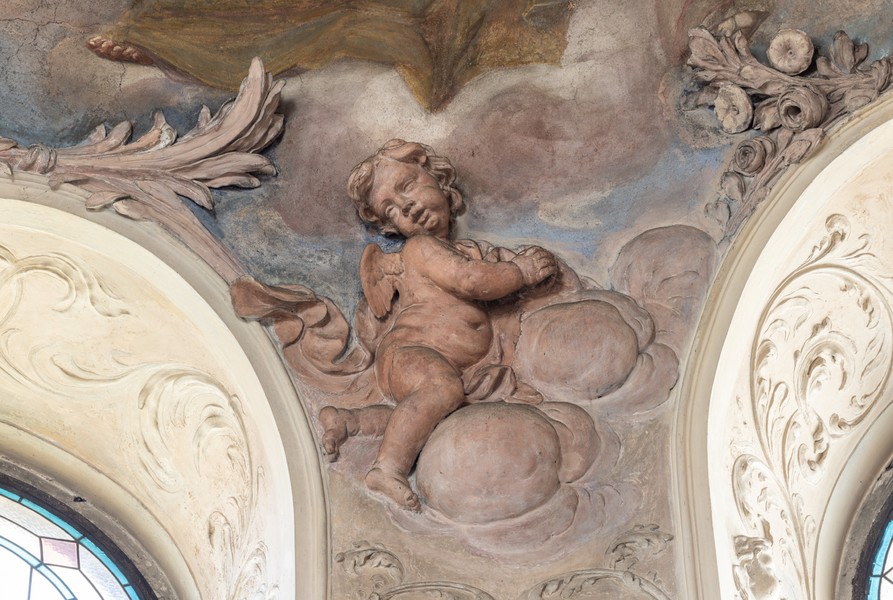
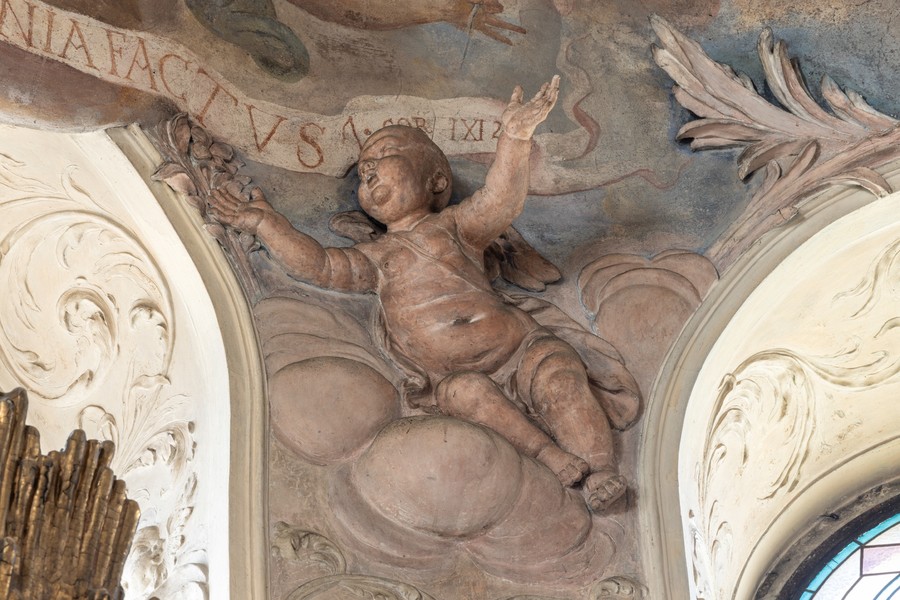
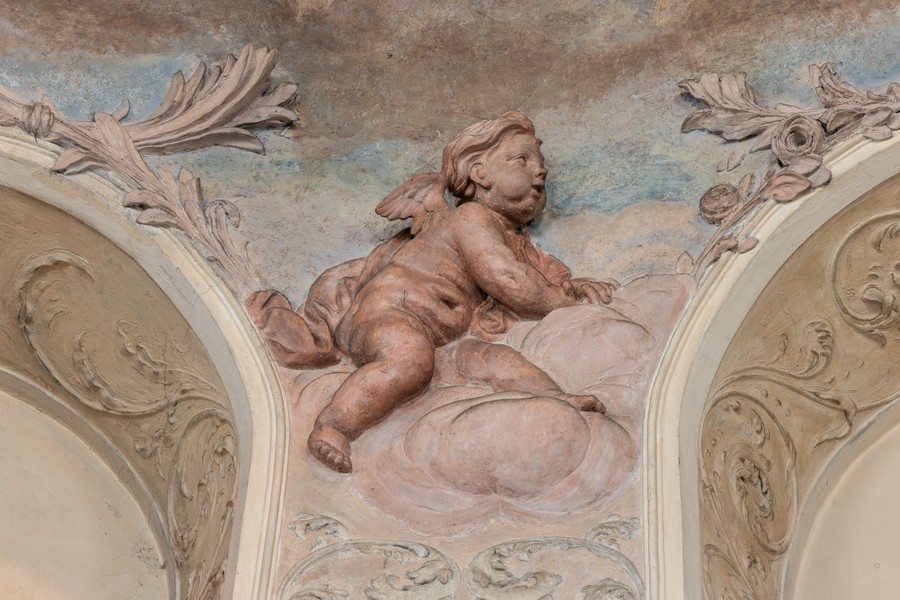
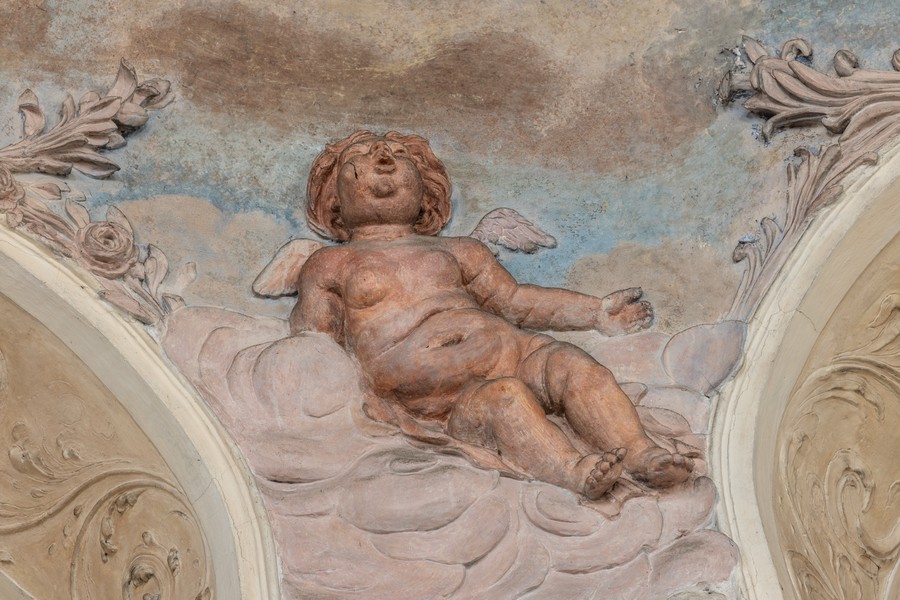
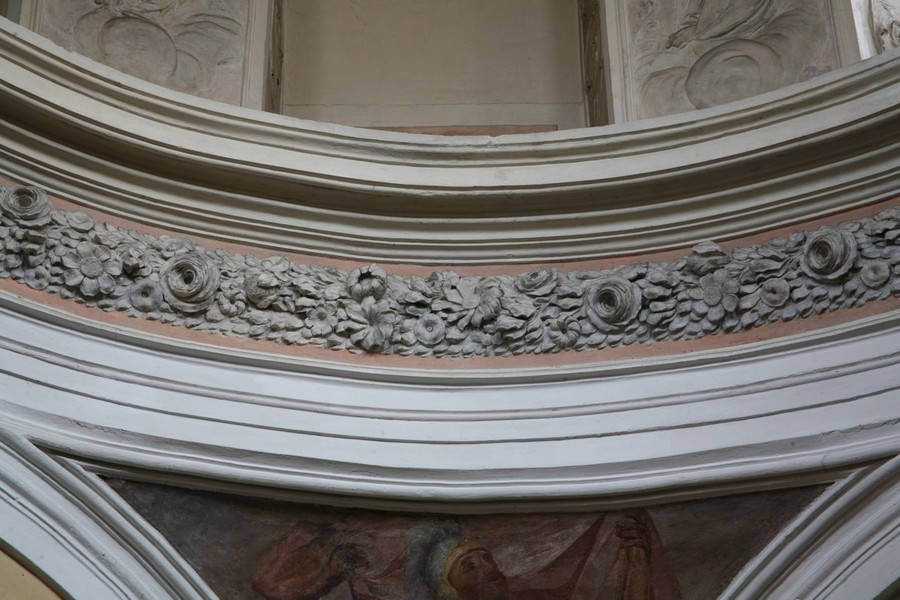
The chapel has a rectangular central hall covered by a dome decorated with stucco and wall paintings, centred on the Apotheosis of St. Anthony (Fig. 3). The dome is punctuated by eight niches with windows, adorned with acanthus leaves, at the base of which are reliefs depicting the four Evangelists and the four Fathers of the Church, each with their respective attributes (Fig. 4). The figures of the saints are accompanied by little angels that seem to float on the clouds, with a gradual modelling effect that perfectly complements the painting (Fig. 5, 6, 7, 8, 9)4. The tambour features a frieze with leaves, rose and sunflower flowers (Fig. 10).
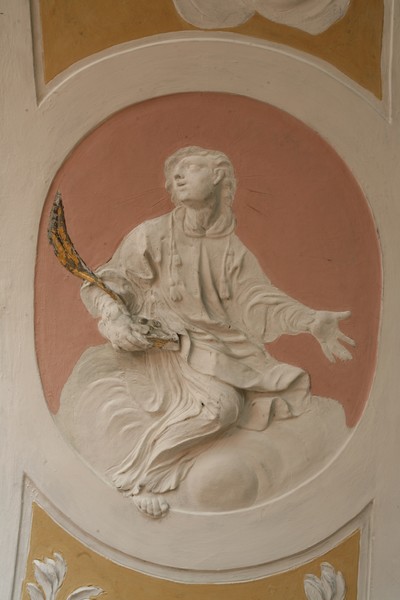
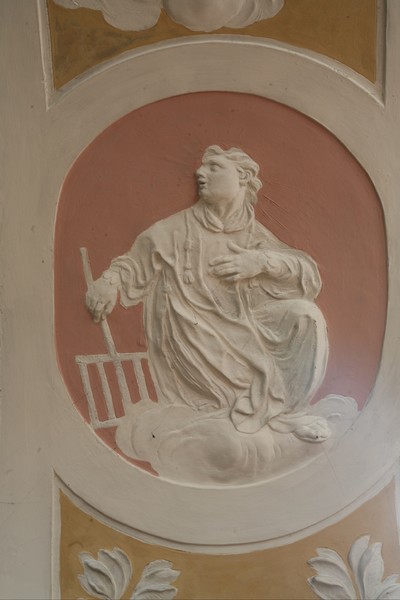
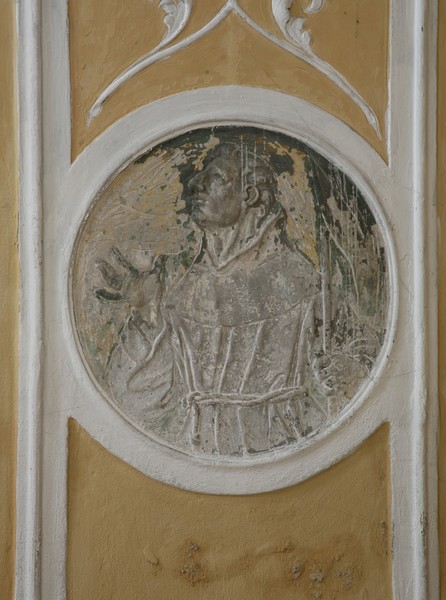
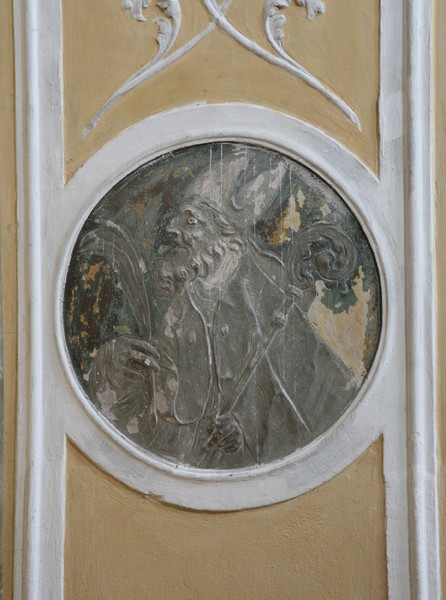
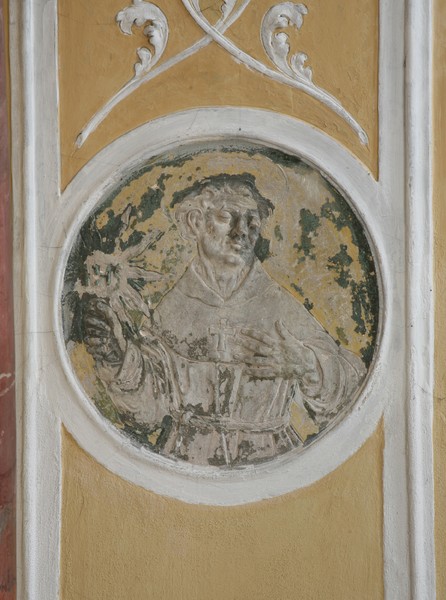
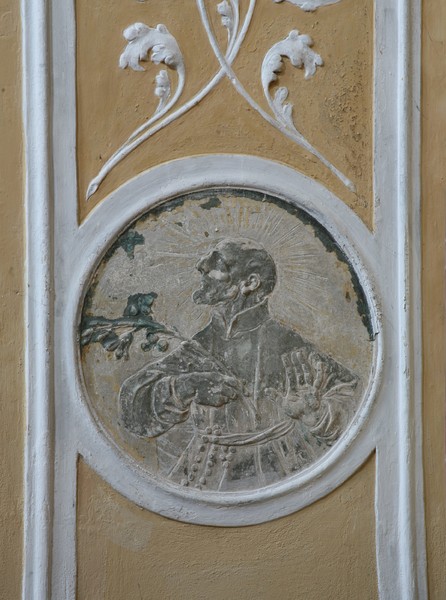
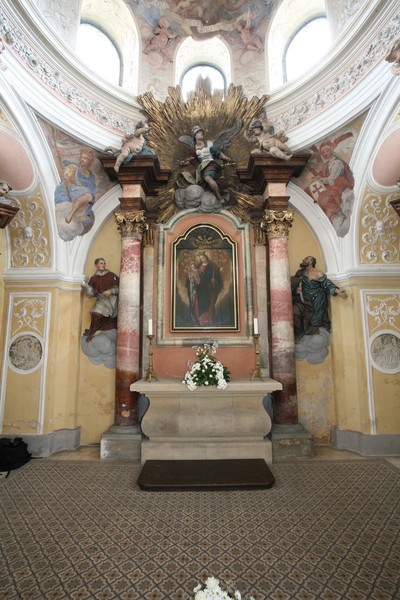
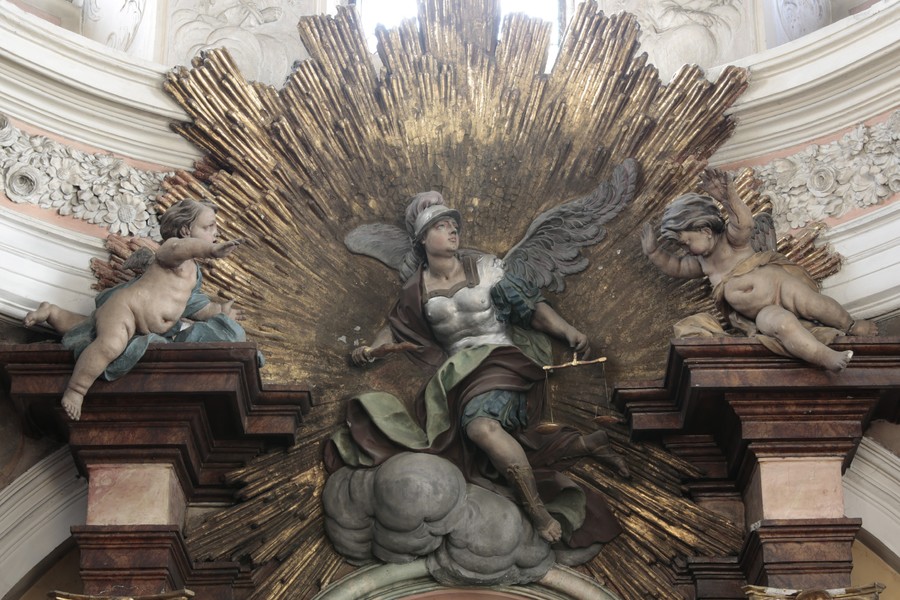
The sub-arch at the entrance to the chapel has a pair of winged heads on clouds and two medallions with bas-reliefs depicting St Stephen and St Laurence (Fig. 11, 12) mentre i sottarchi delle nicchie laterali hanno medaglioni in stucco con bassorilievi di santi francescani e decorazioni vegetali e figurative while the sub-archs of the side niches have stucco medallions with bas-reliefs of Franciscan saints and plant and figurative decorations (Fig. 13, 14, 15, 16). The side altars that complete the harmonious decoration of the chapel are dedicated to St Joseph and St John of Nepomuk, both made of stucco and rose-coloured artificial marble. On the sides of the aedicule-shaped high altar are two stucco sculptures of St Charles Borromeo in cardinal's robes and St Matthias, depicted as an elderly man with an axe (Fig. 17). Above the altar stands the figure of the Archangel Michael (Fig. 18), kneeling amidst clouds and holding a flaming sword and scales in his hand, in a gesture of protection and justice, as he looks upwards, where St. Anthony ascends to heaven.