CHURCH OF ST. ANDREW OF THE POOR CLARES
Church of St. Andrew of the Poor Clares
Ul. Grodzka 54
31-044 Cracow
Poland
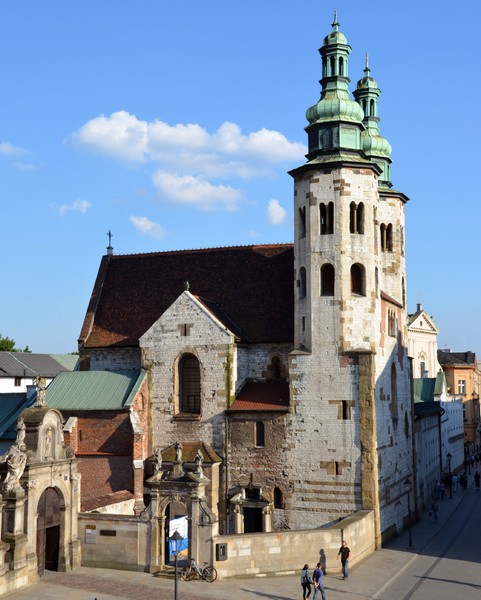
The first convent of the Poor Clares in Poland was founded in 1245 in Zawichost by Blessed Salomea, daughter of high duke Leszek I the White (1184/85-1227). After the second Mongol invasion in 1260, when most nuns were slaughtered, the convent was moved first to Grodzisko near Skała and then, before 1316, to Cracow next to St Andrew's Church (Fig. 1).
The church, built between 1079 and 1098, was refurbished under abbess Anna Eufrozyna Tyrawska (1693-1706). Galleries were added in the nave and transept, the crossing bay was covered by a blind dome, and an altar dedicated to Blessed Salomea in a niche in the chancel. The church was also furnished with the high altar tabernacle, stalls and wall textiles, a refectory was renovated and a Holy Sepulchre was built in the chapter house. In the 18th century, the high altarpiece, pulpit, organs and side altars were added. In 1947-1950, the church was rebuilt to give it a medieval appearance on the outside, but fortunately the inner decoration remained intact.
Interior


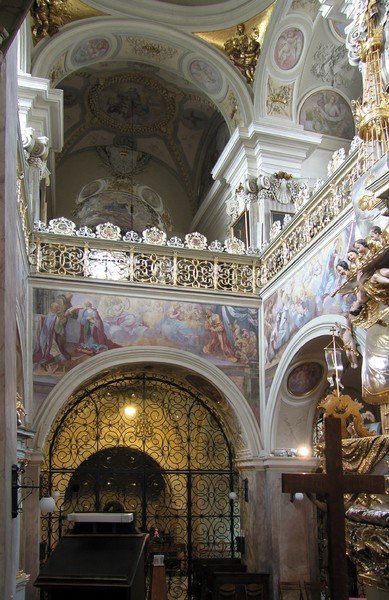
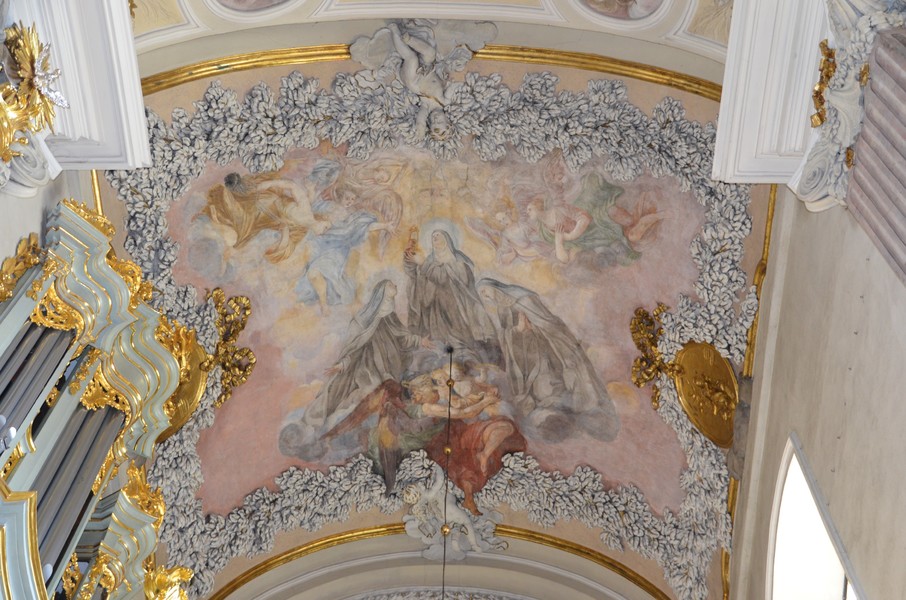
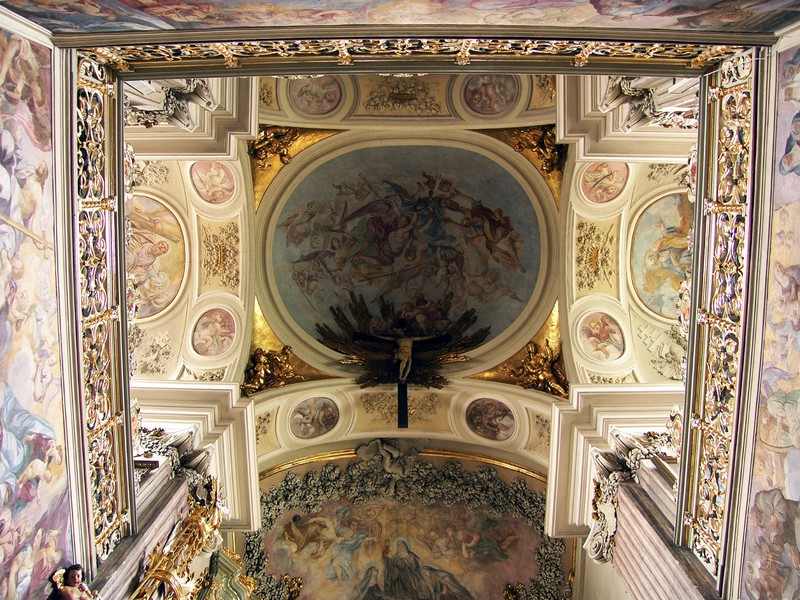
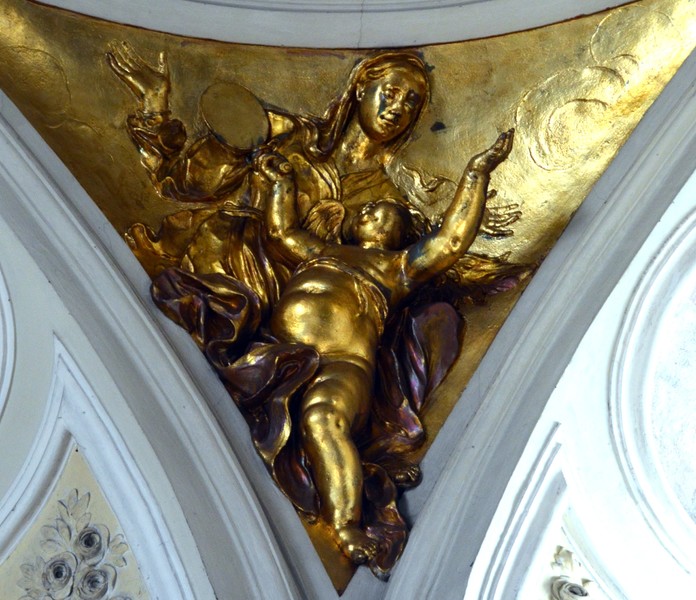
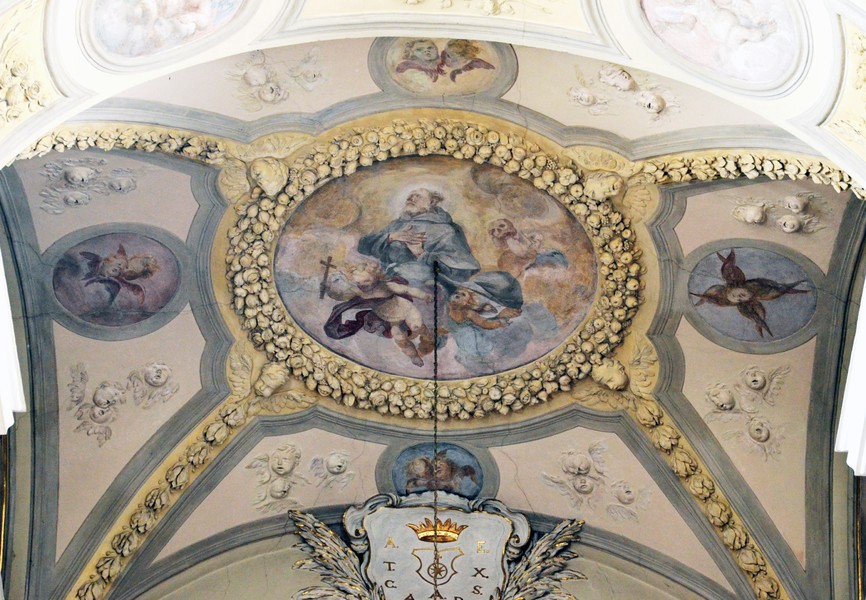
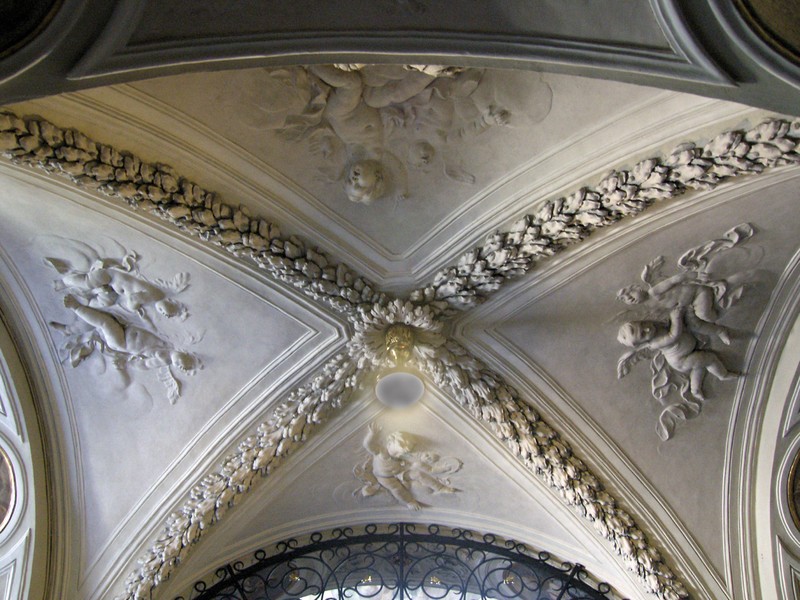
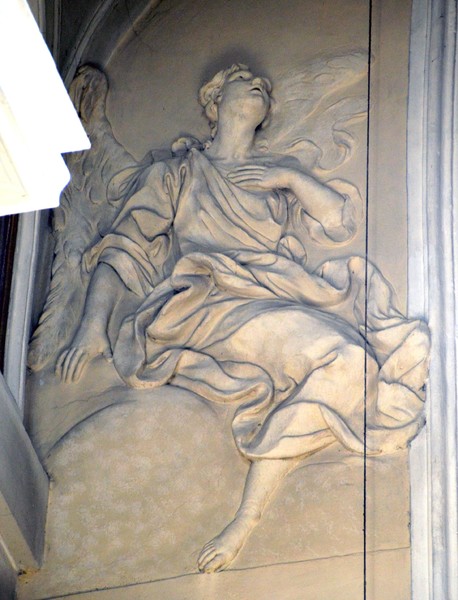
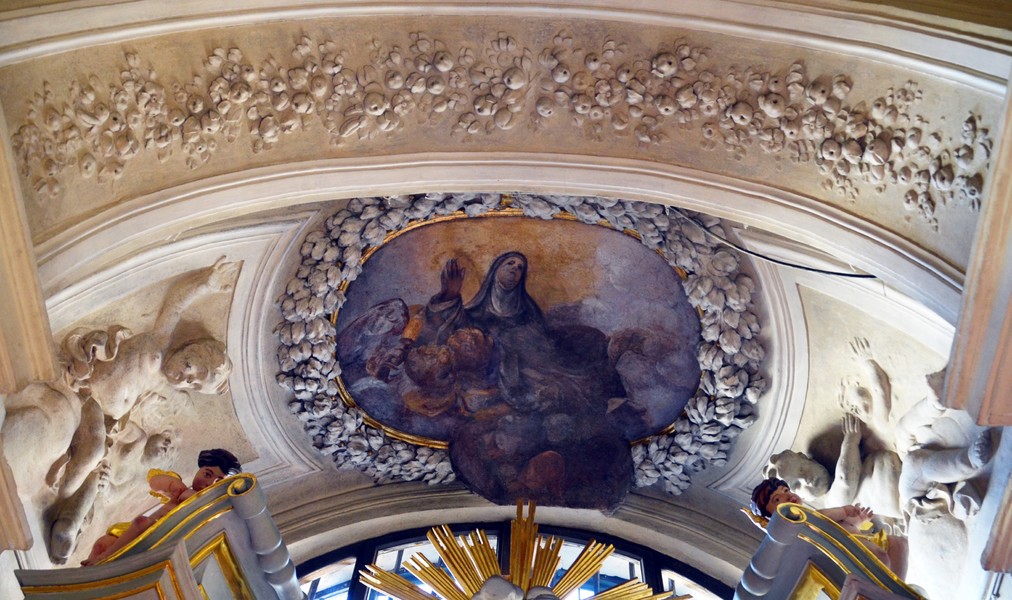
The remodelling of the church was conceived by Abbess Tyrawska and Sebastian Piskorski (1636-1707). Fontana received an advance for the work, documented by a receipt from 1701, and two cartouches (1701-1702) testify to its completion. Stucco works were probably completed before 19 August 1702, when Baldassarre Fontana and Innocent Monti (1653–1710) left Cracow due to the Swedish invasion. Stucco decoration consists of figural and ornamental decoration concentrated on vaulted ceiling and upper parts of walls (Fig. 2). Ionic capitals by the main pillars are adorned with shells and swags. On the chancel bay’s axes there are putto figures and gilded medallions with reliefs depicting holy Poor Clares nuns (Fig. 3). The apse conch is separated by a festoon decoration (Fig. 4). At the rim of the dome there is a stucco glory with a wooden crucifix surrounded by painted angels (Fig. 5). The pendentives are filled with gilded allegories of the Virtues (Constancy, Prudence (Fig. 6), Temperance and Justice). On the vault of the transept, there are compositions of plant motifs and liturgical paraments (Fig. 7, 8). Lunettes are decorated with relief angels adoring images of saints painted above them (Fig. 9). The vaulted ceiling of St. Claire’s decorated with putti and garland surrounding a painting (Fig. 10).
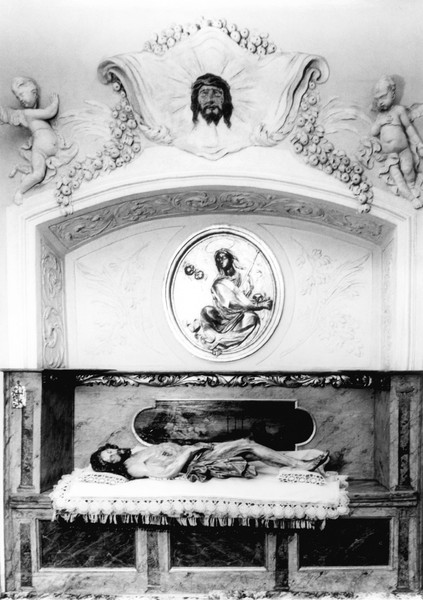
In the 18th century, the altar of the Blessed Salomea contained a stucco figure illuminated by a hidden window, now replaced by a painting, but a putto on the aedicule remains. Fontana also decorated the niche of the Holy Sepulchre (Fig. 11), in the chapter house. It’s adorned with a gilded medallion with Our Lady of Sorrows, festoons of fruit and leaves and the Veil of Veronica.