CHURCH OF STS PETER AND PAUL
Church of Sts Peter and Paul
Vinařská ev. č. 1
687 37 Polešovice (Uherské Hradiště District)
Czech Republic
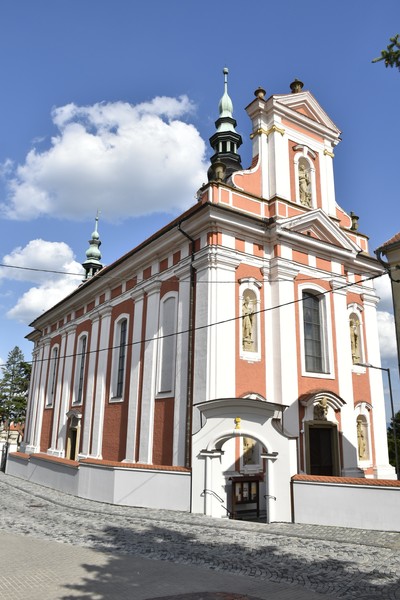
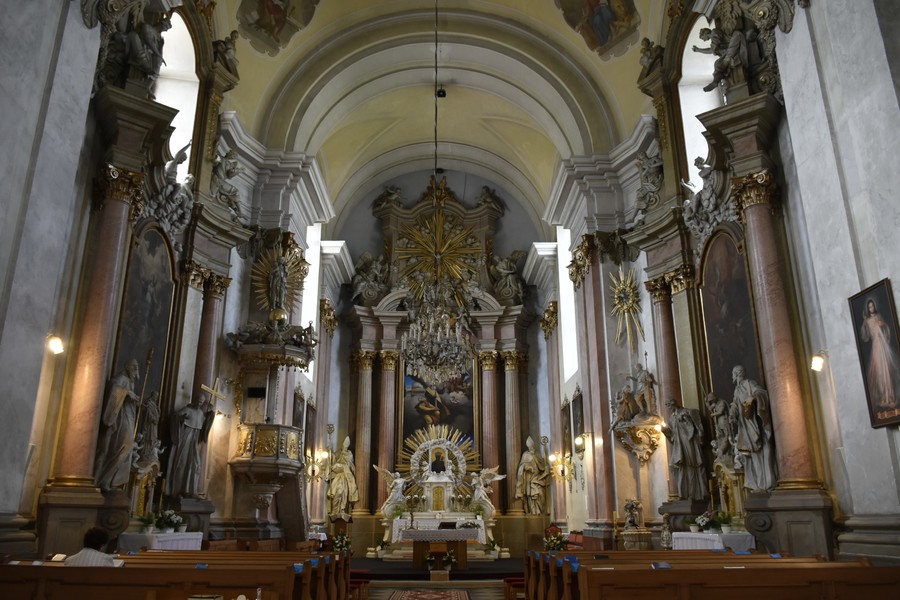
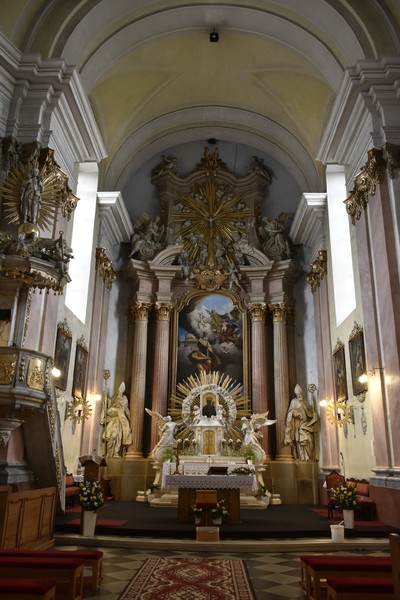
The history of Polešovice is closely linked to the Cistercian monastery of Velehrad, which owned the village for centuries1. The original church, built in the 14th century, was destroyed during the Hussite Wars in the early 15th century and later rebuilt in the late Gothic style. The current appearance of the church dates back to the renovation done between 1725 and 1734, commissioned by Abbot Josef Malý, with the participation of Baldassarre Fontana and his workshop, as was the case at Velehrad (Fig. 1, 2). Despite the scarcity of archival sources, the interior clearly reflects the style of the artists active at Velehrad during this period. The church was consecrated in 1735 by the Auxiliary Bishop of Olomouc, Otto Heinrich, Count of Egkhu. Today, the structure still retains its 18th-century configuration, with a rectangular nave, an elevated presbytery, a sacristy, and a square tower on the south side, while the façade is characterised by a high order of pilasters.
Main altar of Saints Peter and Paul


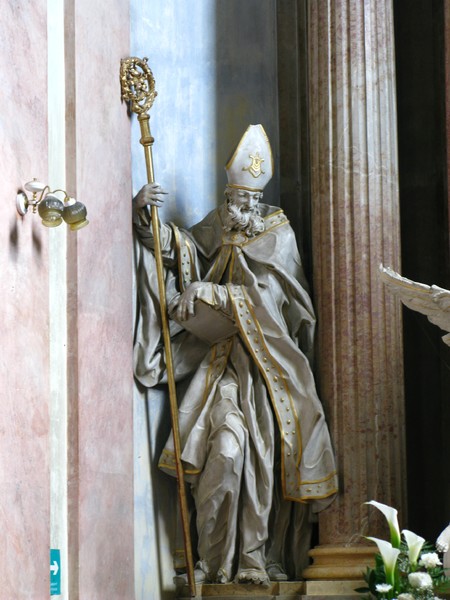
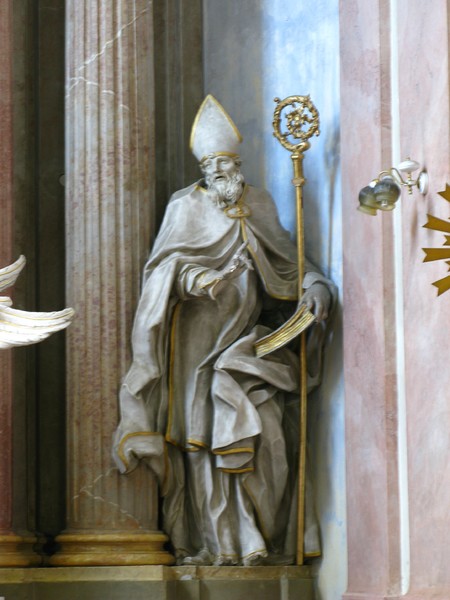
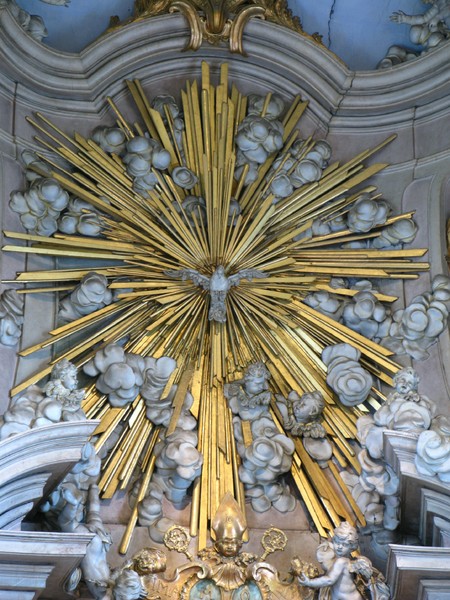
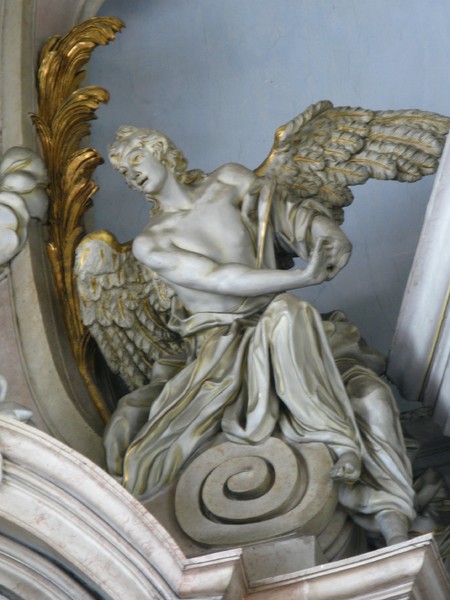
At the base of the altar, statues of Saints Cyril and Methodius are arranged so as to be clearly visible to the faithful (Fig. 3, 4, 5). The central painting is framed by a structure with columns with gilded capitals, topped by an imposing pediment enriched with stucco decorations. At the centre, the Holy Spirit dove emerges among golden rays, stucco clouds, and cherub heads (Fig. 6). On either side of the pediment, two angels sit on volutes (Fig. 7), while the upper frame is adorned with a pair of putti.
Side altar of the Assumption of the Virgin Mary


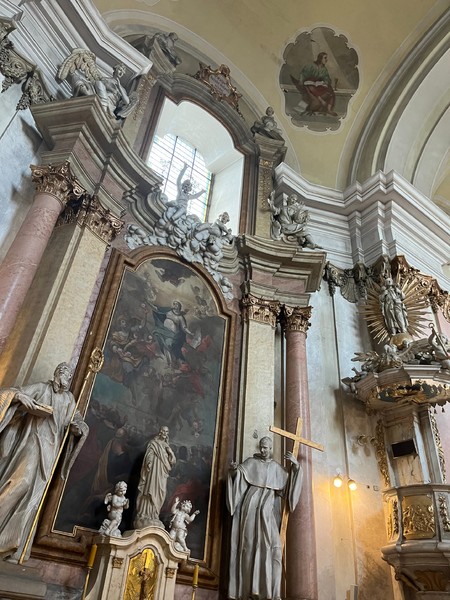
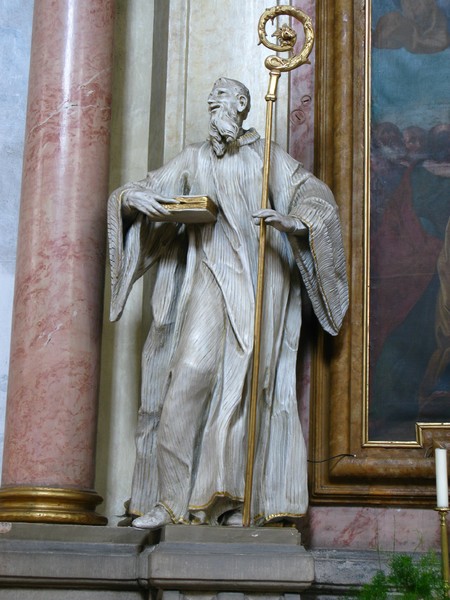
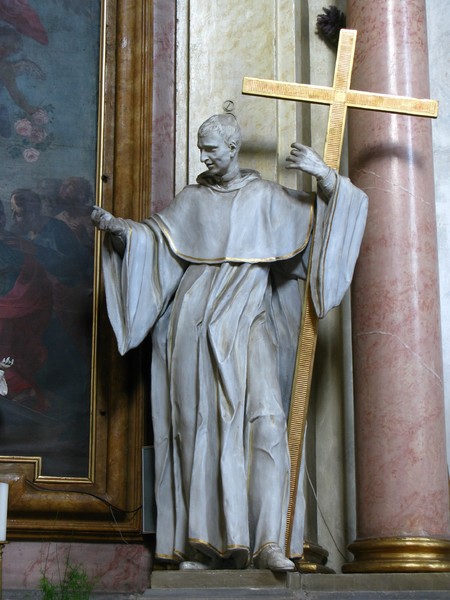
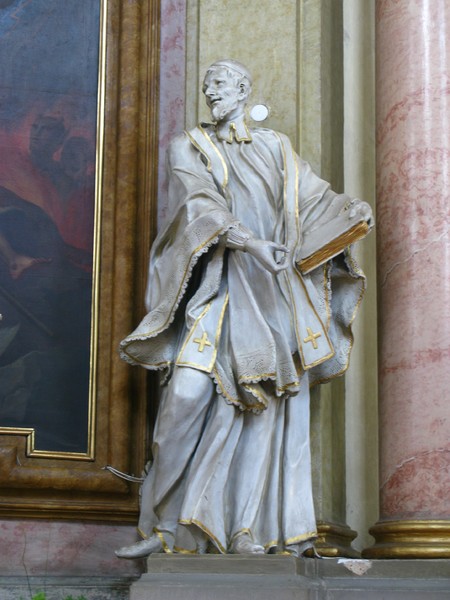
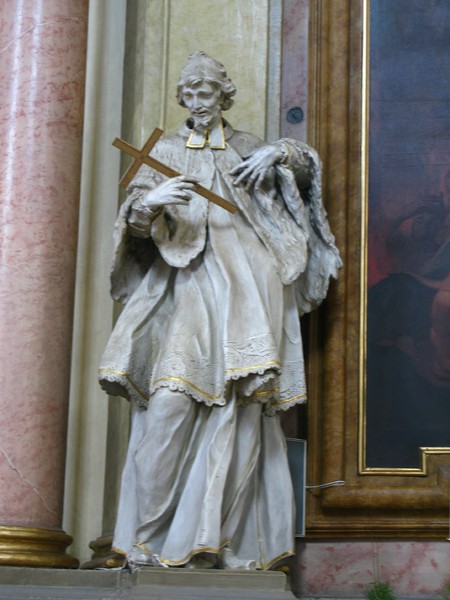
The altar features an architectural structure with columns and pilasters framing a large painting, above which is a window (Fig. 8). On the sides, statues of Saint Benedict, the bearded elderly figure with a pastoral staff and book, and Saint Bernard, a young man with a cross, enrich the lower part (Fig. 9, 10). The tabernacle is topped by a statue of Christ (added in 1891), flanked by two putti: one in prayer, the other looking upwards in adoration. Above the painting, a stucco composition depicts two putti amidst swirling clouds, with winged angels on the lateral frames. The upper part of the altar is framed by a window, flanked by pilasters supporting a broken pediment with two seated putti.
Side altar of Saint Michael the Archangel


Similar to the altar of the Assumption of the Virgin Mary, this altar is distinguished by the statue of St. George piercing the dragon on the tabernacle, flanked by two cherubs, as in the twin altar, where the statue of Christ is located (Fig. 11). At the base, statues of Saint John Nepomucene and Saint Robert complete the composition (Fig. 12, 13). The six figures of saints decorating the three altars share contrapposto postures, elegant drapery, and expressive faces, while the angels and putti are characterised by elongated proportions and refined forms.

Nave


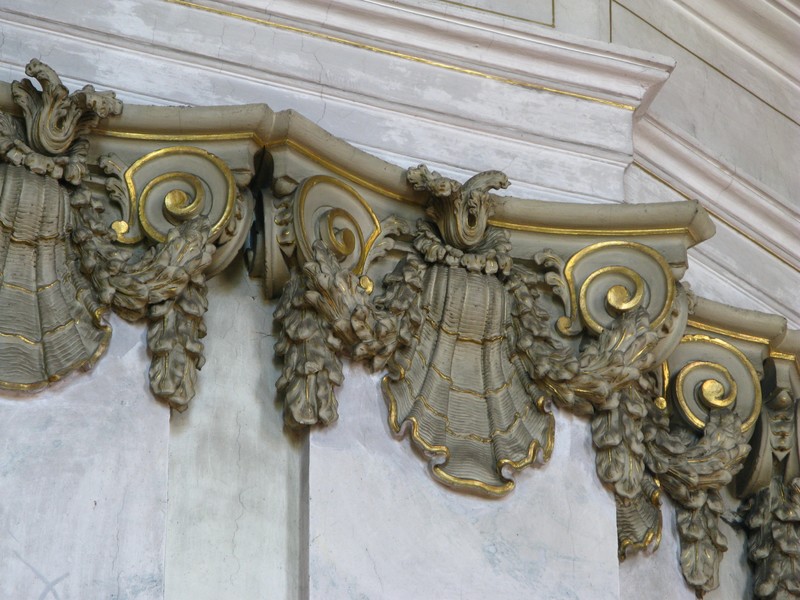
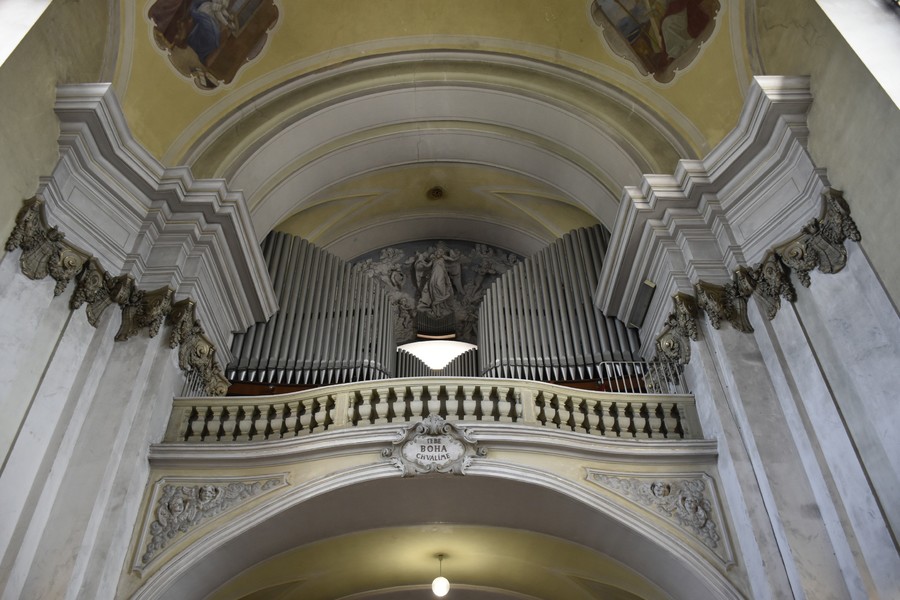
The nave of the church features stucco decorations concentrated in the capitals of the pilasters, which display the typical shell motif (Fig. 14, 15). This decorative element is also present in other works attributed to Baldassarre Fontana and his workshop, particularly in the capitals of the Basilica of the Visitation of the Virgin Mary at Svatý Kopeček and in the pilaster capitals at the entrance to the Chapel of Loreto in St. Wenceslas Cathedral in Olomouc.