CHURCH OF THE EXALTATION OF THE HOLY CROSS
Church of the Exaltation of the Holy Cross
Císařská 36
79807 Brodek u Prostějova
Czech Republic
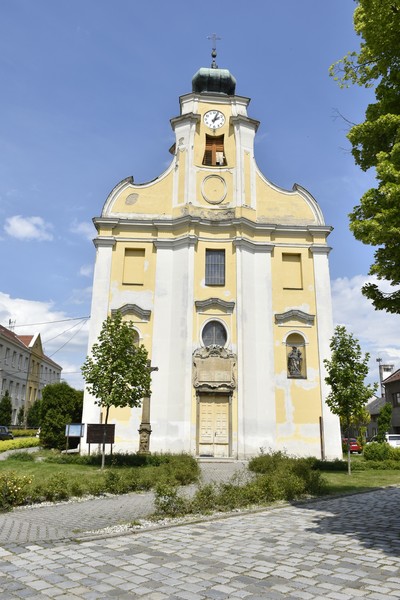
In 1707, Count Paul Karl von Kleinburg purchased the Brodek-Otaslavice estate, including the village of Brodek u Prostějova, and began the reconstruction of the castle into a representative early modern residence 1. He also built a new church (Fig. 1), involving Viennese architects, including Fischer von Erlach (1656-1723), although the style of the church does not show a direct connection with him[Řehová 1968, pp. 127-159]. The inscriptions on the altar mensa and on the bell, dated 1717, indicate the competition of the structural works. On 4 November 1721, the Olomouc Dean, Vilém Vojtěch Libštejnský-Kolowrat (1665-1729), consecrated the church.
Main altar


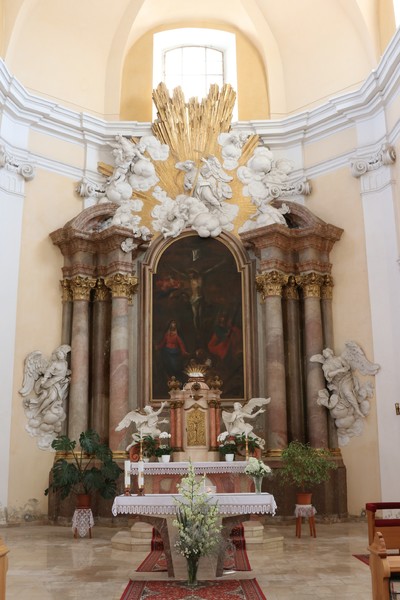
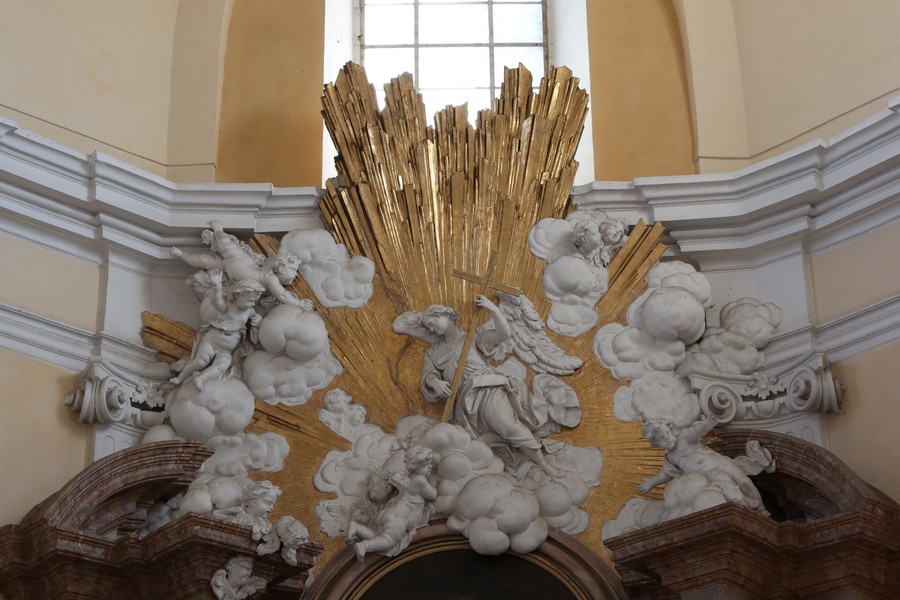
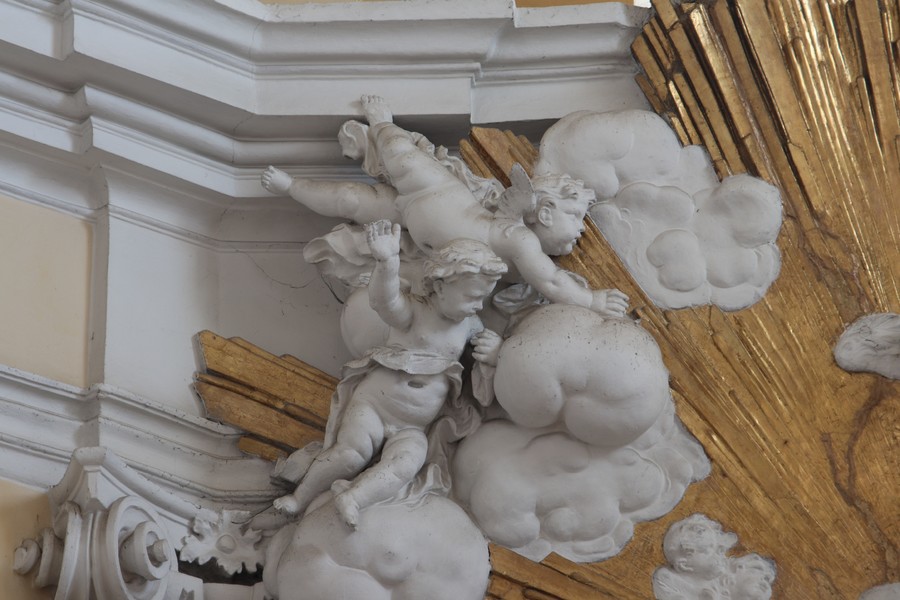
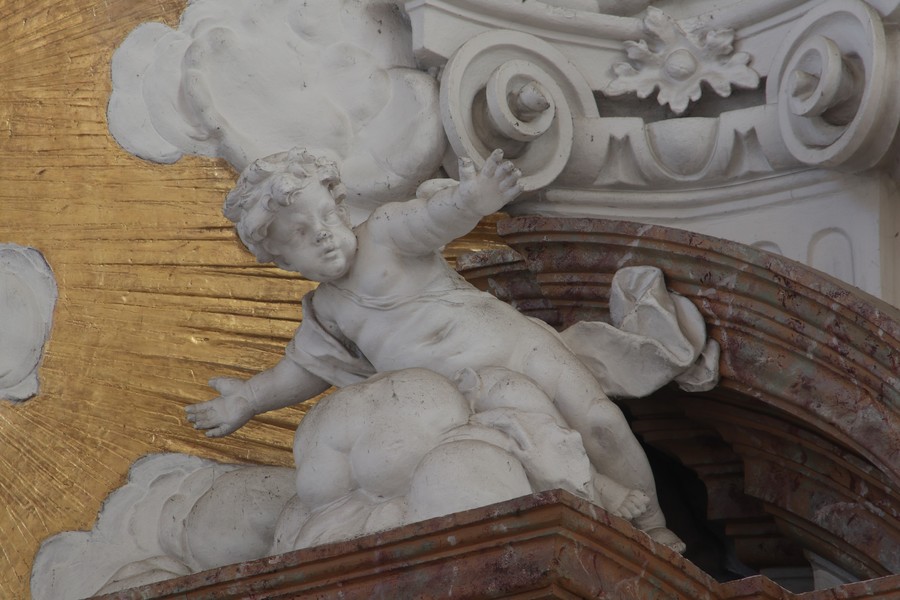
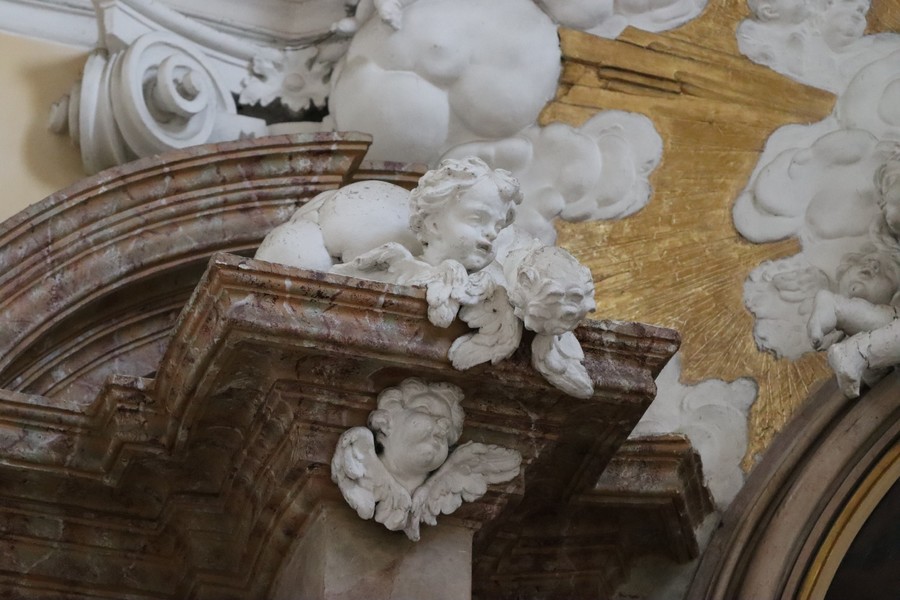
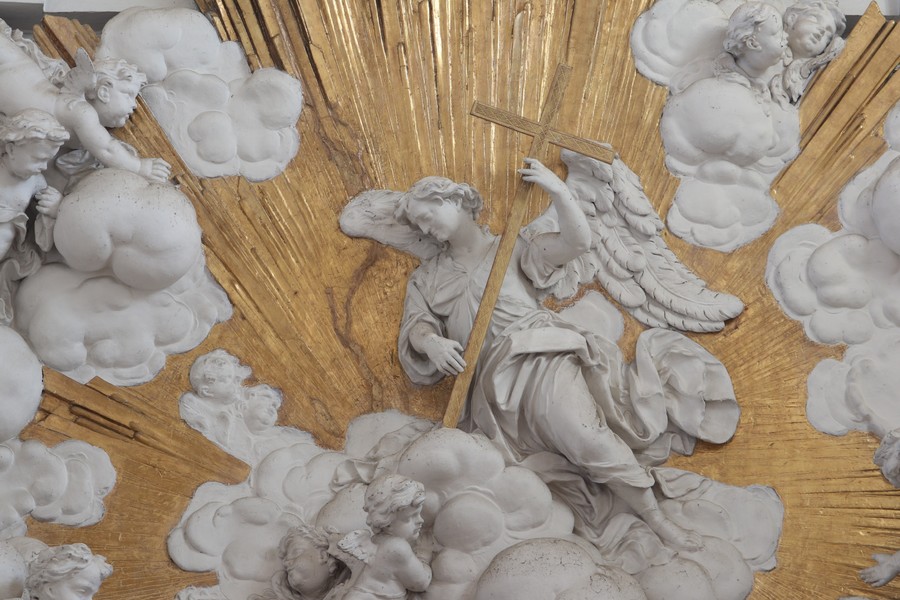
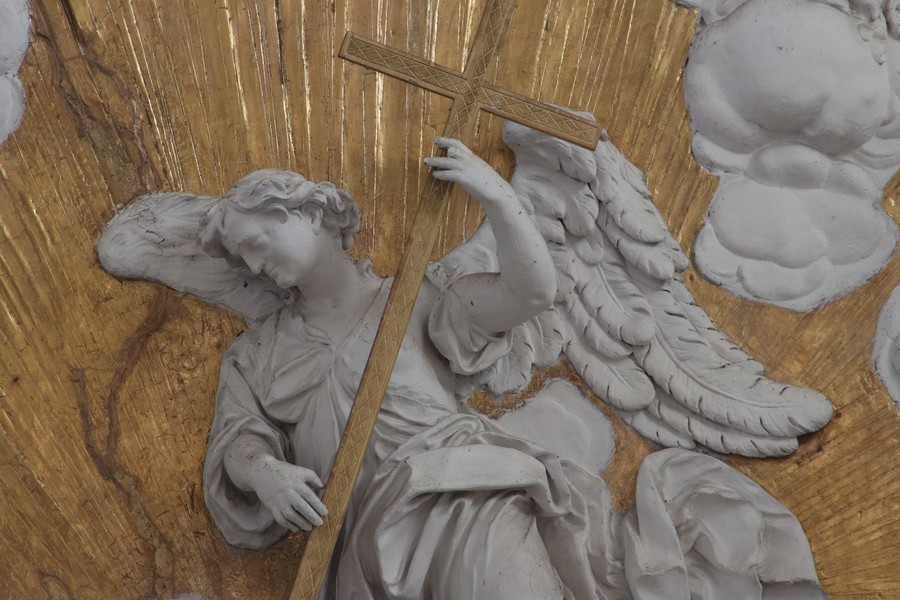
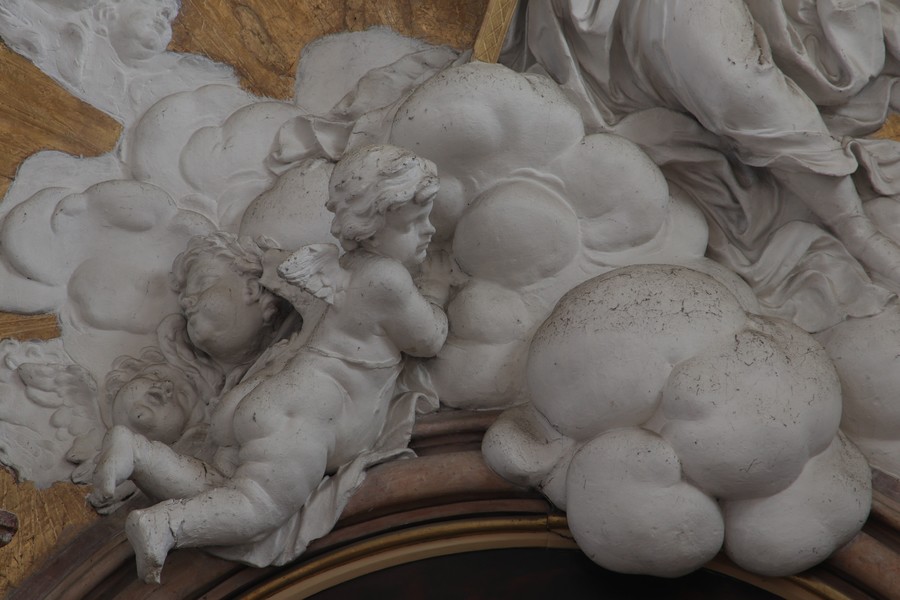
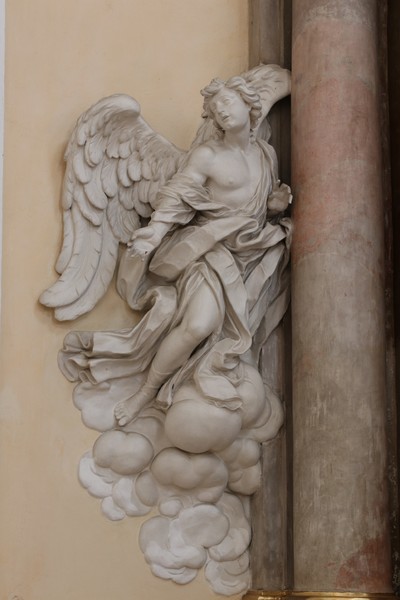
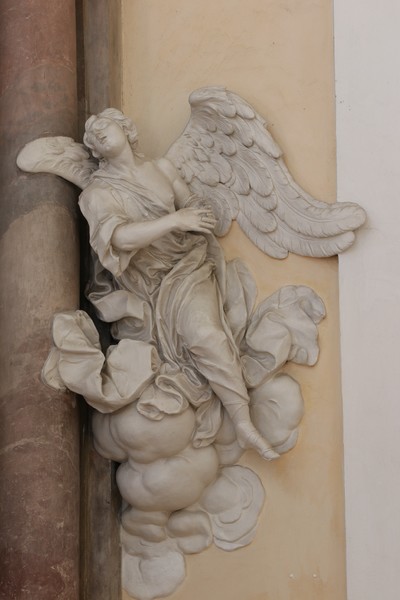
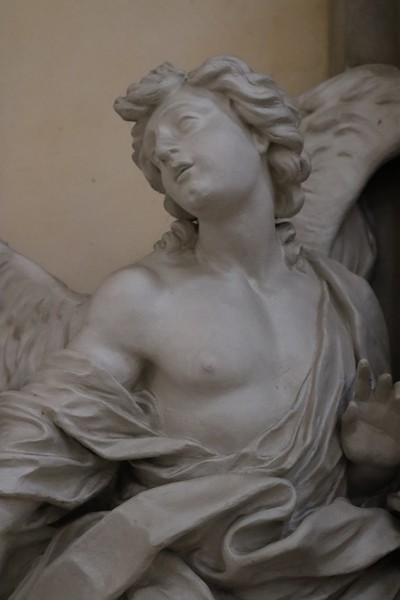
The journals of the Premonstratensian Canonry Hradisko near Olomouc record the departure of Baldassarre Fontana to work in Brodek on 9th July 1718 "discessit Predlitium", without specifying what he was going to made. Historians consider him the author of the main altar [Brno, Moravský zemský archiv (Moravian Provincial Archive in Brno), collection E 55 – Premonstráti Klášterní Hradisko, Deník kanonie premonstrátského kláštera v Klášterním Hradisku, box 4, inventory no. 210, accession no. II 12 (1718), fol. 54a, recorded as of 9th July 1718)] (Fig. 2). The stucco decorations are mainly in the upper part of the altar and extend over the altarpiece, above the broken pediment (Fig. 3). The putti are arranged in various positions and are set against a background of stucco clouds and golden rays, which start from the altarpiece depicting the Crucifixion (Fig. 4, 5, 6). The cherubs surround the figure of an angel holding a Latin cross (Fig. 7, 8). The clouds on which the figures move are realised in low and high relief. In the lower section of the sculpture group, a putto protrudes over the edge of the altar, entering the space of the painting (Fig. 9). In the lower part of the altar, the outer columns are adorned with sculptures of ephebes that seem to emerge from the wall, suspended on full-bodied banks of clouds in high relief (Fig. 10, 11, 12).
The stucco decoration is covered by a thick layer of plaster, concealing the finest details.
The stucco decorations on the side altars of the church cannot be attributed to Baldassare Fontana or his workshop