CHURCH OF THE NATIVITY OF THE VIRGIN MARY AND ST. ANNE
Church of the Nativity of the Virgin Mary and St. Anne
Rajnochovice 12
768 71 Rajnochovice
Czech Republic
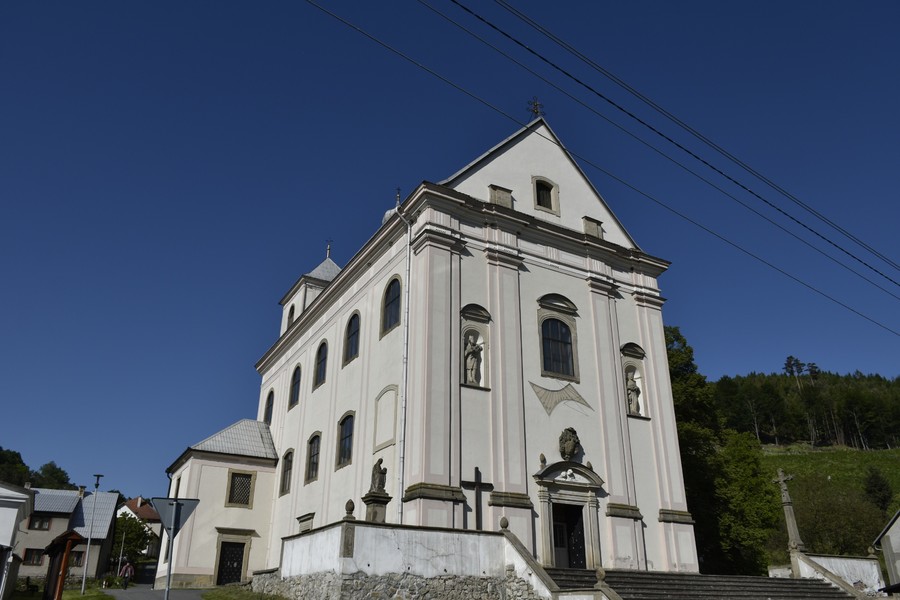
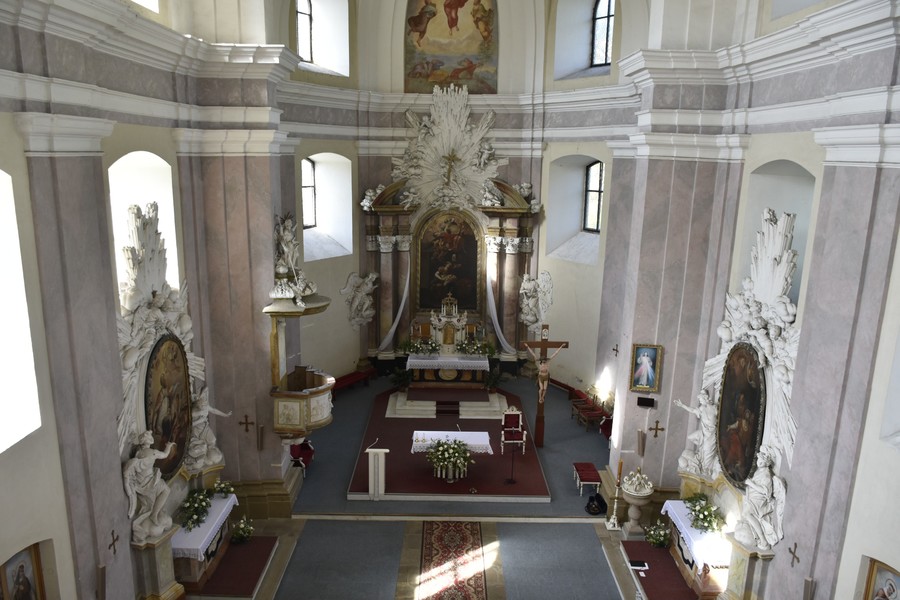
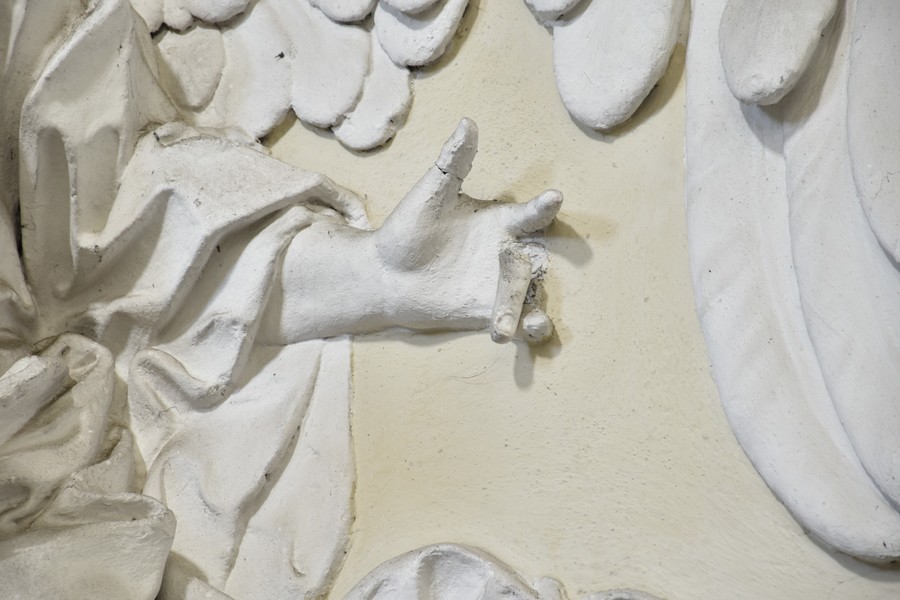
The church dedicated to the Nativity of the Virgin Mary and St. Anne is in the village of Rajnochovice1, originally part of the territory of Podhradní Lhota (Fig. 1). It is built at the beginning of the 18th century on the site of an older church dedicated to St. Anne. The construction was financed by the bishop of Olomouc, Cardinal Wolfgang Schrattenbach (1660-1738), who also chose the artists to be involved. Work began in 1711 and the church was consecrated on 26 July 1718. Although the name of the architect is unknown, this building is often associated with Giovanni Pietro Tencalla (1629–1702), although it is more likely that the church was built by one of his followers or imitators. Baldassare Fontana and his co-workers decorated the high altar, the two side altars and the pulpit between 1716 and 1718 (Fig. 2)2. The work reflects the influence of Bernini's circle, particularly in the use of light, which, through 22 windows situated at a high of 18 metres, accentuates the illusionistic effect of the room 3. The decorative apparatus, however, is not legible in all its details because of the several layers of whitewash on its surface, concealing the reliefs.
The main altar of the Nativity of the Virgin Mary


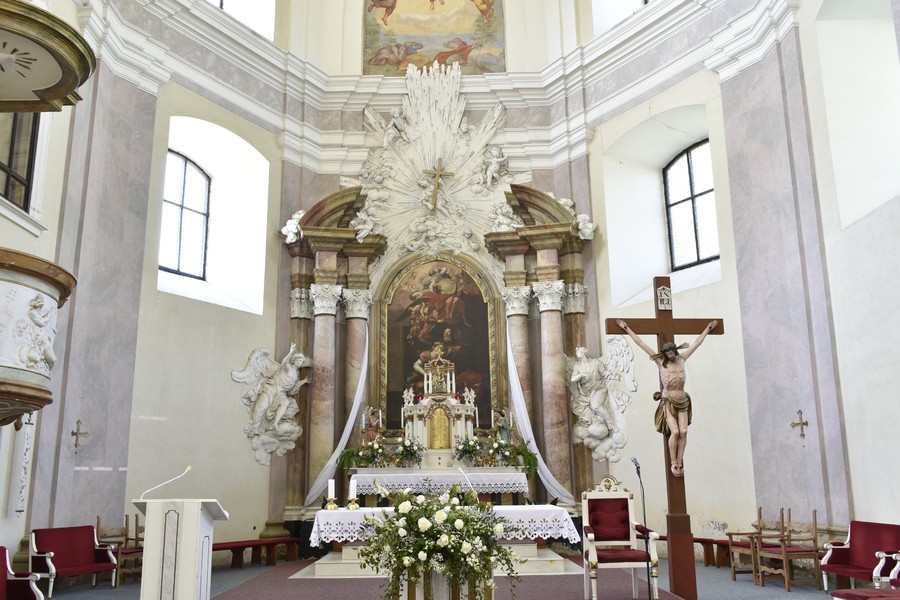
The main altar replicates the four-column system present in the transept of the basilica in Svatý Kopeček near Olomouc with modified proportions: the columns are shorter, the ensemble expands in width and the glory on the crown is larger (Fig. 3).
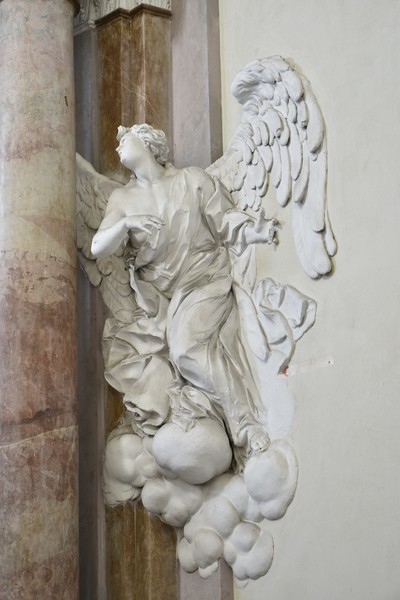
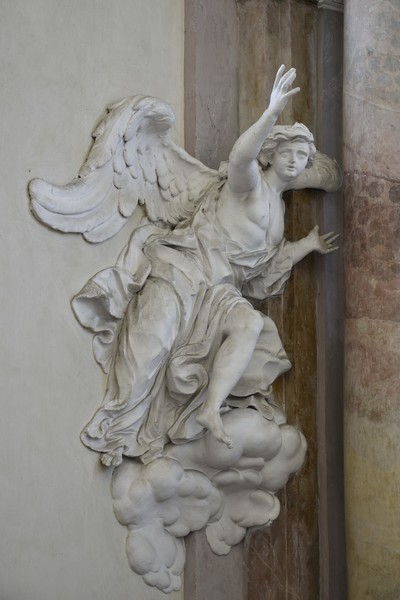
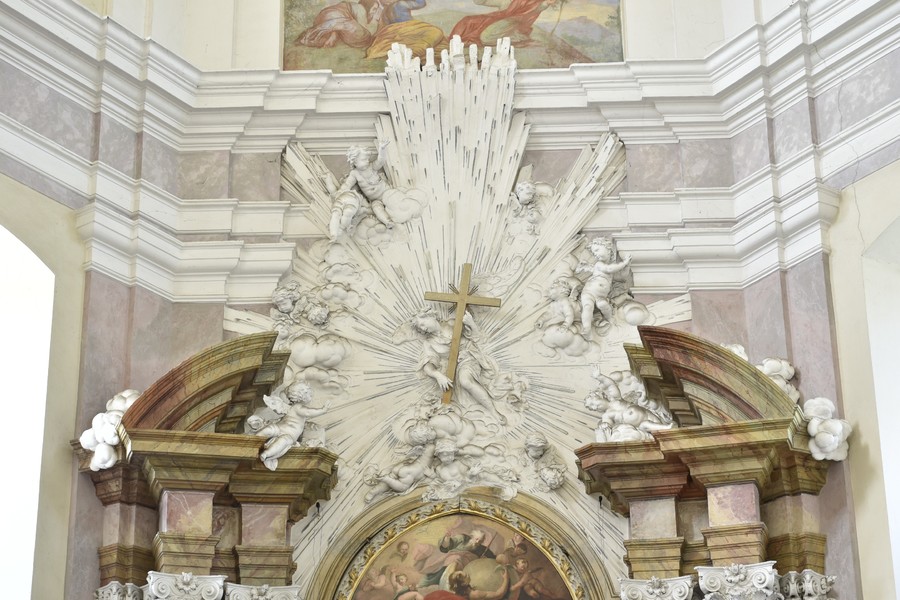
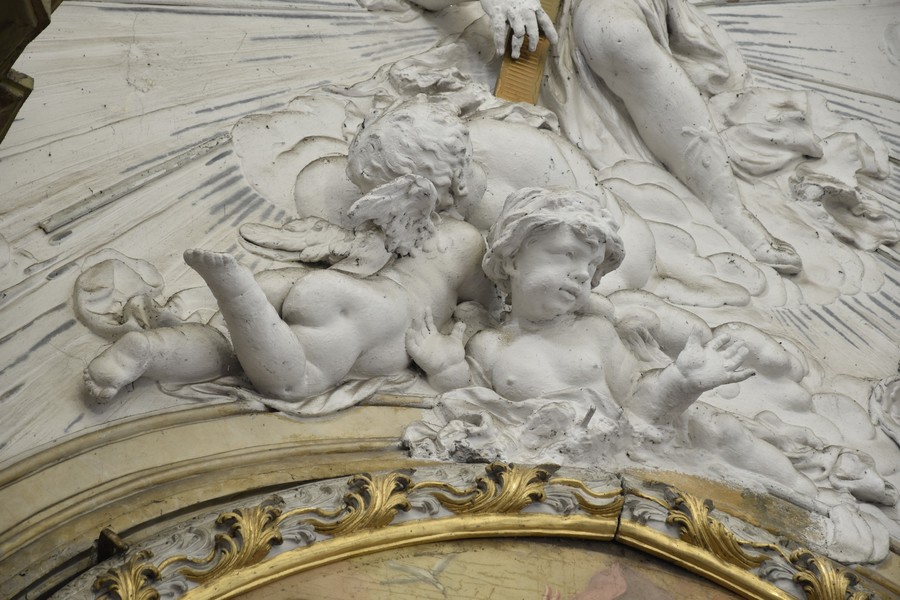
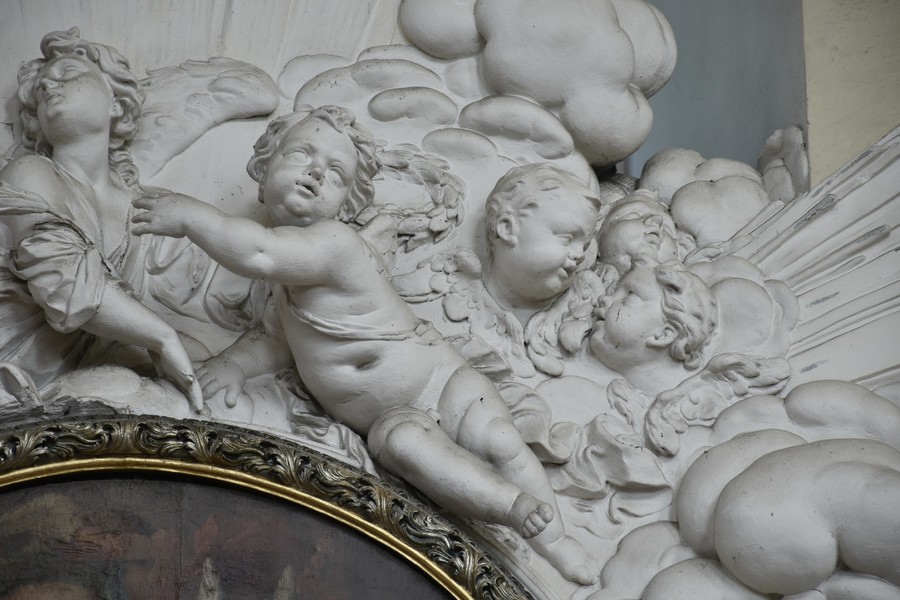
The altarpiece is composed in a symmetrical design around the central image of the Virgin Mary's birth, surrounded by acanthus leaf decorations, partially gilded. On either side is a pair of columns with straight shafts, supported by a double pilaster that connects the altar to the adjacent wall. The architecture is enriched at the sides by statues of angels in dynamic poses (Fig. 4, 5, 6). At the top, the stucco glory features various figurative motifs, including putti playing on clouds and flying around an angel with a golden cross in the centre (Fig. 7, 8). The altarpiece forms a coherent whole, where sculptural and pictorial elements come together in a harmonious visual framework.
The altar of St. Wolfgang


The composition of the side altars continues Fontana's earlier work in St. Anne's Church in Krakow, particularly in the altars of St. Sebastian and St. Joseph, where the oval images, crowned by a glory, are supported by pairs of angels. The angelic figures, fully three-dimensional and actively engaged in the narrative unfolding of the painting, are similar to the composition of the main altar.
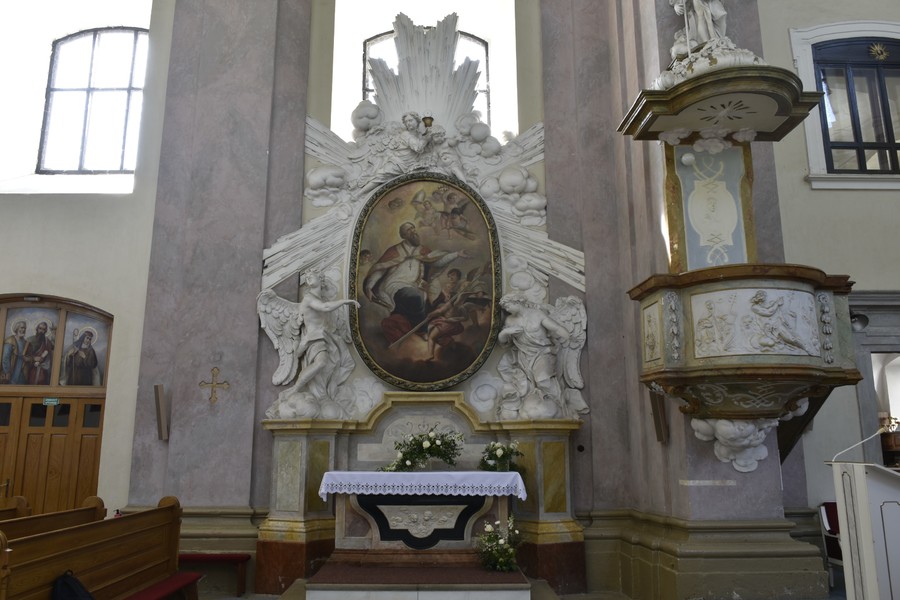
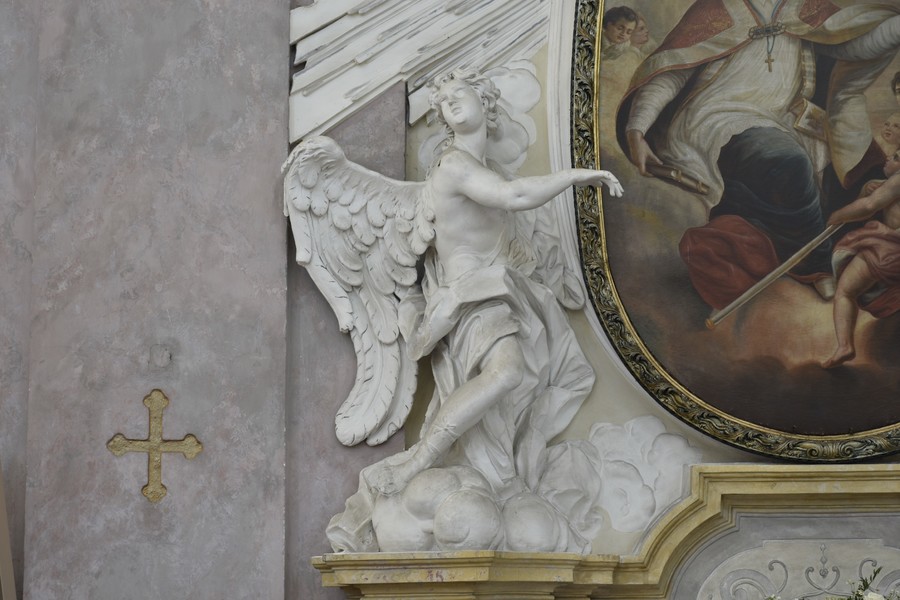
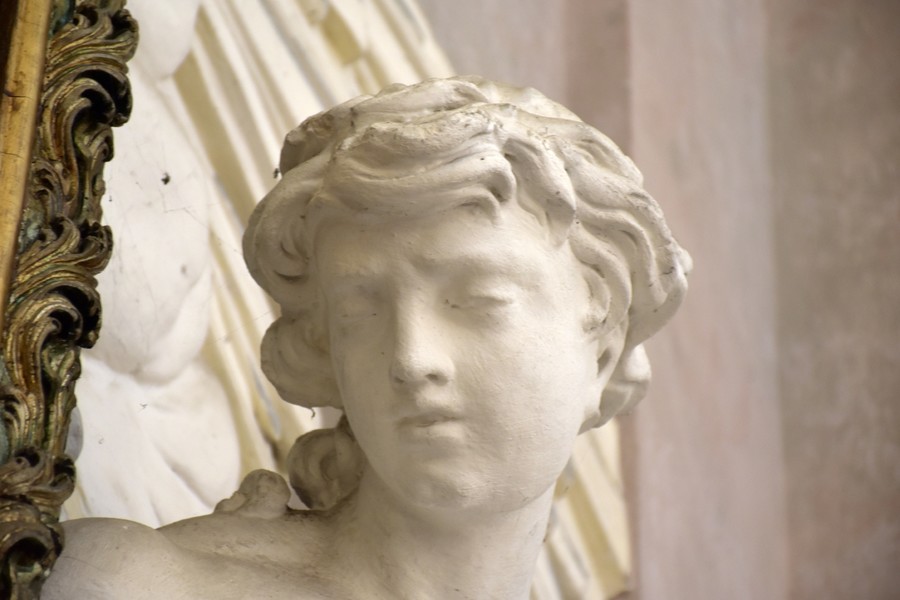
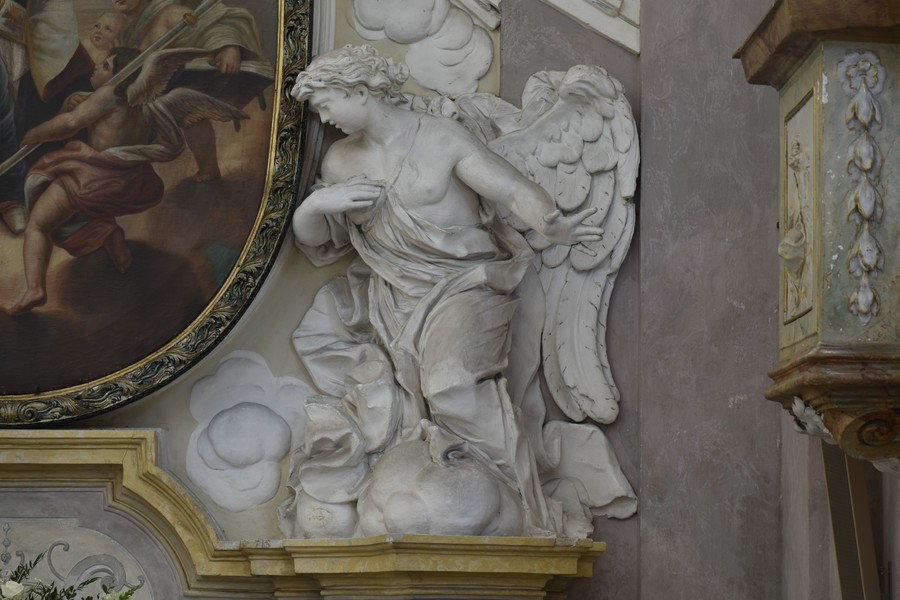
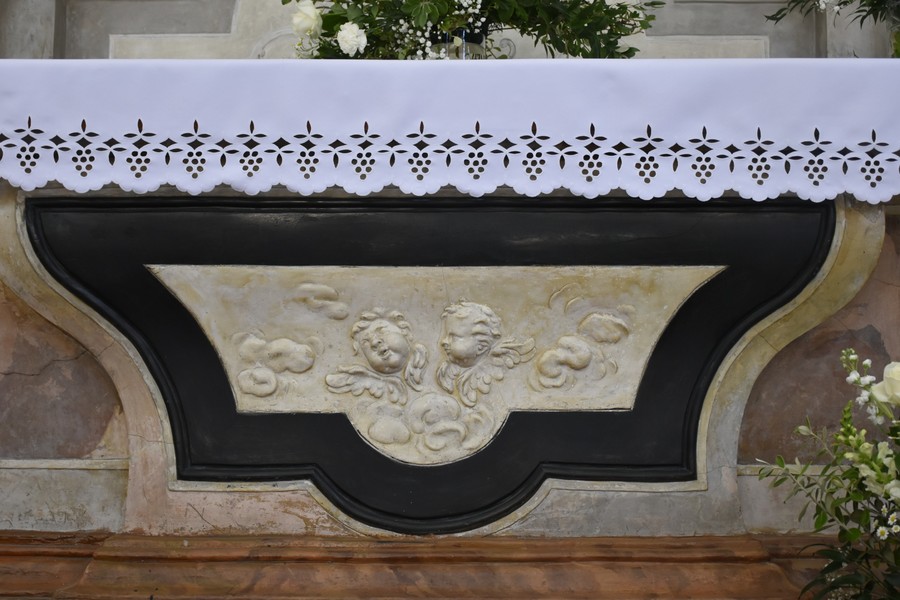
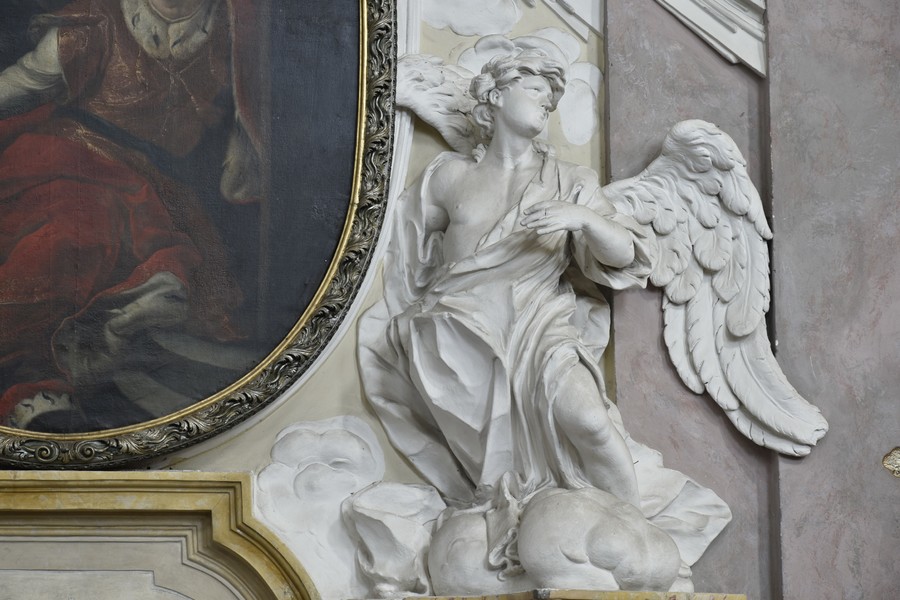
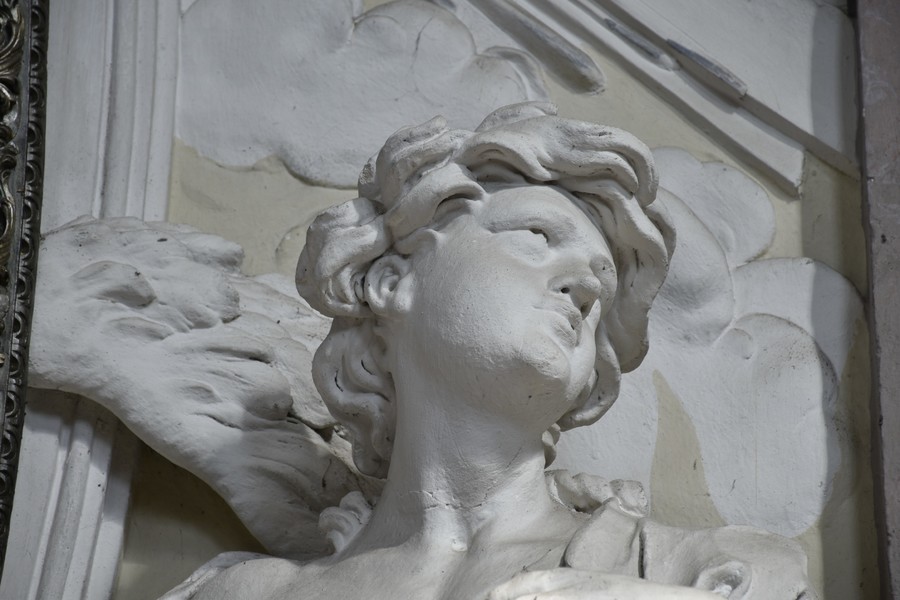
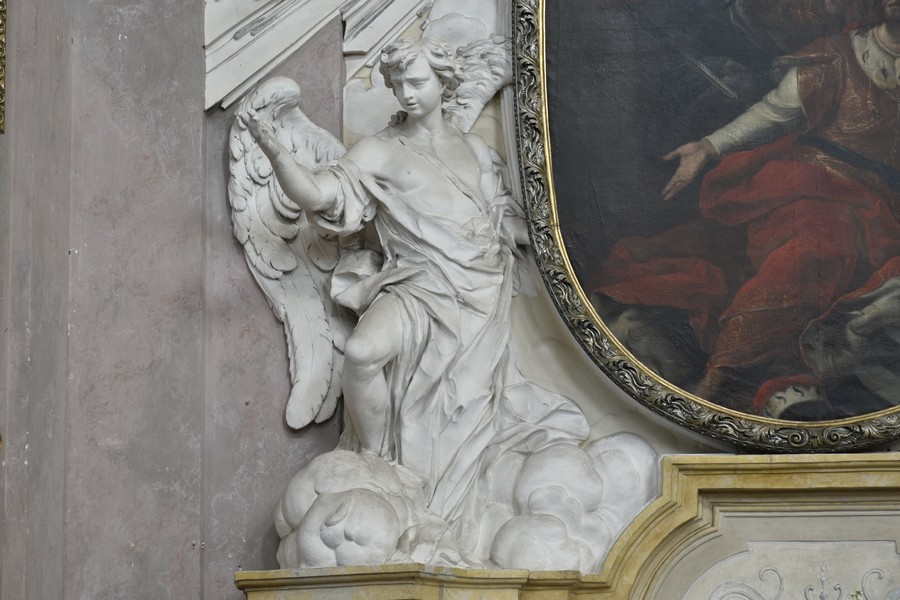
The altar of St. Wolfgang (Fig. 9) presents a more balanced composition than that of St. Wenceslas on the right side. This balance is probably due to the harmonious distribution of the decoration with a pair of figures, an angel holding a chalice and a putto, positioned at the top of the glory and surrounded by clouds. In the lower part, the angels on the sides of the altarpiece show gestures of reverence towards Saint Wolfgang (Fig. 10, 11, 12). The antependium and the altar steps are adorned with bas-relief decorations depicting putti faces and ribbons (Fig. 13).
The altar of St. Wenceslas


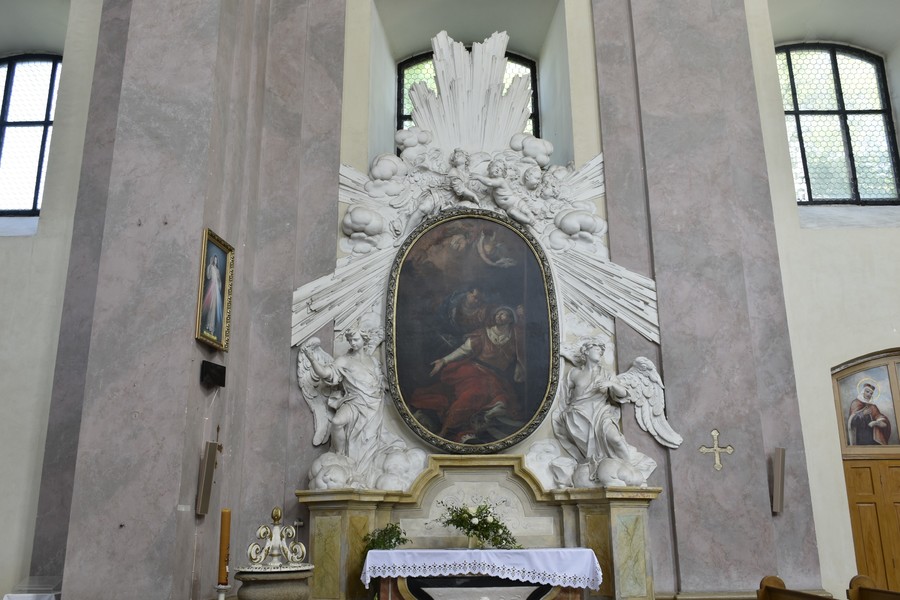
The altar of St. Wenceslas (Fig. 14), similar in style to the other altars, has a different decoration of the glory. Next to the angel and the putto on the left, there are three putti heads on the right side (Fig. 15). The angelic figures framing the sides of the altarpiece depicting the murder of St. Wenceslas are also arranged differently, facing the viewer in a pose of pity (Fig. 16, 17, 18). The antependium and the altar steps are decorated with stucco bas-reliefs that recall the motif observed on the left altar.
Pulpit


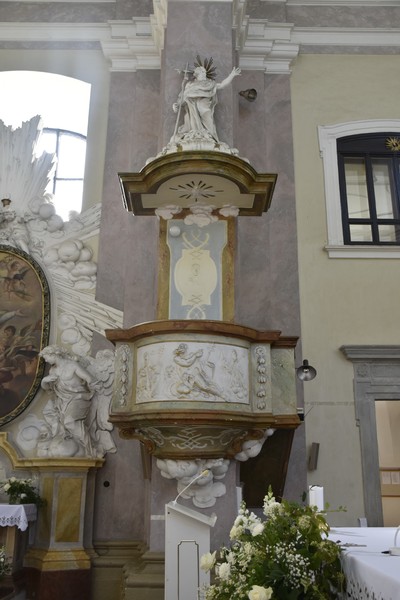
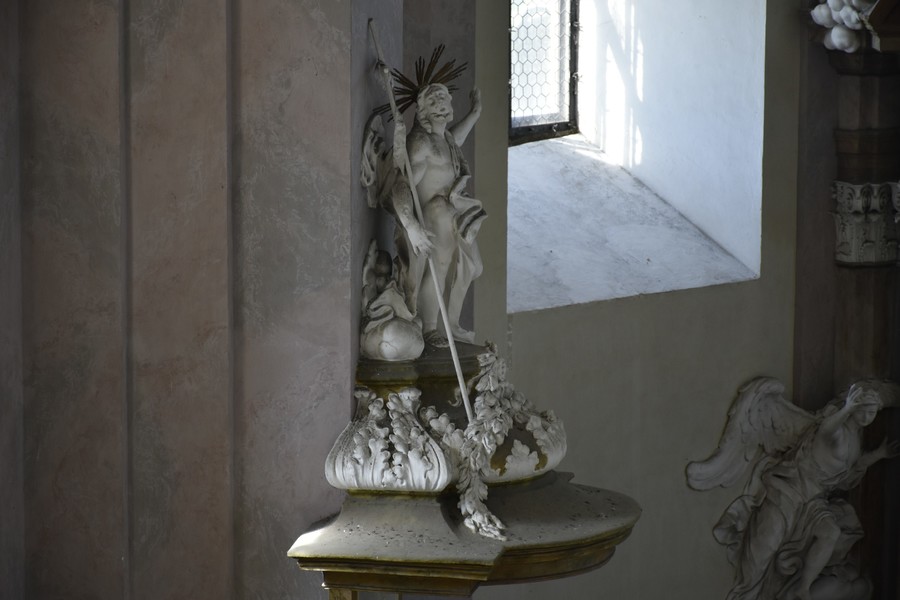
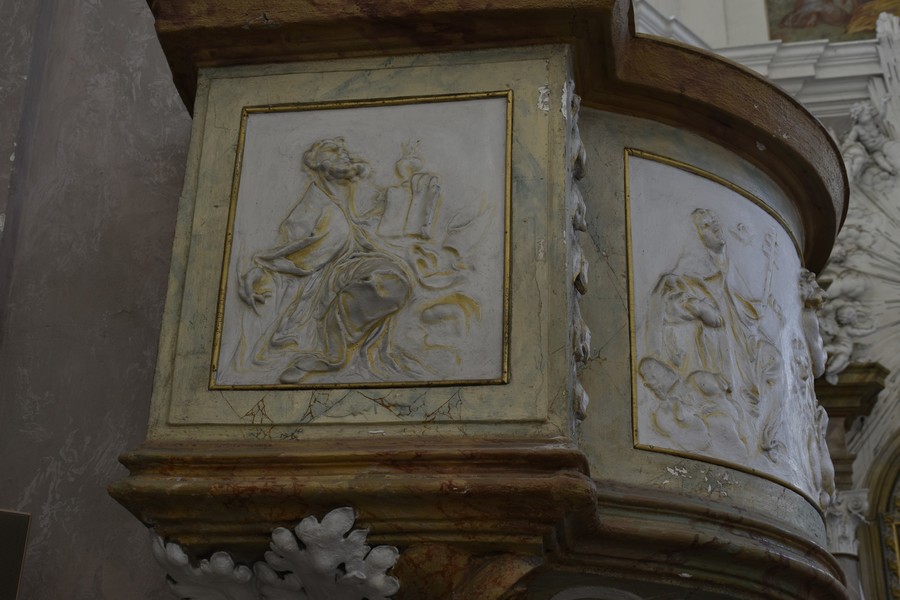
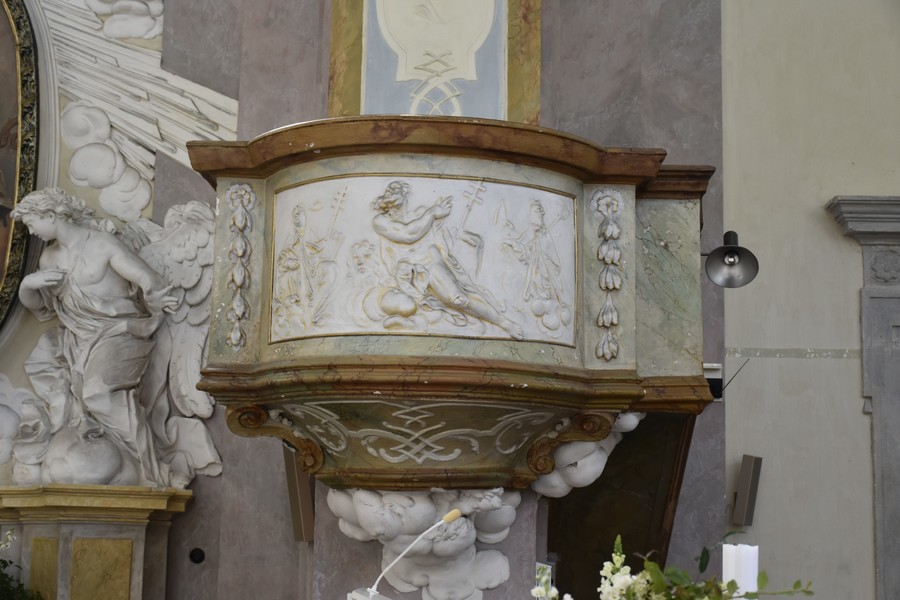
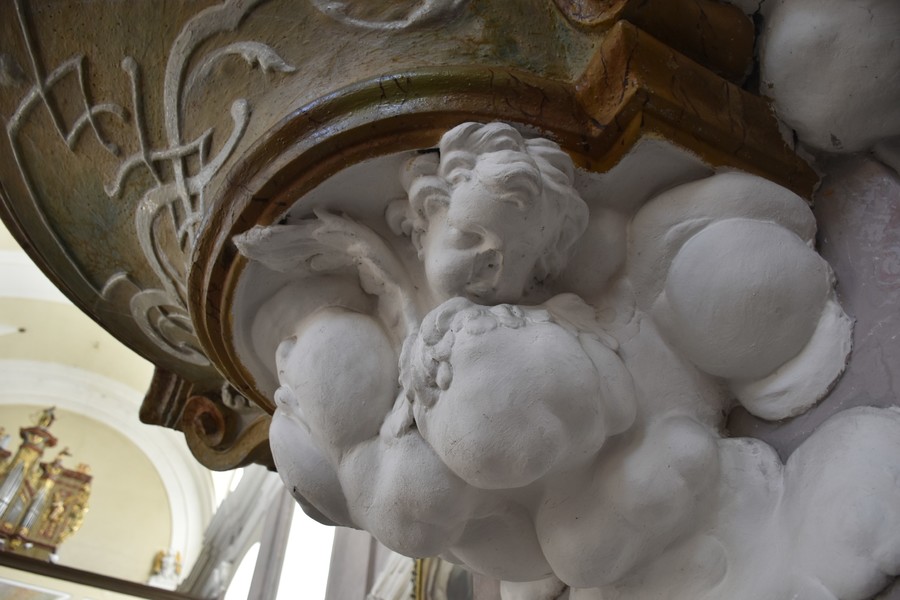
The pulpit has a depiction of St John the Baptist on the top surrounded by a rich acanthus leaf motif (Fig. 19, 20). The canopy is decorated with bas-reliefs of clouds, a dove and a ribbon with a medallion on the lining. The semi-quadrilobed parapet is adorned with bas-reliefs of the four Church Fathers: St. Ambrose on the side, St. Augustine, St. Jerome and St. Gregory on the front, separated by floral motifs of lilies of the valley (Fig. 21, 22). The lower part is decorated with stucco strips, while the base has an embossed design with a putto's head, clouds and wings, integrating the pulpit into the architectural style of the church (Fig. 23).
Façade decoration


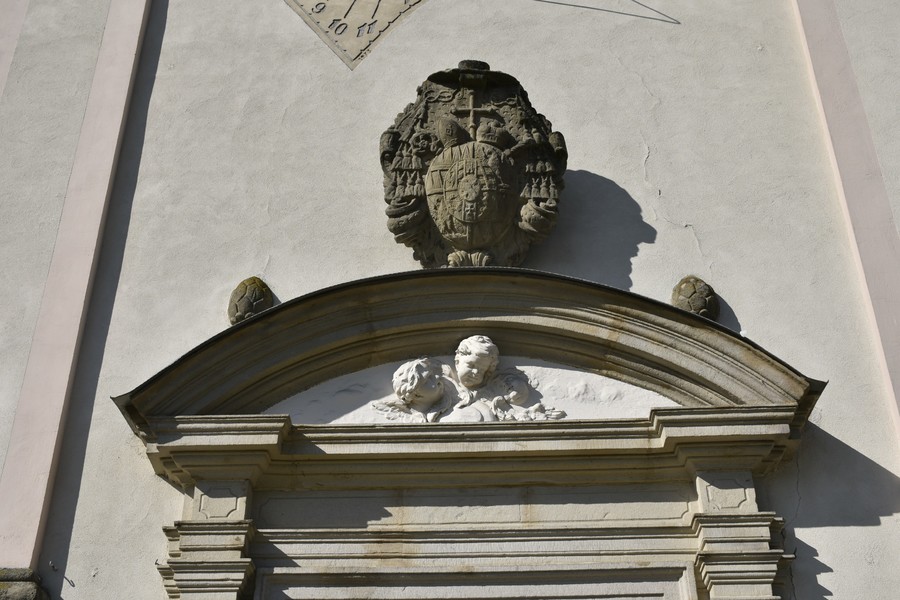
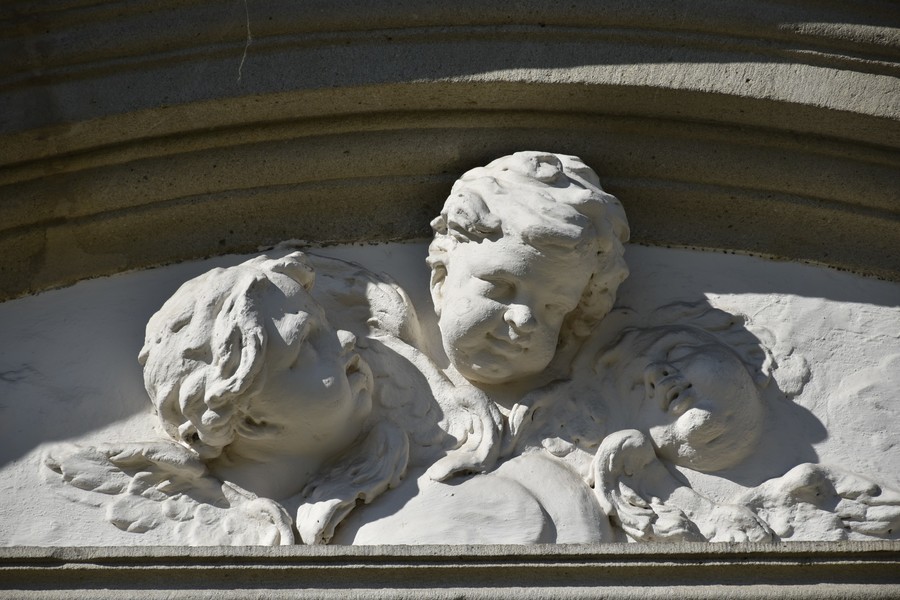
The tympanum of the main entrance portal to the church has a bas-relief with three cherubs' heads (Fig. 24, 25). The composition is dynamic and perfectly complements the exterior of the façade. The heads of the central and left angels are made in the full relief, while the face of the right angel is modelled in bas-relief.