COLLEGIATE CHURCH OF ST. ANNE
Collegiate church of St. Anne
Św. Anny 11
31-008 Cracow
Poland
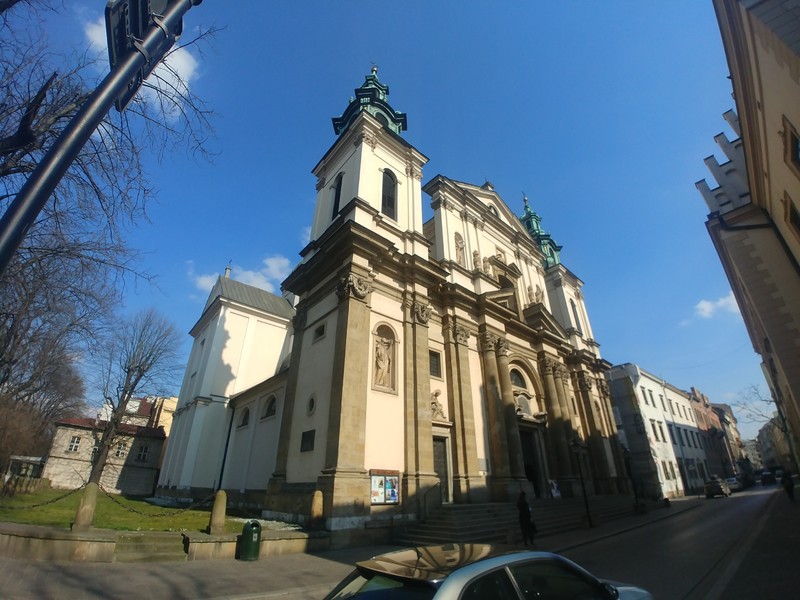
A wooden parish church, documented from the 2nd half of 14th century, was probably replaced by a masonry structure after a fire in 1407. In 1418, King Ladislaus Jagiello (1352-1434) granted it to the University of Cracow, and in 1535 it was raised to the rank of a collegiate. Around 1680, on the occasion of the beatification of St. John Cantius, the university decided to demolish the old church and build a more splendid one (Fig. 1), in order to promote the cult of the saint and outshine the Jesuit church. The foundation stone was laid in 1689, but the construction began in 1692 under the leadership of Prof. Sebastian Piskorski (1636-1707). It was most likely him who altered the initial design by Tilman van Gameren (1632-1706), adjusting it to his idea of the church,and he employed Francesco Solari as the chief engineer. Piskorski devised an elaborate theological programme of the decoration, linking the personages of St. Anne and St. John Cantius with the motives of Immaculate Conception, Incarnation and teaching the theology. Piskorski was also responsible for financing the works and selecting artists and contractors, until the endeavour was accomplished in 1703. After having decided to decorate the church with stucco, he entrusted its design to Jerzy Eleuter Szymonowicz-Siemiginowski (1660-1711) (who surely provided them at least for the John Cantius chapel, but likely also for other crucial elements of furnishing and decoration), and had chosen Baldassarre Fontana to execute them. The artist began the work in 1695 and completed it in 1703. Fontana considered this work as the evidence of his skills and left a generous donation for its maintenance 1.
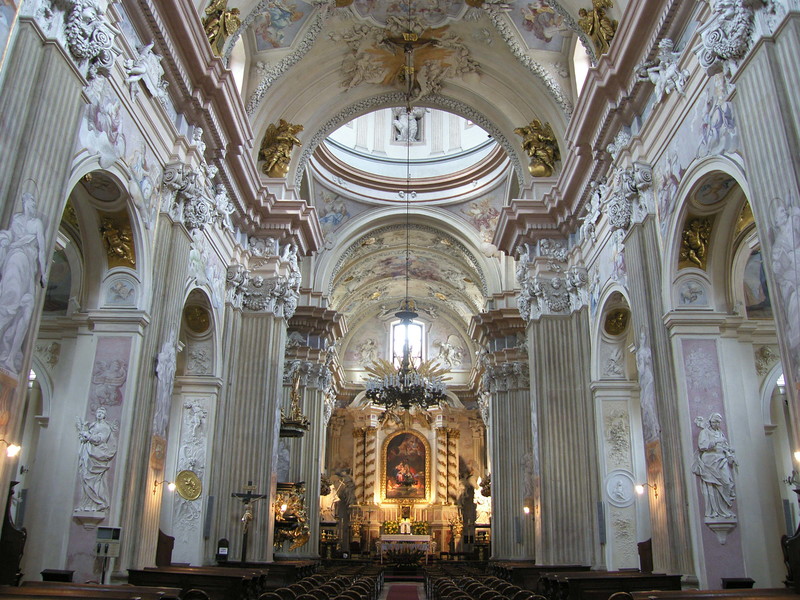
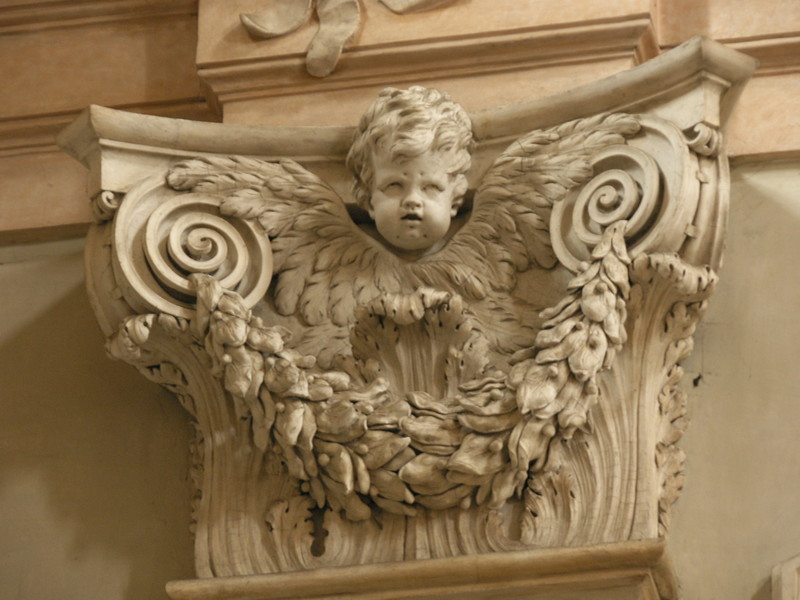
Complex interior design of the church includes stucco decorations of capitals, friezes, upper walls and vaulted ceiling of the chancel, transept and nave, as well as decorations of domes and arches of chapels and elements of altarpieces. The decorations are complemented by the antependia of the altars and pedestals of the figures, decorated in the scagliola technique (Fig. 2). The artistic quality of the stucco decoration is very high. The poses of the sculptures, both in-the-round and in bas-relief, are very varied and rarely repeated. The figures are shown in dynamic, expressive arrangements, usually standing in contrapposto, with their arms outstretched away from the torso, often making expressive gestures. The anatomy is correct, with great attention to detail, varying the proportions according to the age and gender of the characters. The extraordinary level of unification and integration of arts, significantly different from all earlier works by Fontana, is most likely dependent on the designs of Siemiginowski, who was familiar with Roman art. An important factor of the appearance of stucco decorations is the natural light. The illumination of the most important parts of church furnishing, correlated with respective church holidays, was carefully planned by Piskorski, who was deeply interested in astronomy and symbolic sundials.
Chapel of St. Sebastian


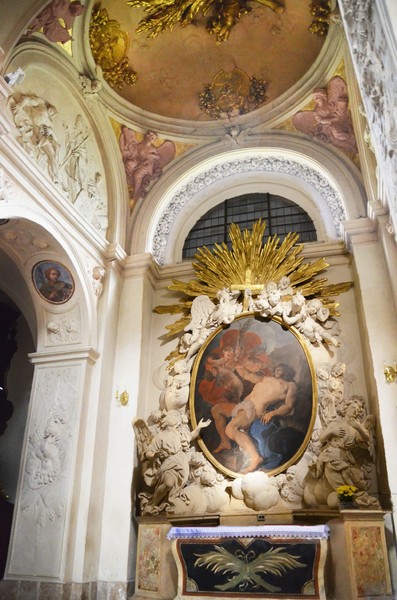
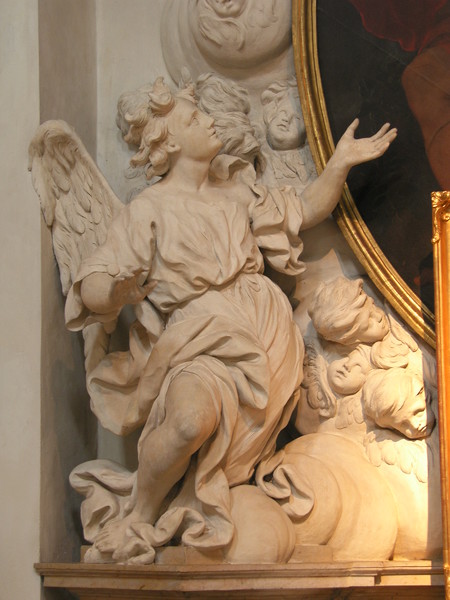
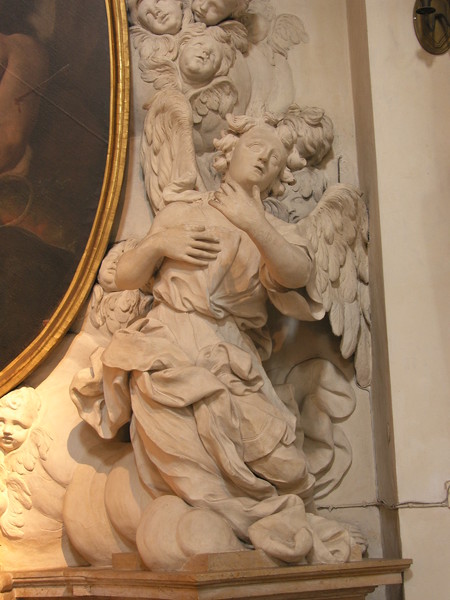
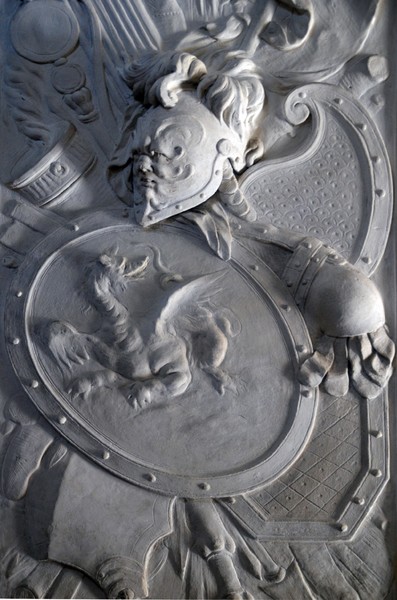
The furnishing of this chapel was sponsored by Piskorski himself and the costs were not revealed. Just after being finished in 1696, the chapel was opened to the public as the first part of the new church and probably the first interior in Cracow decorated entirely in the new Roman fashion. Its remarkable design made a significant impression and encouraged other donors to support further works in the church. Altar of St. Sebastian consists of a painting surrounded by figures of angels, the large ones kneeling on the sides, and the small one at the top holding a cross against the background of the glory (Fig. 3, 4, 5). In the arches of the chapel there are panoplies consisting of elements of church utensils (Fig. 6), and on the side walls, reliefs depicting scenes from the lives of Saints Alexius and Roch. The pendentives are filled with figures of angels holding attributes, coloured pink on a gold background. In the centre of the dome there are gilded representations of angels carrying a palm branch, and around it there are medallions with personifications of virtues.
High altar


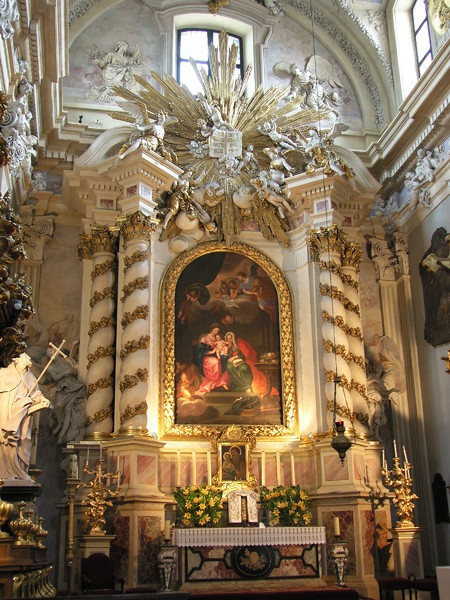
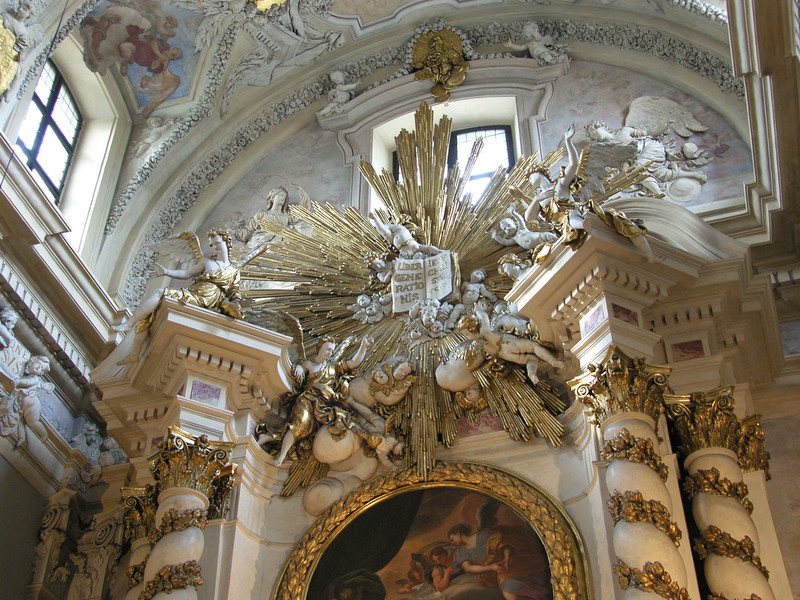
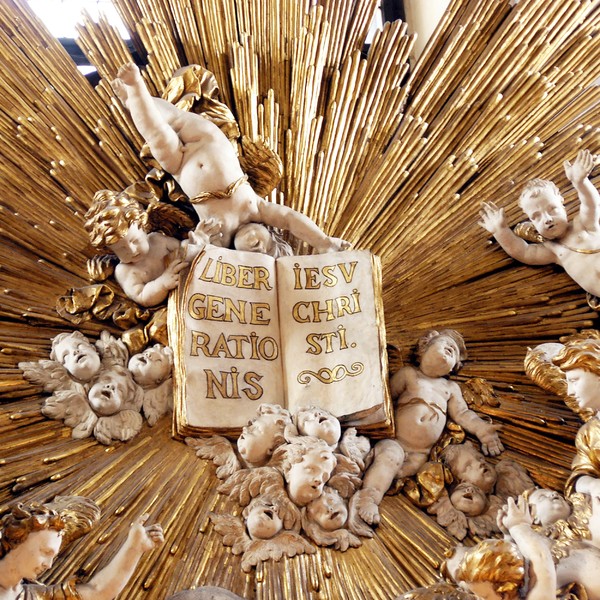
Construction and decoration of the altar costed 8833 Polish zloty (zlp), and it was sponsored by prof. Krzysztof Sowiński (1642-1699). The painting by Jerzy Eleuter Szymonowicz-Siemiginowski costed 1111 zlp which was covered from the money left in last will by Anna Balcerowiczowa. The altar is a large aedicula, composed with two pairs of twisted columns and fragments of entablature flanking a surmounting rayed glory (Fig. 7, 8). In its centre there is an opened book with the first verse of the Gospel of St. Matthew (Fig. 9). At the lower parts of the columns and around the book there are figures of adoring angels. The antependium is decorated with scagliola and the pedestals of columns are ornated with a fake marble.
Chancel


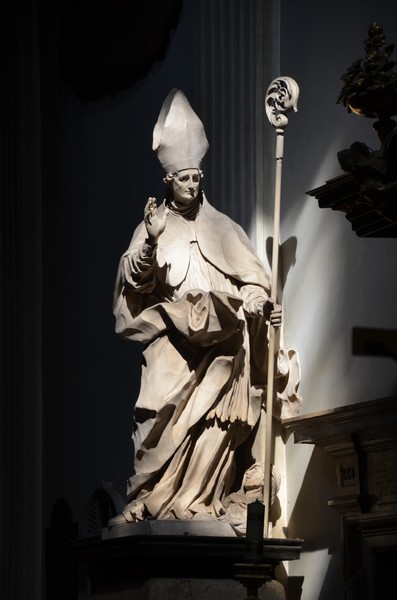
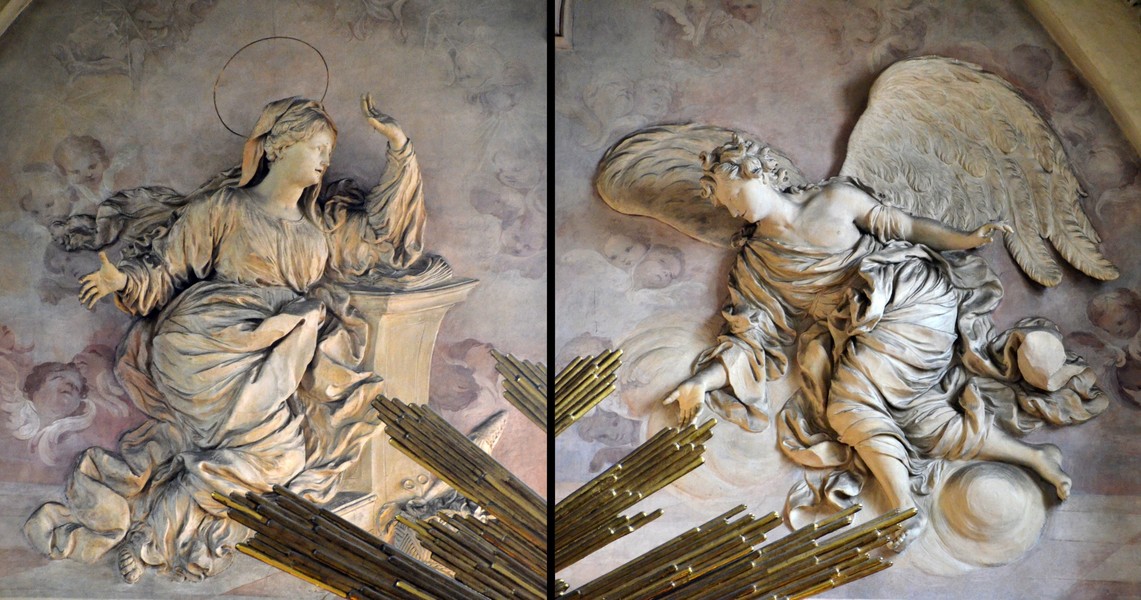
The composition of the high altar is complemented by the figures of St. Adalbert and Stanislaus (added in 1701) (Fig. 10), placed on pedestals at the sides of the altar. The vaulted ceiling of the chancel is divided into three fields containing figural scenes in various frames, richly decorated with stucco. At sides there are figures of angels supporting gilded stucco medallions with depictions of saints. In the lunettes, separated by garlands of flowers, fruits and vegetables, supported by putti, there are gilded relief medallions depicting the Annunciation to Anne and Joachim, decorated from below with palm fronds and supported by putti. Centres of the outer bays are filled with reliefs in smooth strip frames, showing the Adoration of the Child and the Dove of the Holy Spirit (above the altar). On the wall, on the sides of the window, there are stucco figures depicting Annunciation to the Virgin (Fig. 11), and on the cornice crowning the opening – a medallion showing God the Father, surrounded by a garland and a putto on the sides.
Frieze


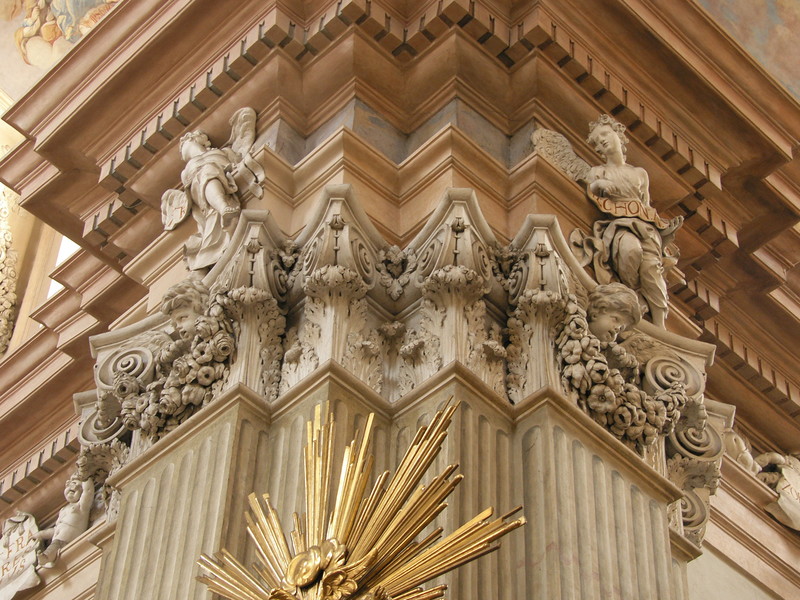
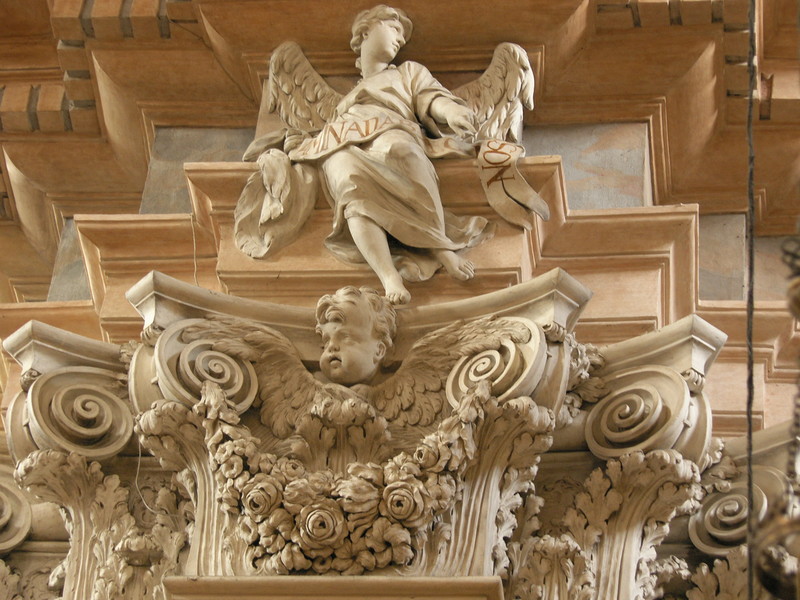
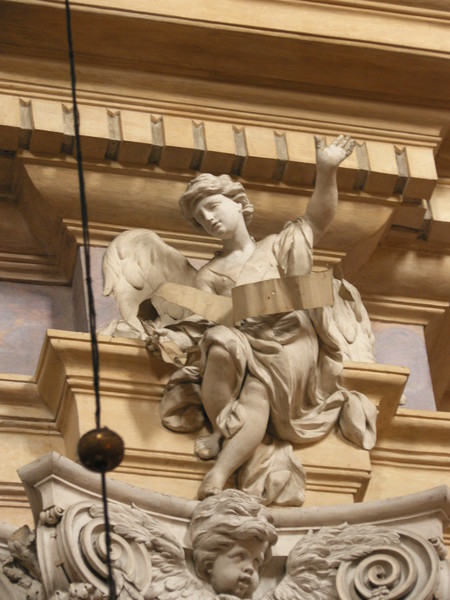
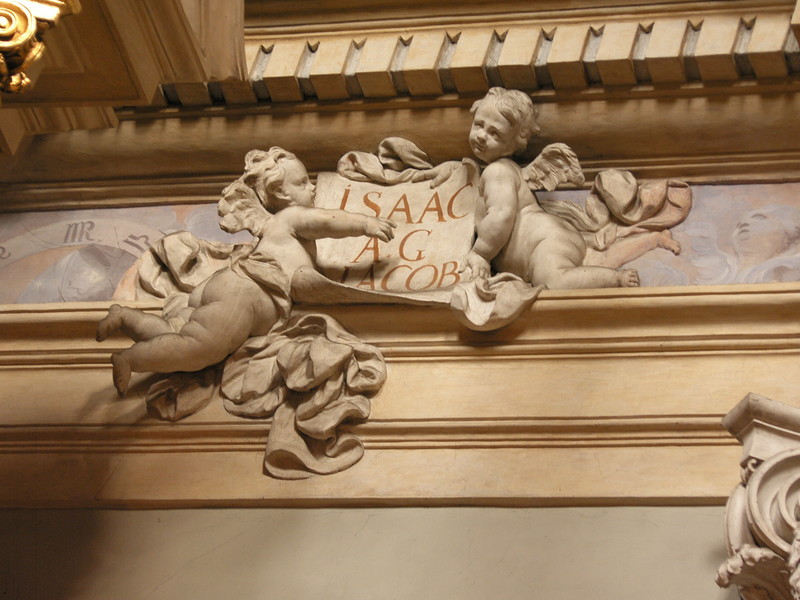
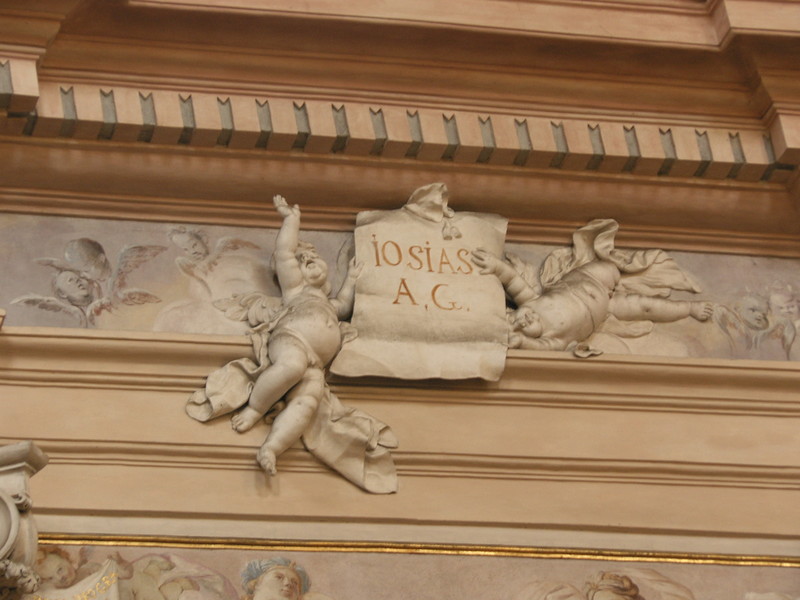
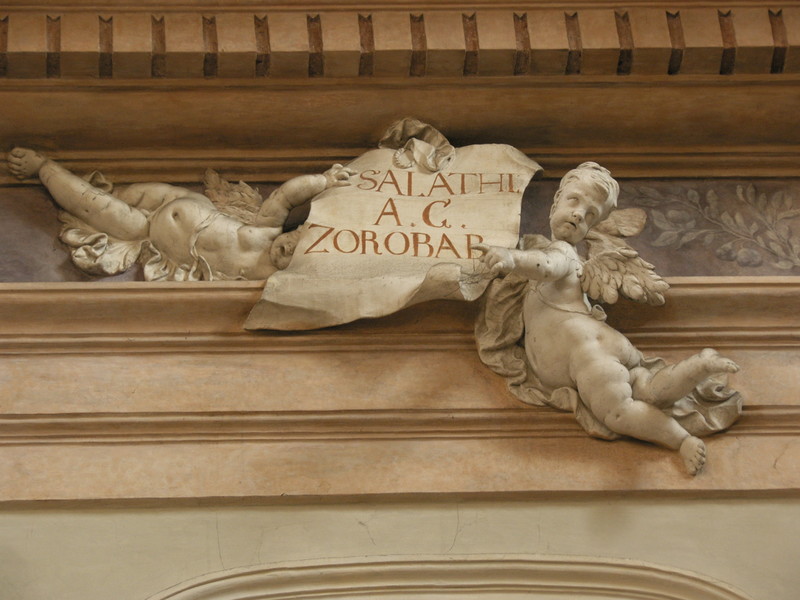
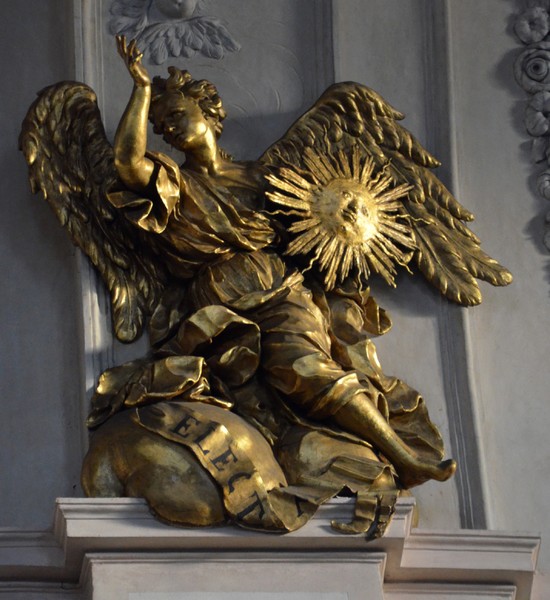
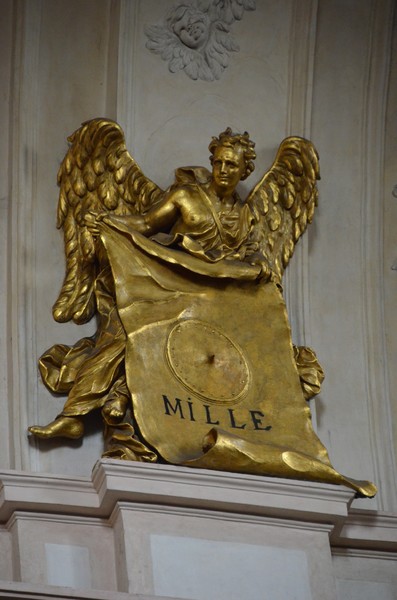
The frieze continues through all the main spaces of the church, that is the chancel, the transept chapels and the nave. Its entire length is decorated with heads and figures of putti and angels supporting scarves and phylacteries – each of them contains a verse from the first chapter of Gospel of St. Matthew, starting from the right side of the high altar (Fig. 12, 13, 14, 15, 16, 17, 18).
Nave


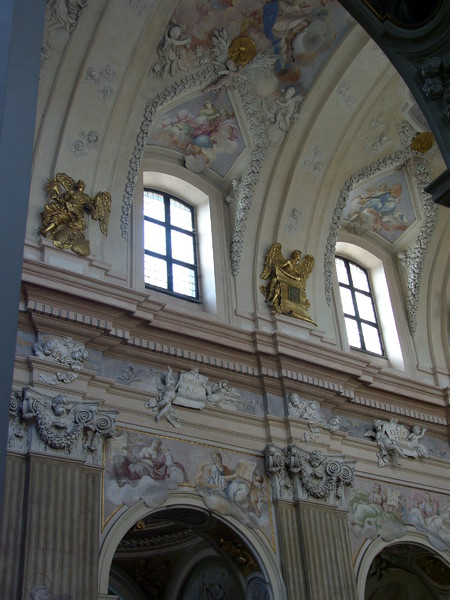
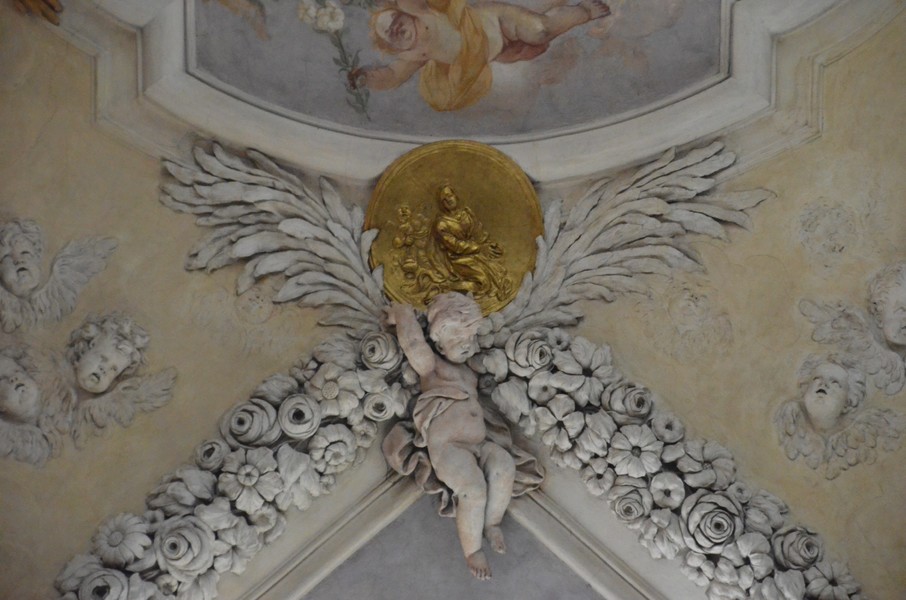
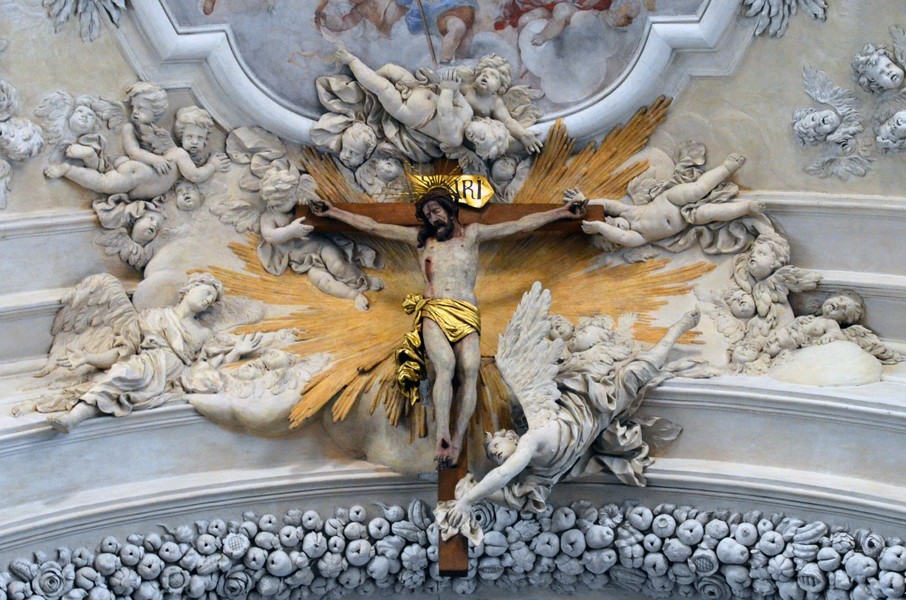
The stripes are decorated with heads, and at their base there are gilded figures of angels holding scarves with the attributes of the Virgin Mary (Fig. 19, 20, 21). The vault frescoes are connected with stucco heads and putti, and the lunettes are separated with stucco garlands supported by putti (Fig. 22). Above them there are gilded medallions surrounded by palm fronds. Similar compositions appear on the sides of the fresco in the choir bay. At the top of the chancel arch there is a wooden crucifix, placed against a background of stucco glory, surrounded by putti and angels, one of which supports the base of the cross (Fig. 23). At the base of the arch there are gilded figures of adoring angels. On the lunette scenes of the Annunciation to Anna and Joachim are shown in relief.
Chapel of St. John Cantius


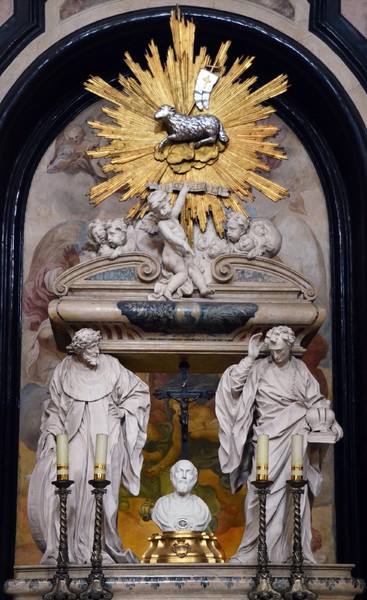
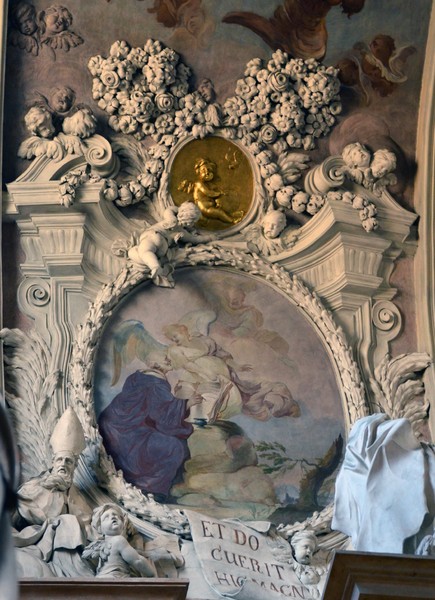
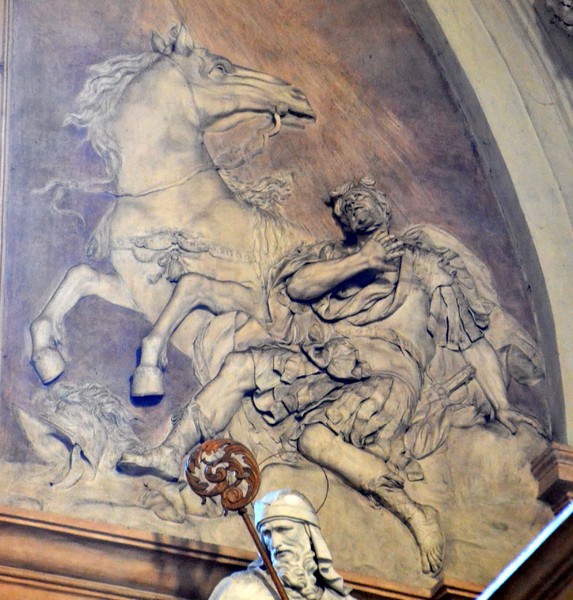
Furnishing and decorating this chapel costed 15002 zlp, and its main benefactor was bishop Kazimierz Łubieński (1652-1719), who donated 6887 zlp. In the altar of St. John Cantius (Fig. 24) stucco was used to make the personifications of the four Faculties of the Academy supporting the coffin and the figures of four Saint Johns placed on the columns surrounding it. On the coffin itself there is a putto surrounded by clouds and winged heads. With his right hand he points to the portrait of the saint, with his left hand to the silvered sculpture of the Lamb of God in Glory. The altar's composition is complemented by figures of an angel and putti holding laurel wreaths, placed on the entablature behind the coffin, and winged heads on the outer wall of the transept. Above Cantius’ grave there are paintings in rich stucco frames, separated by laurel wreaths placed against the background of an eared frame with palm frond and volutes, and topped with a concave entablature with fragments of pediment, interrupted by gilded medallions surrounded by putti and floral compositions (Fig. 25). At the bottom there are seated figures of the Fathers of the Church surrounded by putti, winged heads and scrolls with inscriptions. On the wall by the window, are relief scenes of the Vision of Saint Peter and the Conversion of St. Paul (Fig. 26). The decoration of the chapel also includes the decorations of the arch leading to the passage connecting it with the neighbouring one. It contains reliefs depicting compositions hanging on scrolls, consisting of astronomical and geometric accessories and books.
Chapel of The Holy Cross


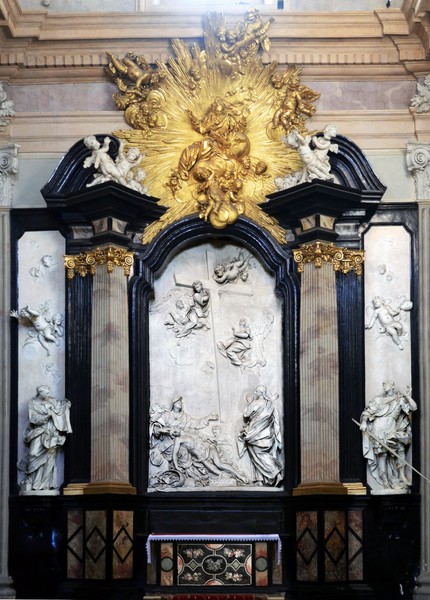
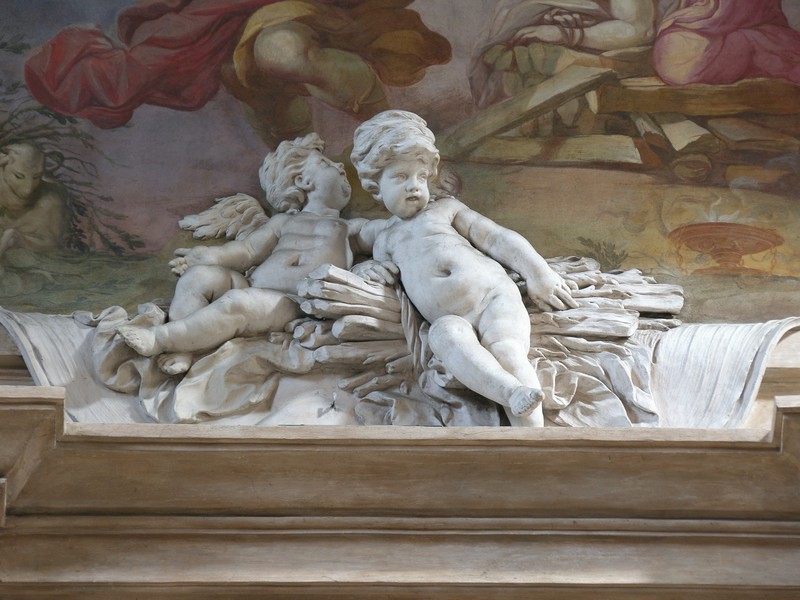
The chapel didn't have a main benefactor, so its decoration wasn't separated from general spendings of church construction. Altar of The Holy Cross houses a huge stucco relief depicting the glory of the Cross, carried by angels and putti, adored by the Virgin Mary with the dead Christ resting on her lap and the figure of Saint John turned back from the viewer (Fig. 27). On the sides of the main field there are figures of Saints Veronica and Longinus, above whom there are putti and winged heads, and on the top, a figure of God the Father in glory, surrounded by putti and angelic heads. The vault of the chapel is designed in a similar way as in the chapel opposite, and at its springing there are putti figurines that are compositionally combined with the frescoes in their background (Fig. 28). In the centre of the bay there is a glory with a representation of the Eye of Providence, adored by angels on the lunette wall, and below, depictions of putti and seated angels holding ladder and column, in relief. The decoration of the chapel is also related to panels with depictions of Arma Passionis in the arch leading to the adjacent chapel.
Chapel of St. Peter


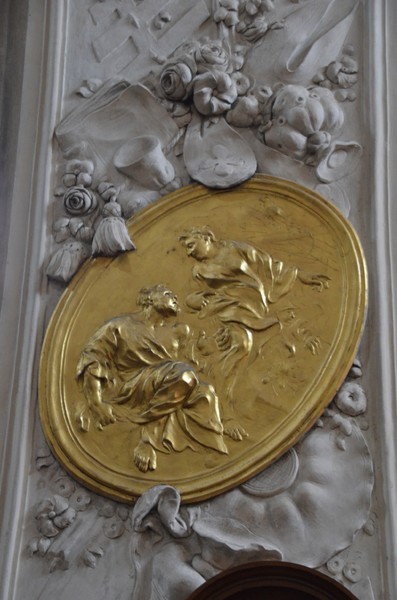
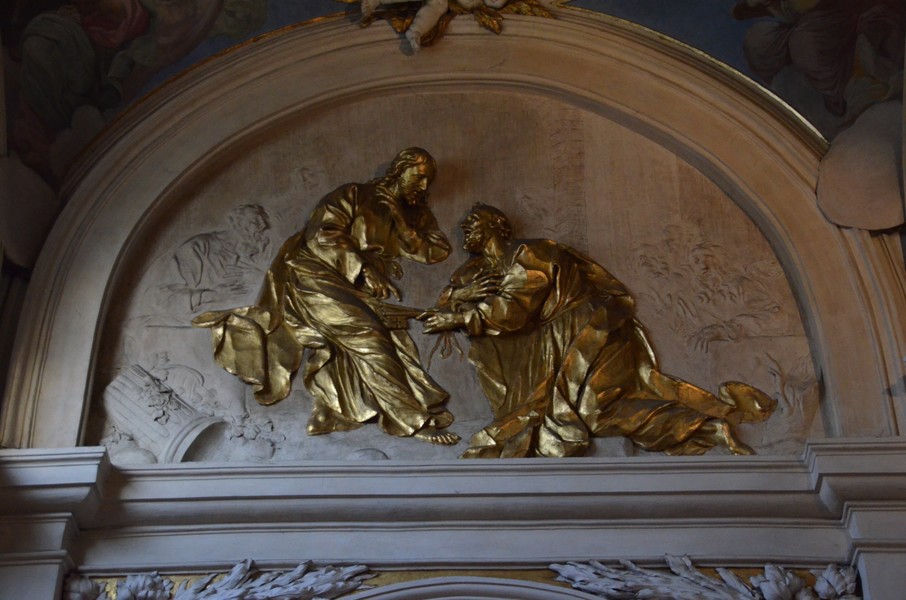
Expenses for this chapel was much higher than to the opposite due to richer gilding of stuccoes, amounting to 3837 zlp. which was covered by the mitrate of Tarnów collegiate prof. Piotr Stanisław Orłowski (1641-1708). In the arches leading to it there are “panoplies" consisting of the patron's attributes, into which gilded medallions with scenes from his life were incorporated from the side of the nave. (Fig. 29). On its walls there are reliefs with scenes: The Healing of the Paralytic and Traditio Clavis (Fig. 30).
Chapel of the Immaculate Virgin


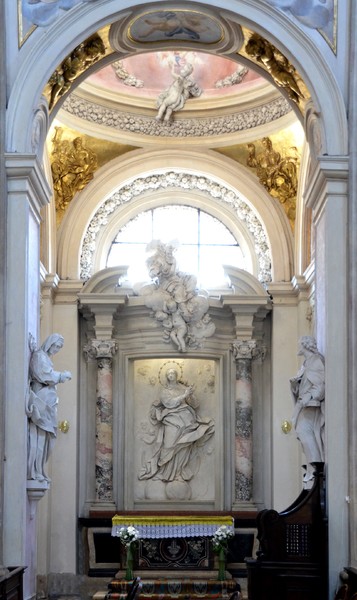
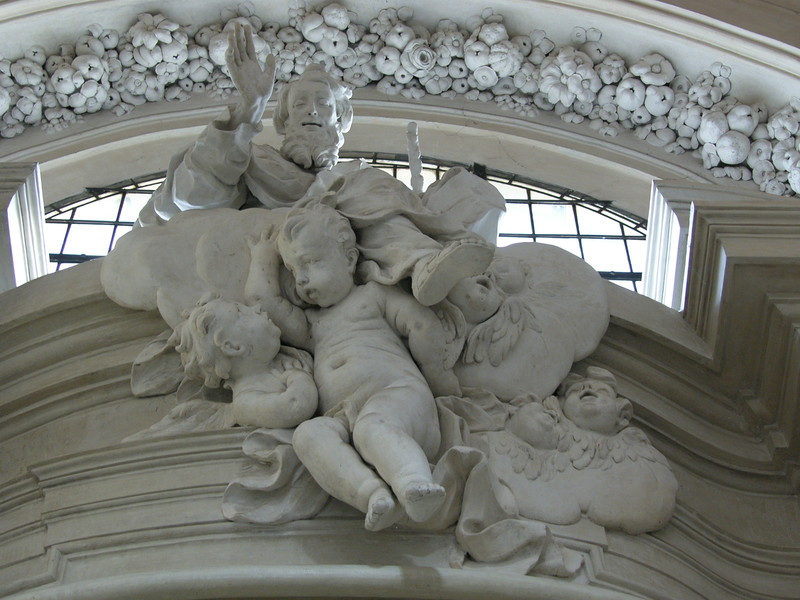
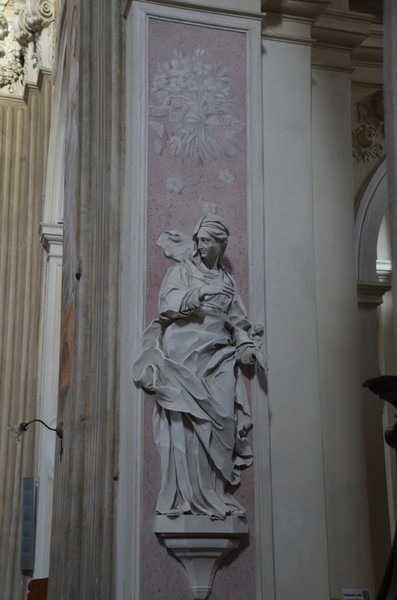
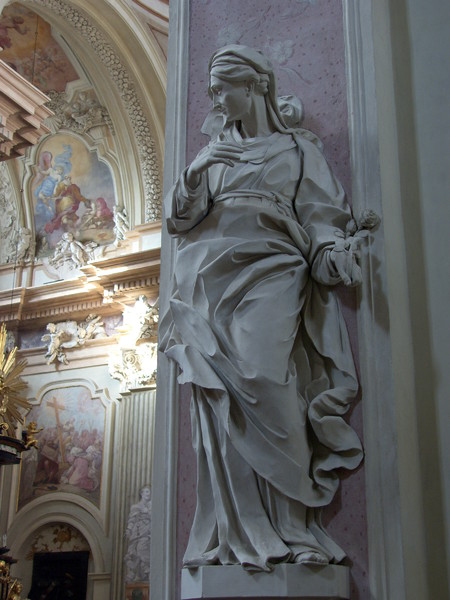
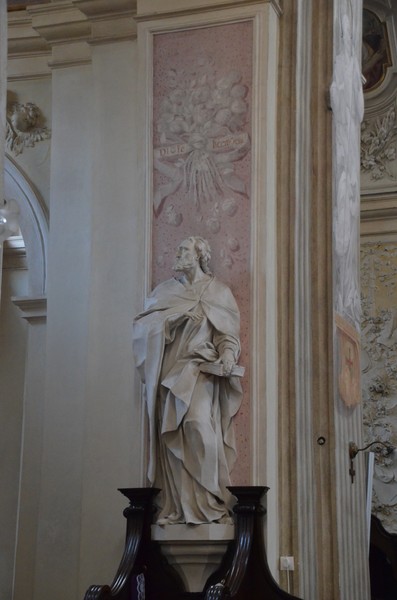
Canon of Tarnów Dominik Kazimierz Górecki donated 2000 zlp for the chapel, but the total costs amounted to 3678. The aedicule altar in the former houses a figure of the Virgin Immaculate, illuminated from above through an opening hidden behind a bulging cornice (Fig. 31). On the entablature, on the clouds supported by putti, there is a figure of God the Father (Fig. 32). Inside the arch there are statues of Saint Anne and Joachim. The pendentives contain gilded representations of the Evangelists (Fig. 33, 34, 35). The window frame and the frieze separating the dome are decorated with compositions of flowers, fruit and vegetables. On the cornice there are four putti with raised hands, set against the background of angels painted in fresco. The dome contains four gilded medallions surrounded by garlands tied with ribbons. The lantern opening is also framed with a wreath of plant motifs.
Chapel of St. Catherine


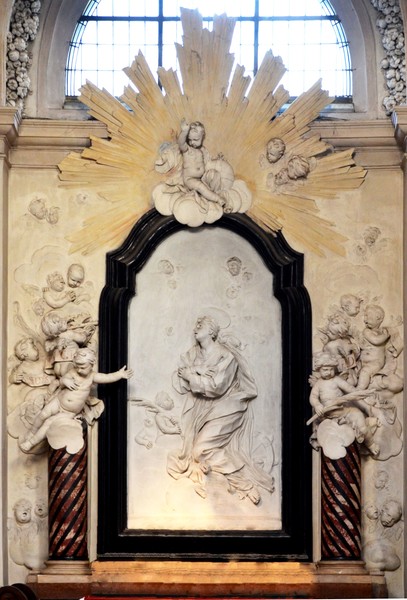
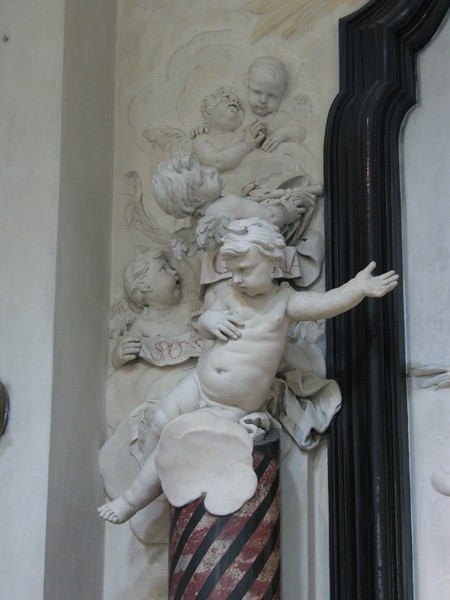
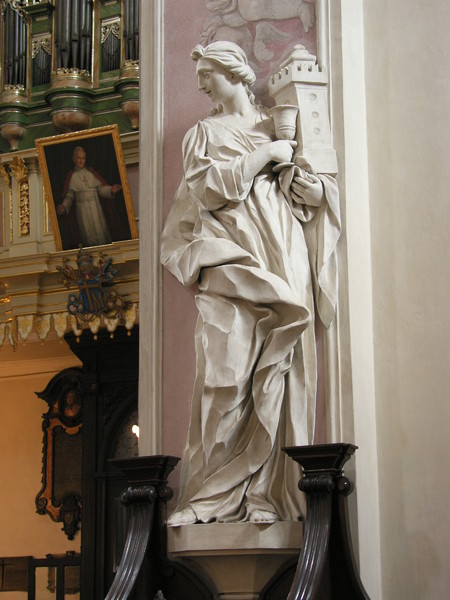
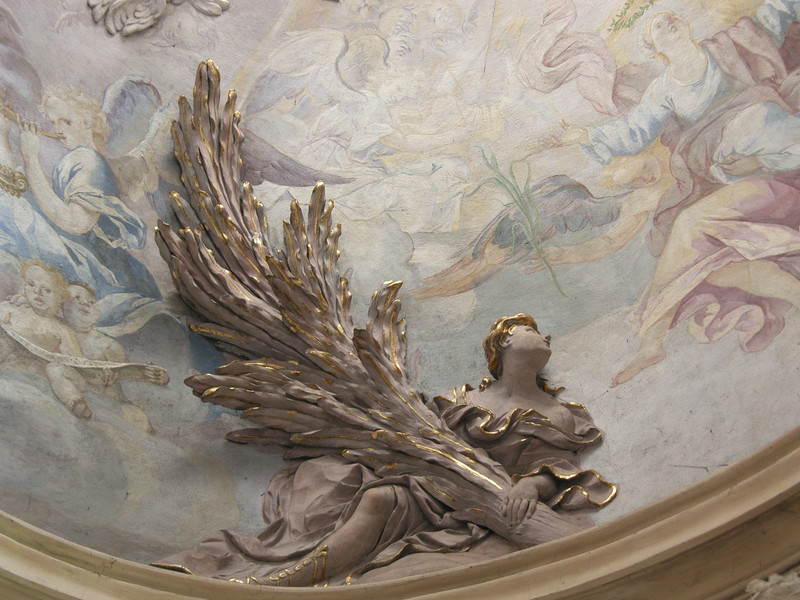
Decoration of this chapel costed 3187 zlp and was covered by archdeacon of Cracow prof. Remigiusz Suszycki (1642-1705). Altar of St. Catherine has the form of a moulded frame with a depiction of the Ecstasy of St. Catherine in relief, topped with the image of Baby Jesus in glory (Fig. 36). The relief was framed in the lower halves of the columns, on which groups of putti holding palm branches and phylacteries are placed (Fig. 37). In the arch of the chapel there are statues of Saints Agnes and Barbara (Fig. 38), and in the side arches there are putti in bas-relief with the attributes and crossed branches. The pendentives were filled with gilded representations of the Virtues. In the dome, separated by a laurel wreath, there are four partially gilded figures of geniuses holding bundles of palm branches (Fig. 39).
Chapel of St. Joseph


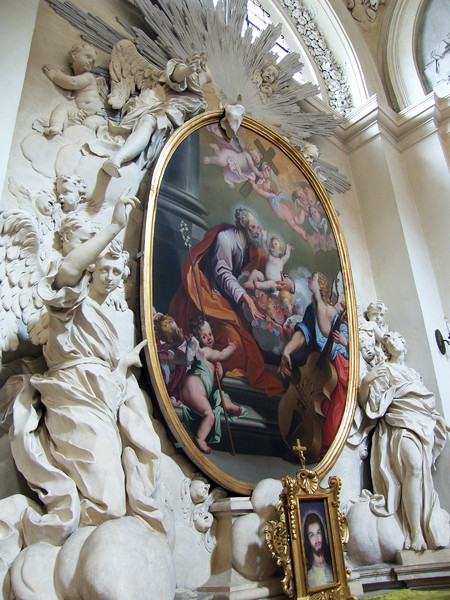
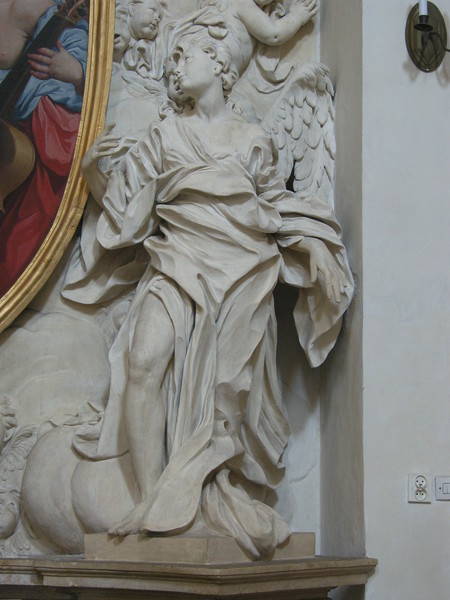
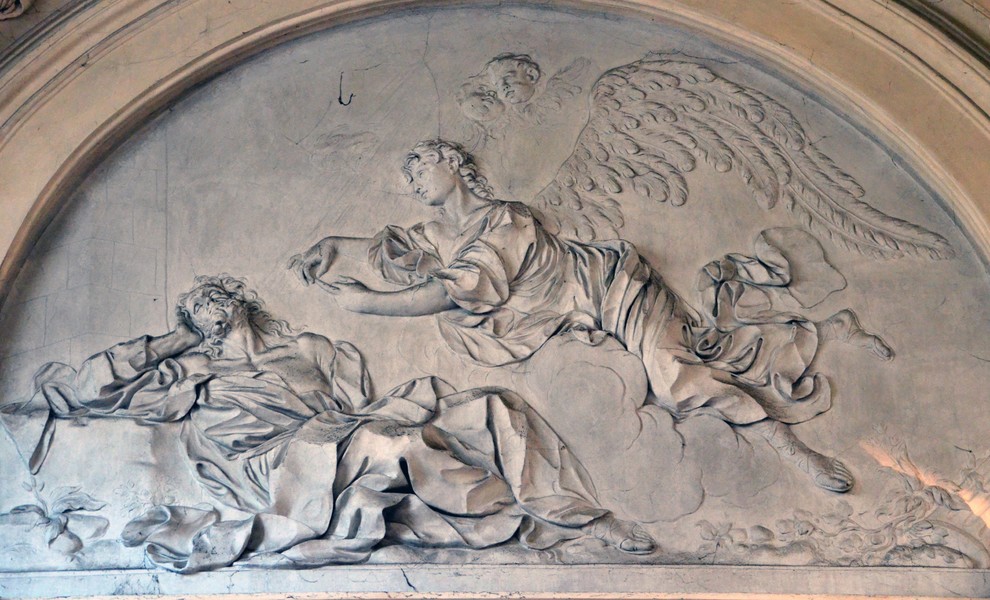
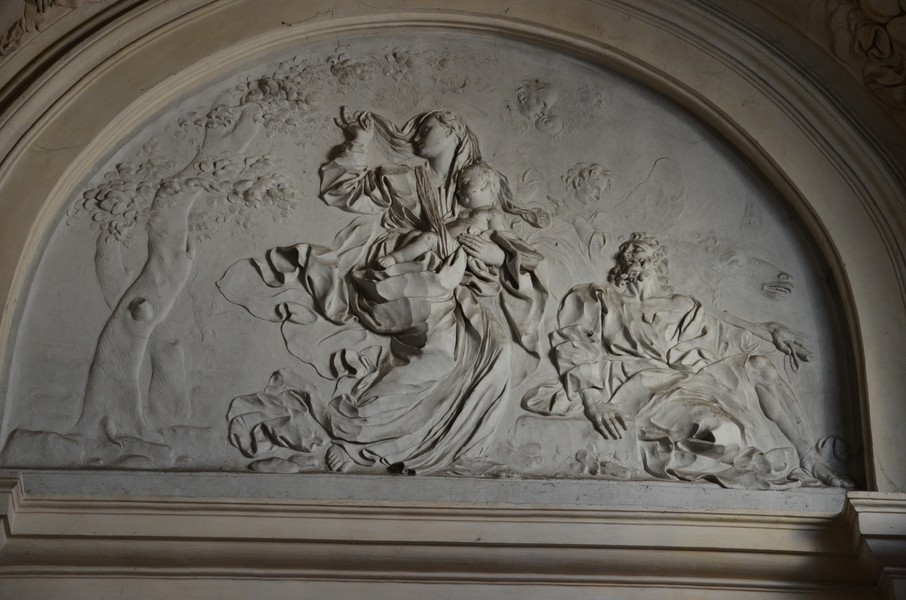
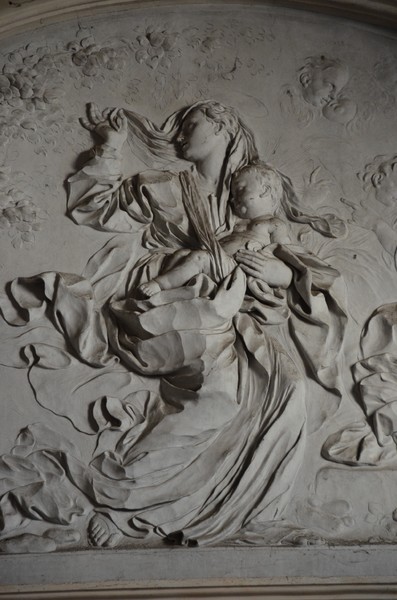
Cost of furnishing the chapel amounted to 2621 zlp, and was covered with some surplus by the tribune of Sącz Aleksander Myszkowski, who thus became the most generous secular donor to the church. The chapel of St. Joseph has an altar similar to that of St Sebastian: one of the angels holds the frame of the painting, and in the glory there is a figure of the Dove (Fig. 40, 41). The walls are filled with reliefs depicting the Dream of Saint Joseph (Fig. 42) and Rest on the Flight to Egypt (Fig. 43, 44). Putti with phylacteries appear in the pendentives. The frieze is decorated with winged heads, and the blind dome is a scene of the saint's glory. There are four medallions on its sides, enclosed in twigs tied with ribbons.
Chapel of St. John the Baptist

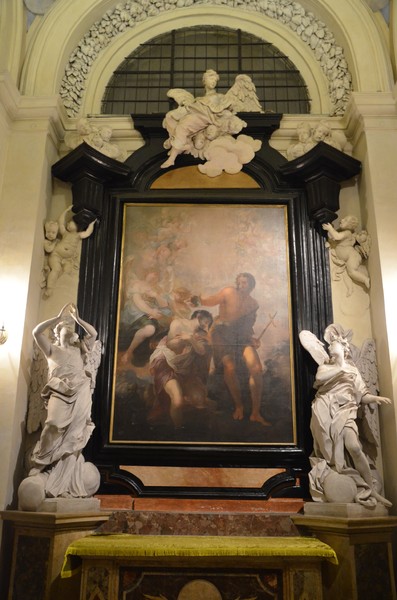
Furnishing and decorating of the chapel costed 2682 zlp and most of this was covered by Crown Referendary Jan Władysław Przerębski (died 1704). The arch of the chapel of St. John the Baptist is decorated with medallions showing John and Christ as infants. The walls on the sides of the interior are filled with reliefs depicting John in the wilderness and his martyrdom. In the centre of the false dome, against the background of glories, there is the figure of an angel holding a scroll with an inscription, and on the sides, four groups of putti and angel heads. At the top of the altar there is a seated figure of an angel with a scroll, and on the sides there are full-length figures of angels adoring an image. (Fig. 45).
Façade

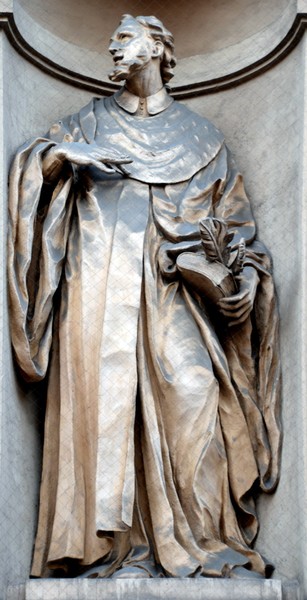
The stucco decoration of the façade consists of bas-reliefs representing seated angels above the side entrances and statues of saint placed in niches” Bernard of Clairevaux and John Cantius in the lower level as well as Casimir and Florian in the upper one (Fig. 46). Above the window illuminating the nave, there is a bas-relief depicting the Virgin Mary and Child, and on the sides of the window in the attic, pairs of flaming vases.