DOMINICAN CHURCH OF THE HOLY TRINITY
Dominican Church of the Holy Trinity
Ul. Stolarska 12
31-043 Cracow
Poland
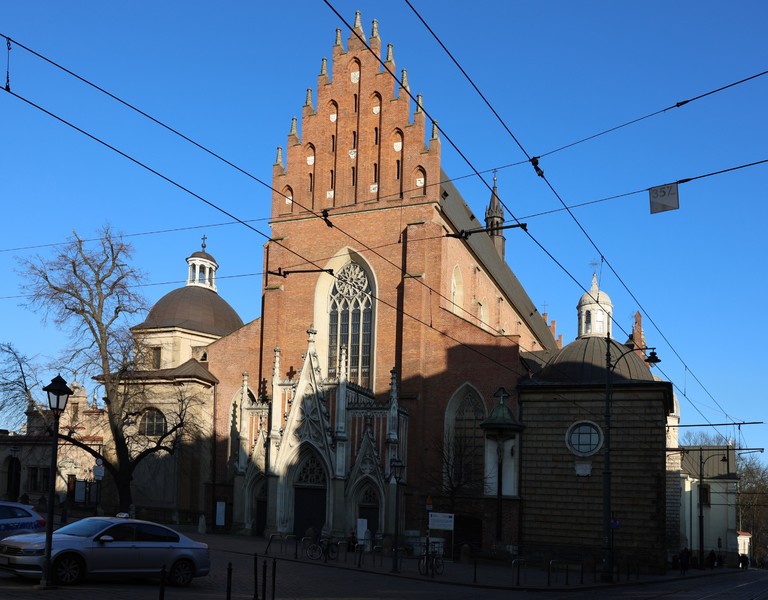
In 1222, a group of Dominicans led by Saint Hyacinth Odrowąż (1183-1257), invited by his uncle Bishop Iwo (1160-1229), came to Cracow from Bologna and settled by the Church of the Holy Trinity, while the parish was relocated to the new church of Our Lady. A new hall church was built after the Mongol invasion of 1241 and rebuilt in the basilica form at the turn of the 14th century (Fig. 1). In 1850, the great fire of Cracow destroyed the church, whose body collapsed during subsequent restorations and until 1884 was rebuilt under the supervision of architect Teofil Żebrawski (1800-1887) and Prior Mariano Pavoni (1829-1901), who designed the new high altar and porch. Side chapels survived the fire. The stucco decorations of the Saint Hyacinth chapel were restored and gilded in 1872, 1894, and 1931. Probably around 1894 reliefs in two pendentives and a medallion in the dome were replaced.
Chapel of St. Hyacinth


Saint Hyacinth was worshipped shortly after his death in 1257. During the effort for his canonisation, his relics were translated to a chapel built in 1543–1545 above the cloister, in the corner between the church’s north aisle and chancel. A new chapel was built on the same site in 1581–1583 and decorated in 1614-1618 with grotesque ornaments carved in limestone and paintings, later repainted.
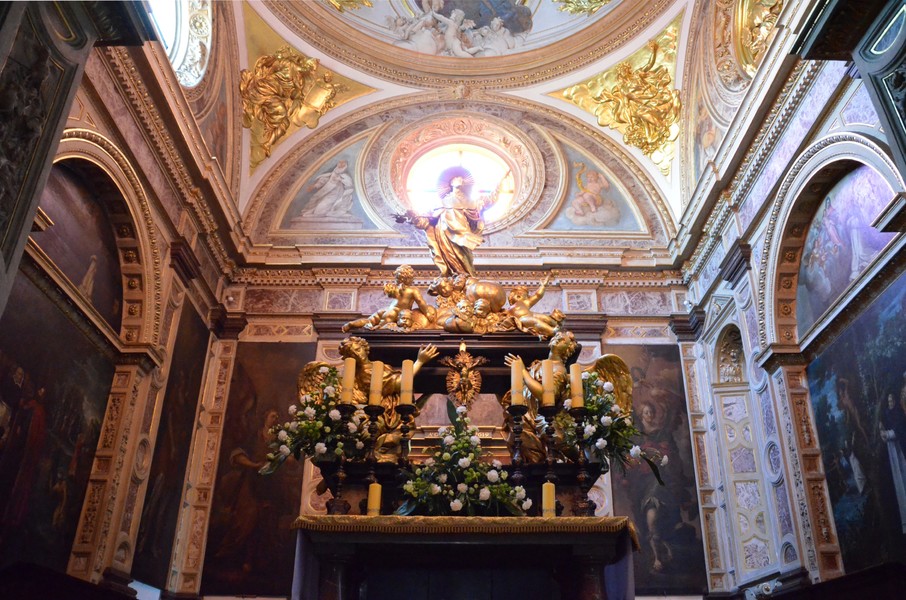
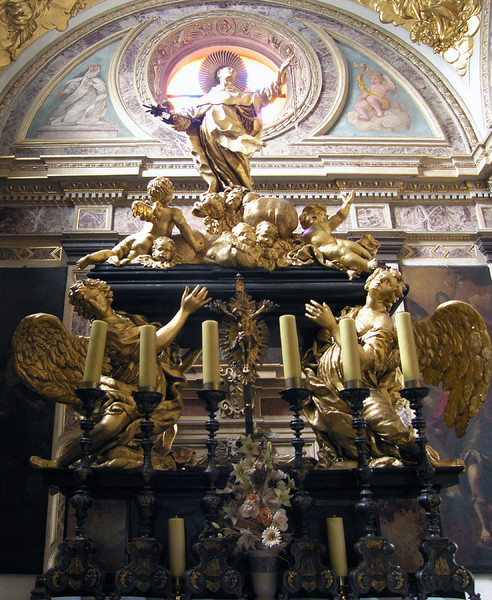
The monument saint’s from 1540s was moved to Bochnia and replaced in 1583 with a polychrome alabaster monument, dismantled in 1626 due to its weight and partially reused as furnishings in St. Giles church in Cracow. A new marble tomb was created in 1629 by Andrea and Antonio Castelli and later replaced by the present shrine by Baldassarre Fontana (Fig. 2)1. What is known is that the works must have taken place during the tenure of the prior Kazimierz Napolski. It’s possible that Fontana was recommended by Sebastian Piskorski (1636-1707), who might also be involved in the planning of the new arrangement of the chapel, with innovative use of natural light illuminating the saint’s statue around the time of his death (mid-August).
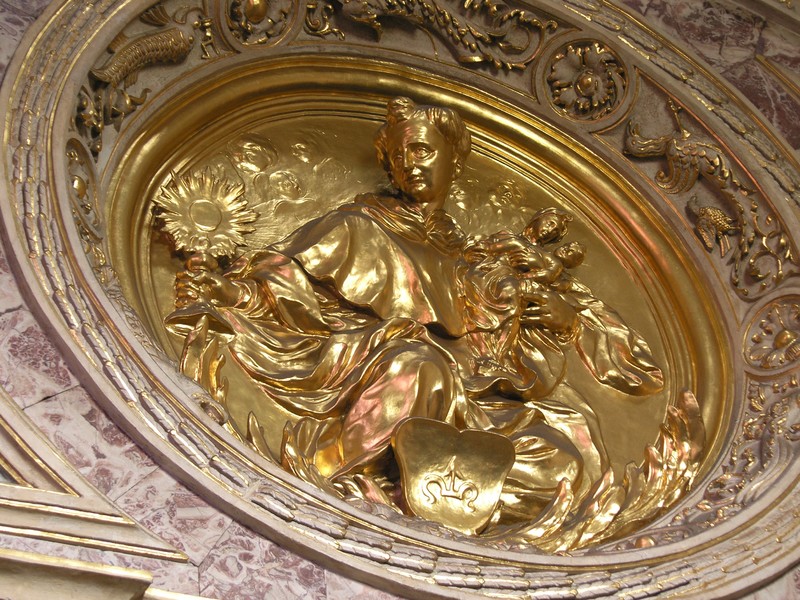
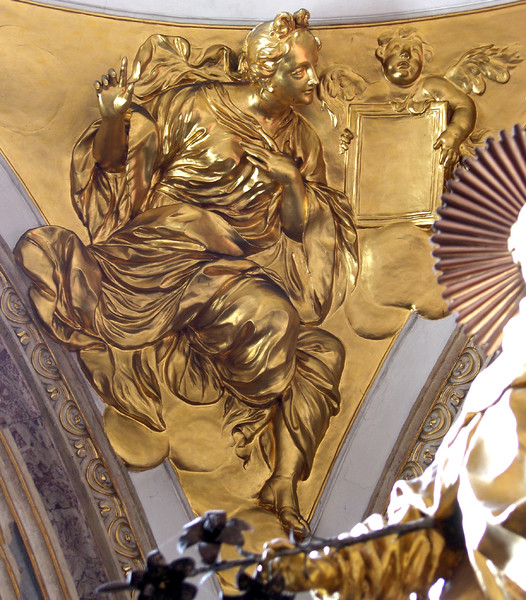
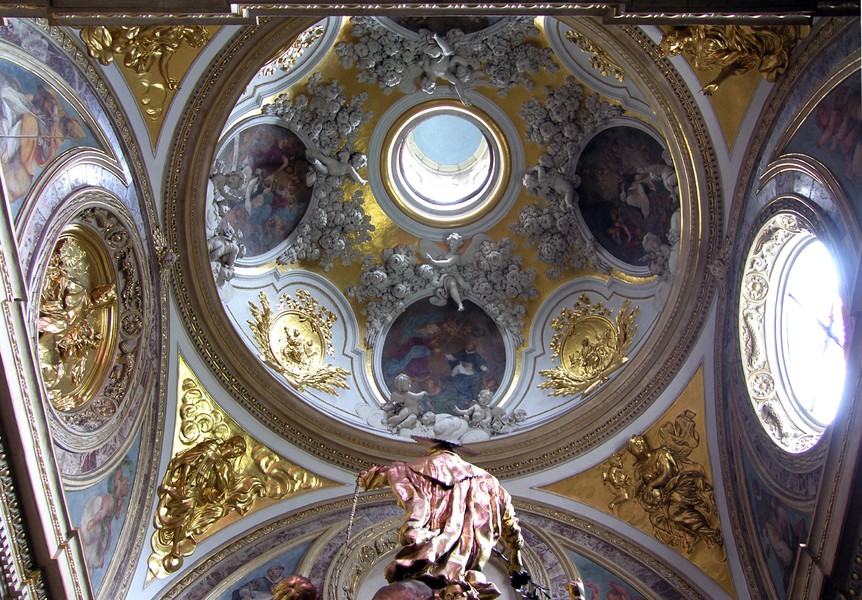
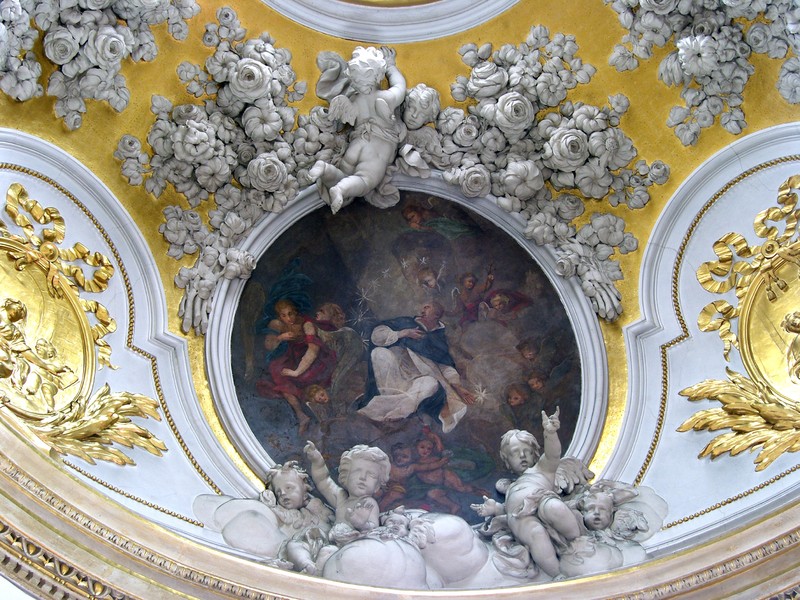
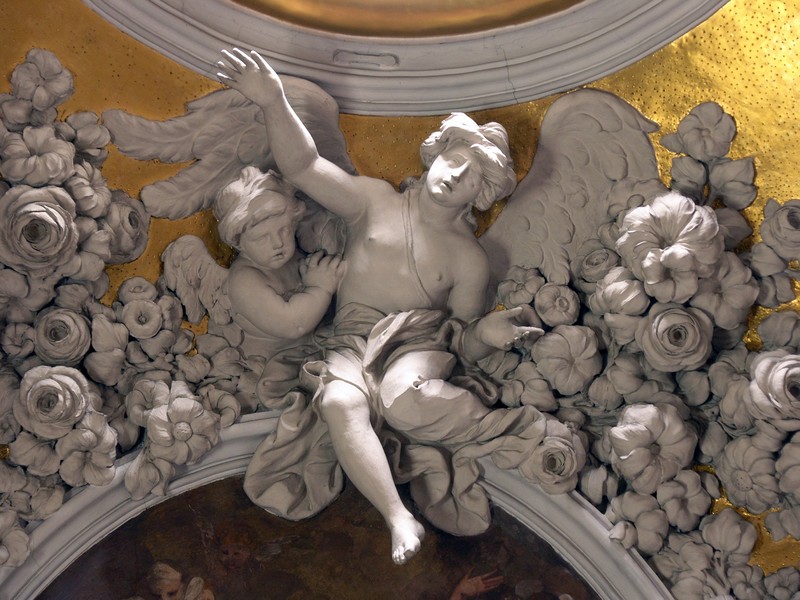
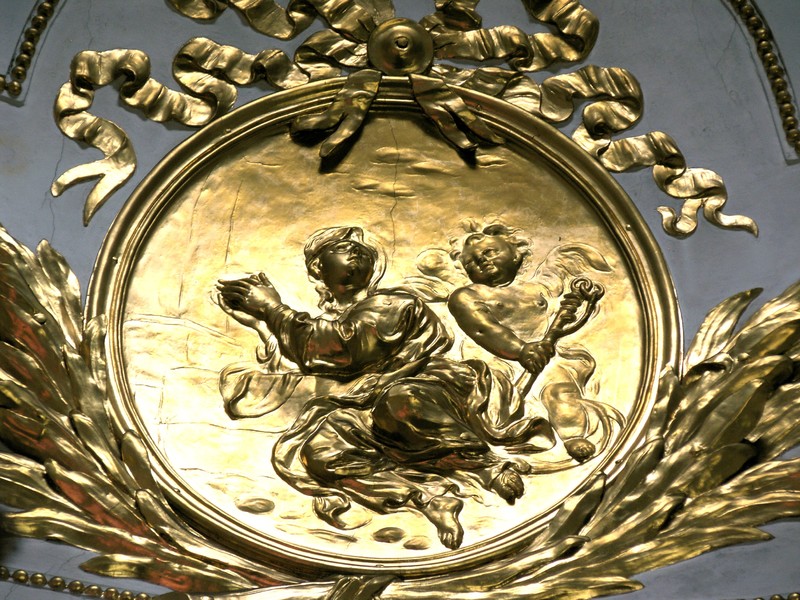
In the upper part of the south wall, a stucco relief depicts Saint Hyacinth holding a monstrance and a statue of the Virgin (Fig. 3). The pendentives contain gilded personifications of virtues: Temperance and Prudence (originals) (Fig. 4), Courage and Hope (later replacements). In the dome there are white angels and cherubs among floral decorations and gilded medallions (Fig. 5, 6, 7, 8)2.
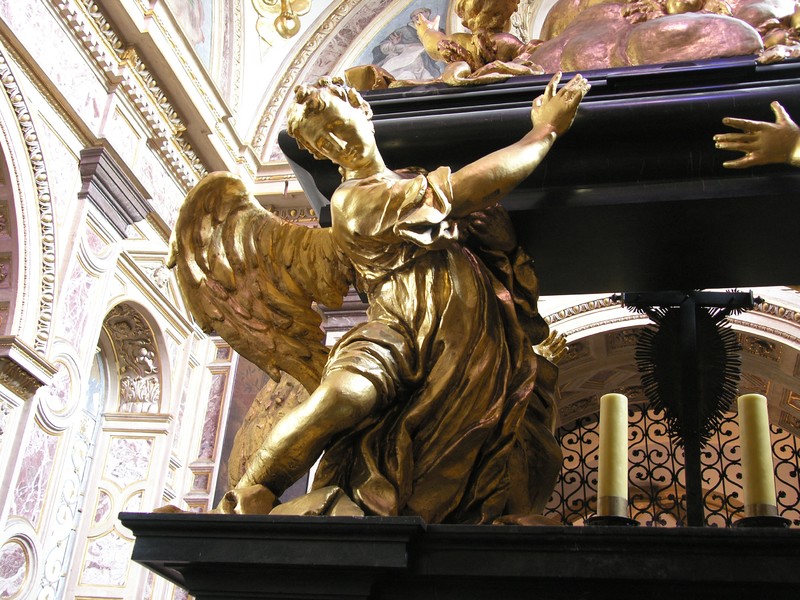
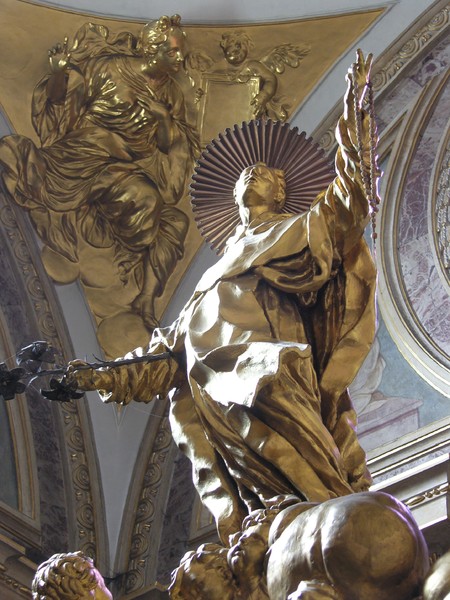
The tomb consists of two pairs of gilded figures of kneeling angels carrying a black marble coffin on their shoulders (Fig. 9, 10). Above it surrounded by adoring angels stands the figure of the saint, holding a lily and facing his bust in a tondo (Fig. 11).