FORMER RESIDENCE OF THE VELEHRAD CISTERCIANS (CASTLE)
Former Residence of the Velehrad Cistercians (castle)
Saidova 19/9
620 00 Brno-Tuřany-Brněnské Ivanovice
Czech Republic
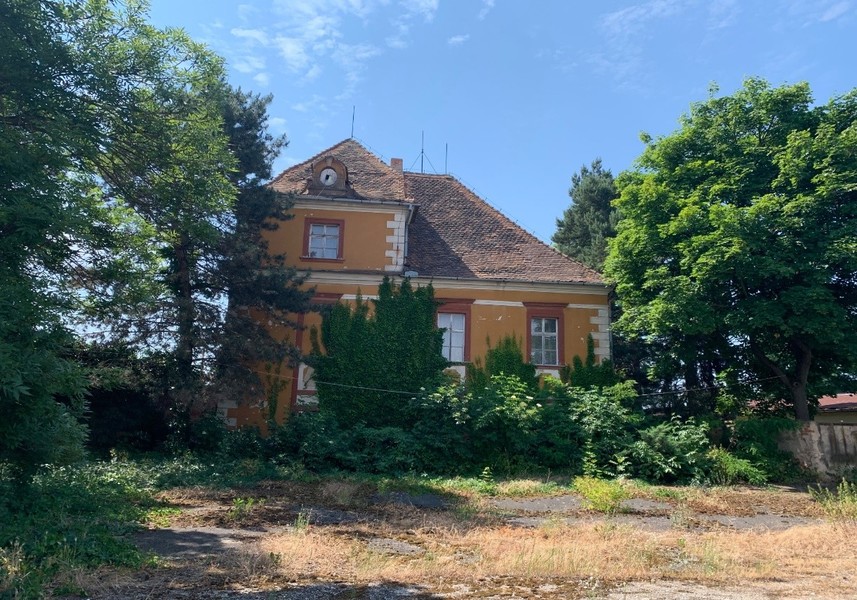
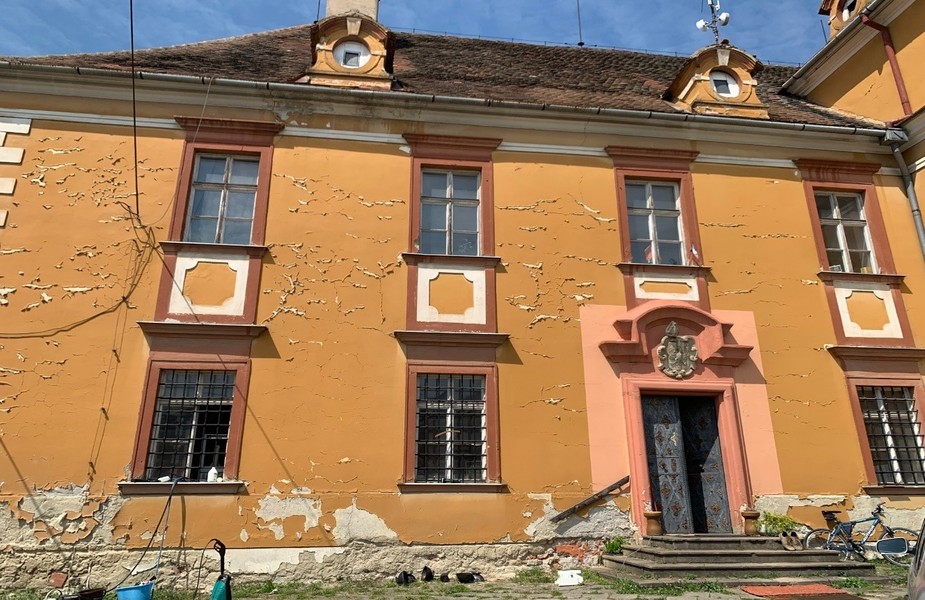
Brněnské Ivanovice (Nenovice) is historically tied to the Cistercian monastery of Velehrad, which controlled the village from the 13th century1. In 1683, the Cistercians commissioned the construction of a residence near the manor farm, intended for the abbots of Velehrad (Fig. 1, 2). After 1725, the building underwent significant modifications, including the addition of a private chapel and stucco decorations by Baldassare Fontana 2.
The property passed into private hands in the 18th century, was confiscated in 1945 under the Beneš decrees, and after 1948, was used by agricultural enterprises. Renovated between 1980 and 1984, it became state property in 1992 but was soon privatized. Since 2001, it has been owned by the company Jamoz, s.r.o., and the former residence remains closed to the public. After 2000, undocumented interventions and numerous whitewashings caused the loss of mural paintings and damage to the stucco work.
Private Chapel


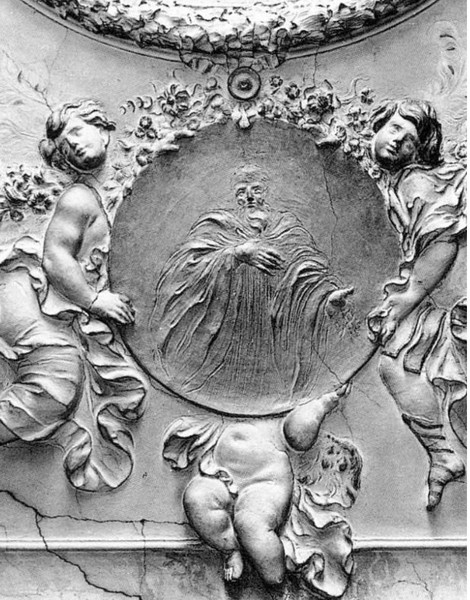
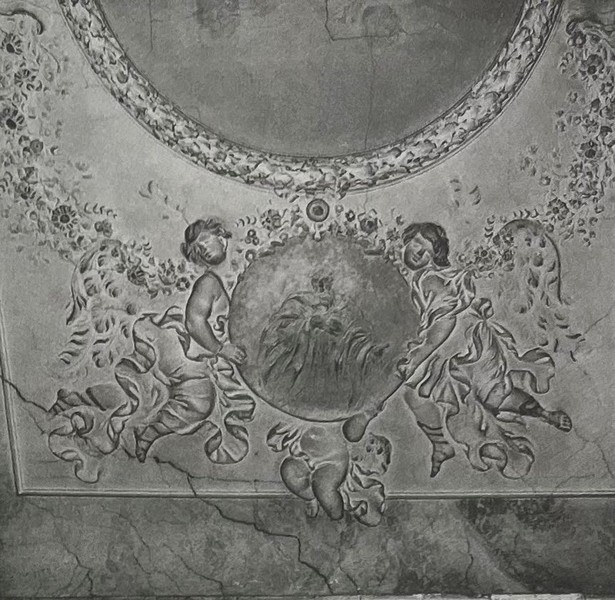
The stucco decoration of the private chapel ceiling is focused in a rectangular field, with a central circular frame surrounded by leaf motifs (fig. 3). On the short sides, medallions supported by angels in bas-relief enrich the composition (Fig. 3, 4). Karpowicz attributes these angels to Fontana's assistants, who may have also worked on the Chapel of San Sebastian in Craców.
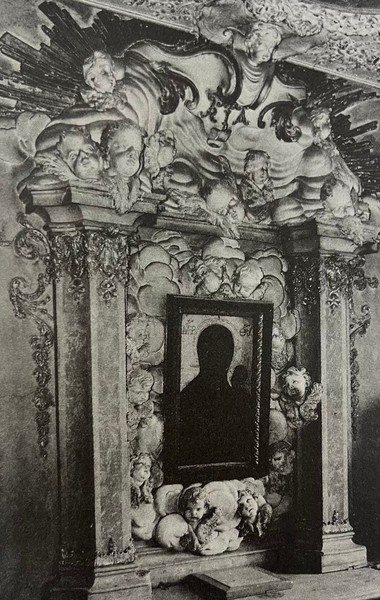
Bohumil Samek reports stucco decorations on the chapel's altar 3, cas confirmed by a historical photograph showing intertwined clouds with heads of winged putti, a cartouche with the Marian monogram and a radiant composition, in keeping with Fontana's works (Fig. 5). However, Karpowicz suggests that the altar was made by a less experienced workshop.
Room 1
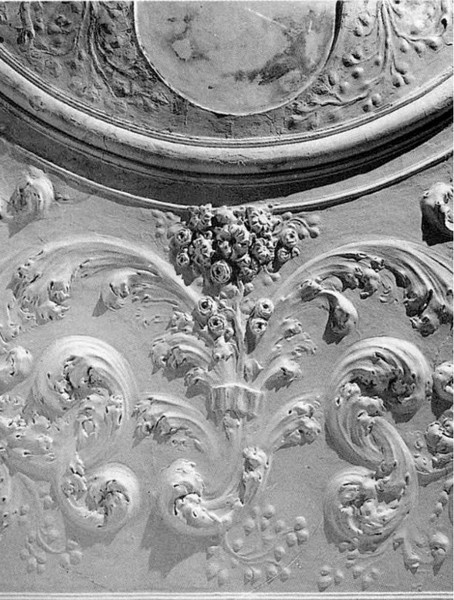
As asserted by Libuše Máčelová, the stucco decoration of the first room is predominantly constituted by vegetal motifs. These are mainly acanthus scrolls incorporating branches and flowers.
Room 2
The decoration includes a circular frame surrounded by stucco laurel leaves, enhanced by a floral garland. The composition is completed by figurative elements in bas-relief, including putti with a basket of flowers and an eagle encircled by weaponry.
Room 3
The decoration includes floral garlands and clusters of grapes. On one of the long sides, a pair of putti, while on the short sides, other putti hold a rolled-up cartouche.
Room 4

The stucco decoration of the fourth room is similar to that of the first one, with acanthus scrolls forming the primary motif. However, here the acanthus motifs are more delicate and subtle (Fig. 6).