FRANCISCAN MONASTERY AND CHURCH OF THE ANNUNCIATION
Franciscan monastery and church of the Annunciation
Mariánské náměstí 200
68601 Uherské Hradiště 1
Czech Republic
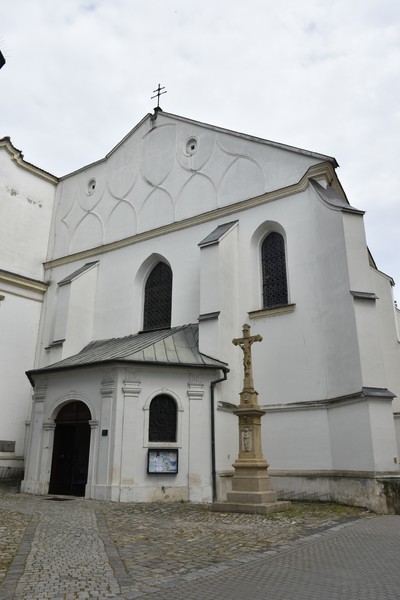
The history of the monastery began in 1491, when construction was financed by Bishop Jan Filipec (1431-1509), with subsequent support from King Vladislav II Jagiellonian (1456-1516) in 15071. After the Franciscans abandoned the monastery and church unfinished in 1543, due to the spread of Lutheranism, the monastery was used by the municipal authorities. In the 17th century, the Franciscans from Skalice returned to the monastery and in 1612, renovation work began. The monastery suffered severe damage from fires and natural events in 1643, 1647, 1681 and 1695. Restoration work, financed by Amand Ferdinand of Petřvald, took place between 1700 and 1708, defining the form that is largely preserved to the present day (Fig. 1), although some structural problems persisted, such as in the refectory. Construction was resumed and completed between 1717 and 1728, with the west façade of the church completed in 1736. In the 19th century, the monastery underwent further changes and was again damaged by fire in 1894, with reconstruction completed in 1904. After the suppression of the male monasteries in 1950, the monastery became the State District Archive in 1964. The Franciscan Order returned to the city in 1990, taking over the use of the building.
Dining Hall


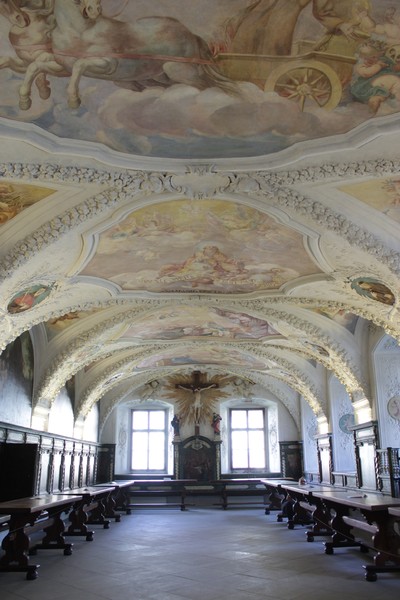
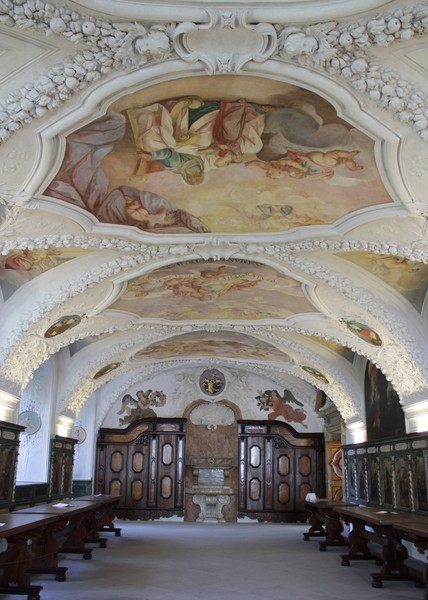
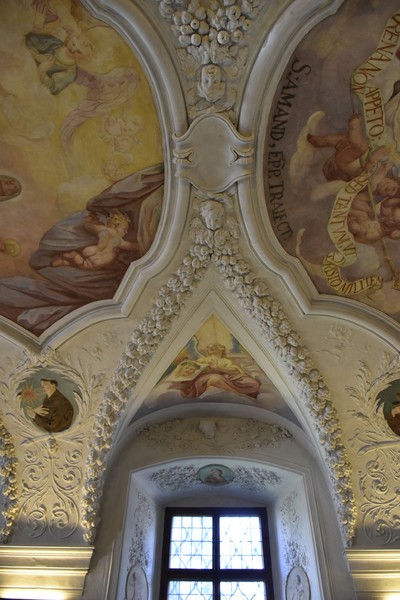
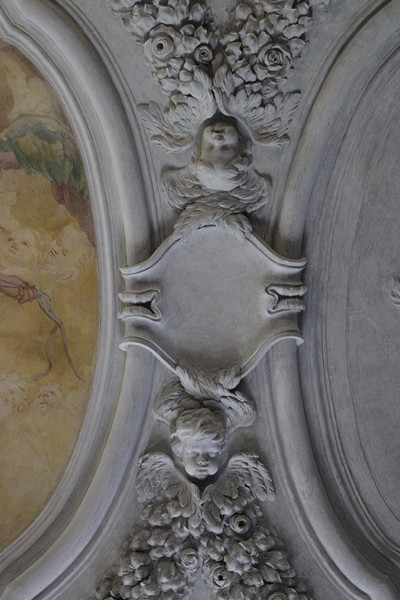
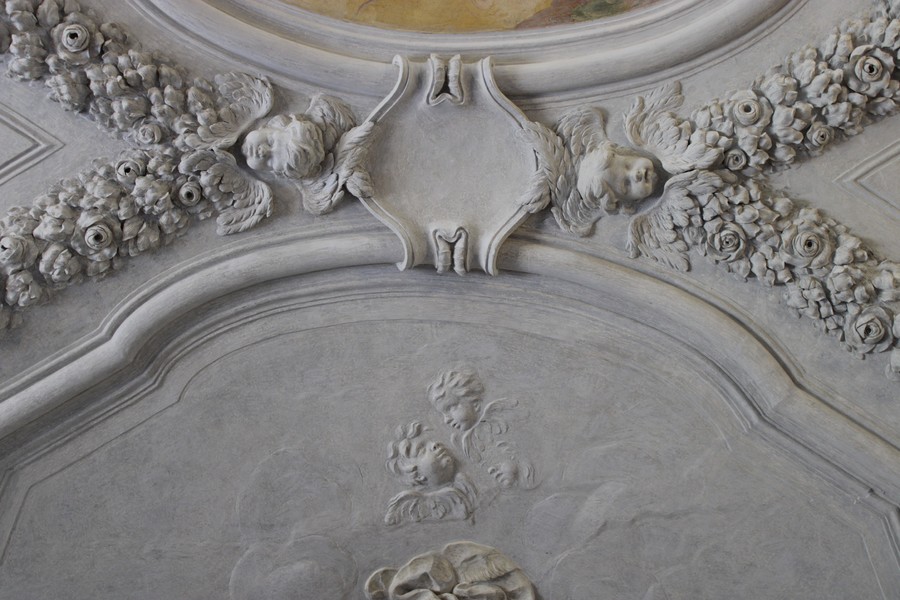
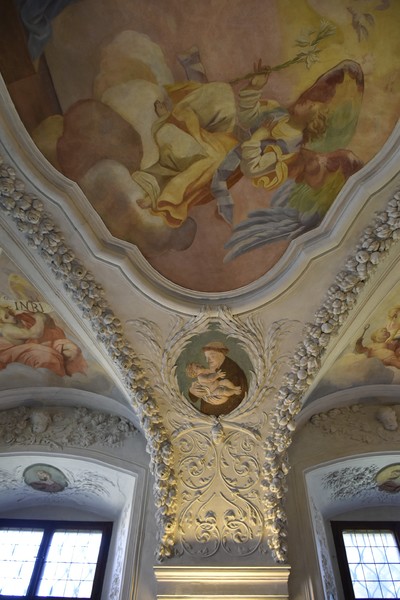
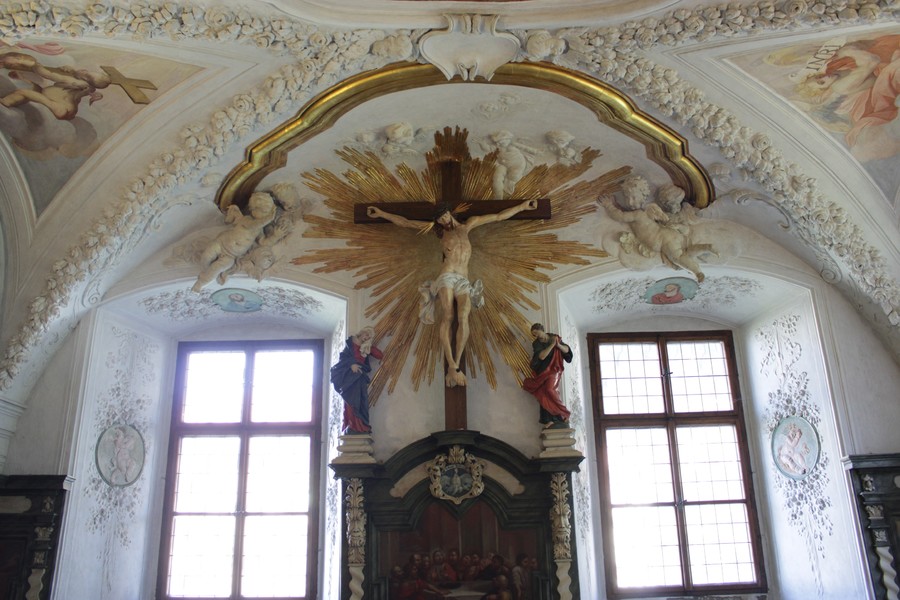
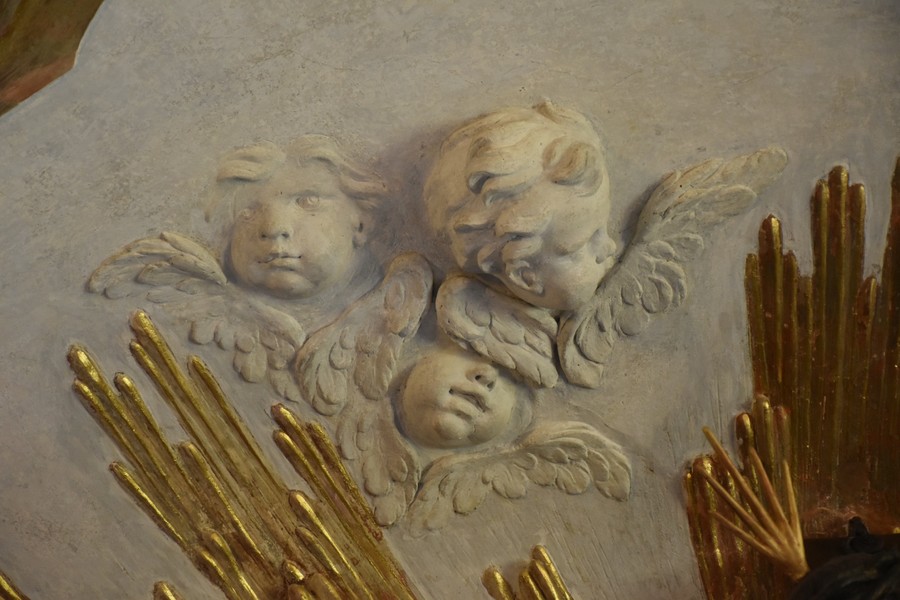
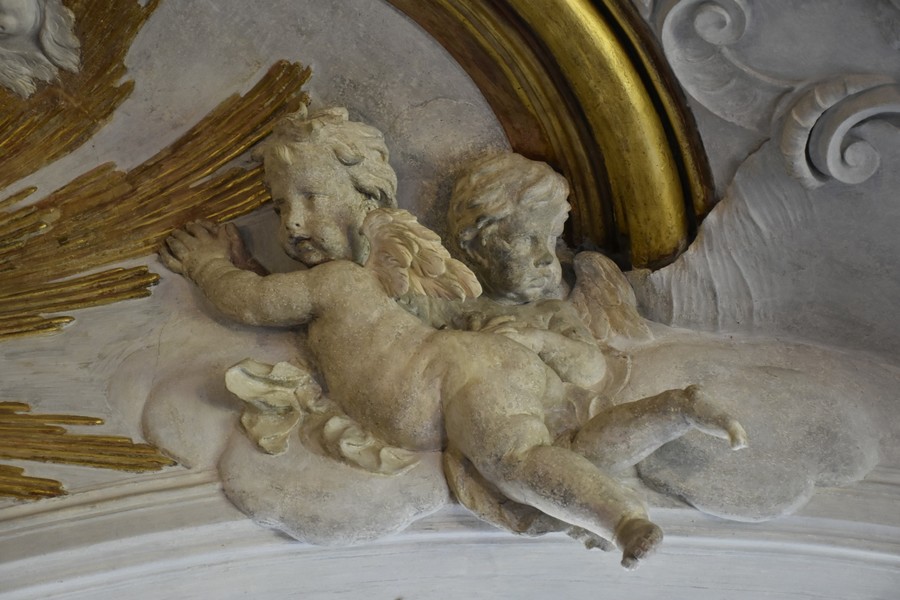
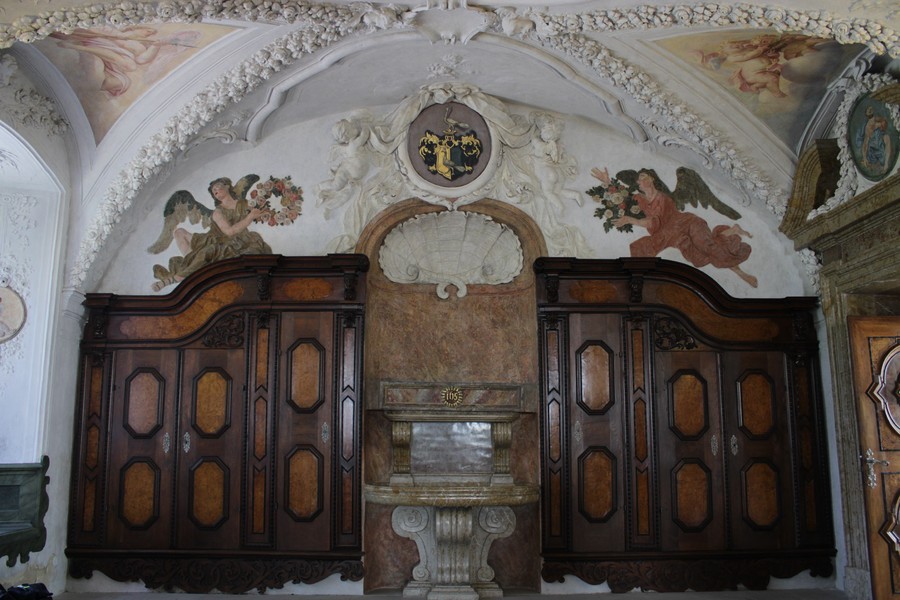
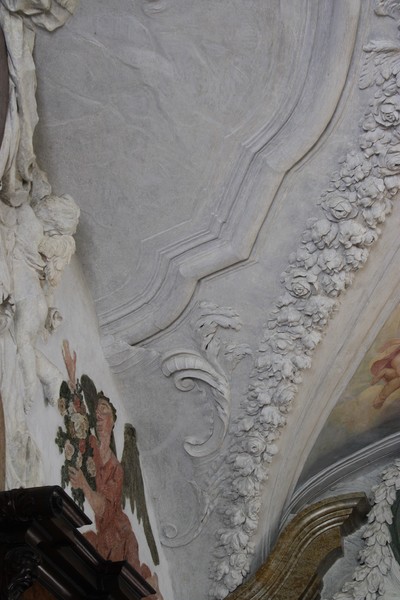
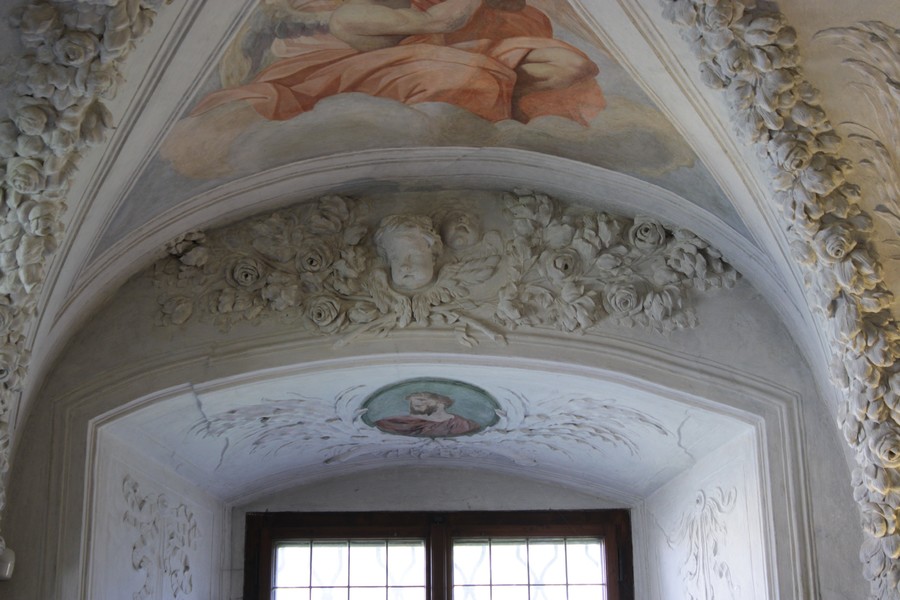
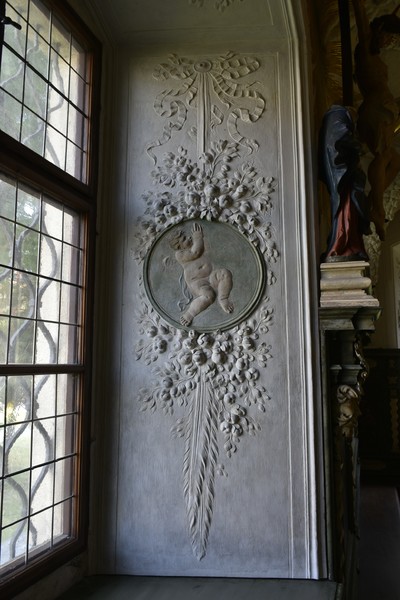
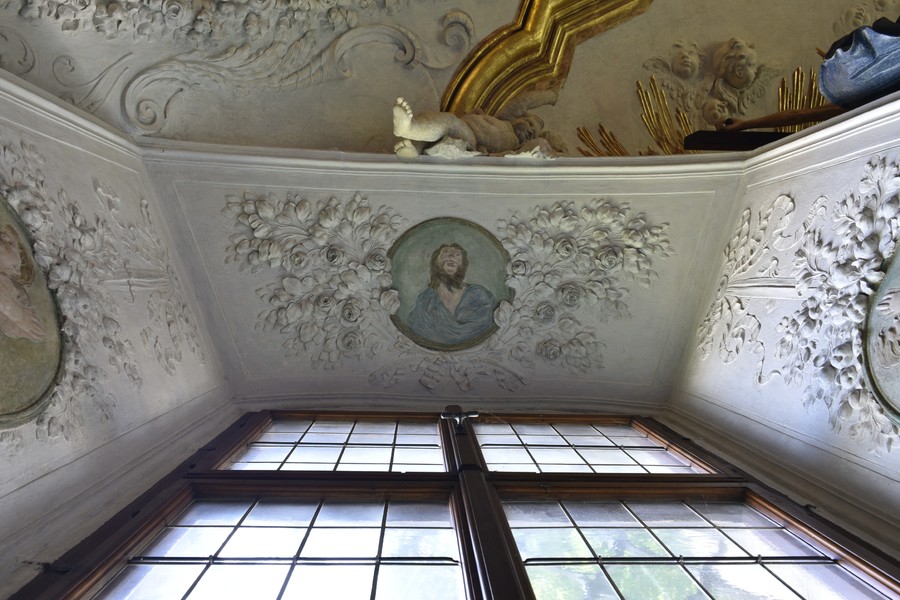
The refectory, with a rectangular floor plan, is characterised by a lunette barrel vault decorated in stucco (Fig. 2, 3)2, divided into bays by festoons of flowers and fruit running along the edges of the lunettes (Fig. 4), at the apex of which are heads of seraphim and cartouches (Fig. 5, 6). In each bay there is a large central panel with wall paintings and oval medallions with Franciscan saints framed by palm branches and acanthus leaves on the pendentives (Fig. 7). On the short sides of the vault there are ‘semi-panels’ that connect to the decorative systems of the walls. On the east wall, a glory with a crucifix stands out from the wall to the vault, surrounded by a dynamic composition of putti and cherubs that move from minimal reliefs to the tridimensionality (Fig. 8, 9, 10). The western wall is completed by a lavabo set in a shell-shaped niche, with the coat of arms of Amand Ferdinand of Petřvald encroaching on the vault, surrounded by a drape that is unveiled with the help of cherubs and angels carrying a bouquet of roses (Fig. 11, 12). The eastern and southern walls are characterised by niches with windows, above which space is occupied by a pair of cherubs' heads with branches of roses and leaves (Fig. 13). The spandrels of the windows are adorned with medallions depicting putti in various positions, surrounded by floral compositions (Fig. 14, 15). As indicated by the sources, Baldassare Fontana's personal style is recognisable in the modelling of the drapery of the angels on the west wall, while the workshop style is evident in the acanthus leaves on the vaulting and the decorations around the windows3. The stucco decorations were restored in 1998-2000 by Jiří Martinák.
Chapel of Our Lady of Lourdes


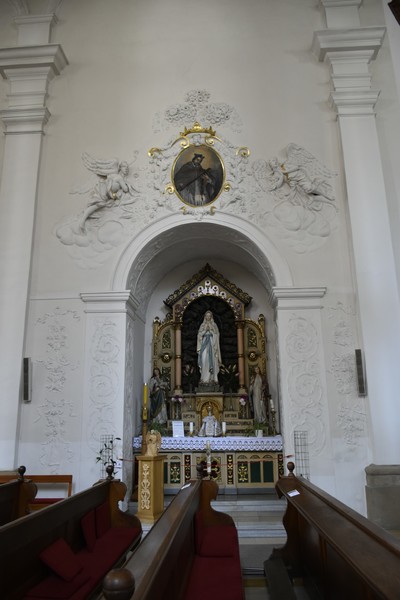
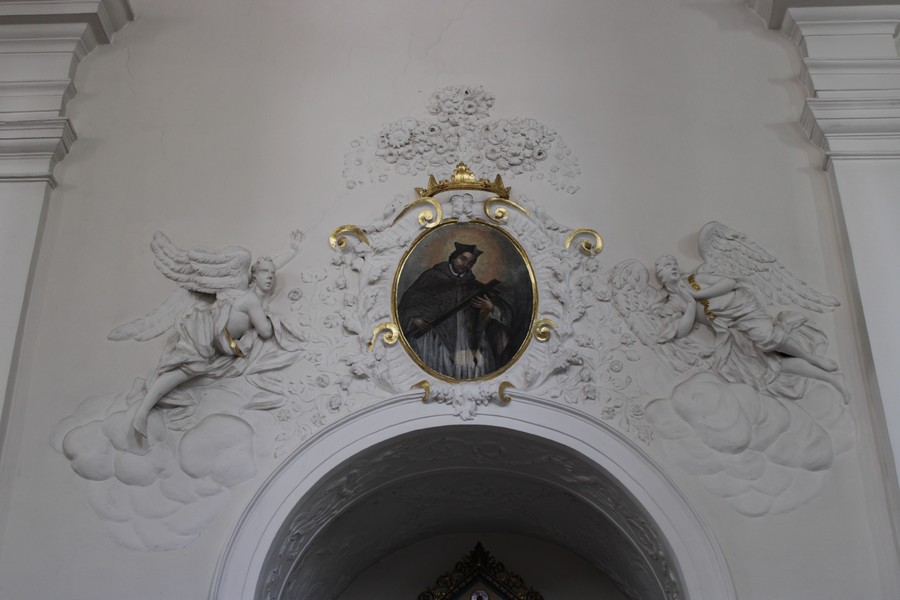
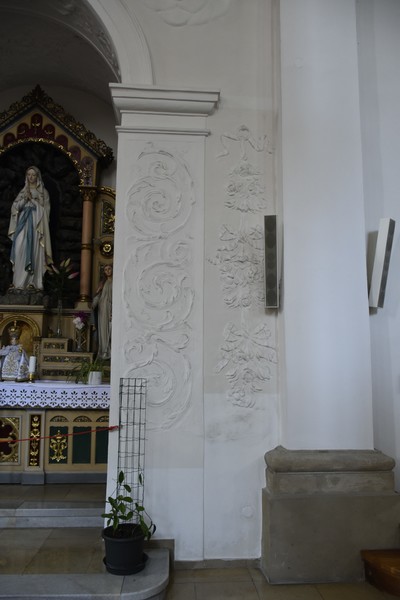
The chapel of Our Lady of Lourdes has a stucco decoration (Fig. 16), attributed to a follower of Baldassarre Fontana, framing the upper part of the chapel entrance (Fig. 17). The oval medallion above the niche depicts St John of Nepomuk, to whom the chapel was originally dedicated. The medallion is set in a cartouche composed of acanthus leaves and surmounted by a crown. From this appears to emerge a trio composed in pyramid form of bouquets of roses and other flowers. Two full-plastic angels flank the cartouche arising from the clouds. A thin ornament of rose buds comes out from beneath the cartouche. The other stucco decoration in the chapel is also not part of the work of Baldassare Fontana or his workshop and is probably earlier (Fig. 18).