MINORITE FRIARY
Minorite friary
Pl. Wszystkich Świętych 5
31-004 Cracow
Poland
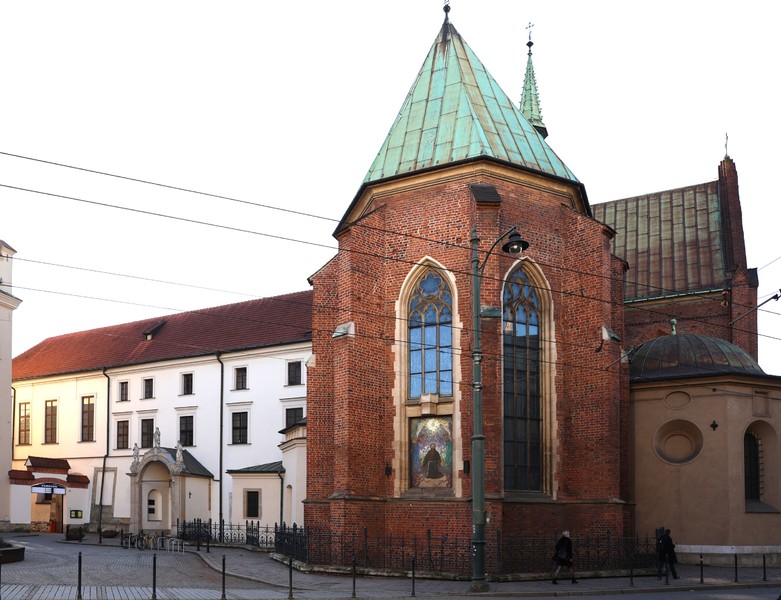
The friary was established in 1237. Its church (Fig. 1) was built by 1269 and became the burial site of the High Duke of Poland Boleslas V the Chaste (1226-1279) and his sister Blessed Salomea (1211-1268). The church was extended to the west, and at the beginning of the 14th century the cloister was added to the south, which since the 15th century has housed a portrait gallery of Cracow bishops. The interior of the church was destroyed in the great fire of 1850, but the cloister remained intact.
Italian Brotherhood chapel of St. John the Baptist


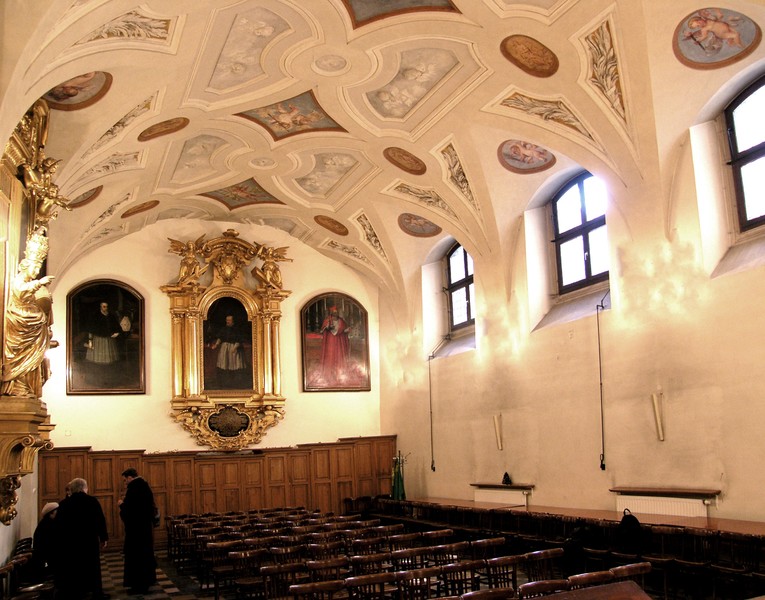
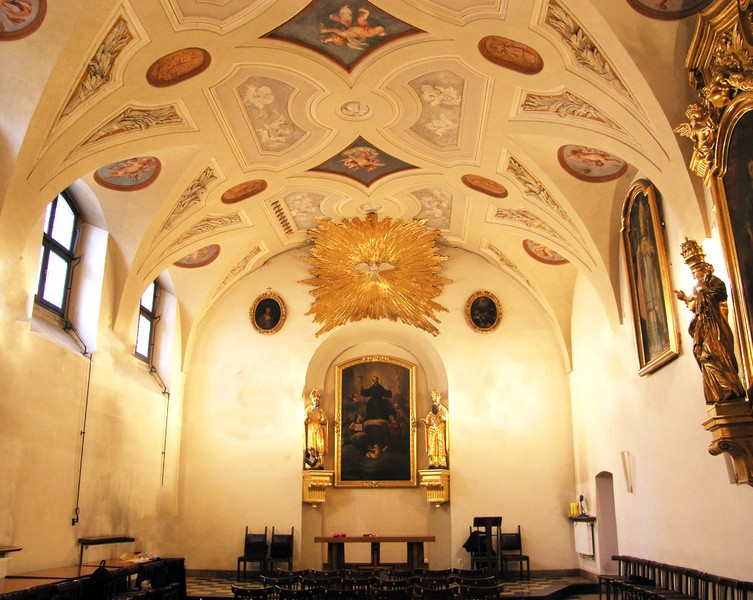
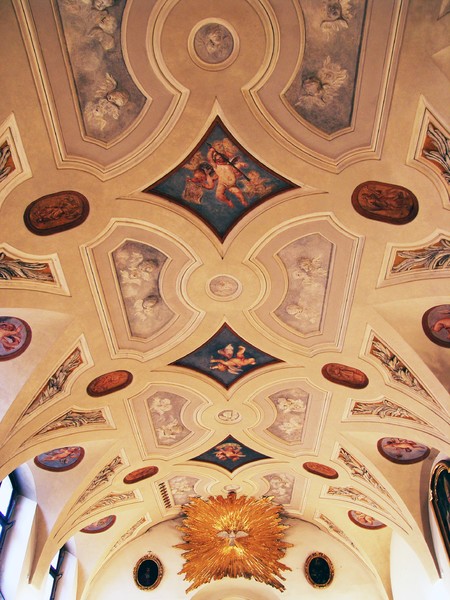
In the 17th century, the convent complex was expanded with the addition of several chapels. The Italian community in Cracow, in 16th century became a significant part of the society, and established its own religious brotherhood. In 1583, it received a chapel and dedicated it to St. John the Baptist. The chapel was rebuilt at the beginning of the 17th century when the barrel vault and wide flat stripes was constructed (Fig. 2). In 1696 it was decided to redecorate the chapel and to make a new high altar with a sculpted group of the Baptism of Christ. Michał Poman made the marble structure, following the designs provided by Baldassarre Fontana, and Wojciech Brzeski sculpted the statues.
The work, completed by 1700, included stucco work by Fontana, paid for by 536 Polish zloty1. The altar and marble furnishings were probably destroyed after 1796, when the confraternity was moved to St. Barbara's Church and the chapel became a storage room. In the 19th century, part of the chapel was walled up to make space for the cloister parlour.
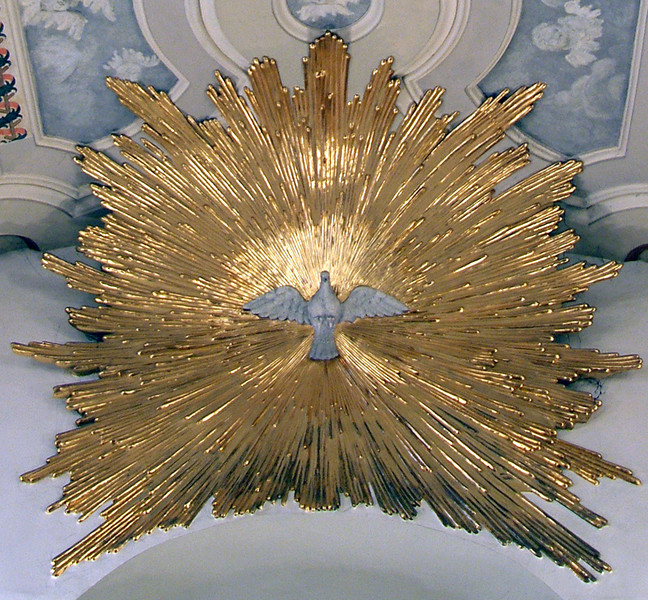
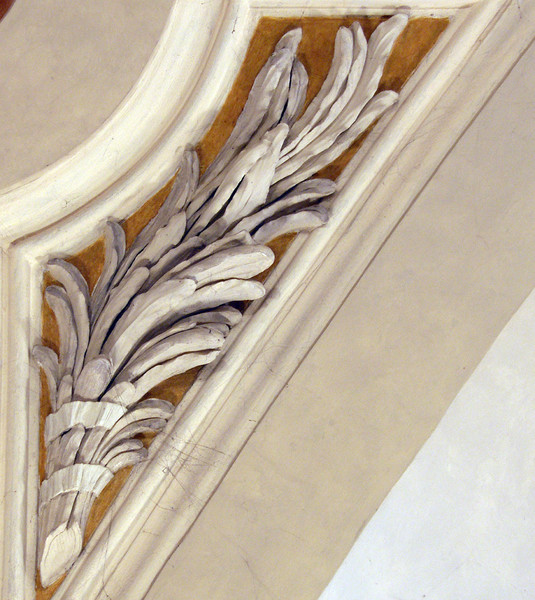
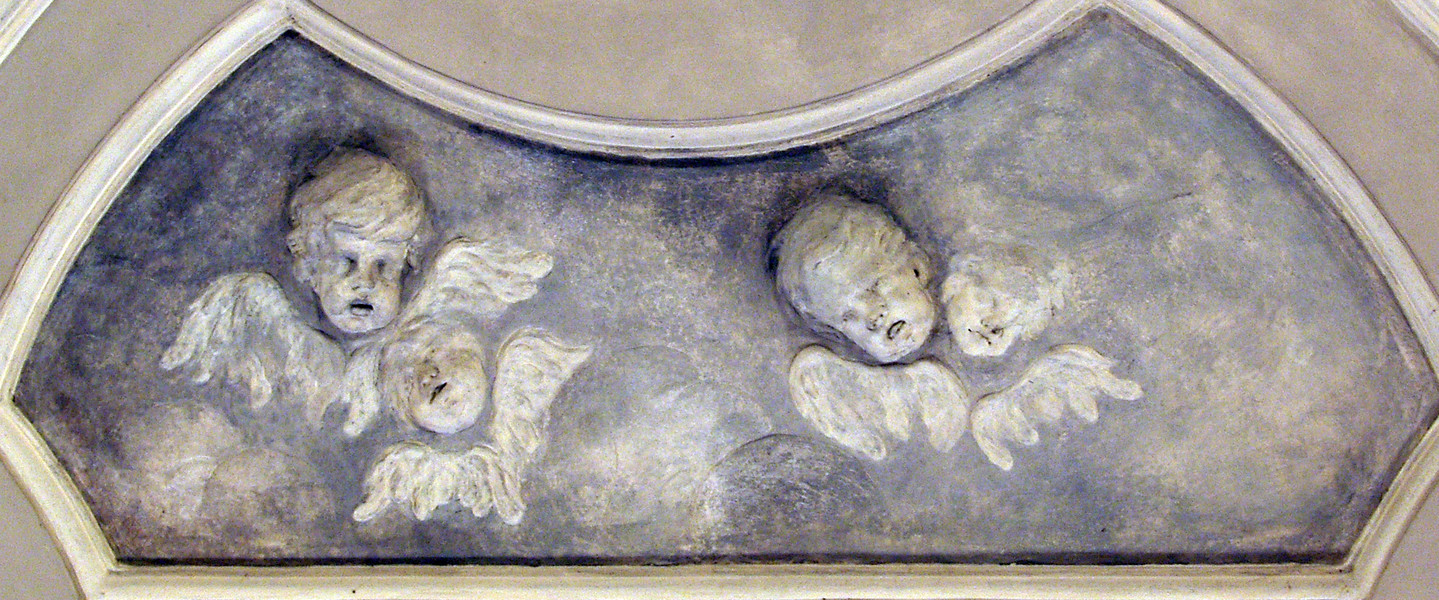
What remains is a glory with the dove of the Holy Spirit which topped the altar (Fig. 3, 4) and reliefs of palm fronds and angel heads on the early 17th century vault (Fig. 5, 6, 7), which clearly show manner of Fontana.