POOR CLARES CHURCH OF THE HOLY TRINITY
Poor Clares Church of the Holy Trinity
Plac Św. Kingi 1
33-340 Stary Sącz
Poland
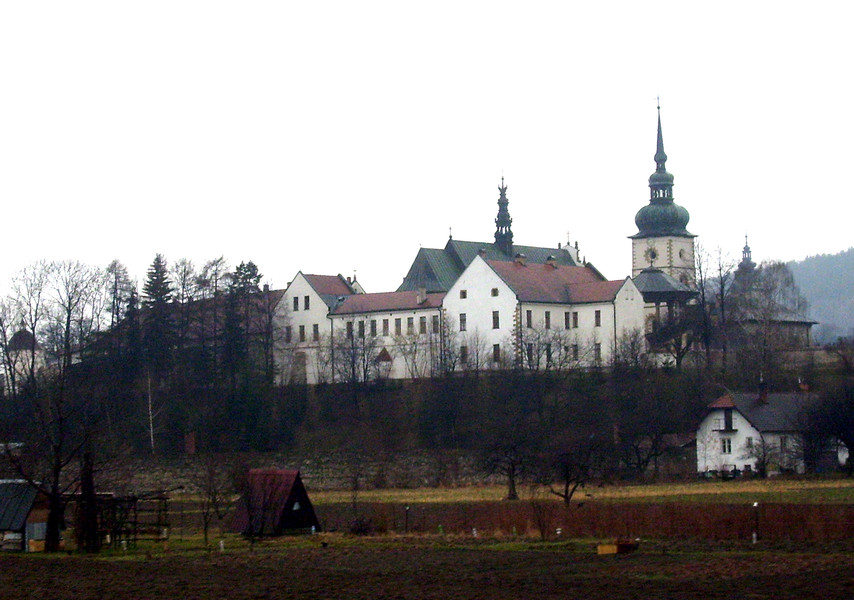
The convent (Fig. 1), founded by St. Kinga (1234-1292) in 1279 after the death of her husband Boleslaus V the Chaste (1226-1279), is the second of the order in Poland, after that of Blessed Salomea. Wealthy and influential, it adopted some customs close to those of the Benedictine congregations. The present church, consecrated in 1332, was partially rebuilt in the 1st half of the 17th century, and subsequently equipped with: high altar (1617-1619), chancel arch altars (1661, 1664) and pulpit (1671). In 1696, under Abbess Konstancja Jordanówna, crypts, a new floor and altar steps were built. In 1699, Fontana made three stucco altarpieces for 3,000 zlotys Stucco works were ready in October and three altar paintings were purchased from Carl Tanquart1. The idea and the iconographic programme most likely came from Sebastian Piskorski (1636-1707).
The church was restored in 1861, 1891 and 1980-1984.
Apse altars


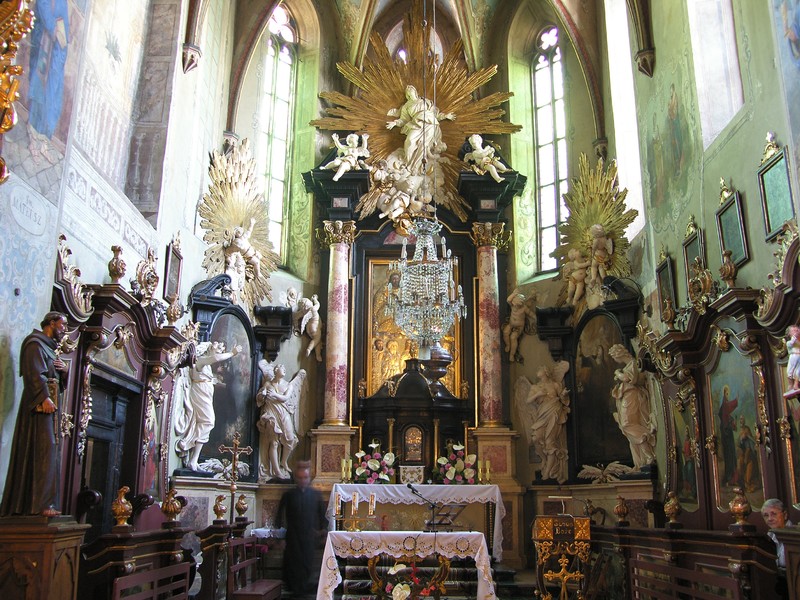
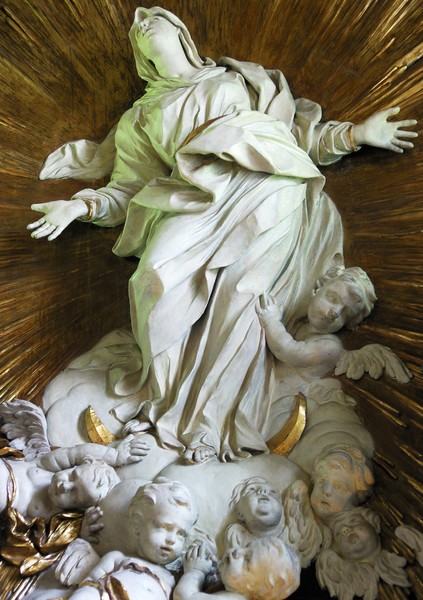
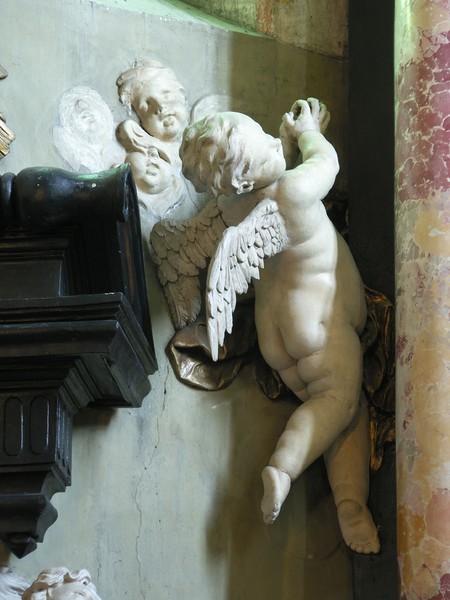
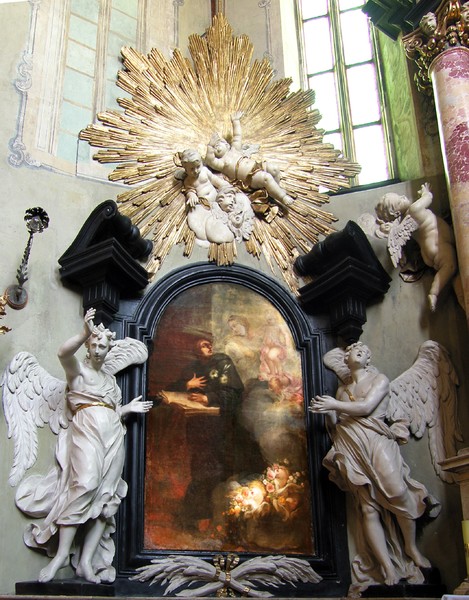
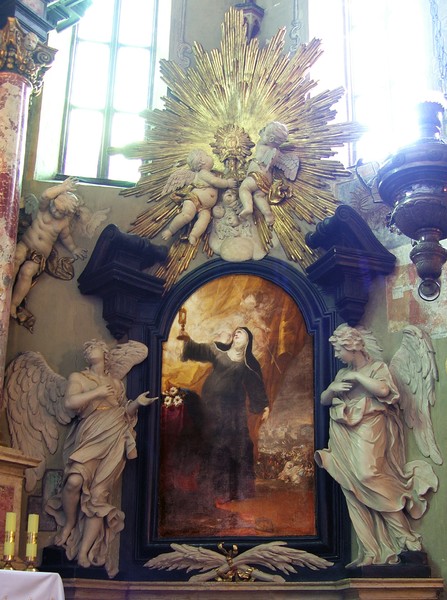
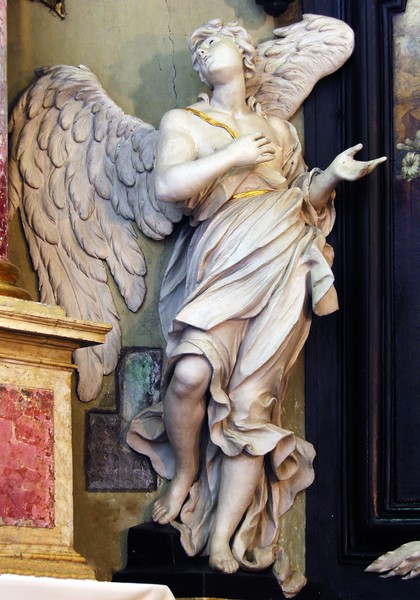
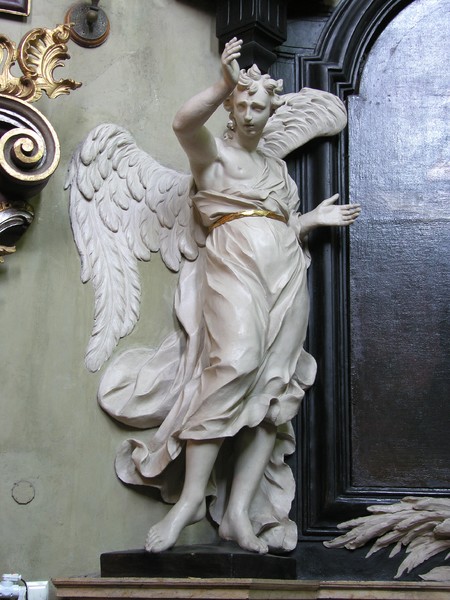
According to the contract, Fontana was supposed to be working with his assistants, but their names and number have not been mentioned. The high altar is an aedicula surmounted by a radiant glory, surrounding the statue of Our Lady of the Immaculate Conception (Fig. 2), standing on a moon encircled by clouds, putti and angels’ heads (Fig. 3). Sitting figures of adoring angels are also placed on the section of the entablature flanking the figure (Fig. 4). On the sides of the altar are two retables, without tables, topped with glories (Fig. 5, 6) and flanked by statues of angels. Two of them near the altar face towards the centre, but with their gestures they point to the sides, connecting the entire composition (Fig. 7, 8).