ŠEBETOV CASTLE
Šebetov Castle
Šebetov 1
679 35 Šebetov (Blansko District)
Czech Republic
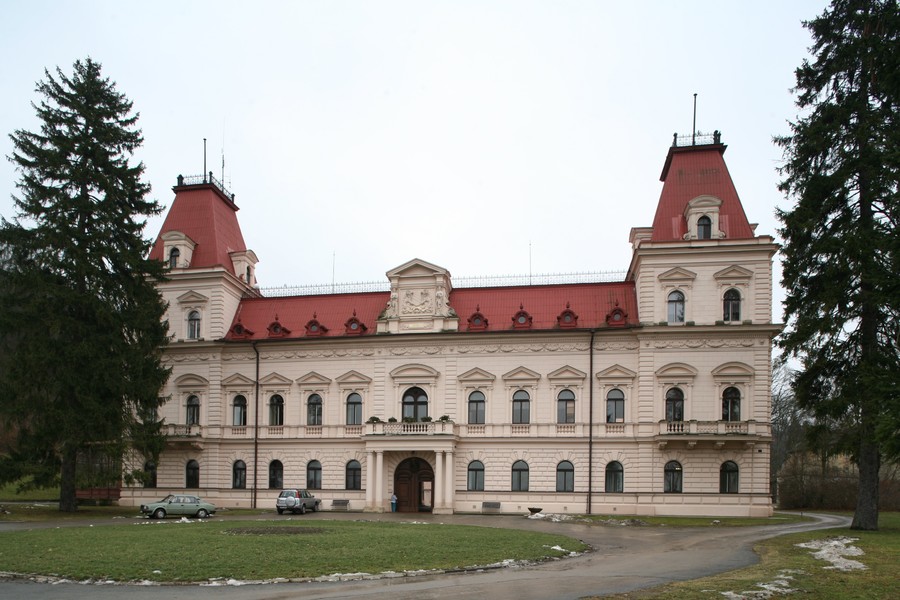
The first document mentioning Šebetov dates back to 1200, when the village was under the Premonstratensian canonry of Hradisko near Olomouc1. In the 16th century, it became the centre of a monastic estate with the construction of the Old Castle. In 1640, during the Swedish occupation of Olomouc, the castle hosted the Premonstratensians of Hradisko. At the end of the 17th century, under the direction of Abbot Norbert Želecký (1649-1709), the castle was reconstructed by changing the interior and establishing the Chapel of St. Barbara. In 1693, Baldassarre Fontana started to discuss with the Prior of the Premonstratensian Canonry, stating that he could not begin work before the Feast of St Peter and St Paul, 29 June 1693. The contract for the stucco decorations, still preserved, was signed on 20 September 1694 and, according to Máčelová, Fontana was still at work in Šebetov in the spring of 16952. The castle served as a summer residence for the Premonstratensians until 1784, when, with the dissolution of the monastery, the estate passed to the Religious Fund and in 1825 to Karel Maria Strachwitz. After several changes of ownership between 1860 and 1877, the castle was purchased by Moritz von Königswarter (1837-1893), who in 1885 began a reconstruction in the Neo-Renaissance style, working mainly on the exterior and some interior areas (Fig. 1)3. After World War II, the castle was nationalised and in 1953 it became a centre for deaf-mute women and girls, now known as Šebetov Social Services. In 1966 the stucco work was restored by a local artist, E. Křivánek.
Main Hall


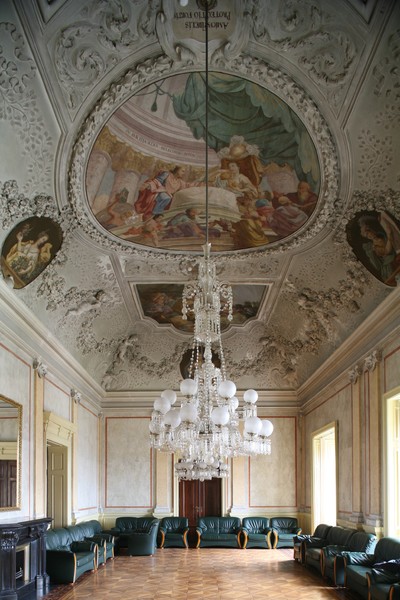
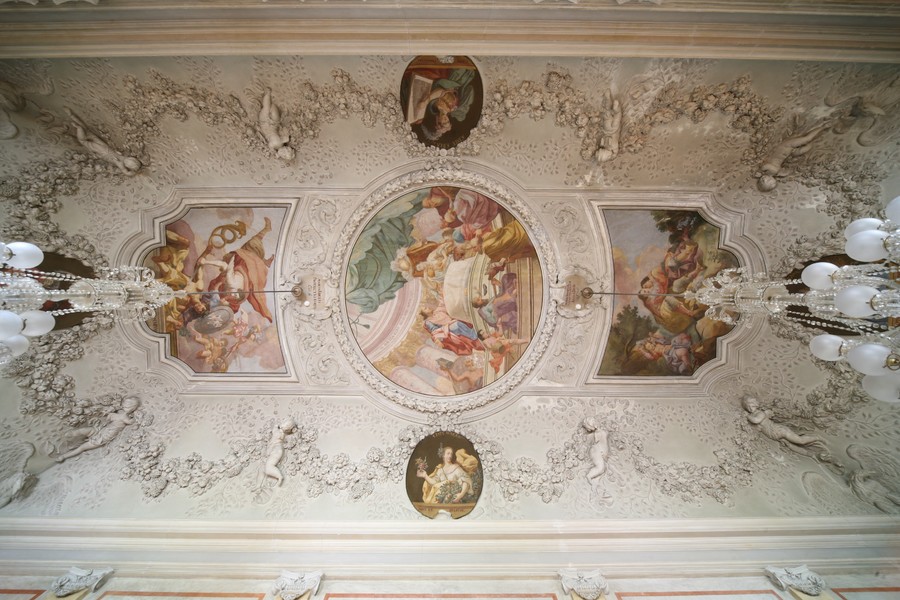
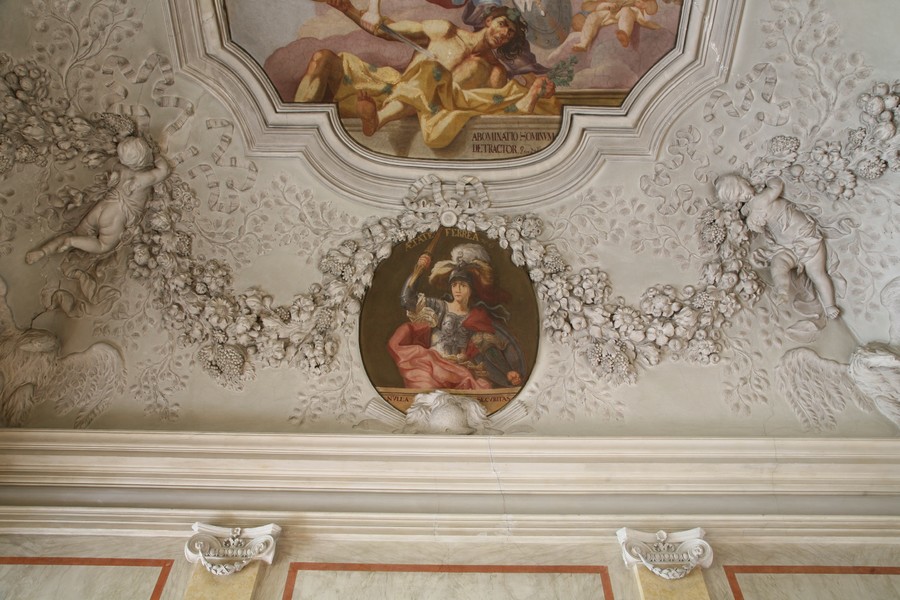
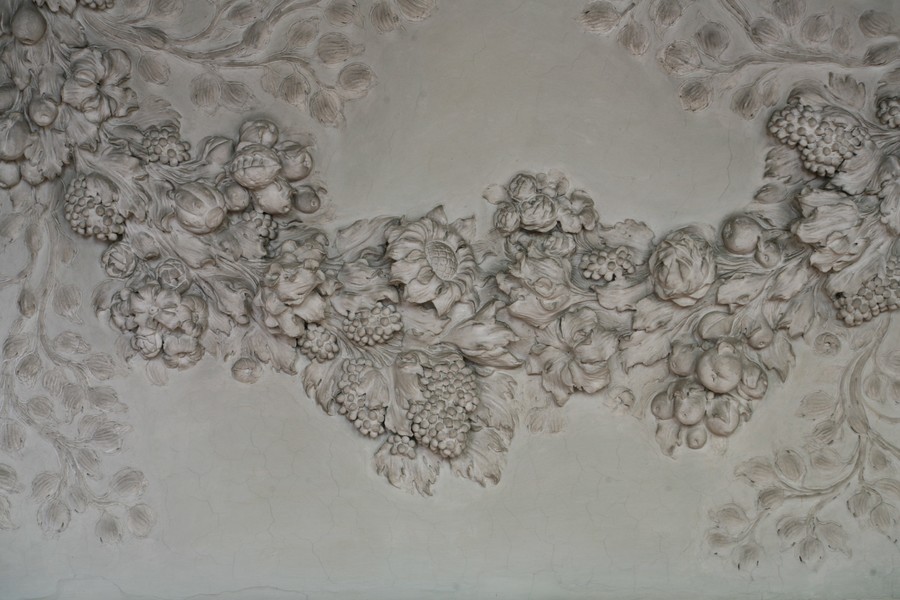
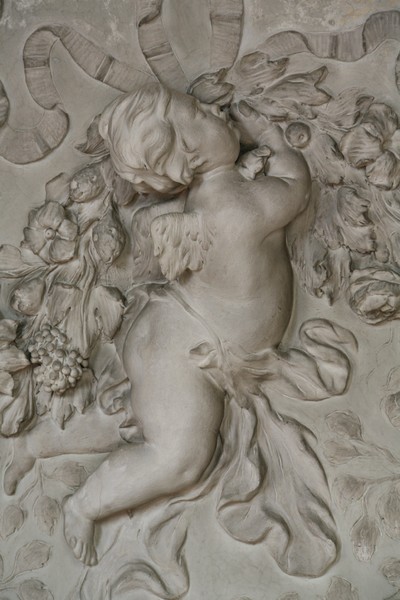
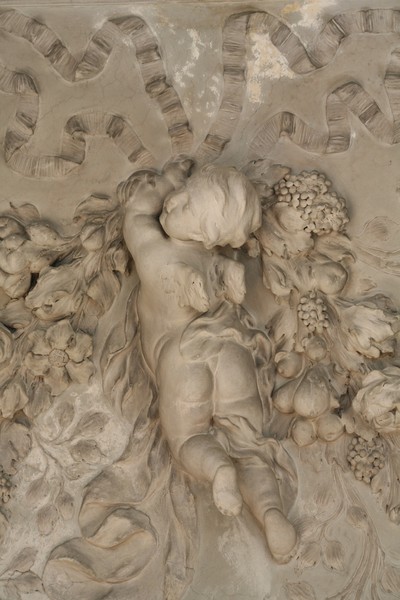
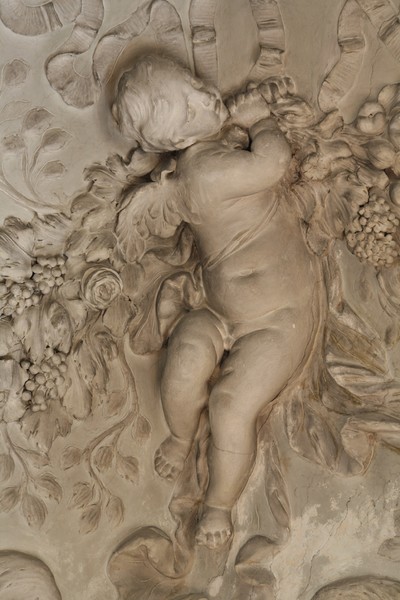
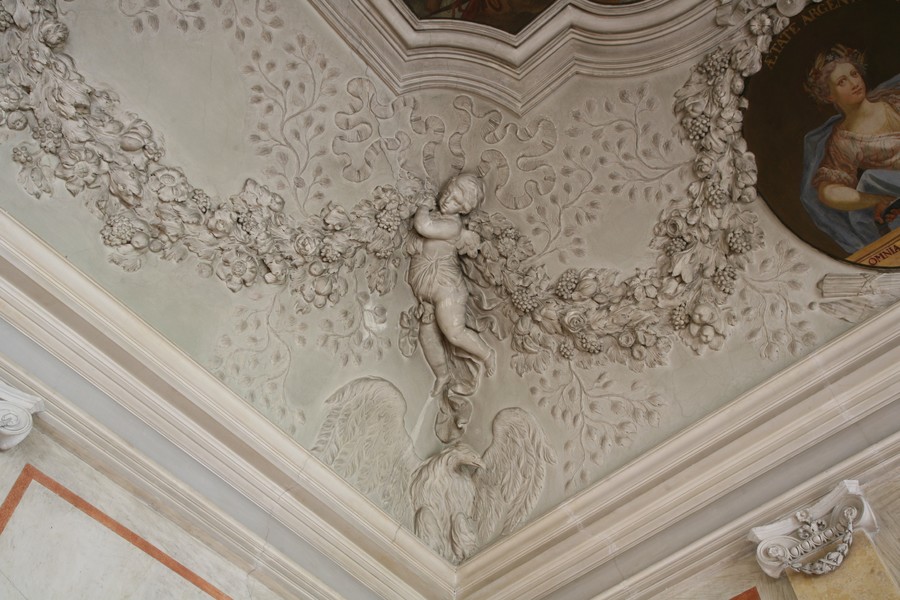
The main hall (Fig. 2), with a rectangular floor plan, has a vaulted ceiling divided centrally into three painted panels, separated by stucco decorations (Fig. 3). The central, oval one is framed by a rich stucco motif of acanthus leaves, enriched by two cartouches on the short sides of the ceiling. The side panels are bordered by simple cornices, while the spaces between them are filled with acanthus mouldings. In the centre of the sides walls, medallions supported by trophies depict the four ages of man (Fig. 4), joined by a majestic garland of flowers and fruit (Fig. 5). Surmounting the scene are eight putti, symmetrically arranged, some wrapped in flowing draperies (Fig. 6, 7, 8). In the corners of the vault are stucco eagles and the rest of the surface is decorated in bas-relief with delicate branches, richly decorated with leaves and ribbons (Fig. 9).
Winter Dining Hall

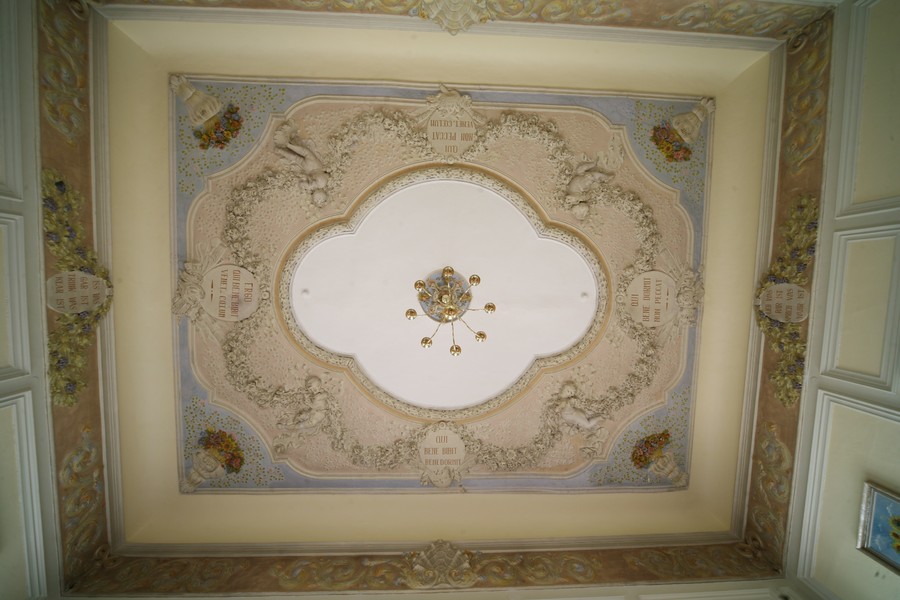
In the winter dining hall, the stucco decoration extends over the ceiling and cornice, visually dividing into three sections, which are distinct due to an illusion created by the three-dimensional effect (Fig. 10). In the centre of the ceiling, an oval panel is framed by an elegant stucco floral motif. Other circular medallions, supported by trophies and engraved with the Latin mottos ‘Qui bibit dormit’, ‘Qui dormit non peccat’, ‘Qui non peccat sanctus est’ and ‘Ergo qui bibit sanctus est’4, are connected by garlands of flowers and acanthus leaves, surmounted by four putti arranged diagonally. The ceiling is completed, in bas-relief, by delicate branches and ribbons and, in the corners, by stucco vases with coloured flowers, enriched by small branches on a blue background.
South room

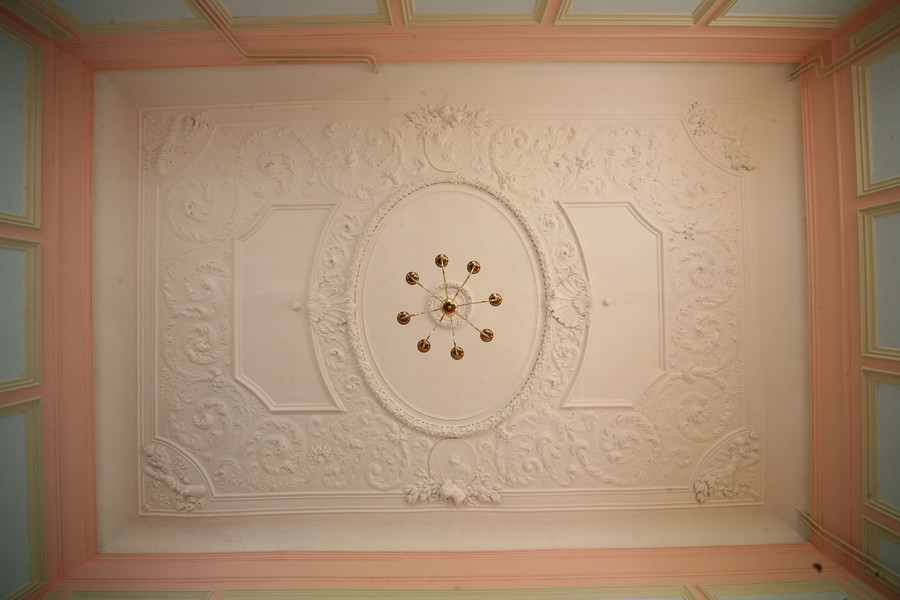
The south room has a stucco decoration on the ceiling with a central oval panel surrounded by a laurel wreath (Fig. 11). The main stucco motif consists of clearly outlined acanthus leaves. The ceiling is divided into compartments, each decorated with stucco, enriched with shells and moulded cornices. Along the longitudinal sides, busts of fauns are placed inside central medallions, anchored to bundles of ears of corn, tied with ribbons, also present at the corners of the ceiling.