ST. CHRISTOPHER’S (KRZYSZTOFORY) PALACE
St. Christopher's (Krzysztofory) Palace
Rynek Główny 35
31-011 Cracow
Poland
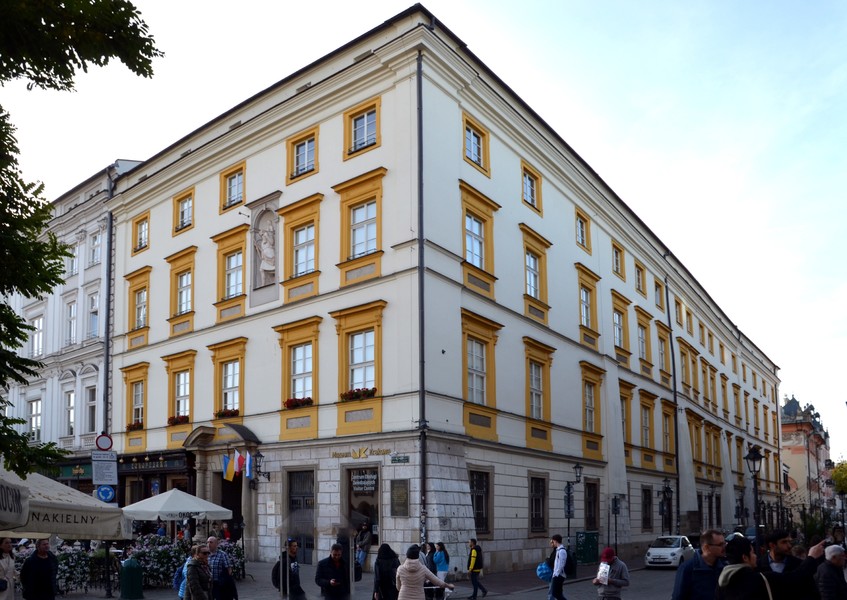
A corner house in the market square likely dates back to the 13th century and is named Pod Krzysztofory after the stone statue of St. Christopher (ca 1380) on its façade. Purchased in 1664 by the Wodzicki family, Jan Wawrzyniec (1640-1697) combined it with an adjacent building and rebuilt in 1682-1684, creating one of the biggest town palaces in Cracow (Fig. 1). The decoration of the main hall facing the market square, depicting the Fall of Phaeton, likely dates after 1726, as this part of the building was previously in poor state of repair, so it’s unlikely that Baldassare Fontana worked there1.After changing ownership several times, the building became the seat of the Museum of Cracow in 1960 and underwent restoration between 2005 and 2020.
Studiolo


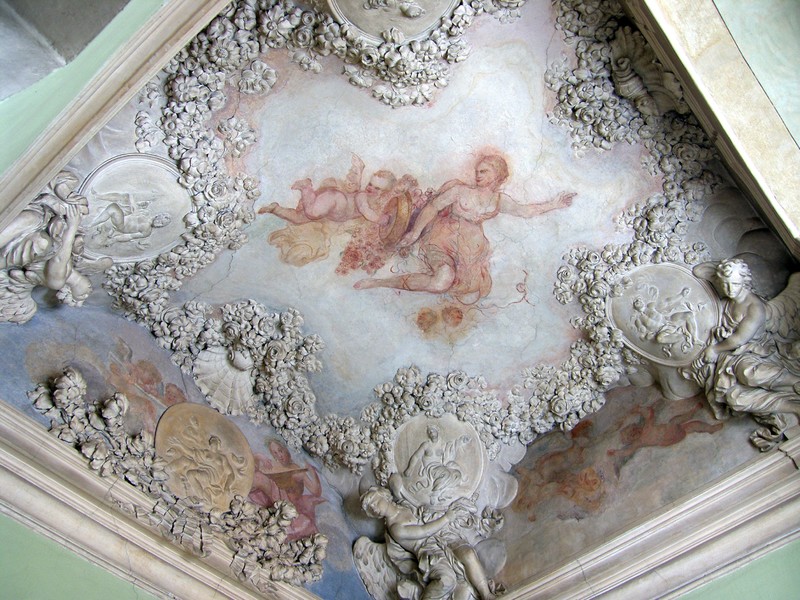
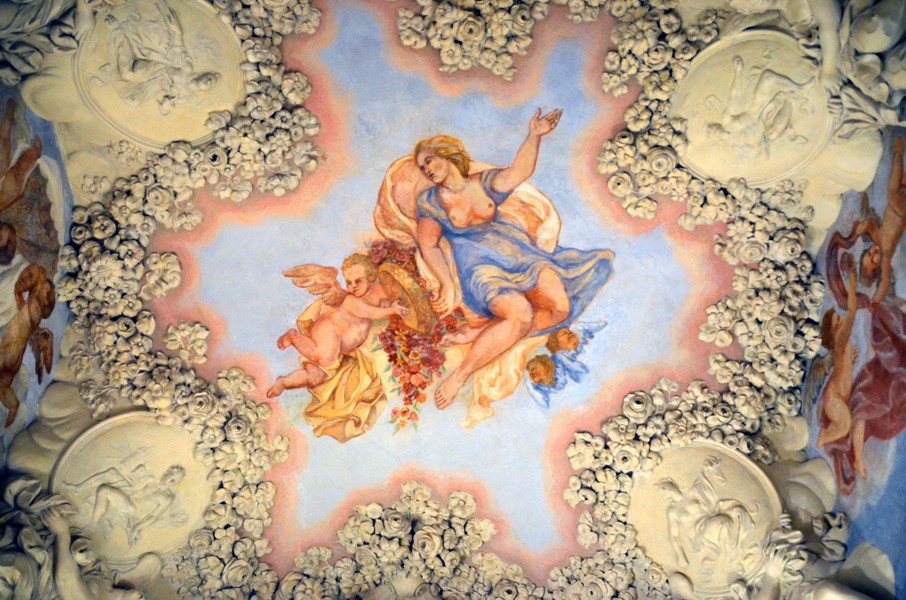
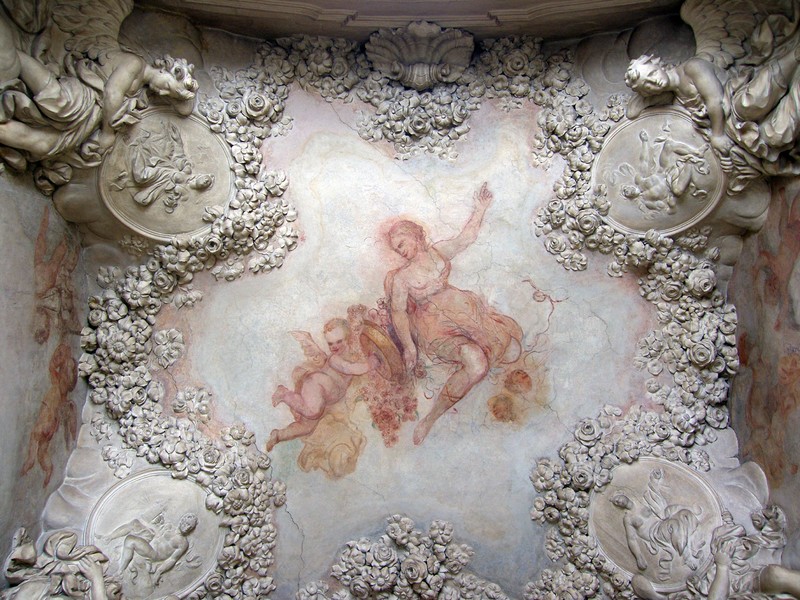
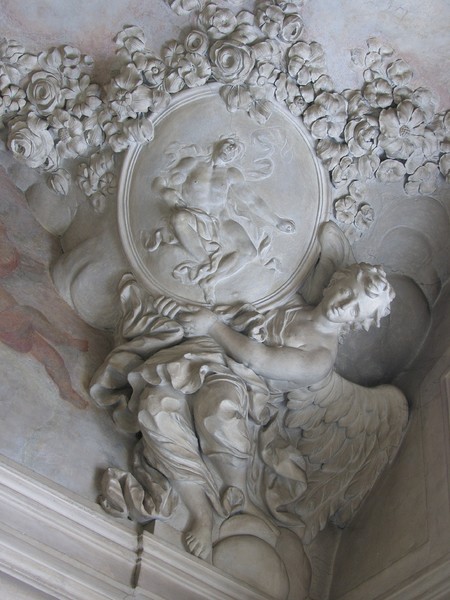
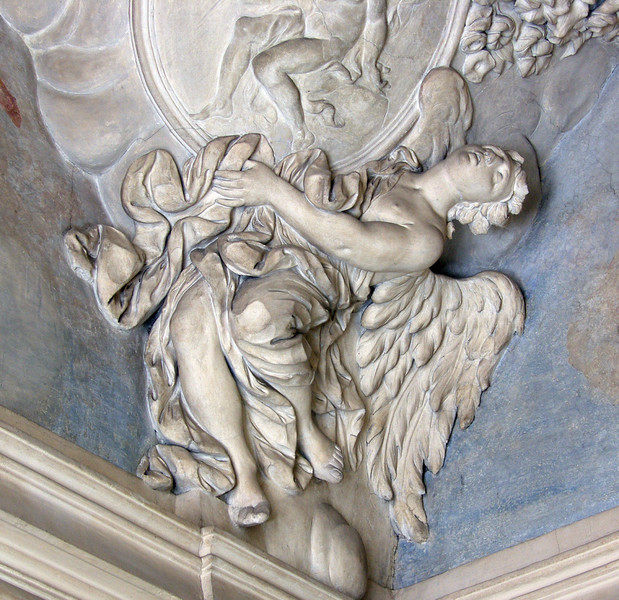
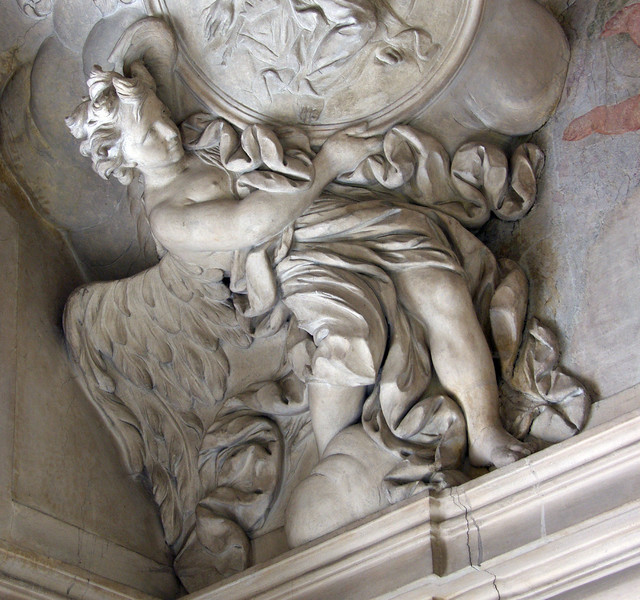
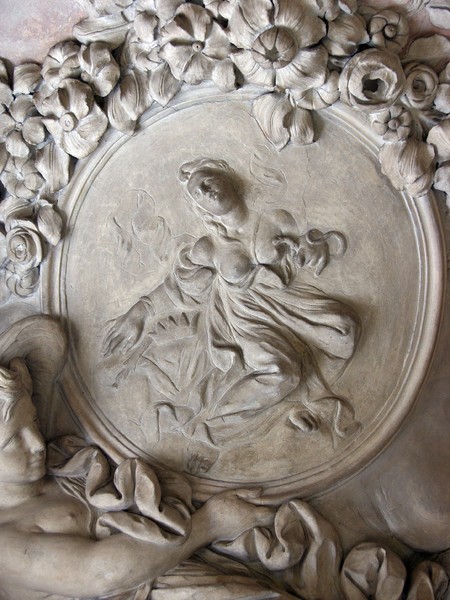
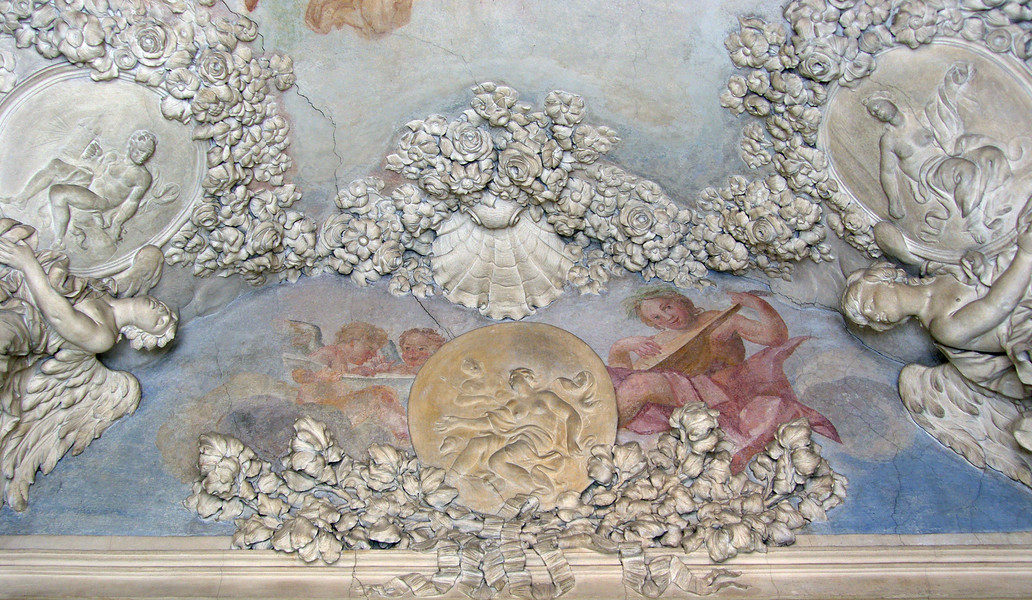
The decoration of the studiolo (Fig. 2), facing Szczepańska Street, is attributed to Fontana and was probably commissioned by Jan Wawrzyniec Wodzicki, a nobleman and benefactor of St Anne's Church, or by his wife Maria Gratt (1650-1709). In the last quarter of 18th century, Bishop Kajetan Sołtyk (1715-1788), who resided in the palace, reportedly used the room as a chapel, leading to the belief that it was originally designed as a sacred space2. However, the secular iconography, lacking parallels with early modern house chapels, suggests it was originally a studiolo, often decorated with stucco in the 17th century3. The wall paintings, unprofessionally overpainted during the latest restoration (Fig. 3), are attributed to Carl Tanquart4 (documented by 1686-1704) and more plausibly to Innocenzo Monti5 (1653–1710). The painting in the centre of the vault (which shows a female figure) is framed by a garland of flowers supported by shells (Fig. 4). Medallions in the corners, held by figures of angels (Fig. 5, 6, 7), depict Diogenes, Cleopatra (Fig. 8), and two unidentified figures. On the wall opposite the window, there is a medallion featuring a semi-nude woman (possibly Diana) accompanied by a dog and another figure in the background (Fig. 9).