ST. MARTIN’S CHURCH
St. Martin’s Church
Mořice 28
798 28 Mořice, (District of Prostějov)
Czech Republic
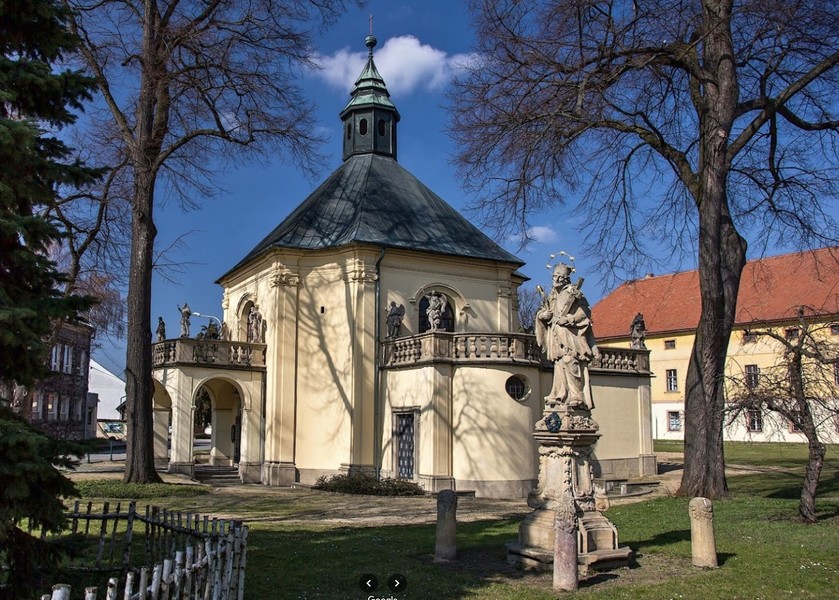
The construction of the Church of St Martin in Mořice began in 1633 under the patronage of the monks of the Order of St Paul the First Hermit1, but it faced immediate obstacles due to conflicts with the episcopal office of Olomouc, which slowed down the work 2. The project progressed in three phases: the first between 1703 and 1707, when the church was nearly completed but halted by the bishop; the second between 1708 and 1709, when the monks were allowed to finish the work, though with some restrictions; and the third between 1728 and 1729, when the church was enlarged (Fig. 1).
The interior was enriched between 1720 and 1721 with the decoration by David Kubát, while the wooden altar was later replaced by a stone one. The church was consecrated in 1728. However, in 1784, following the reforms of Joseph II (1741-1790), the monks left Mořice and the church lost its original function, becoming part of the parish of Nezamyslice. Although there are no certain sources, it is believed that the monks' former residence dates back to the late 17th century.
Main altar


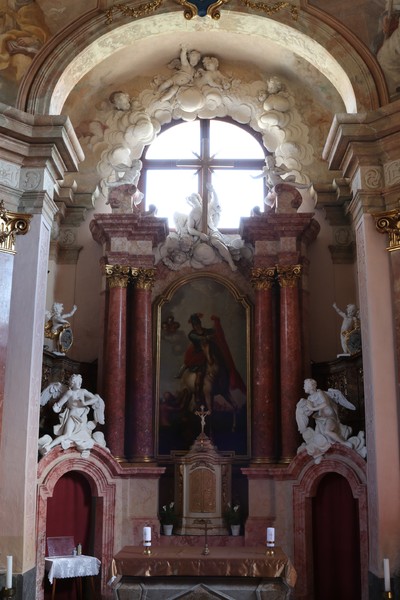
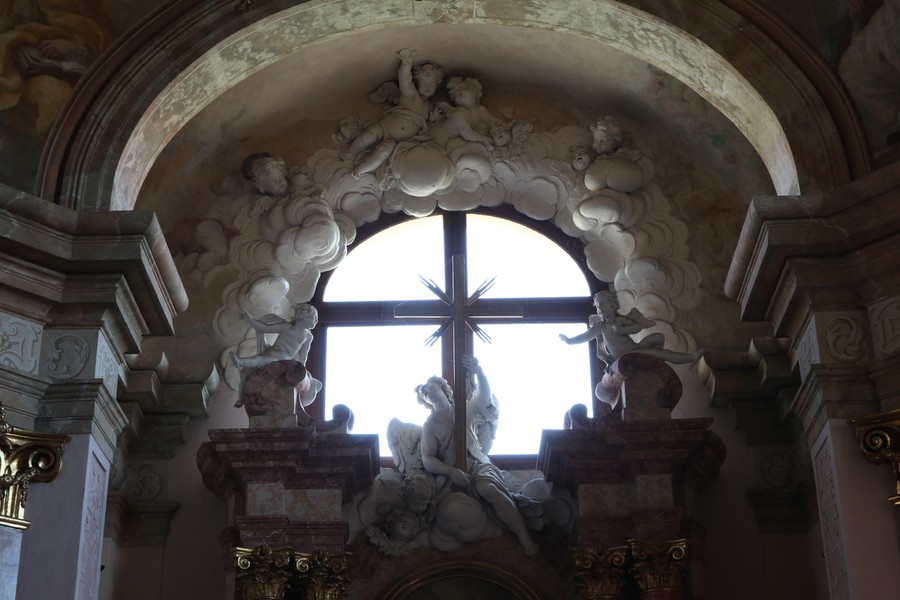
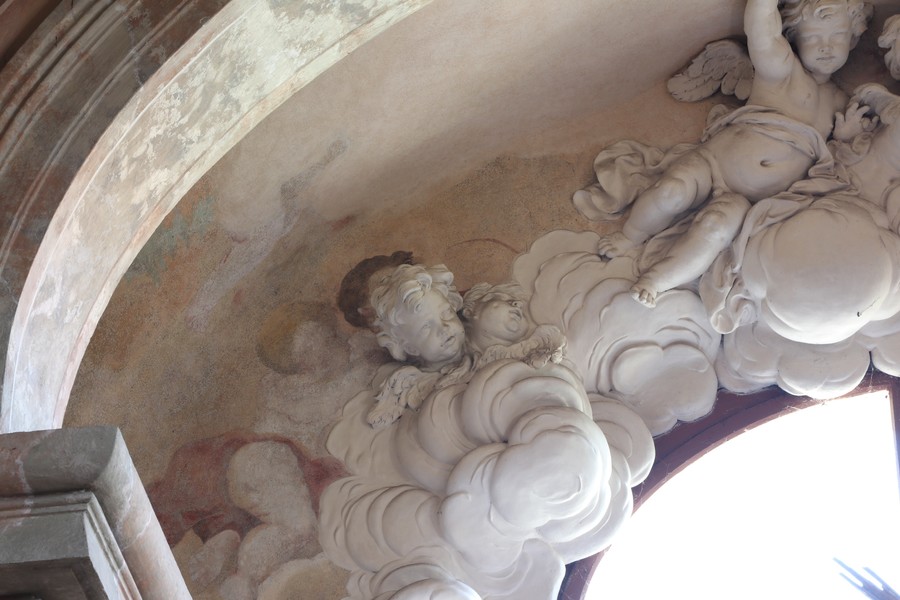
The stucco decoration of the main altar focuses on the column structure and the upper area, which forms the heart of the decorative design (Fig. 2). Above the altar, the stuccoes harmonise with the round window in the wall (Fig. 3).
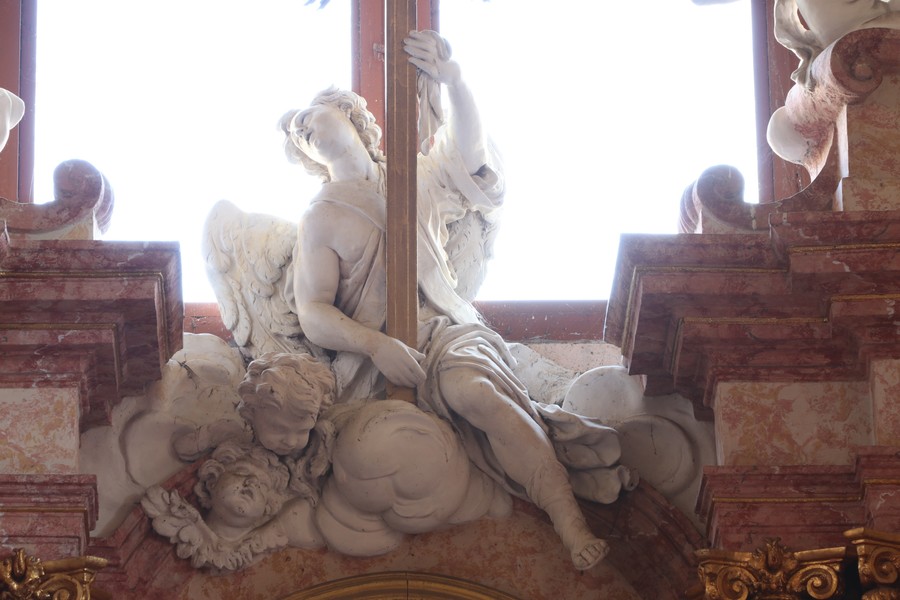
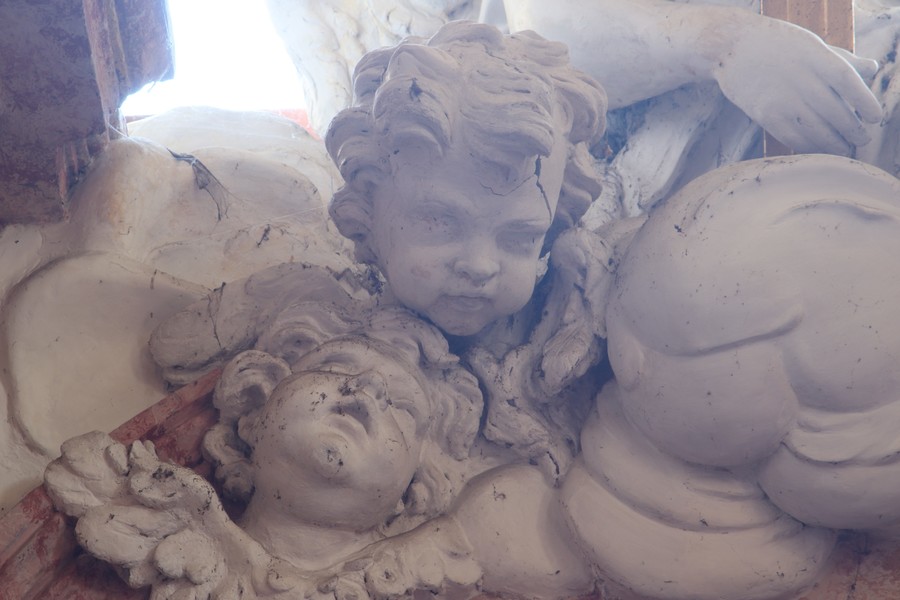
At the bottom, on the doors leading to the rear area, two kneeling angels appear among clouds present a lower quality compared to the rest of the work. In the centre, a stucco angel flanked by two winged putti (Fig. 4, 5) holds a large cross above the painting, , while another two are placed above the architectural frame (Fig. 6, 7). The execution of these last putti is less refined, suggesting the work of a different artist.
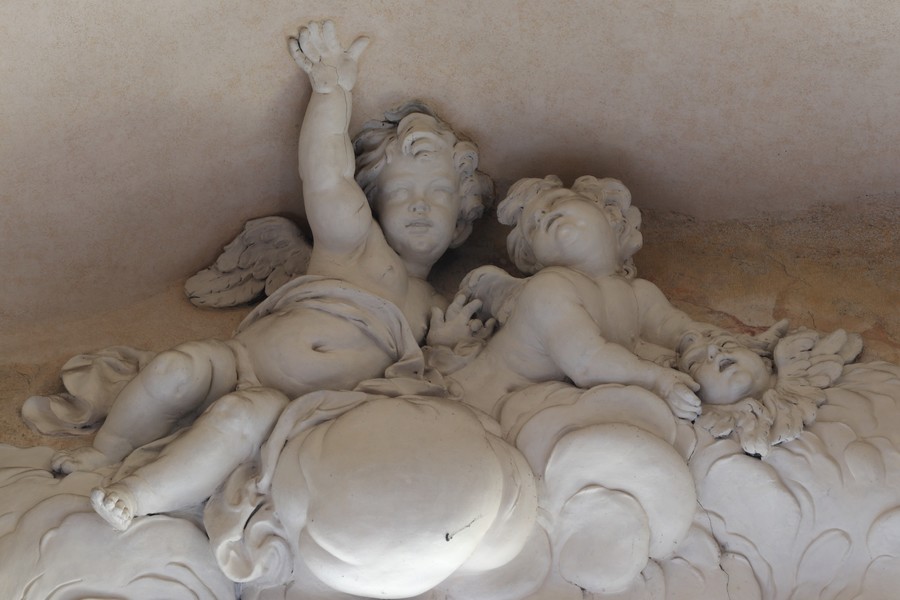
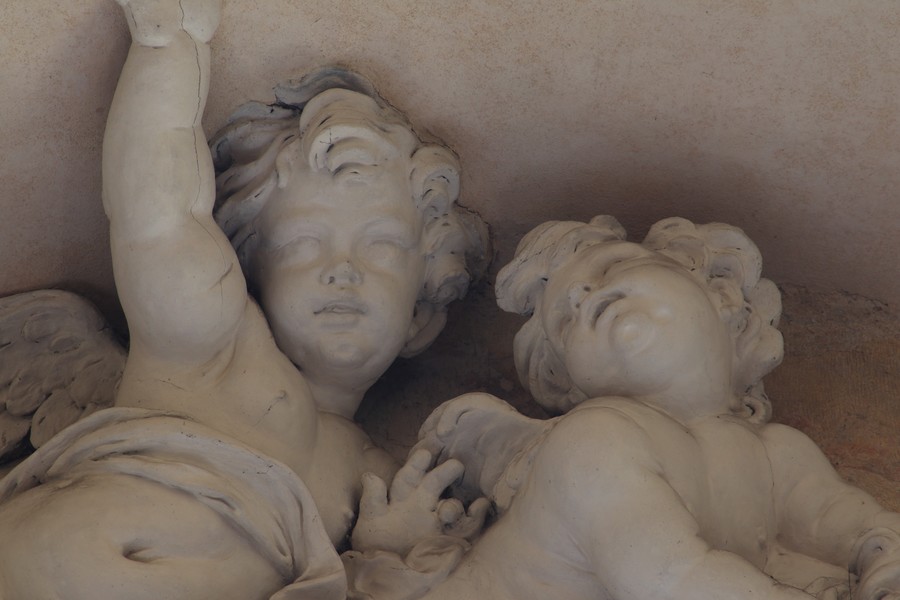
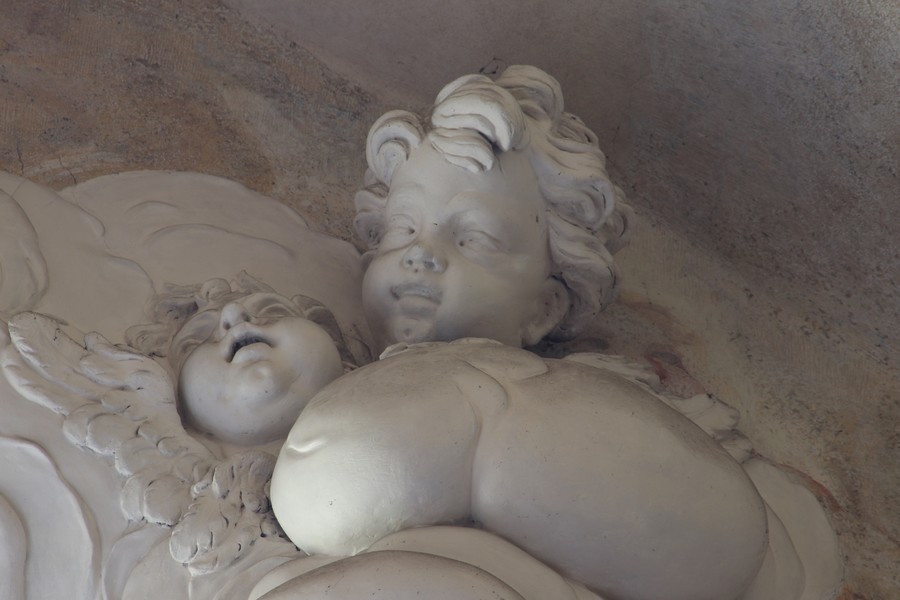
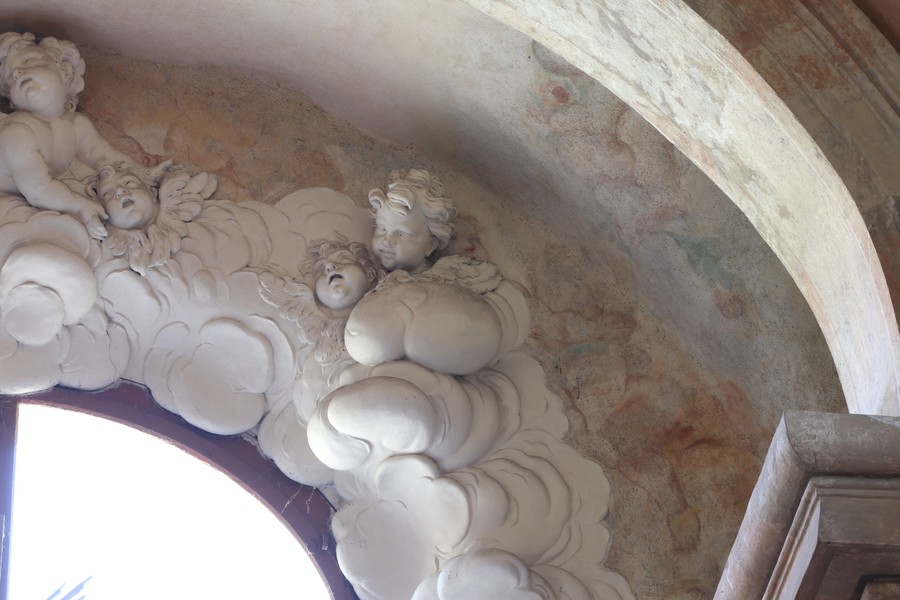
The decoration is completed around the window with clouds and a pair of putti at the top, accompanied by five winged heads (Fig. 8, 9, 10). The clouds are modelled to create depth, recalling the style of Baldassarre Fontana and his workshop, with plastic effects and pronounced reliefs.
Side Altar of St Francis of Paola


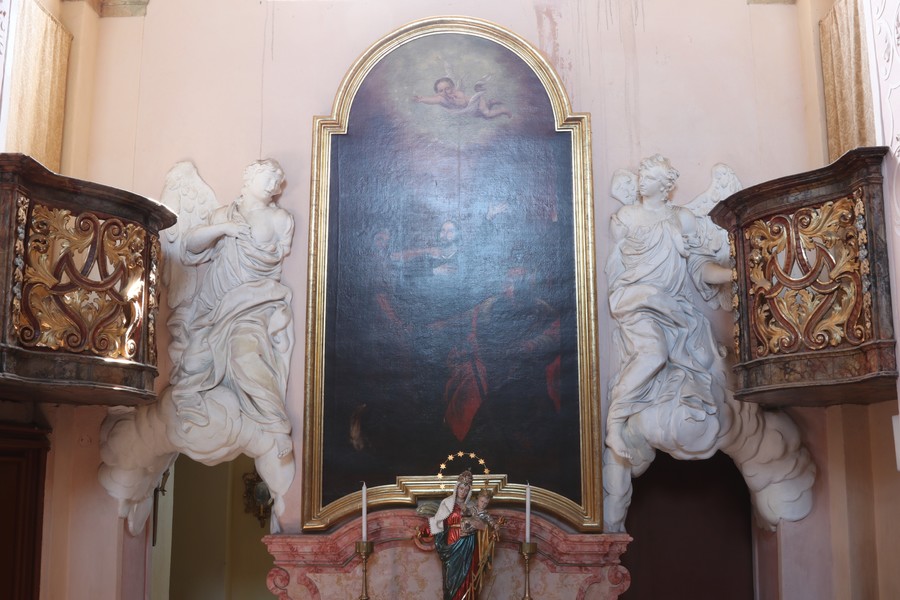
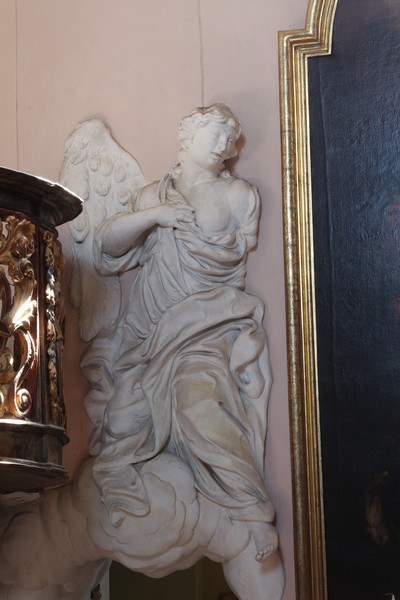
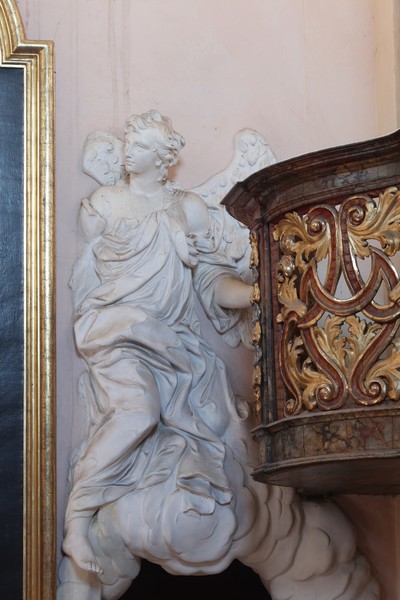
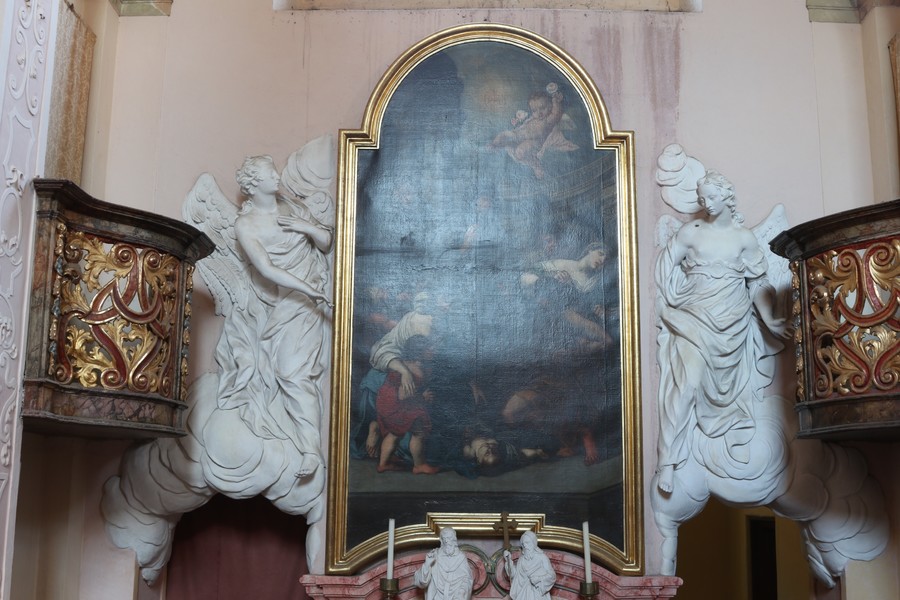
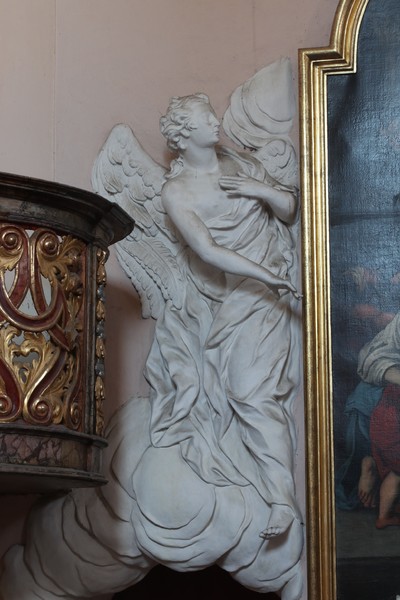
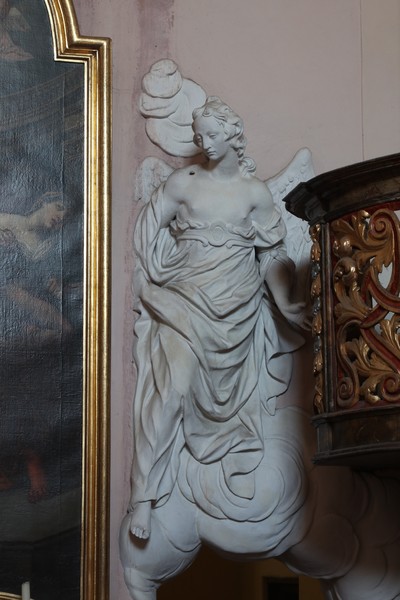
The side altar of St Francis of Paola features a central painting, flanked by two stucco angels on rounded clouds that mirror the openings below (Fig. 11). However, the angelic figures (Fig. 12), particularly the right angel with an incomplete arm (Fig. 13), do not integrate perfectly with the painting, suggesting that the painting originally had a different size. The stucco decoration may have initially extended to the upper window with a composition resembling a halo, in the style of Baldassarre Fontana or Filip Sattler (1695-1738).
Side Altar of St John Nepomucene


The decoration of the side altar of St John Nepomucene is very similar to that of St Francis of Paola (Fig. 14). The absence of the upper limbs of the angels suggests the original design was different, with an oval painting that extended to the angels (Fig. 15, 16). It is possible that the altar originally had a richer stucco decoration, perhaps with a radiant halo, as seen in other altars. The four angelic figures feature a neoclassical style, which contrasts with the more traditional plastic approach seen elsewhere in the church.