THE HIPOLITS HOUSE
The Hipolits house
Pl. Mariacki 3
31-024 Cracow
Poland
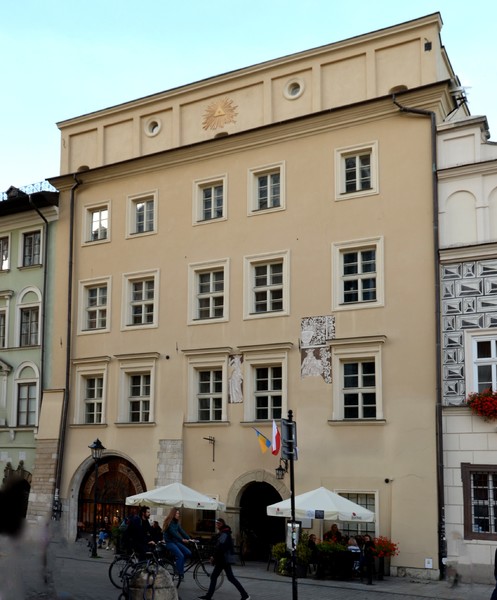
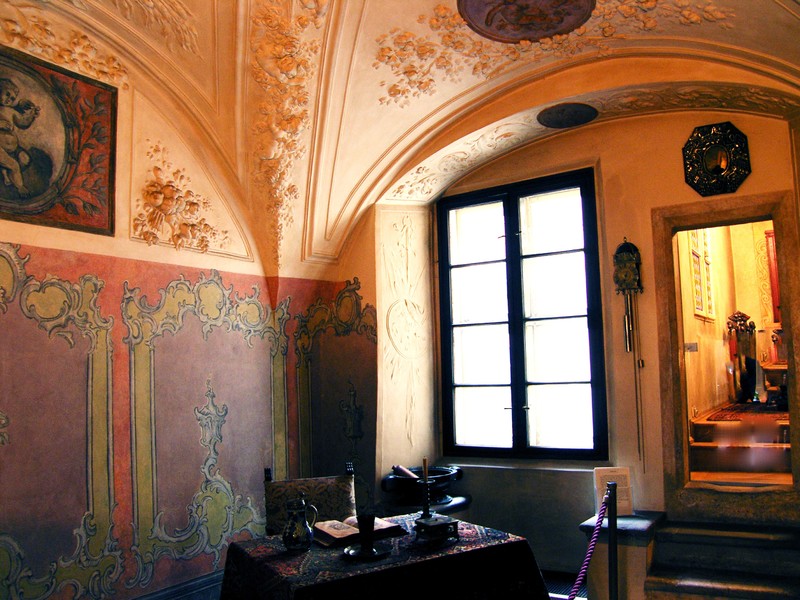
The house (Fig. 1), built in the 16th century on the site of an earlier one, was owned by the Hipolit family in the first half of the 17th century. Around 1680, it went into possession of the Zaleski family and at the turn of the 18th century the front building was joined with an annex at the rear of the courtyard with a small gallery to house a studiolo and the adjacent room was decorated with stucco (Fig. 2). These works were commissioned by Jan Zygmunt Zaleski (d. 1709), a merchant, town councillor, and mayor of Cracow, who owned a big collection of books and artworks.
In the 18th century a third floor was added. The house remained in the Zaleski family until the late 18th century, then changed hands multiple times and underwent minor modifications. In 1982, the Olszowski family sold the property, and it became one of the branches of the Cracow Museum. The house was restored in 1892–1894, 1957–1958, 1982–1992, and again starting in 2016.
First floor room


The stuccoes in the first-floor room, located at the eastern corner of the front building facing the courtyard, are attributed by Pagaczewski (1909) to Baldassare Fontana.
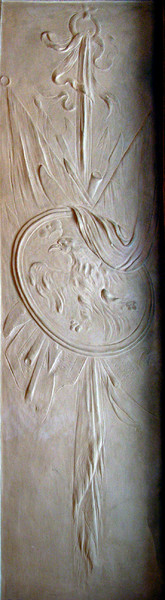
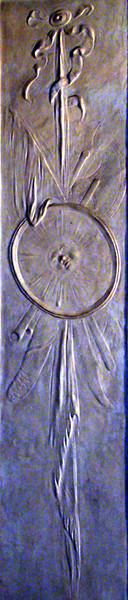
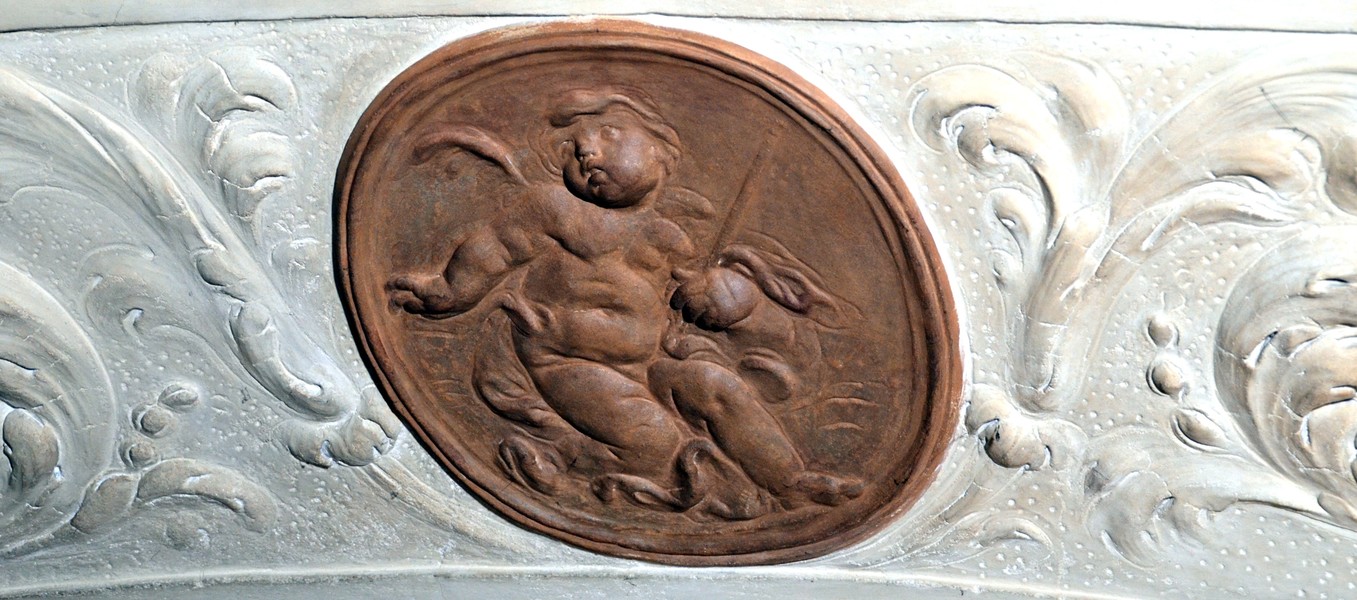
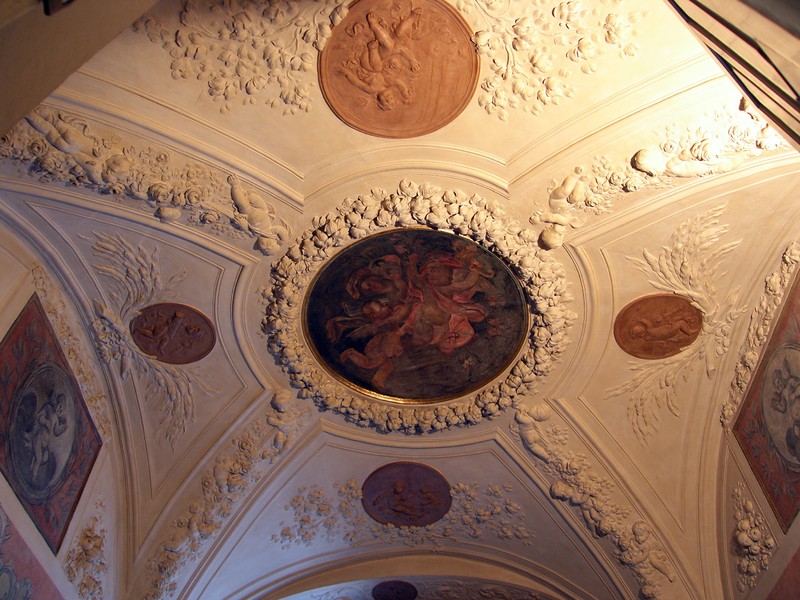
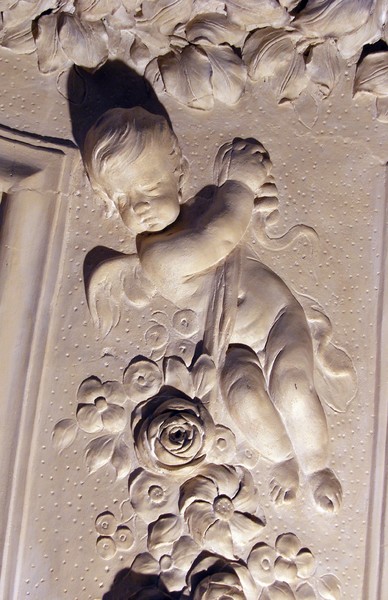
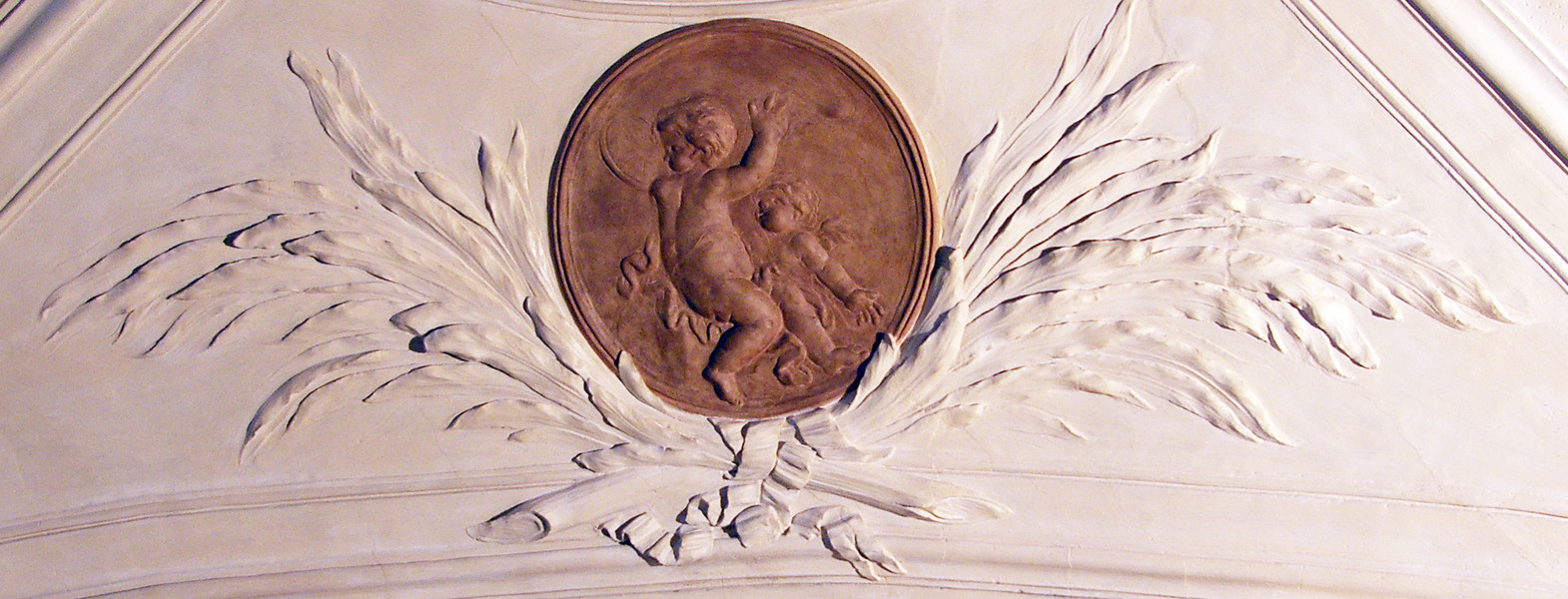
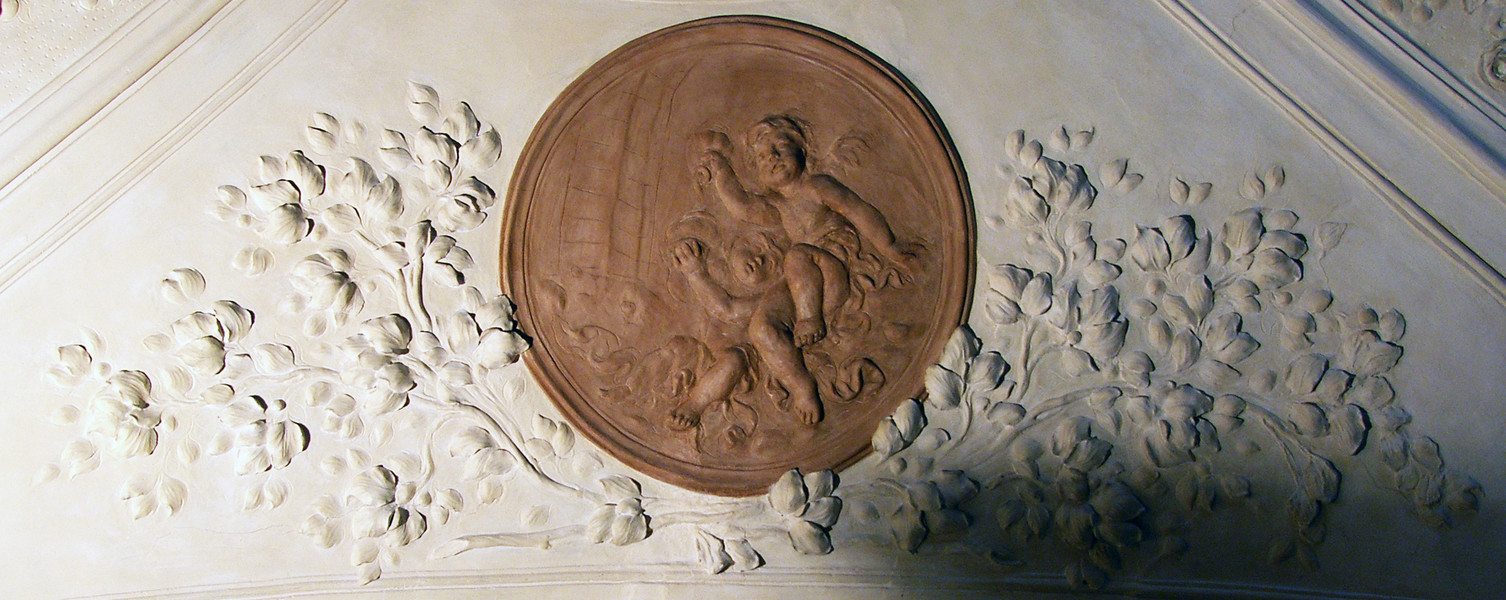
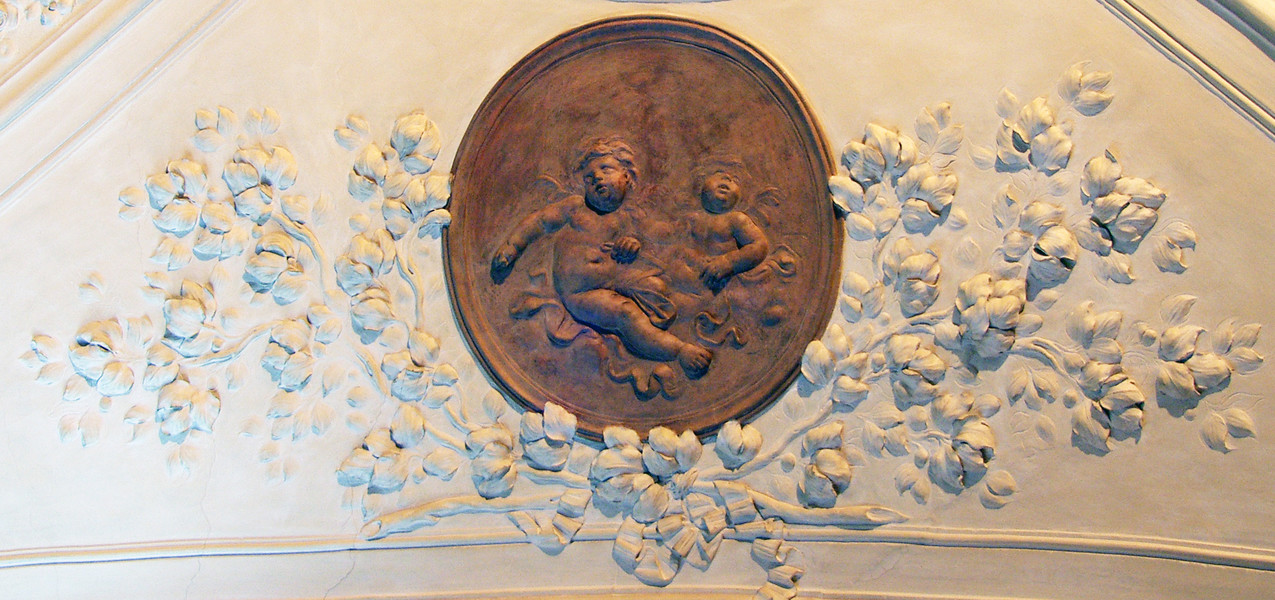
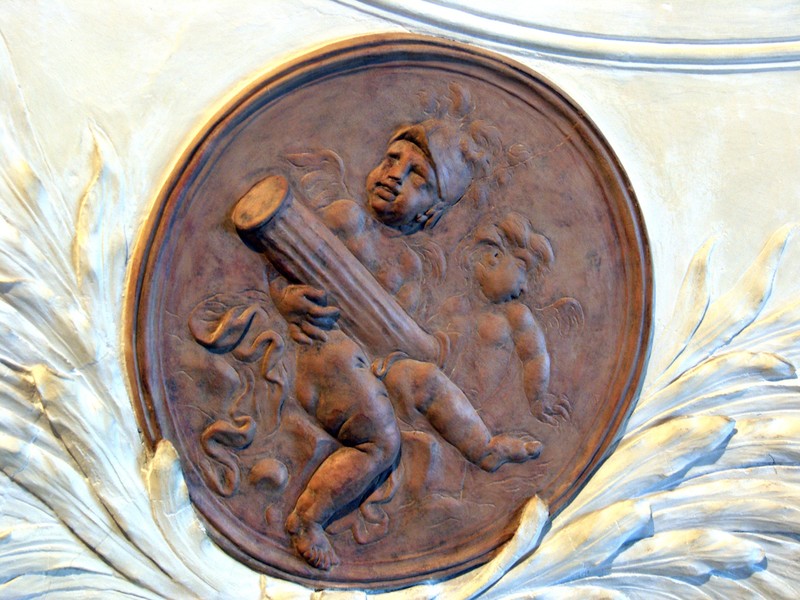
The decorations include reliefs with putti and figurative medallions, located on the lunettes and the vault. The walls, divided into three panels, feature fruit and twig compositions in the side panels, while the central ones contain paintings framed by ornaments: twigs on the longer walls and fruit platters on the shorter ones. On the northeast wall, a niche with a window and an entrance is flanked by panoplies and shields (Fig. 3, 4) and an arch adorned with delicate acanthus vines emerging from a medallion with a putto (Fig. 5).
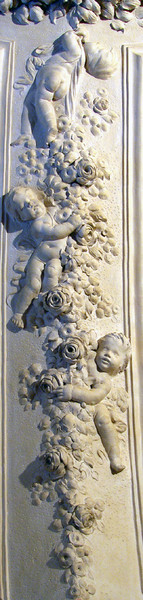
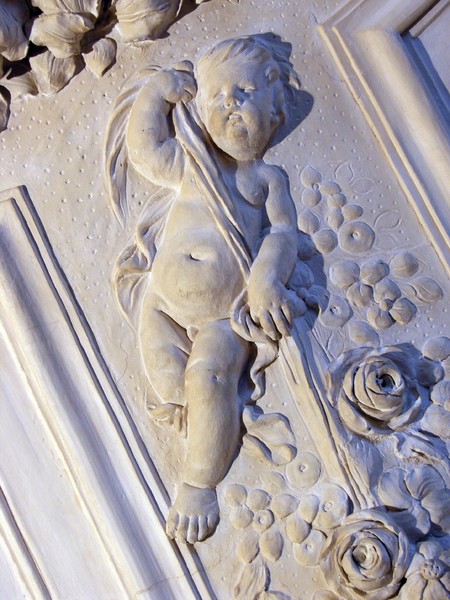
The vault centres around a painting, surrounded by a wreath of flowers (Fig. 6). The seams are decorated with putti in various poses and vegetal motifs suspended on ribbons held by one of the figures, interspersed with medallions depicting putti holding symbols of virtues, surrounded by branches, flowers, and palm fronds (Fig. 7, 8, 9, 10, 11, 12, 13).