THE PREMONSTRATENSIAN CANONRY HRADISKO
Olomouc – The Premonstratensian Canonry Hradisko
Sušilovo náměstí 1/5
779 00 Olomouc 9-Klášterní Hradisko
Czech Republic
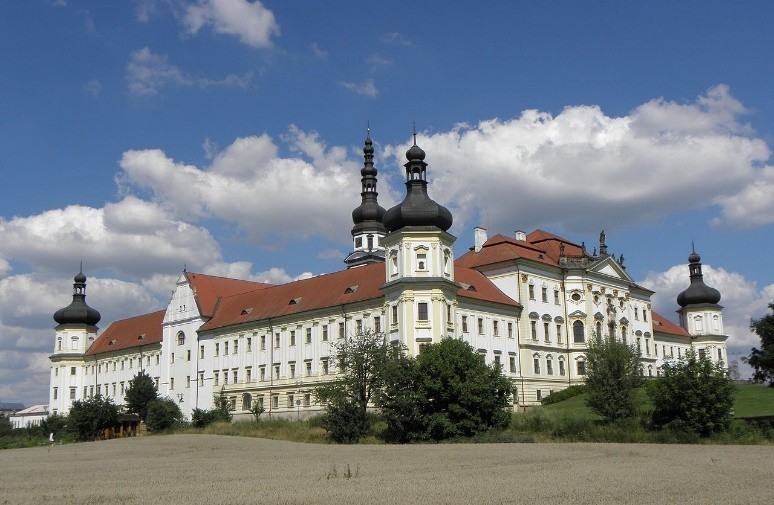
Founded in 1077 by the nobles Otto I of Olomouc (1045-1087) and Eufemia of Hungary (1050 circa-1111), the Benedictine monastery of Saint Stephen was passed to the Premonstratensians in 1151, who began significant construction work1. After centuries of destruction, the monks returned in 1653 under the leadership of Abbot Bedřich Schialia and began the reconstruction of the convent church, completed in 16612.
In 1686, Abbot Norbert Želecký of Počenice (1649-1709) promoted the construction of a new convent building, designed by Giovanni Pietro Tencalla (1629–1702) (Fig. 1). Between 1692 and 1693, the Angelic Staircase was decorated with paintings by Justus van den Nypoort and figurative stucco work by Baldassarre Fontana. The complex was completed in 1736 but was suppressed in 1784 during the Josephine reforms. Since 1802, the former monastery has hosted a military hospital, a function it still maintains today.
Angelic Staircase


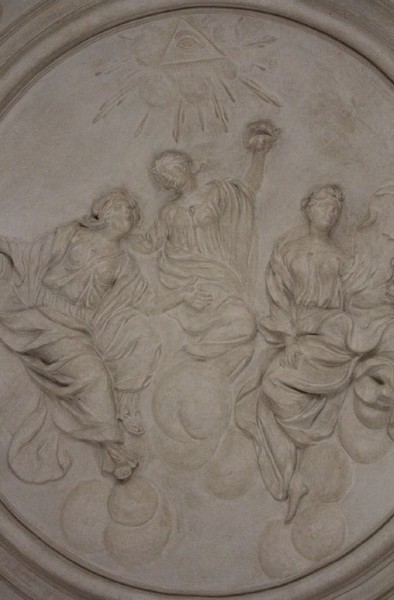
The Angelic Staircase features a domed vault with an intricate plastic border and decorative stucco ornaments. The vault is supported by corner consoles shaped like mascarons. At the centre, a large circular medallion depicts the Immaculate Purity of the Virgin Mary, surrounded by three female figures holding shells, symbols of purity and revelation (Fig. 2).
Four pear-shaped corner medallions represent the cardinal virtues: Caritas, Veritas, Fortitudo, and Pietas. A floral garland with ribbons separates the central medallion from the corner ones. Stucco putti hold shells along the northern and southern walls, while decorative frames embellish the lateral walls.
Vault of the Capitol Chapel of Our Lady of the Snow


The rectangular vault of the chapel features a barrel structure with lunettes and stucco panels decorated with garlands. One of the most interesting elements is a group of three putti’s heads, arranged in a triangle in the central space between the panels. At the top of the vault, two stars are placed: an eight-pointed one to the south and a six-pointed one to the north. The central openings are adorned with four stucco cartouches, framed by acanthus scrolls and crowned by heads of winged putti.
The lunettes contain stucco decorations with personifications of the virtues, accompanied by painted Latin inscriptions3.
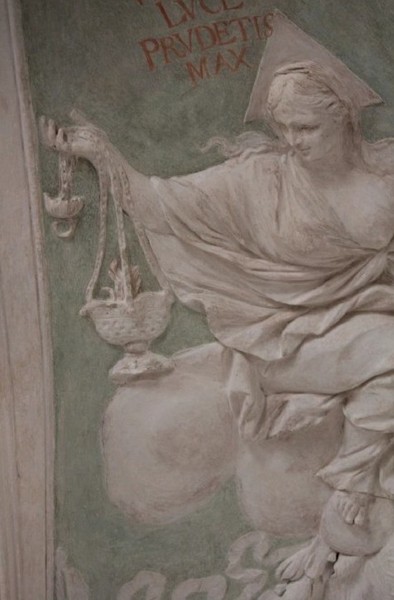
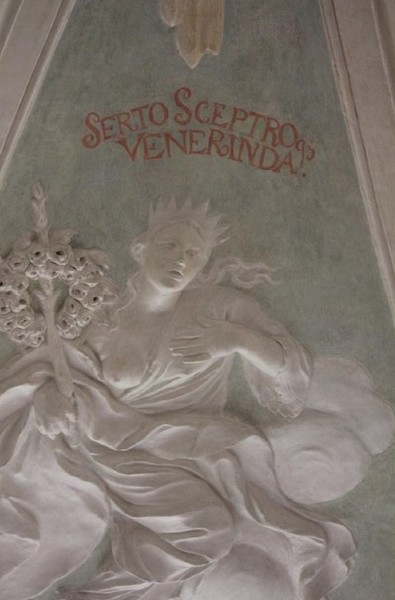
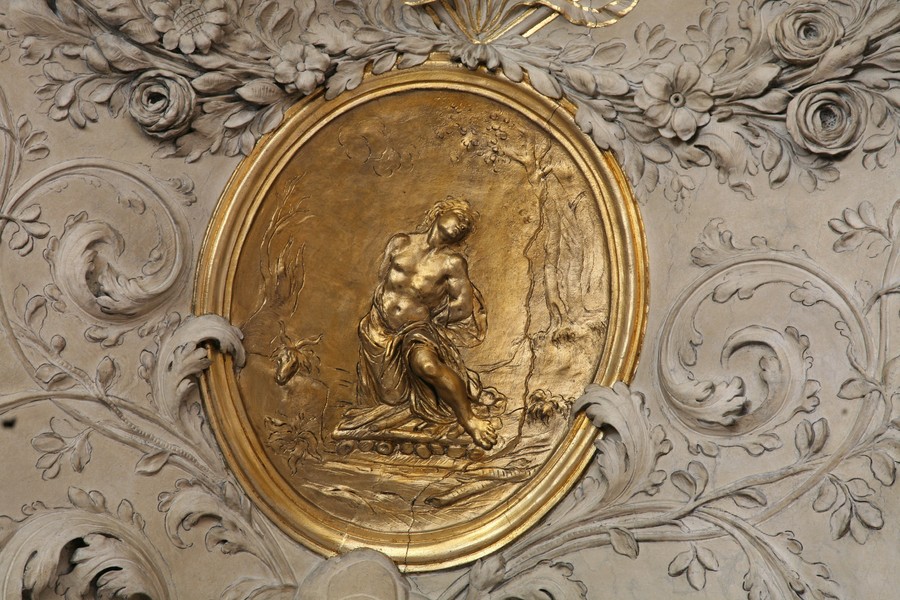
Prudence is represented with a lamp and a snake (Fig. 3), Glory with a trumpet and a lily, Purity with a unicorn, Temperance with a sceptre entwined with a crown of roses (Fig. 4), Fortitude with a lion and an inverted column, and Justice with a sceptre and scales.
Library Hall


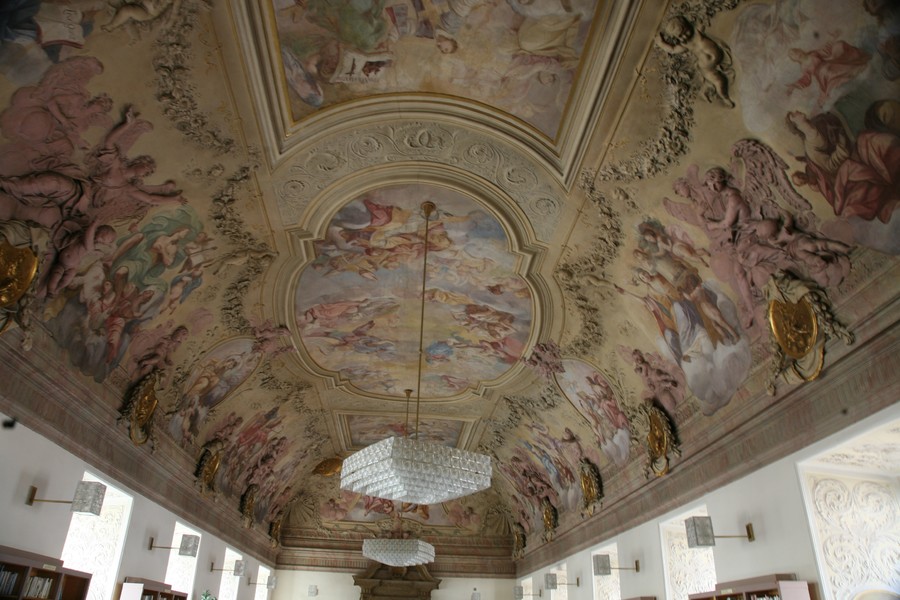
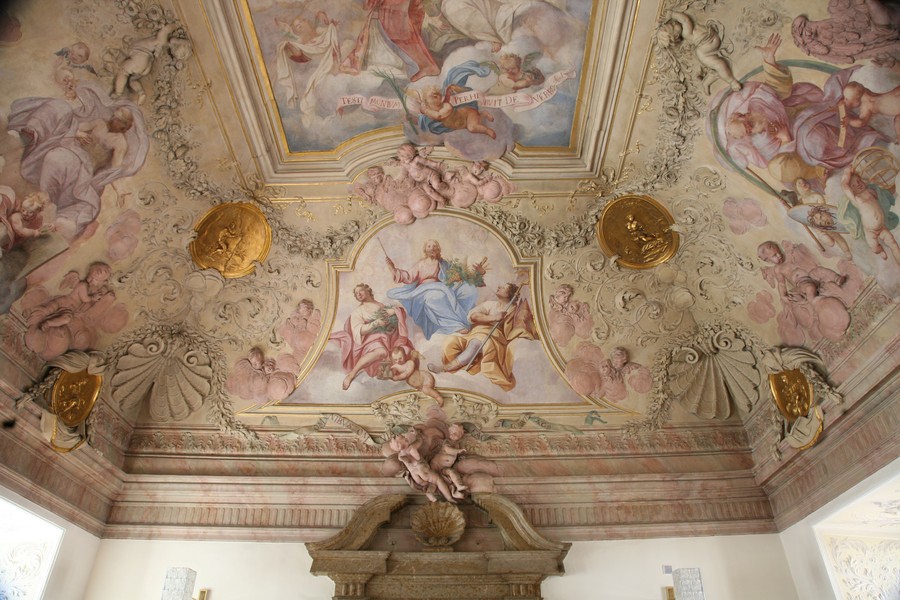
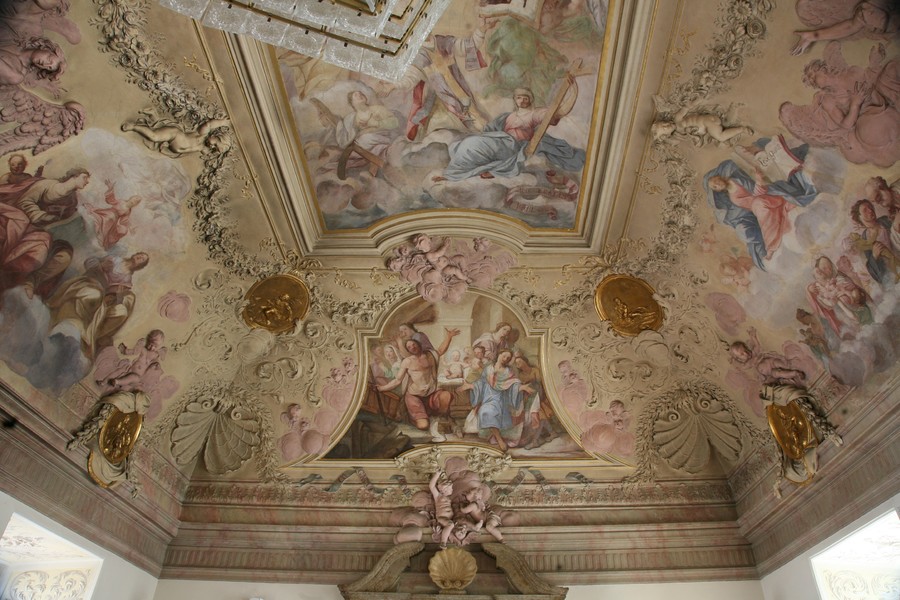
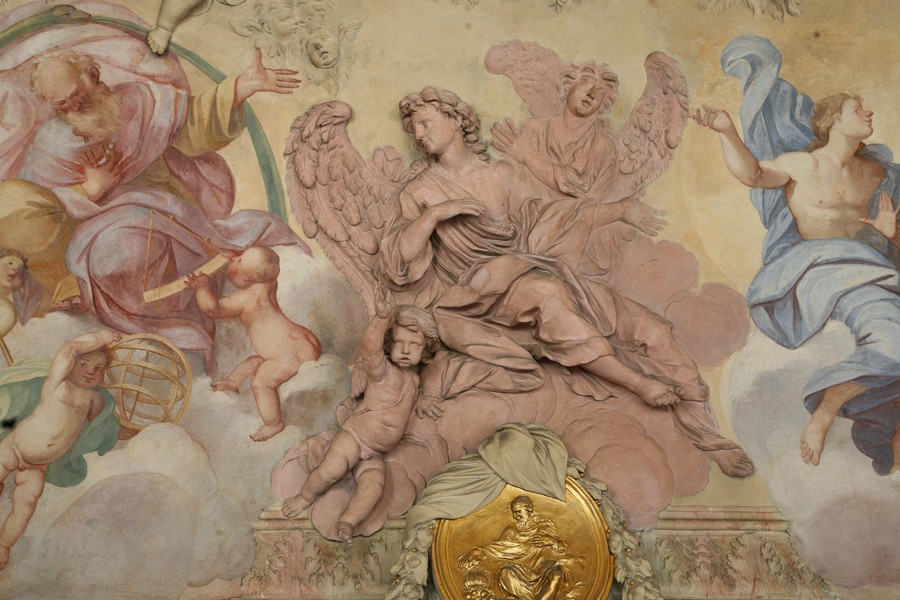
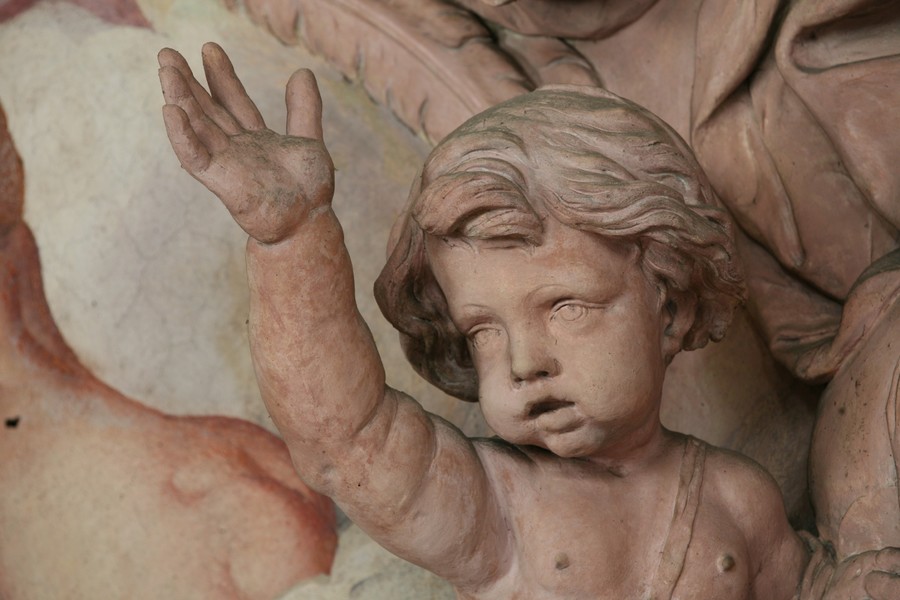
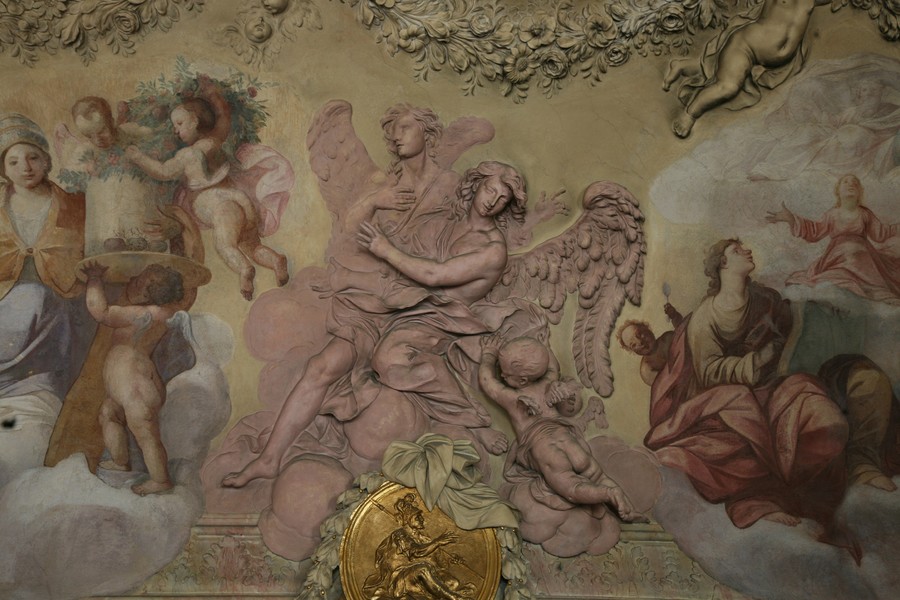
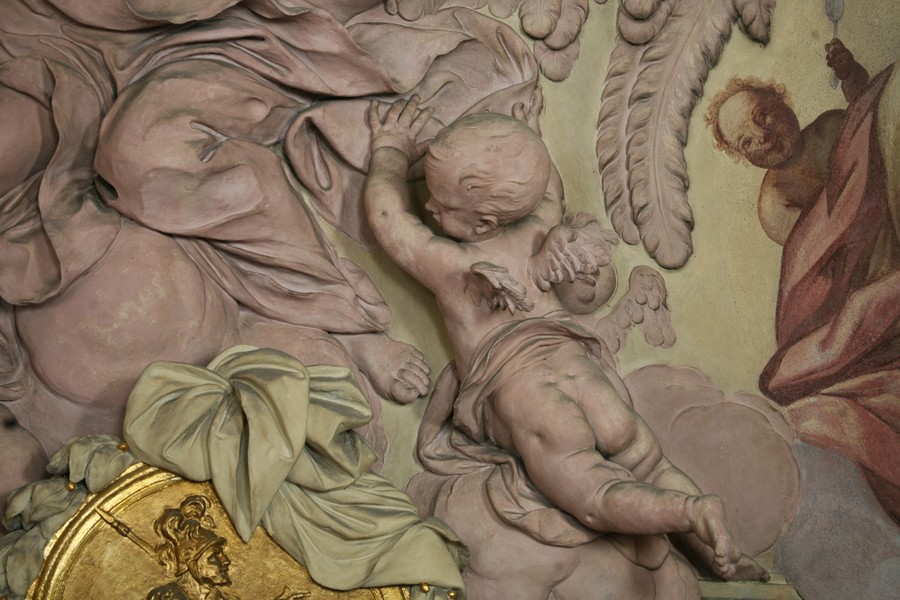
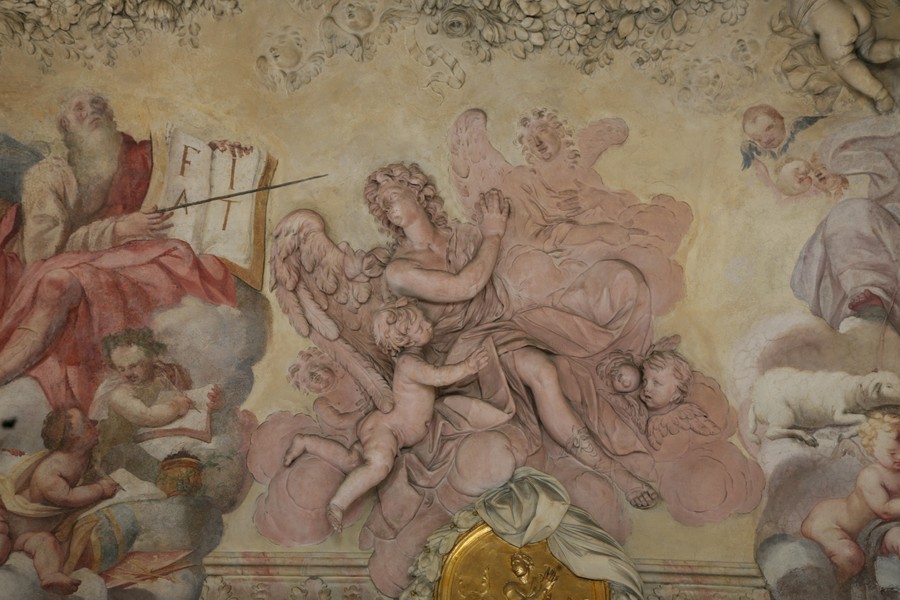
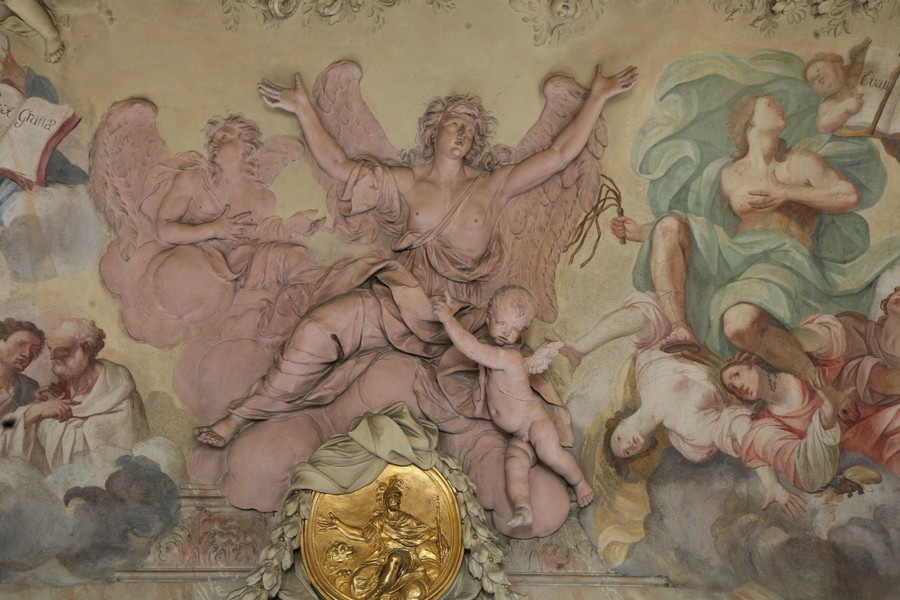
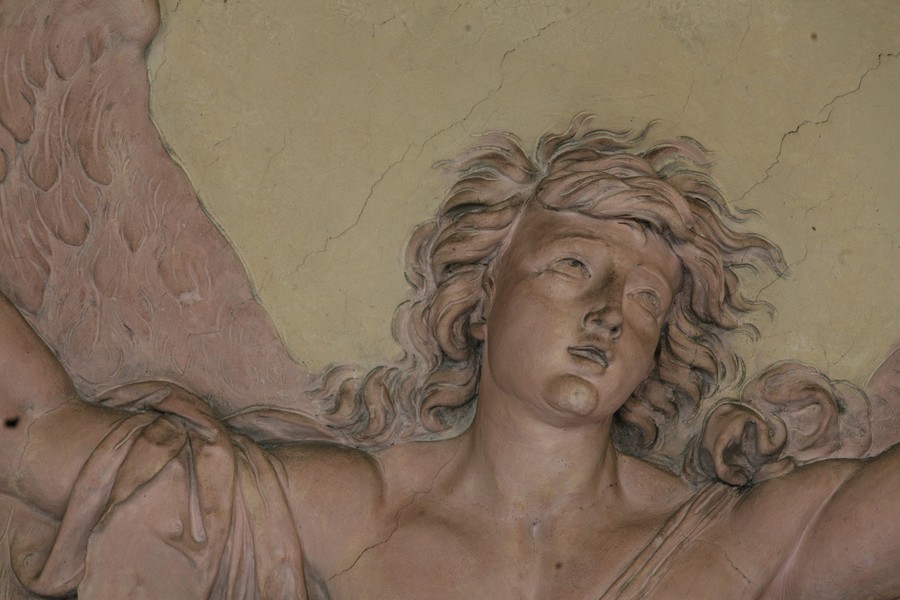
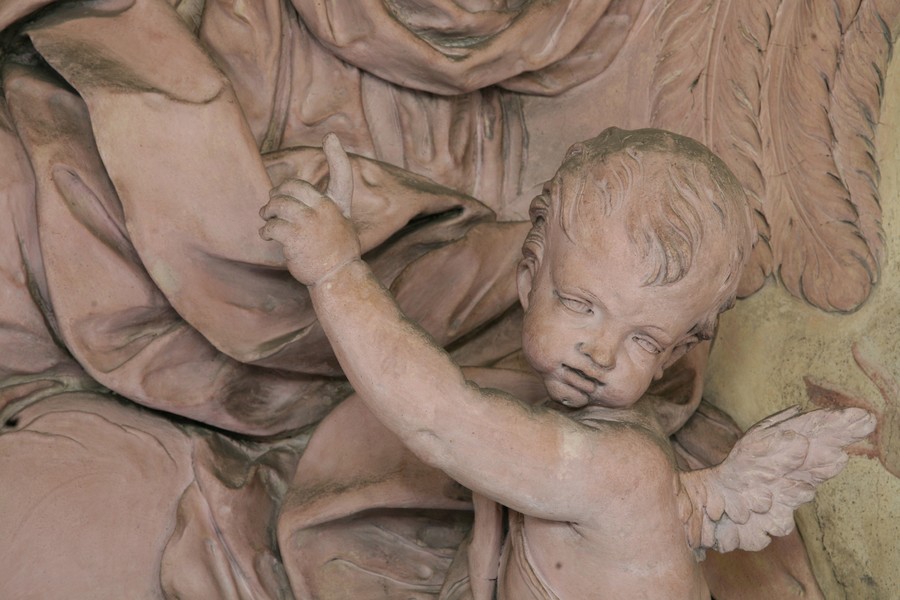
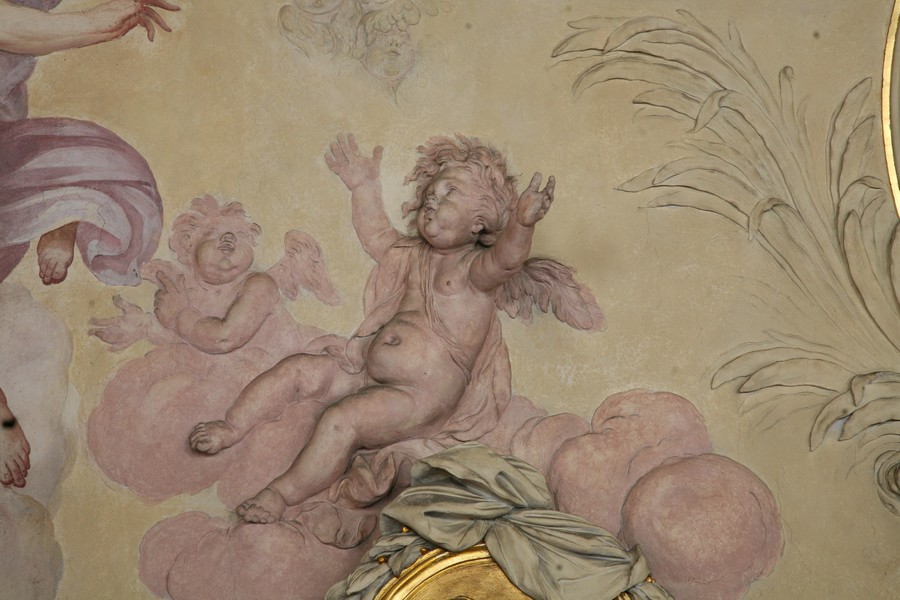
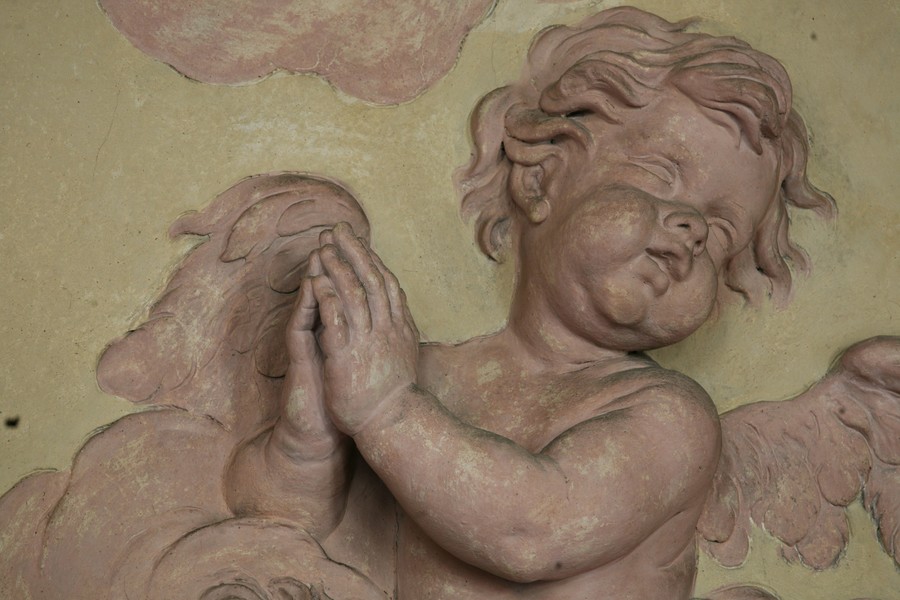
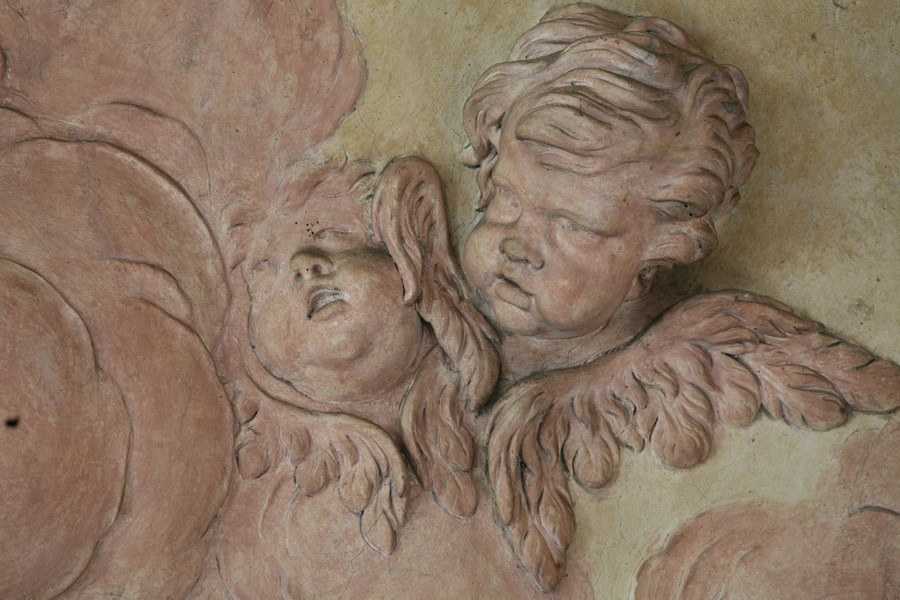
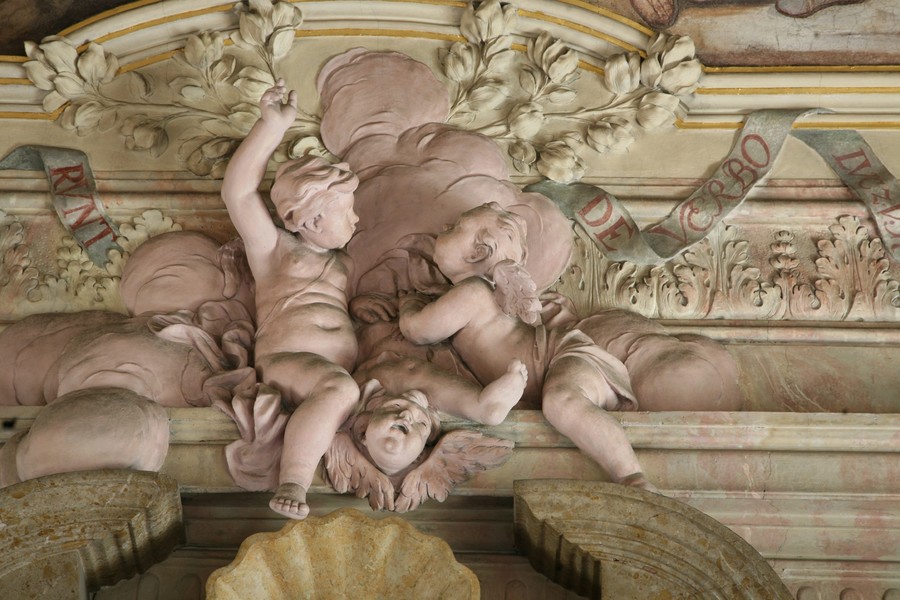
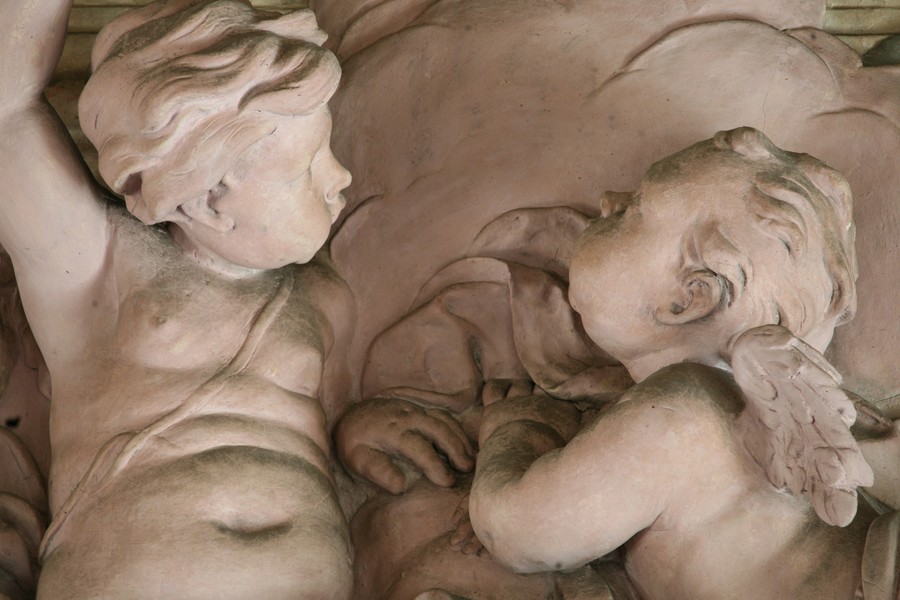
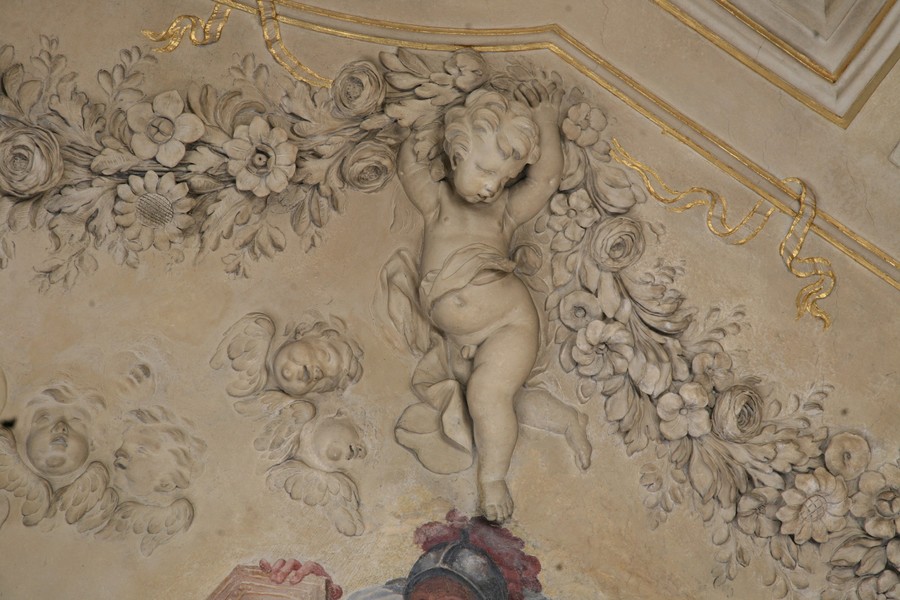
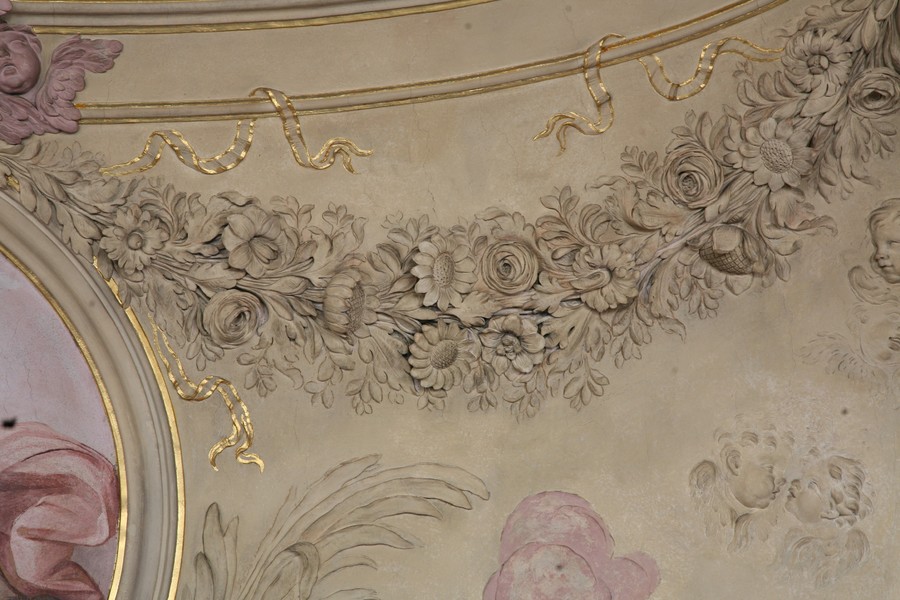
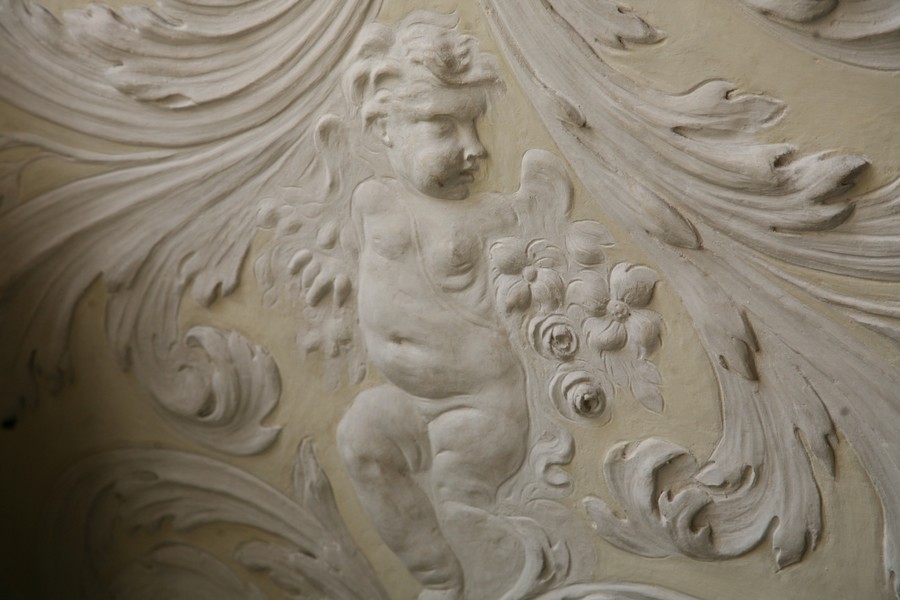
The stucco decoration of the Library Hall is the most relevant of Baldassarre Fontana's work, marked by an innovative integration of sculpture and painting, resulting from his collaboration with Innocenzo Monti (1644-1713) (Fig. 5, 6, 7). Fontana skilfully uses spatial depth, with reliefs dynamically emerging from the surface (Fig. 8, 9, 10, 11, 12, 13, 14, 15, 16, 17, 18, 19, 20, 21, 22).
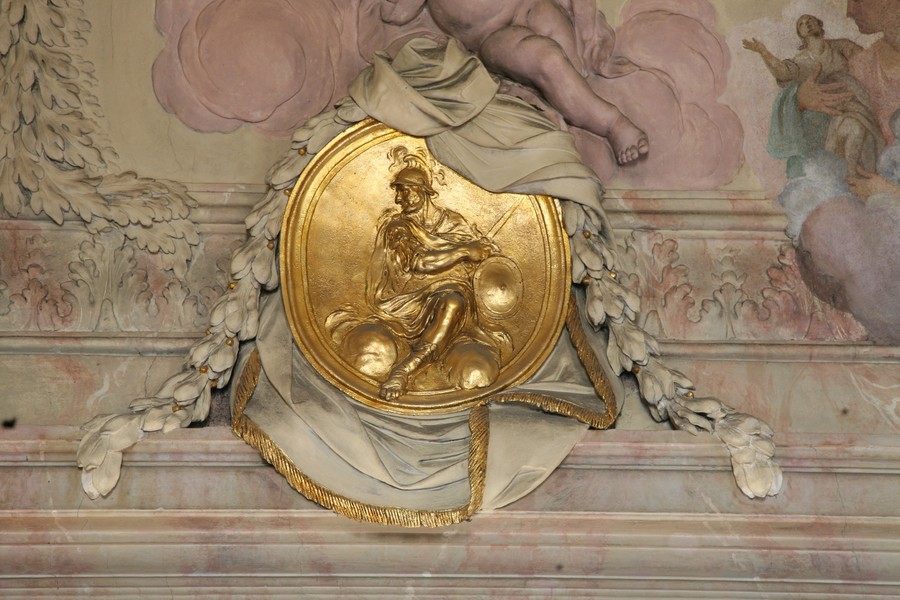
The vault is enriched with frescoes by Monti, completed by golden medallions celebrating the Holy Name of Jesus. Twelve medallions above the windows depict the twelve sons of Jacob, with figures in bas-relief partially sculpted beyond the frame (Fig. 23). Among them, Ruben with a water jug, Simeone with a sword and shield (Fig. 24), Levi with a protruding spear, Giuda with a sceptre and lion, and Giuseppe with bow and arrow.
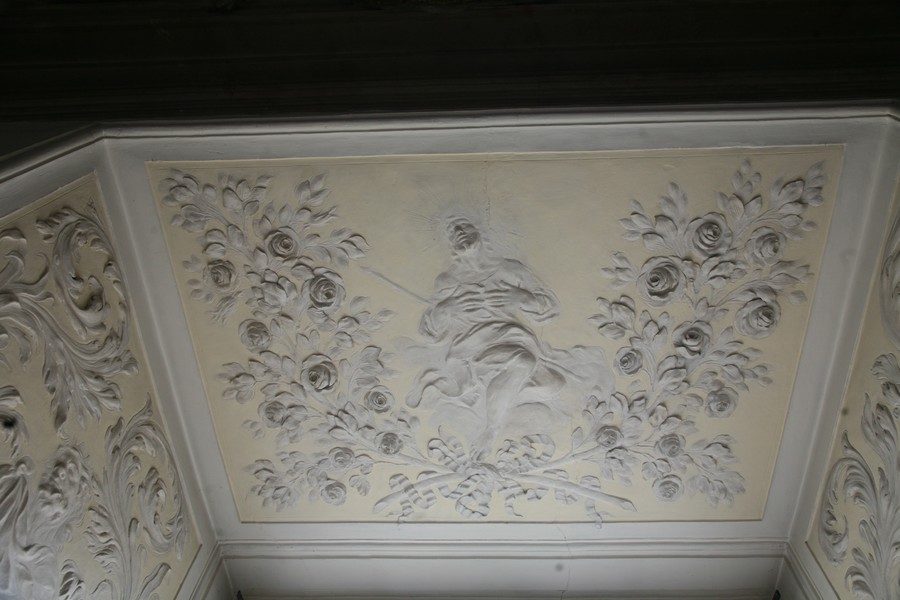
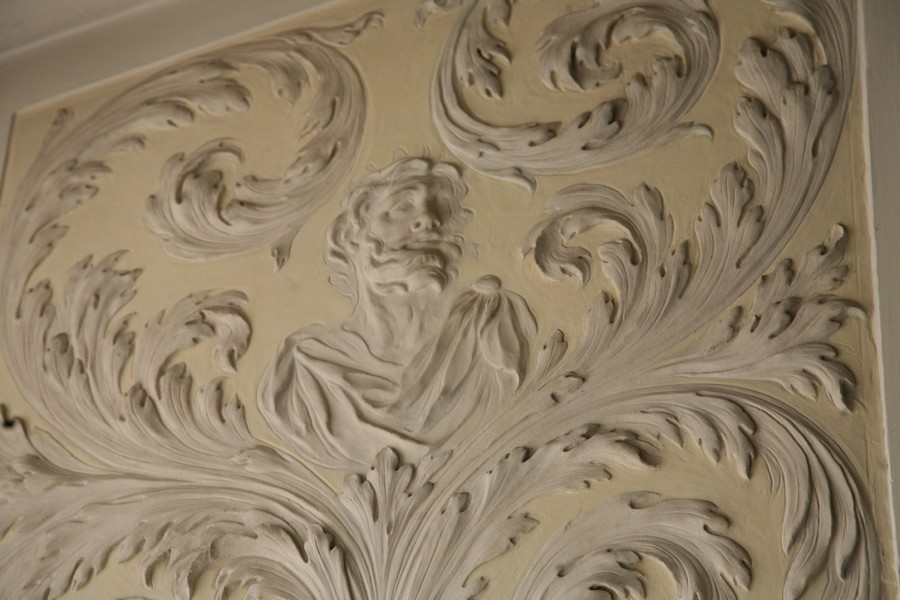
The walls of the intrados feature reliefs of the 24 kings of the Old Testament, putti, and acanthus scrolls. The ceilings house the twelve apostles (Fig. 25, 26, 27), including Saint Peter with keys, Saint John with a chalice, Saint Thomas with a square, and Saint Matthew with an axe. Above the western portal, painted putti carry the signatures of the artists, completing the impressive decoration.
Former Convent Church

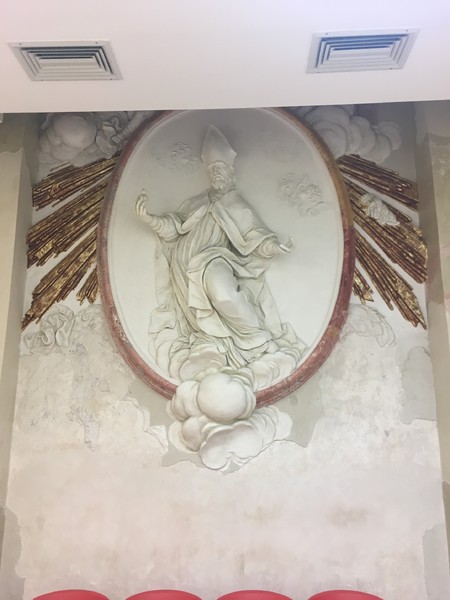
According to sources and the manuscript of Johann Peter Cerroni, in 1718 Baldassarre Fontana contributed to the decoration of the convent church, realizing the main altar, the capitals, the angel statues on the pillars, the stucco statues in the founders' mausoleum, and the decoration of the altar of Saint Stephen. His involvement extends beyond these elements, also including the ornamentation of the altars of Saint Norbert, Saint Joseph, and Saint Augustine. Of these works, the altar of Saint Augustine is the only one that has survived to the present day (Fig. 28).
Former Sacristy of the Convent Church


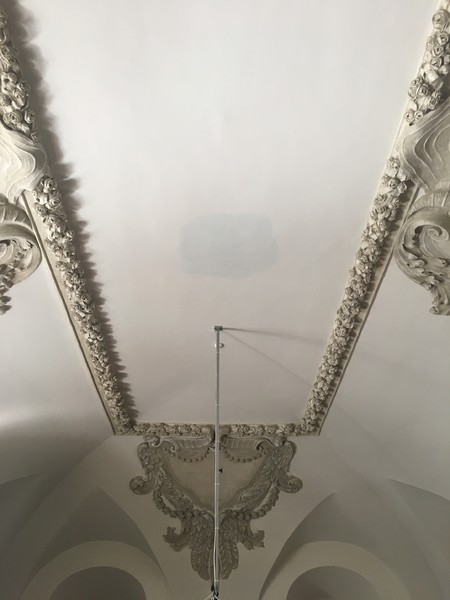
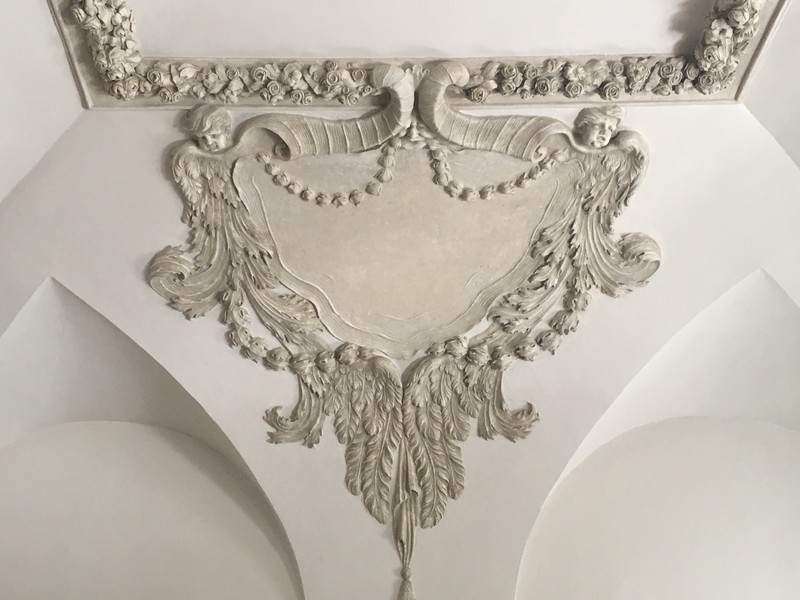
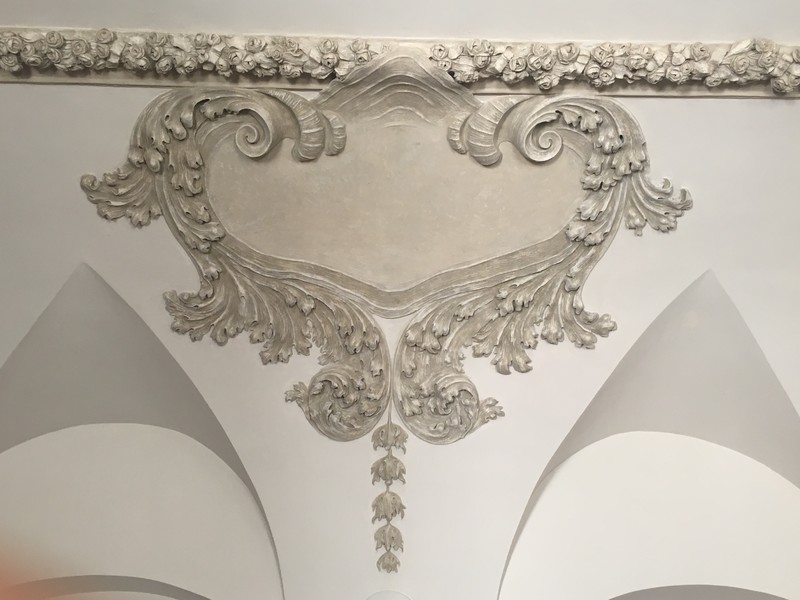
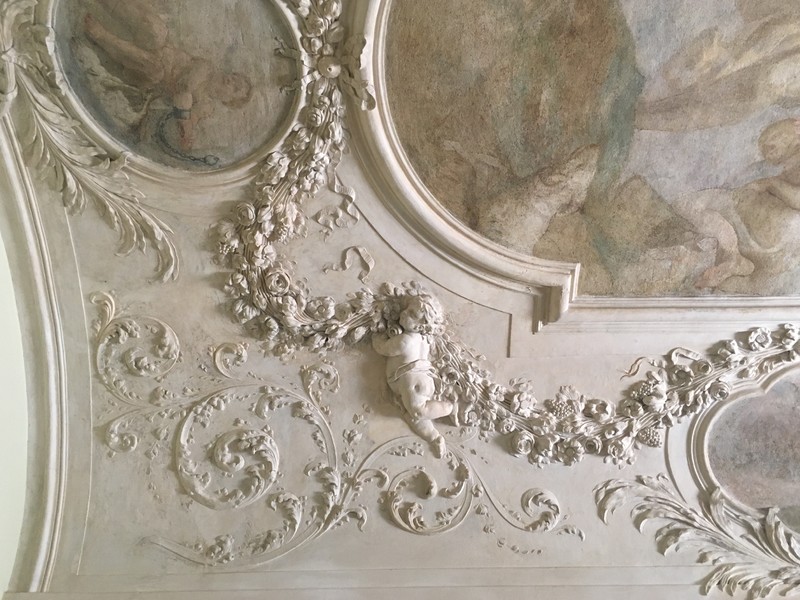
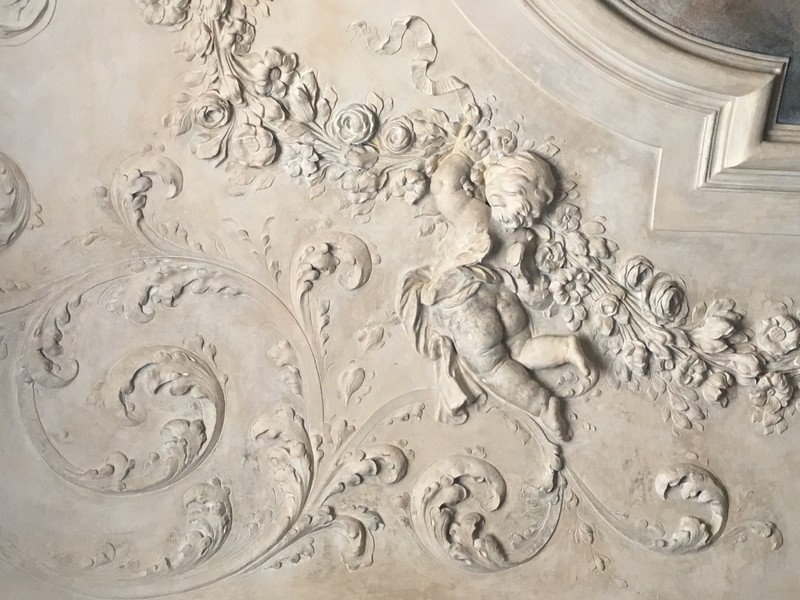
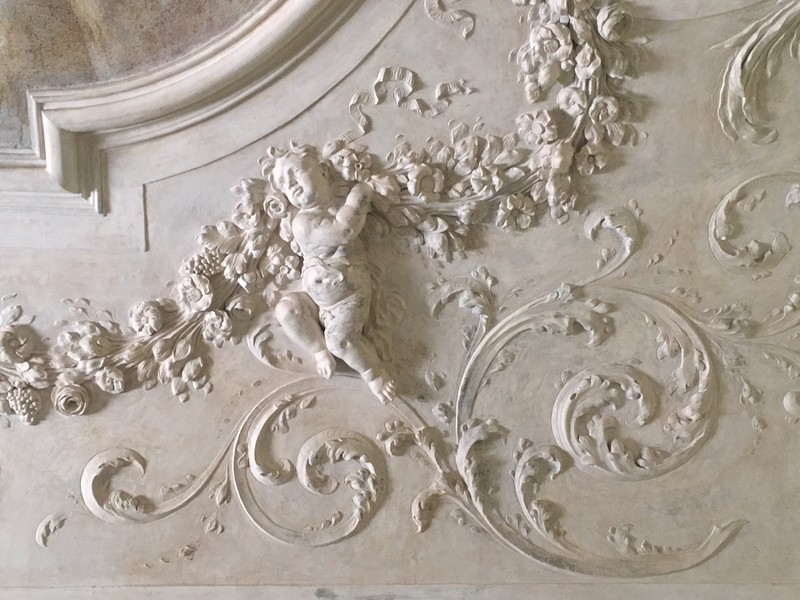
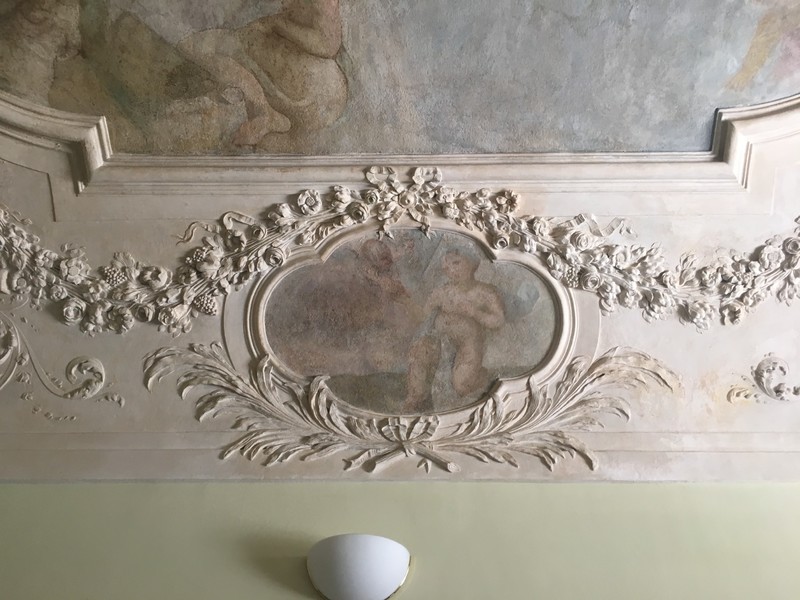
The former sacristy of the convent church, decorated around 1726, features an elegant stucco decoration concentrated on the ceiling. The central element is a rectangular frame with arched short sides, flanked by four smaller frames: two circulars along the major axis and two quadrilobed along the minor axis. A floral garland with bows and ribbons separates the frames, enriched by four stucco putti (Fig. 29, 30, 31). The composition is completed with delicate acanthus scrolls and a palm branch beneath the smaller frames (Fig. 32).
The decorations were restored in 1995.
Former Winter Dininig Hall