UNDER THE PEAR HOUSE
Under the Pear house
Ul. Szczepańska 1
31-011 Cracow
Poland
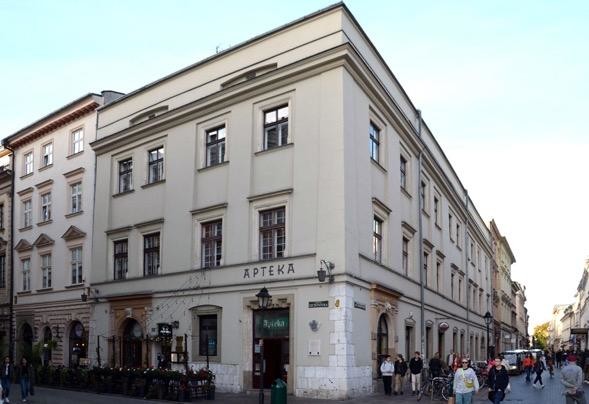
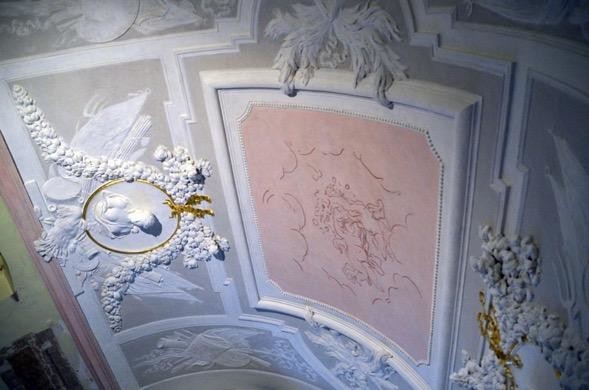
The house (Fig. 1), built around 1300 and a pear became its emblem. It underwent numerous reconstructions over the centuries. The net vault on the first floor likely dates to the 16th century. From 1697, the house belonged to Jan Andrzej Żydowski (c. 1632-1721), the standard-bearer of Cracow, who most likely commissioned the decoration of two rooms on the first floor. Later, the property changed hands multiple times. In the second half of the 19th century two rooms were merged, and since early 20th century, the house was used as a restaurant. Over time, it belonged to the Chamber of Physicians and the Association of the Polish Journalist and finally it passed to city ownership. Today, the main hall is used for meetings and occasional events organized by the Cracow Library or The Journalists' Club. It is generally accessible via the Pod Gruszką restaurant, which occupies the adjacent rooms. The house was restored in the late 19th century: stucco was restored in 1949-1950, 1966, 1968 and 2015-2016 (the rear room) (Fig. 2).
First floor room


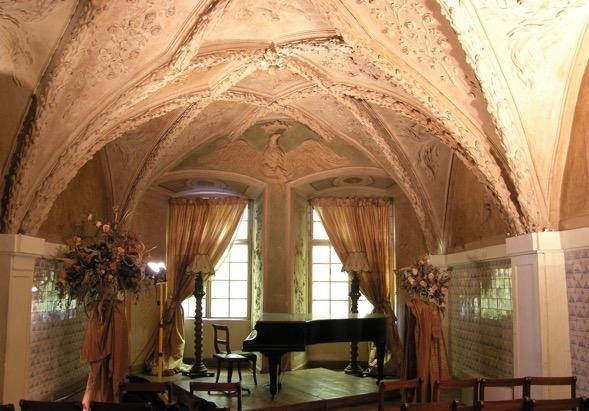
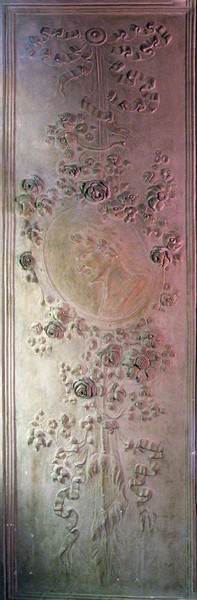
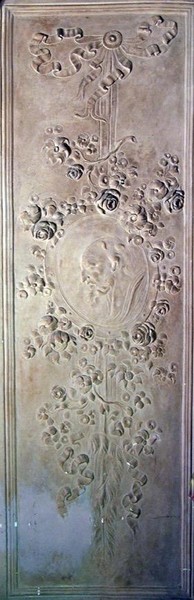
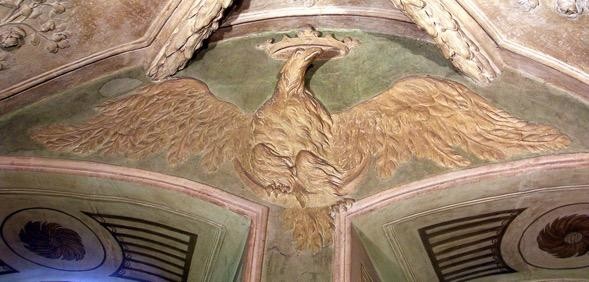
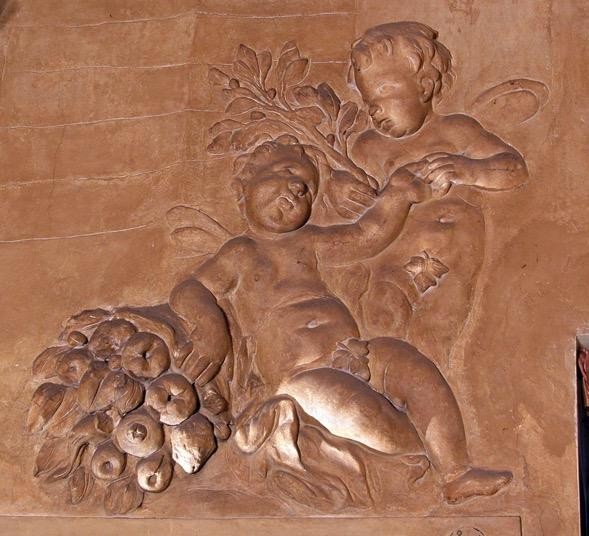
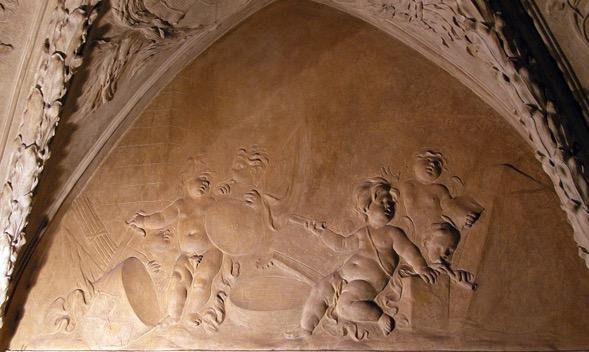
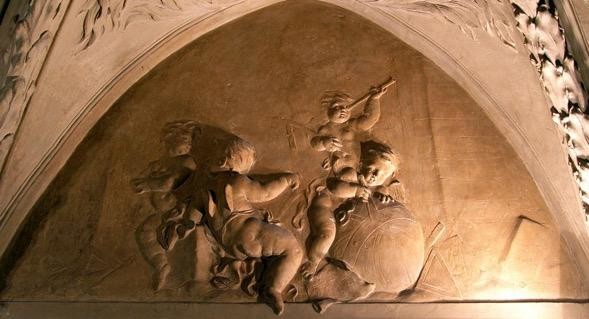
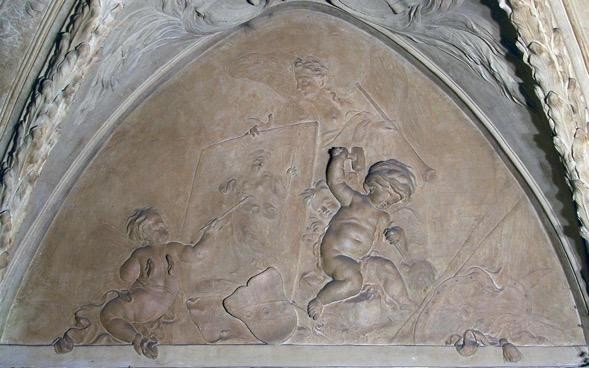
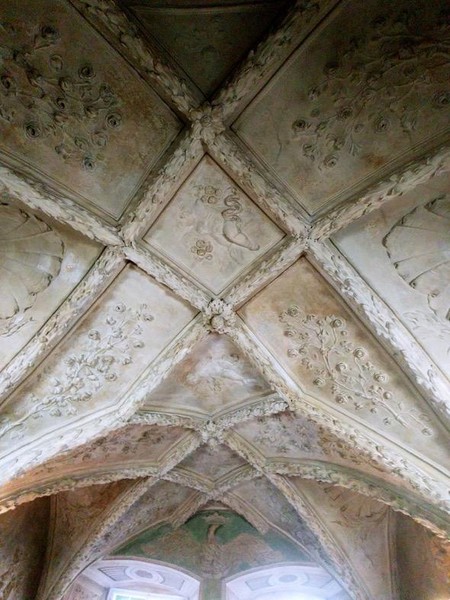
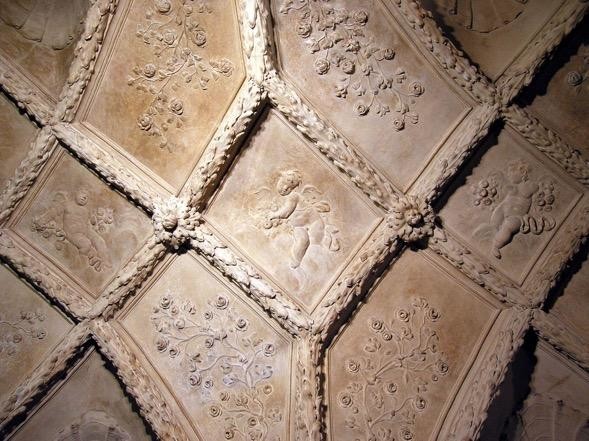
In the front room (Fig. 3), the window panels are decorated with portrait medallions, likely representing ancient figures (Fig. 4, 5), while above them there is a figure of an eagle trampling a crescent moon (Fig. 6). The walls beneath the ceiling are adorned with reliefs depicting allegorical scenes with putti. Above the door putti bear symbols of peace and abundance (Fig. 7), in the next bay they are holding musical instruments (Fig. 8), on the opposite wall one putto is measuring a celestial globe with a compass and the other is looking through a telescope (Fig. 9). The fourth panel shows a putto painting the Virtue and the other sculpting. At the bottom the owner’s coat of arms Doliwa is depicted (Fig. 10). The structure of net vaulting is clearly visible: the ribs are covered with laurel leaves and bosses are decorated with rosettes. Fields between them are filled with reliefs of angels, roses and shells (Fig. 11, 12). The lower parts of the walls are covered with Frisian ceramic tiles with figural decoration .
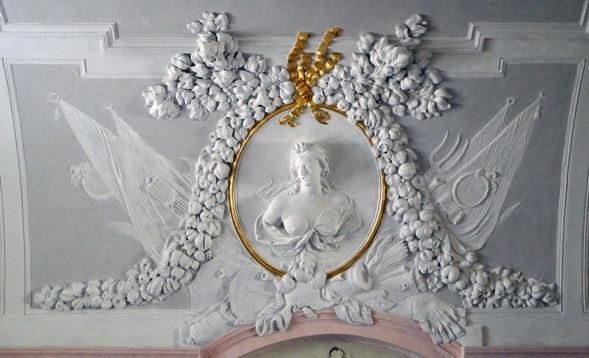
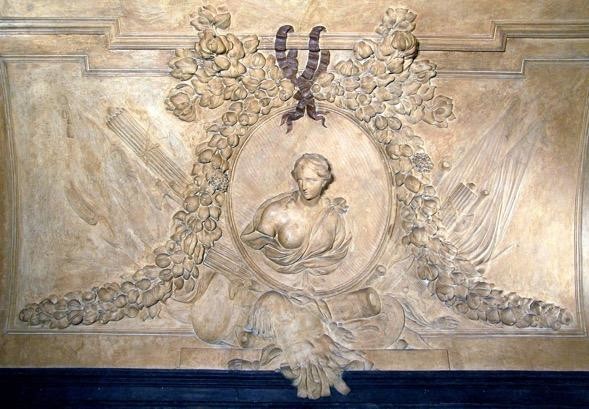
In the rear room, the vault is decorated with female busts and panoplies (Fig. 13). The central space seems designed for paintings (Fig. 14).