VŘESOVICE CASTLE (FORMER PREMONSTRATENSIAN RESIDENCE)
Vřesovice Castle (former premonstratensian residence)
Vřesovice 41,
798 09 Vřesovice (district of Prostějov)
Czech Republic
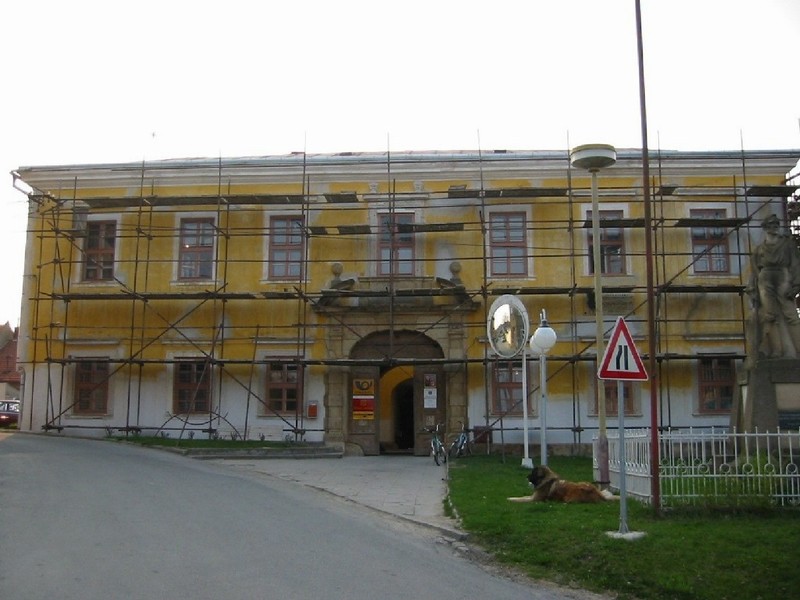
The four-wing, two-storey castle (Fig. 1), built between 1702 and 1704 under the supervision of the Premonstratensians of Klášterní Hradisko, was mainly used as the summer residence of Abbot Norbert Želecký of Počenice (1649-1709)1. The stucco decorations were created by the workshop of Baldassarre Fontana. Libuše Máčelová states that the attribution to Fontana was made by Cerroni, but the monastery documents only indicate that the stuccoes were made by Italian artists2. The chapel was built in 1708. From 1724, the castle became the administrative seat of the Vřesovice estate. After the closure of the monastery in 1784, it housed the administration of its former estate. In 1825, Klemens Wenzel von Metternich bought it and renovated it. The castle suffered a fire in 1885 and became a workshop owned by Vincenc Jančík in the 1920s. After World War II, it was nationalised and housed various public services. In 1994, after the property rights were returned, it was sold to the municipality and used as offices and a school.
Room on the first floor


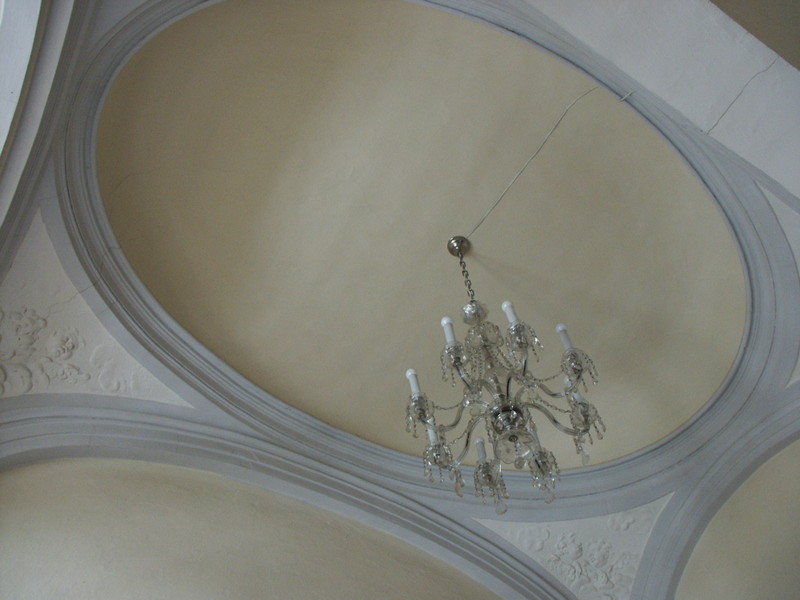
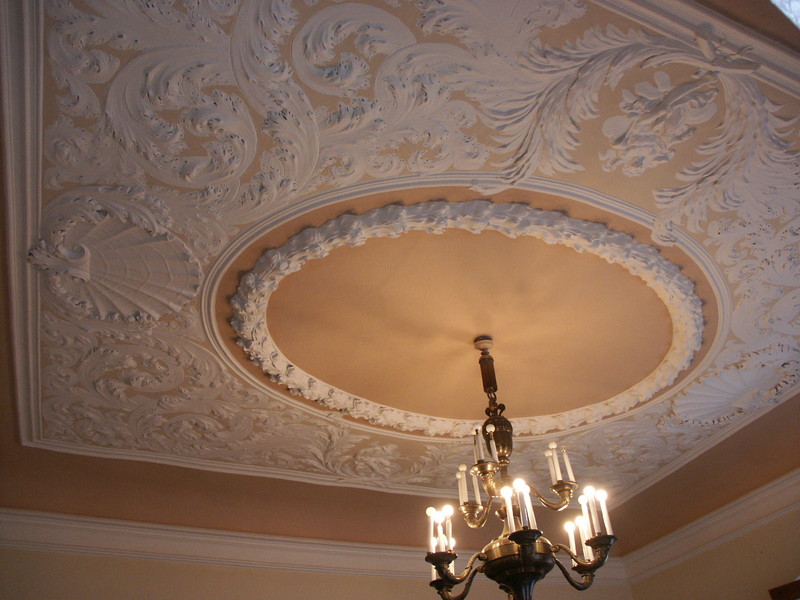
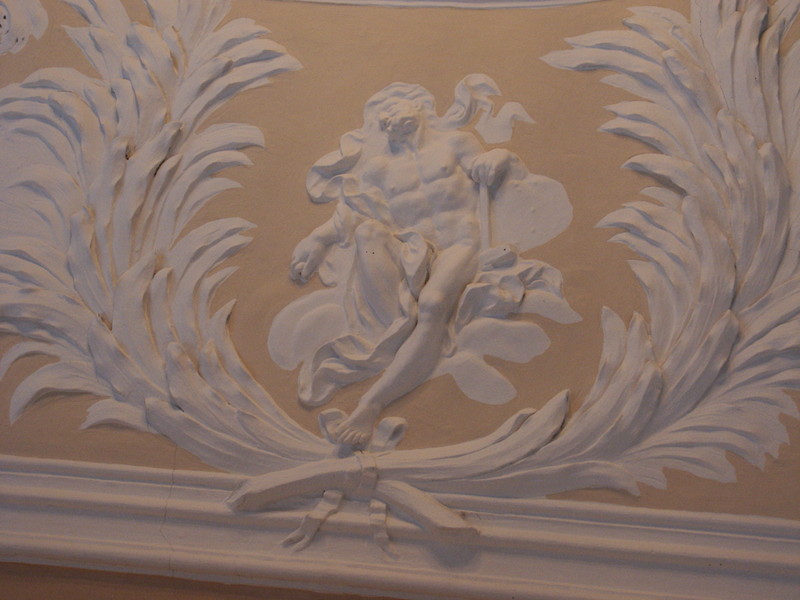
In this room, the ceiling is entirely decorated in stucco (Fig. 2). In the centre, an oval medallion composed of laurel leaves is surrounded by acanthus leaves that extend to the corners of the room. The central part of the shorter sides is decorated with shells, while that of the longer sides features two figures surmounted by crossed palm branches (Fig. 3). The stuccoes were heavily repainted, hiding the details under layers of whitewash.
Former chapel


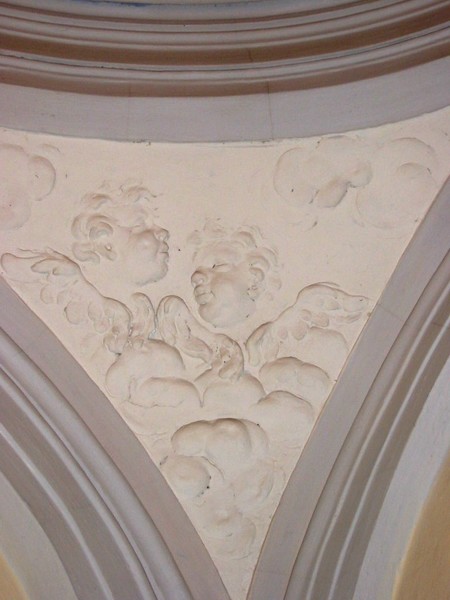
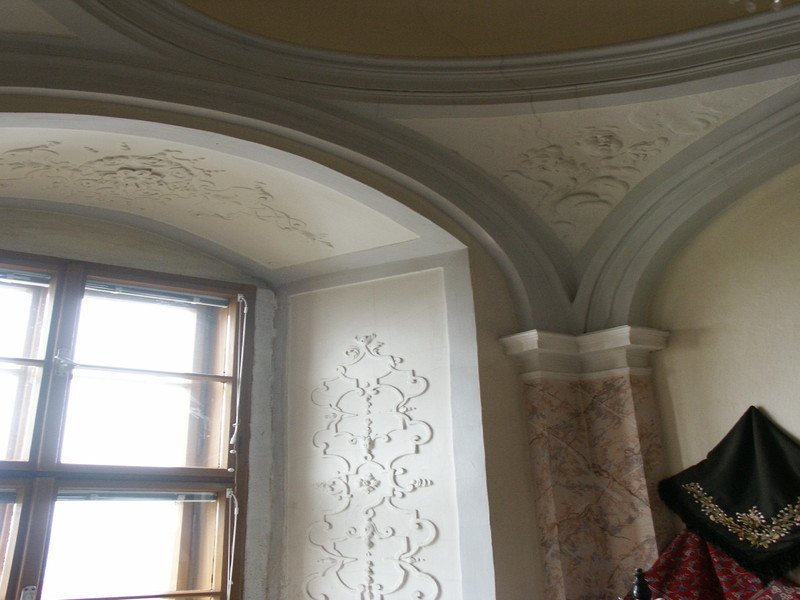
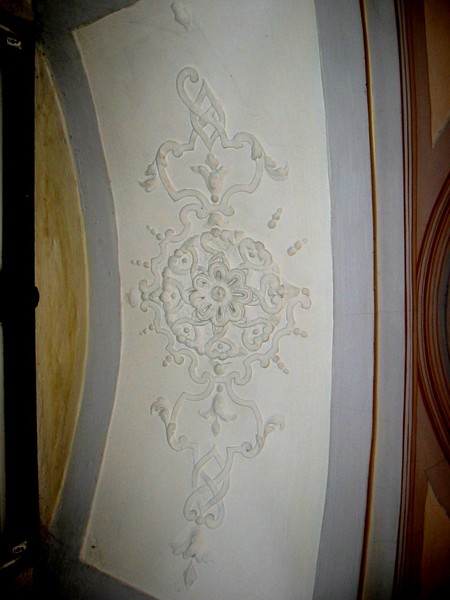
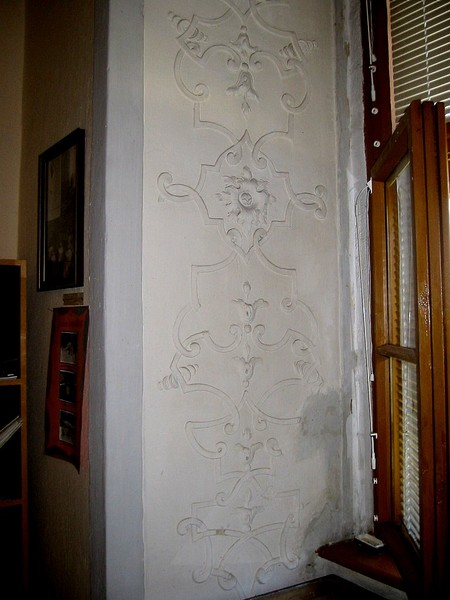
In the chapel, the stucco decorations are partially preserved, surrounding the central medallion of the vault and extending into the former chancel (Fig. 4). The four pendentives of the vault are decorated with two cherubs each, immersed in clouds (Fig. 5, 6). The window splays are also ornamented: on the sides, there are geometric motifs, while the upper arch is embellished with a festoon with a rosette (Fig. 7, 8, 9). As in the room on the first floor, the stuccoes have been repainted with numerous layers of whitewash.