CHURCH OF THE HOLY CROSS
Tempio di Santa Croce
Via Santa Croce
6826 Riva San Vitale
Switzerland
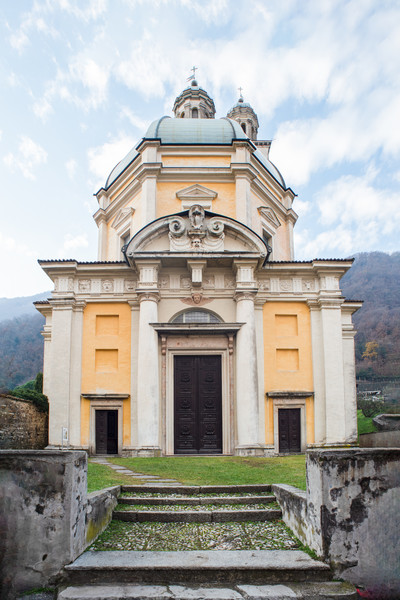
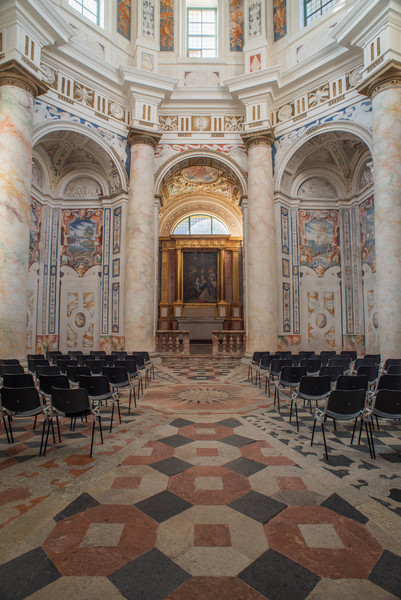
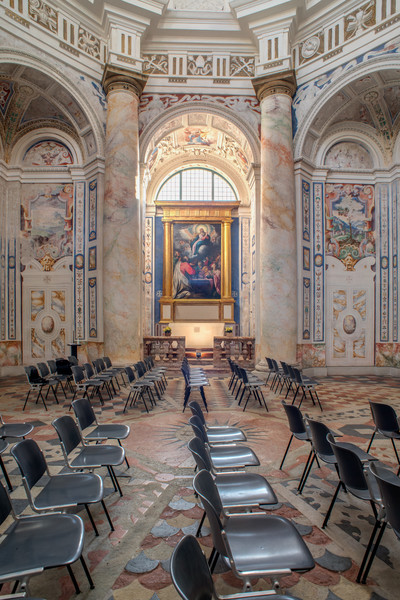
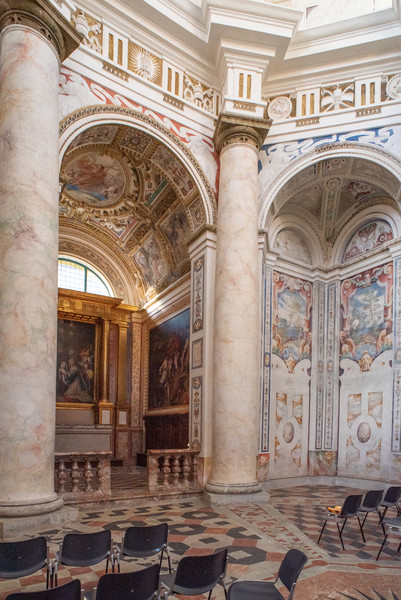
The Church of the Holy Cross in Riva San Vitale was probably built beginning in 1588 to the designs of architect Giovanni Antonio Piotti of Vacallo (1529-1596), at the behest of prelate Giovanni Andrea Della Croce. The building takes the form of a central nave with three chapels: the main one dedicated to the Holy Cross, the lesser ones to the Assumption of the Virgin and St Bernardine of Siena. The interior was decorated beginning in 1591 by the Pozzi brothers, painters from Valsolda, and by Camillo Procaccini (1561-1629), originally of Bologna but later based in Milan, who undertook the completion of five oil paintings within a year. Other contracts were signed with carpenters, stonemasons, and the stuccatori Domenico Fontana of Muggio (documented 1582-1630) and Pietro Mazzetti of Rovio (documented 1592-1632).
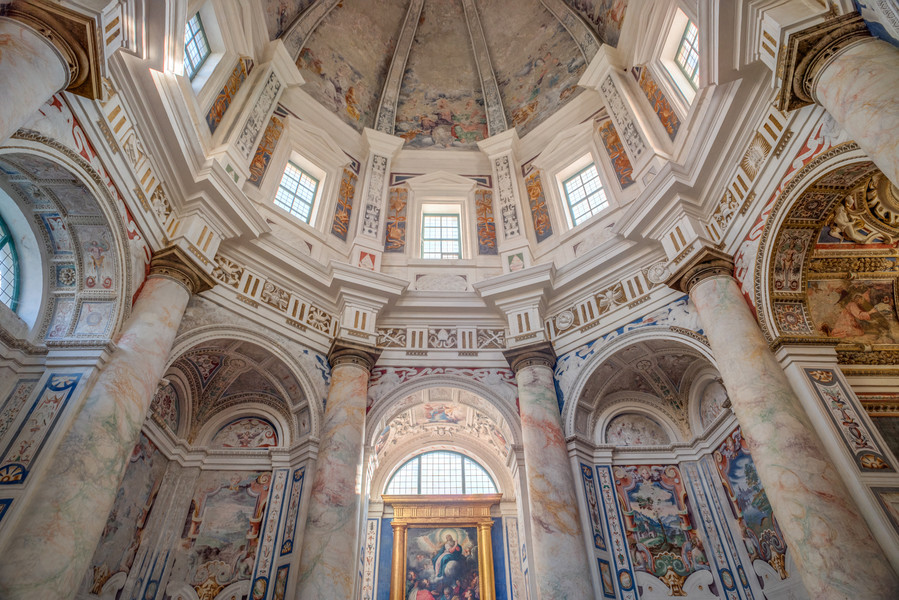
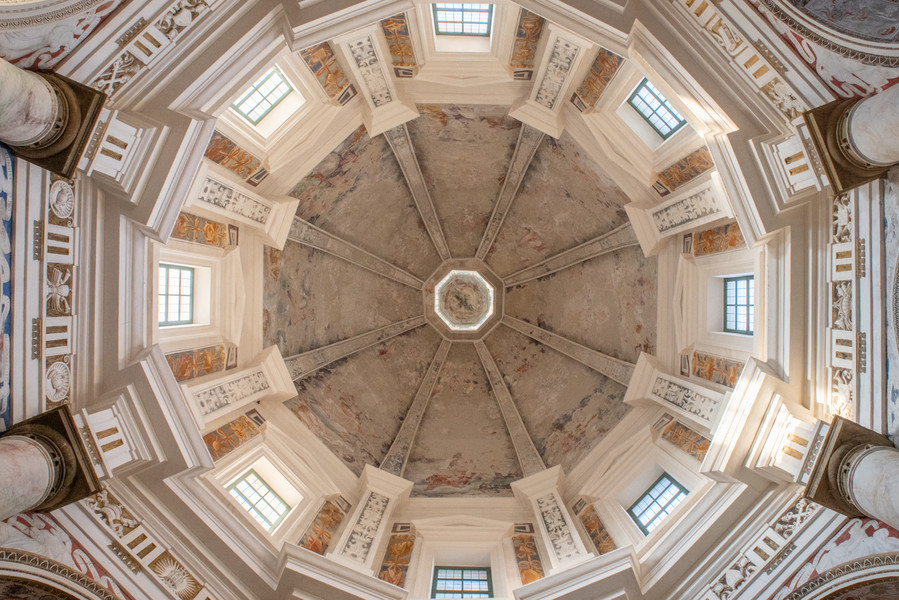
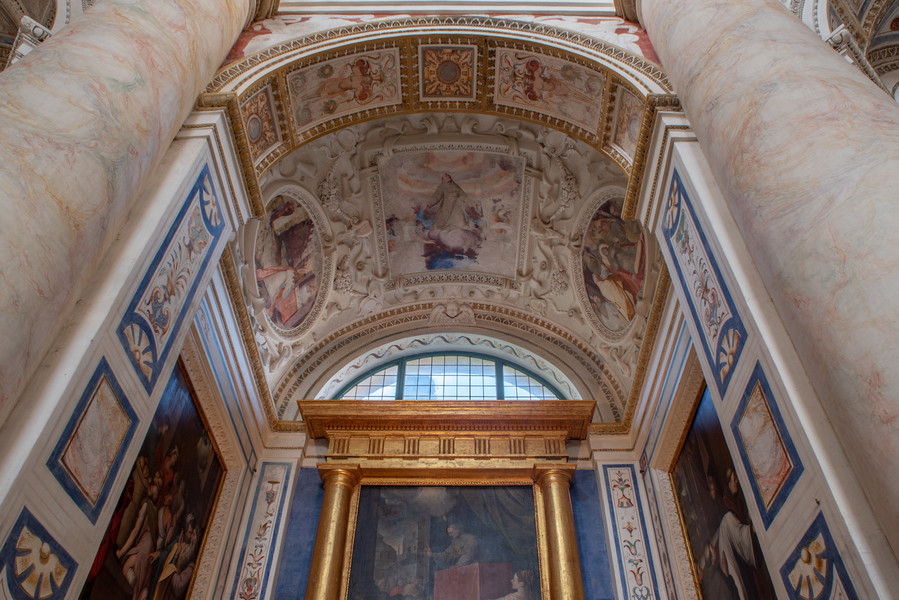
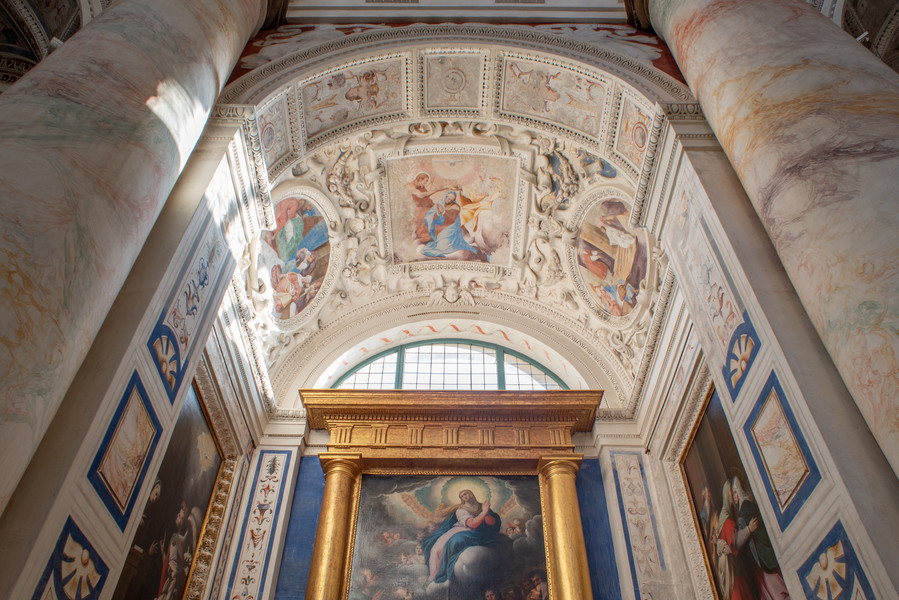
The latter were to prepare the ornaments for the vaults, including those in the main chapel with eight figures “di rilievo”, masks and festoons, all for completion within May 1592. As usual, the client was to purchase and supply the raw materials(Fig. 1, 2, 3, 4, 5, 6).
Interior
Mazzetti Pietro


The sumptuous decoration of the church demonstrates the desire of the wealthy and cultured patron, Giovanni Andrea Della Croce, to develop a monument worthy as a mausoleum for his own family. The structure was erected on land next to his palace.
The rapidity of construction and the involvement of master artists in the decoration made it an almost unique case in the area: the architectural layout and iconographic program, all centred on the theme of the Cross and with inventive freedom for the artists, came together in a whole of absolute coherence. The direction of works was probably in collaboration between architect Piotti and painter Camillo Procaccini. Paintings and stuccos merge in a choral vision, drawing on a mannerist and mostly profane figurative repertoire, featuring lion protomes, masks, sphinxes, birds, landscapes and coats of arms(Fig. 7, 8).