Interior


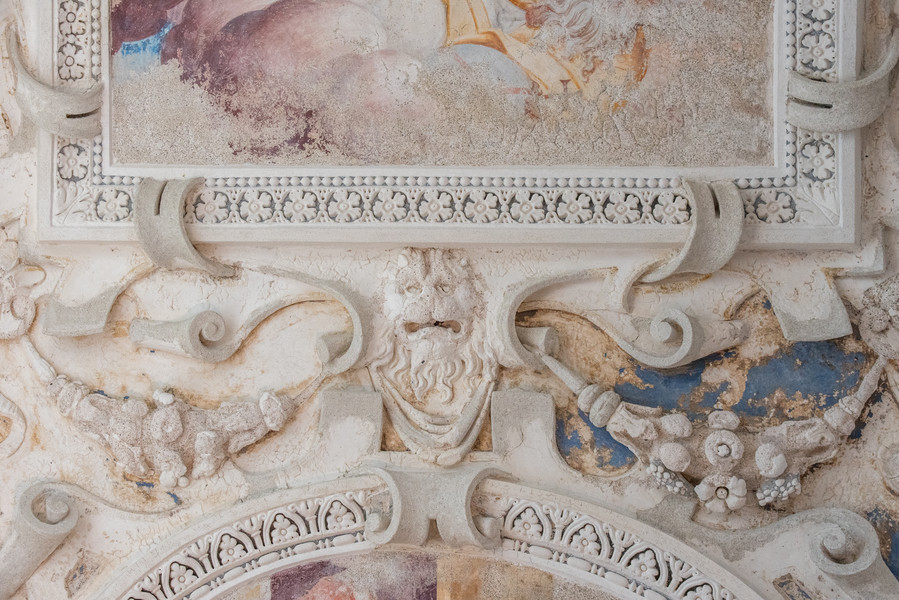
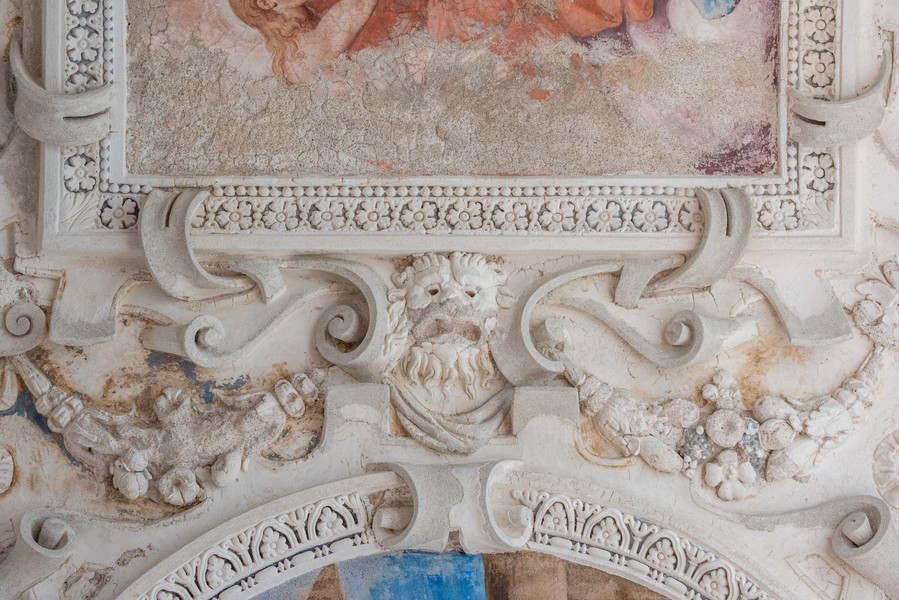
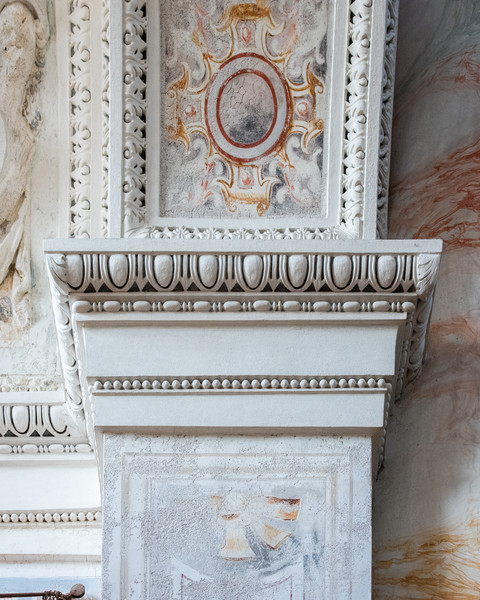
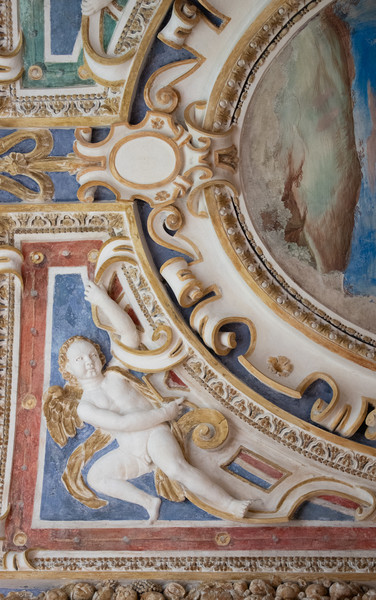
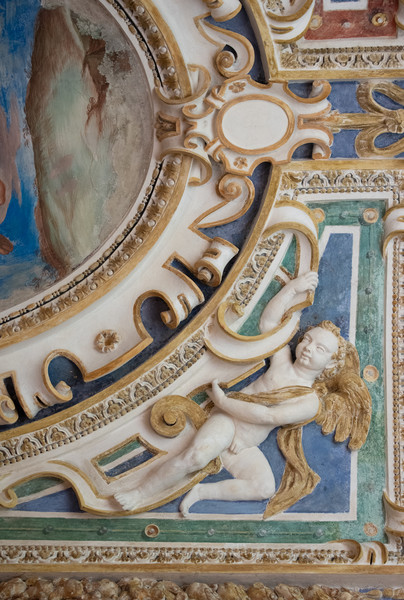
The stuccos accompanying the frescos, by the Pozzi and Procaccini workshops, create mixtilinear frames surrounded by floral festoons, cartouches, herms and putti. The language is purely Mannerist and compares well with other works by Fontana, such as the ornamentation created in the sanctuary of Tirano, the Collegiate Church of Balerna and the Chapel of the Rosary in San Vittore in Varese (Fig. 1, 2, 3).
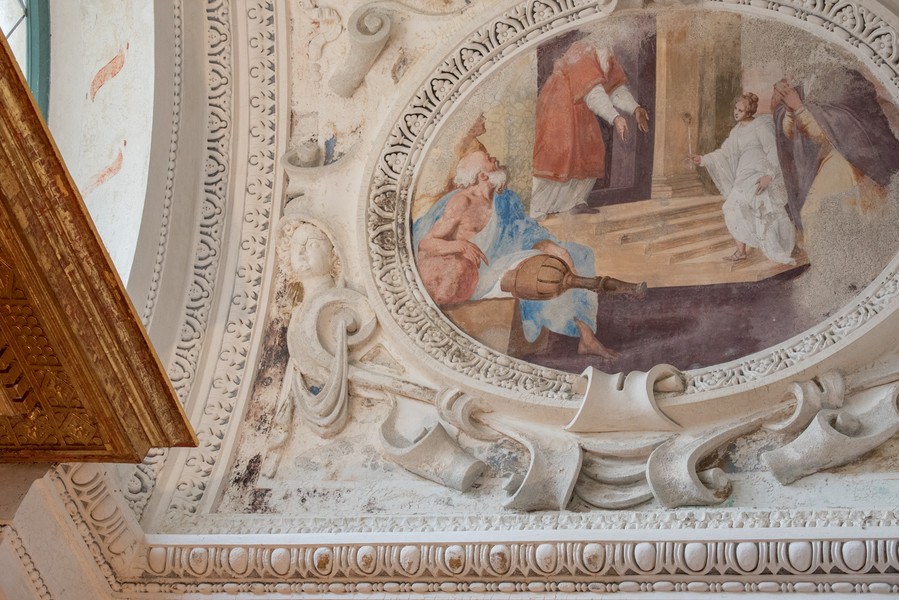
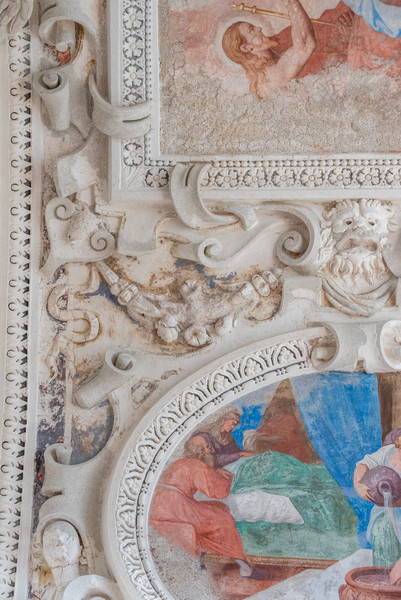
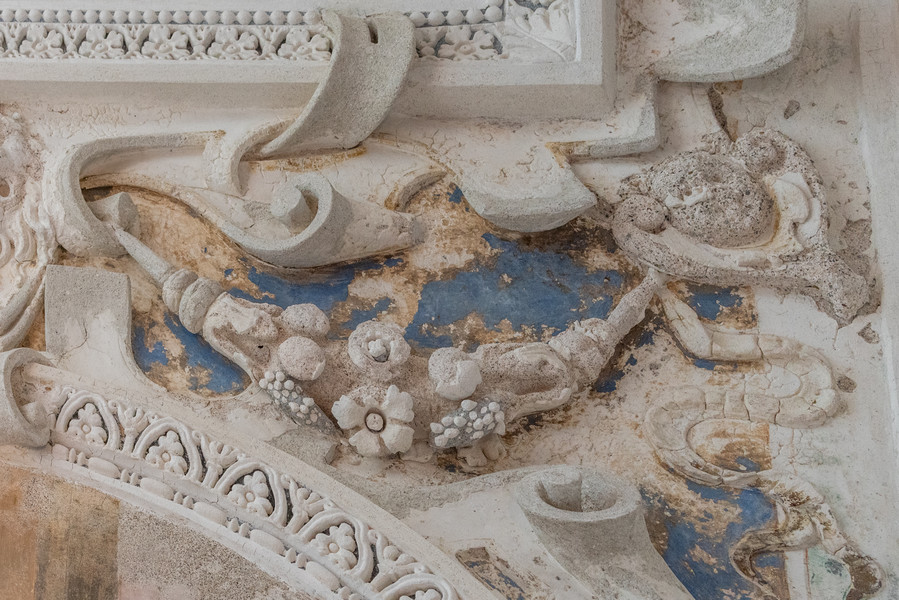
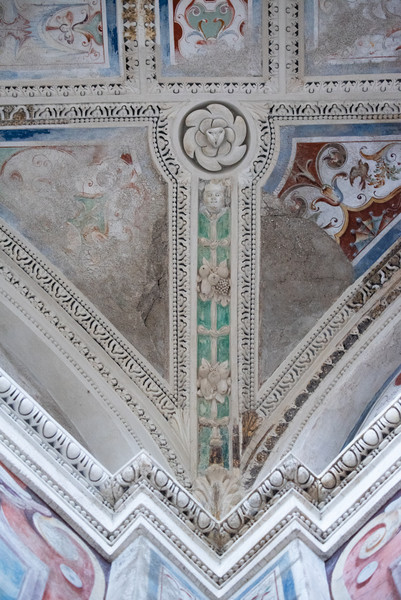
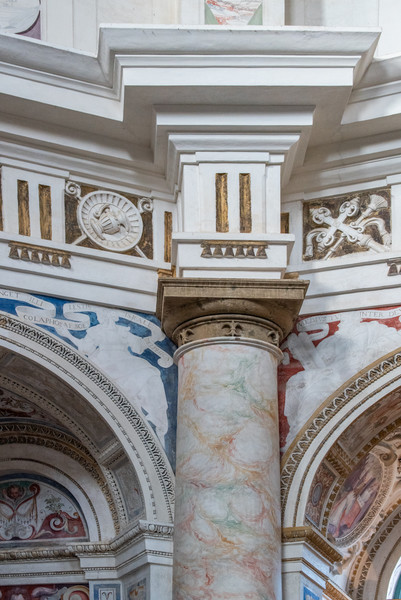
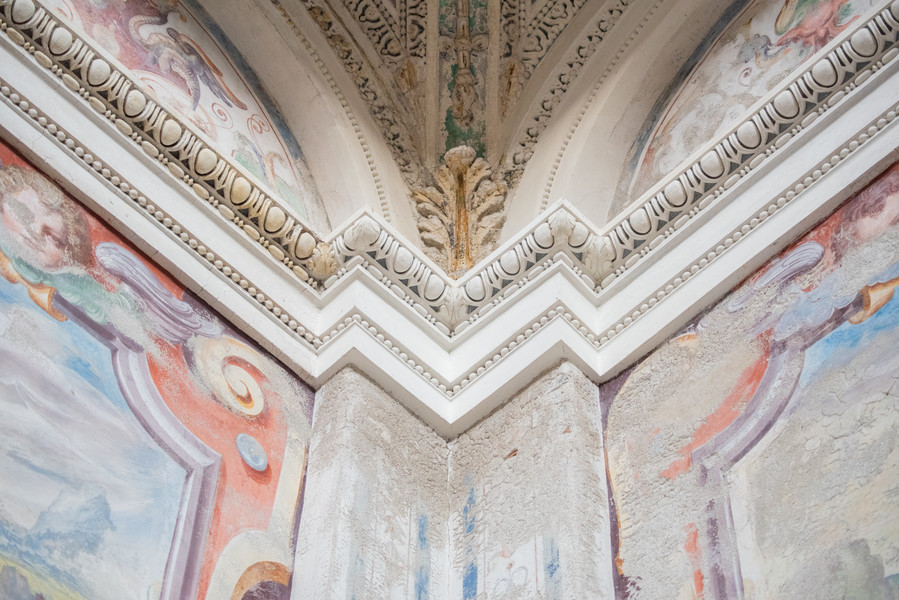
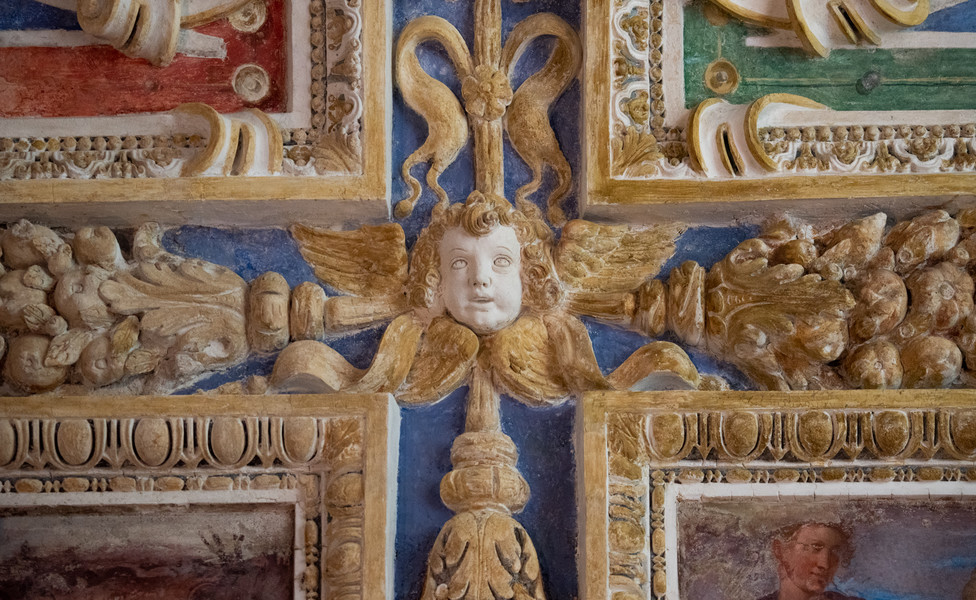
In the vaults of the side chapels, symmetries in stucco set of the architecture with rhythmic effect. The reliefs are restrained, but the repertoire is rich in elements: masks, ribbons, seraphim and garlands of fruits and flowers relate integrally with the complex volumes of the cartouches (Fig. 4, 5, 6, 7, 8, 9, 10, 11).
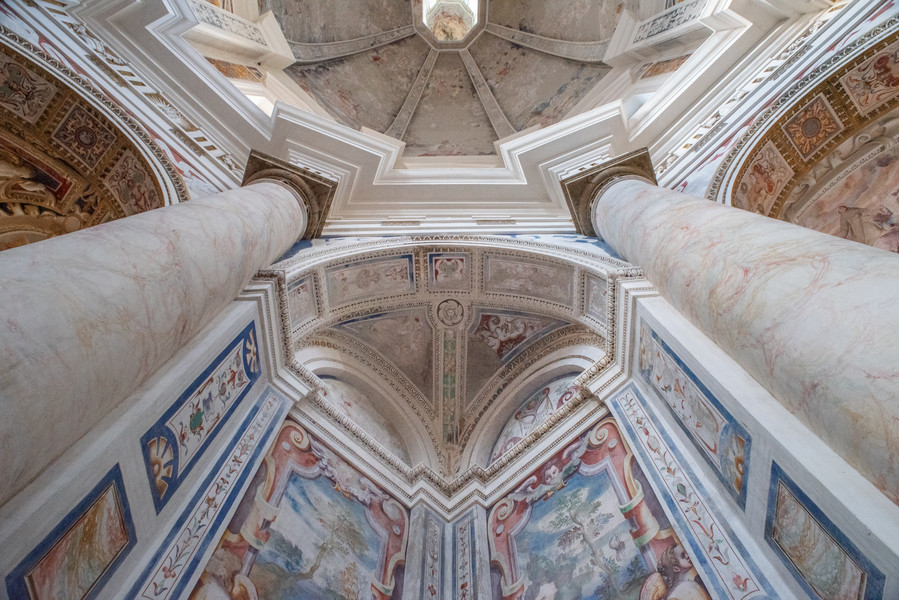
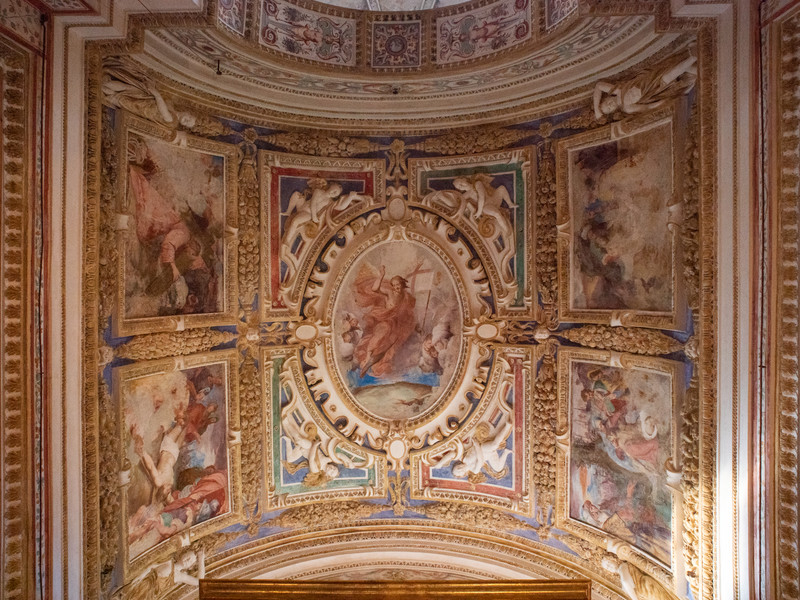
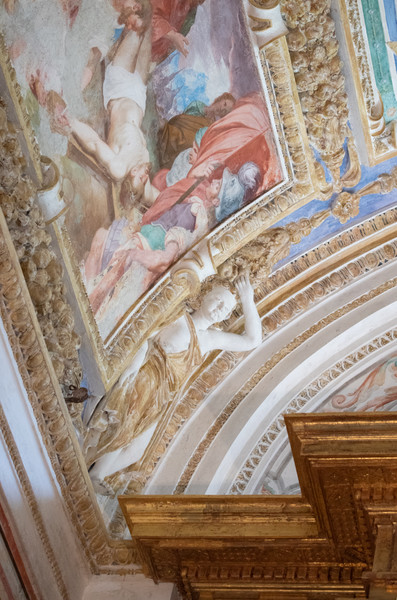
The vault of the main chapel houses scenes from the Passion of Christ, framed by angels and large gilded garlands of fruits and leaves that cling to seraphim (Fig. 12). Volumes and projections are more pronounced here, increasing the expressive range of the modelling. In this chapel, the stuccatori have worked to obtain a more important role for their creations, with a certain independence from the painted parts (Fig. 13, 14, 15, 16).
This attempt, still immature, is more fully developed in the vault of the Madonna Chapel of Morbio Inferiore, where Fontana succeeded in freeing himself from the rigidities that, here at Riva San Vitale, still firmly bind stucco decoration and architecture. At Morbio, the volutes, cartouches, and putti achieve a greater physical presence, achieving freedom from the architectural support and marking a step forward in the search for a new decorative language.
Such stylistic changes, occurring over the years of many construction sites, also demanded developments in technique of execution. Consider, for example, the selection of raw materials and preparation of mortars: through experimentation, these had to be rendered more malleable and with greater capacities for construction of pronounced forms, independent of the backing masonry and supported by increasingly solid reinforcement. In the decades bridging the 16th and 17th centuries, only a few stuccatori pursued such technical and design efforts, seeking to emancipate themselves from established traditions of savoir-faire, thereby gaining prominent commissions and their own autonomy in the varied world of the arts.